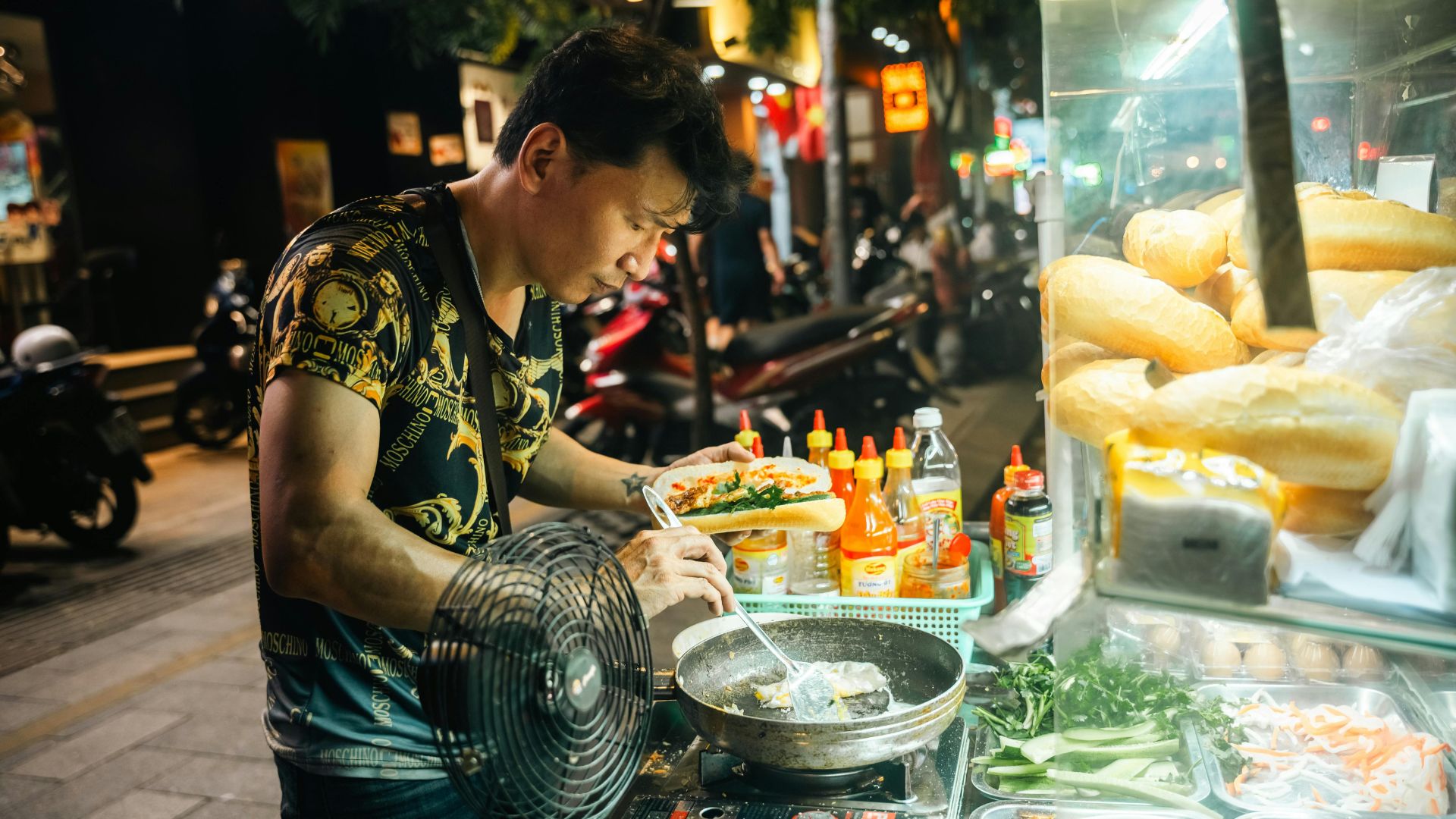
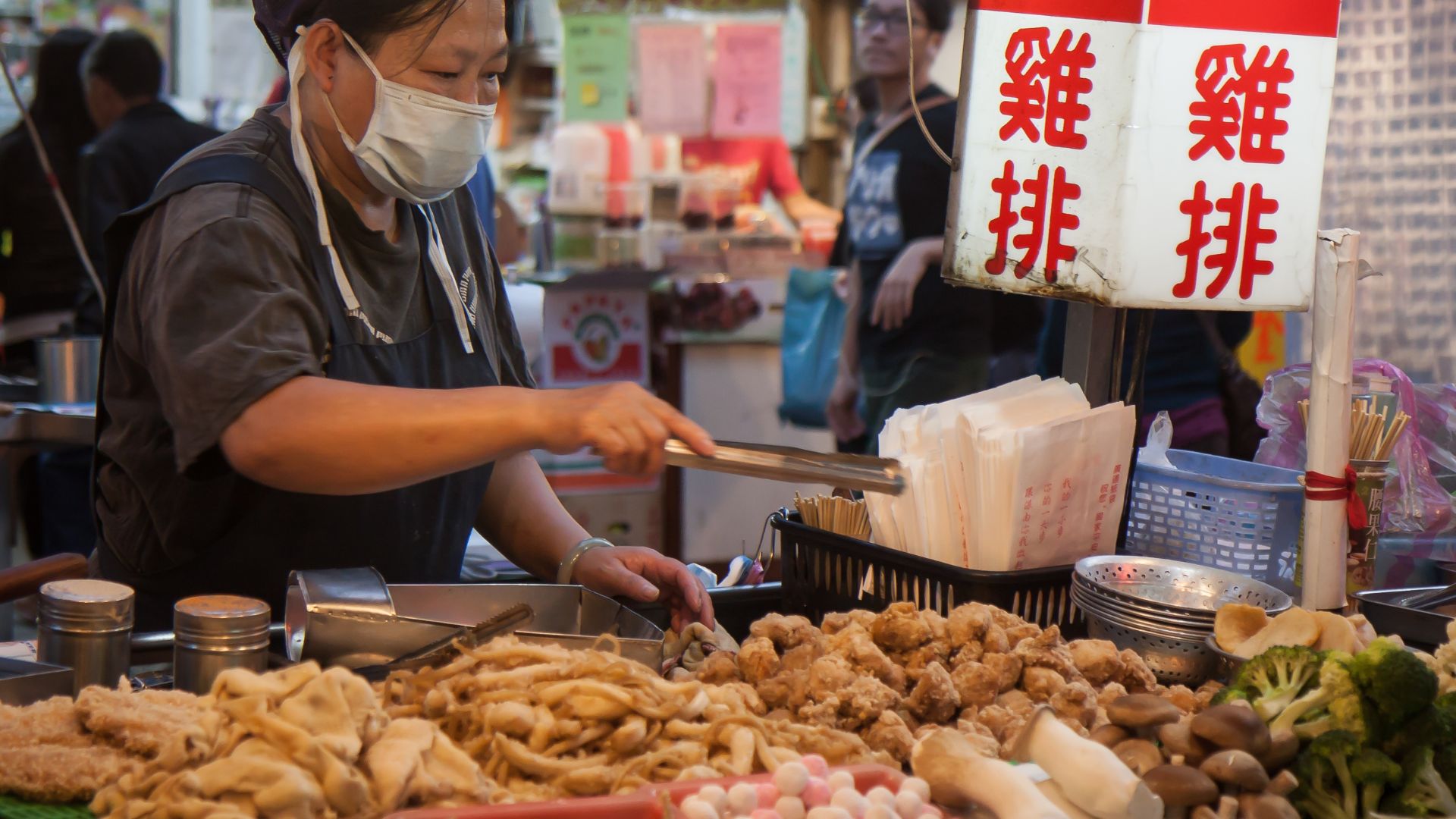
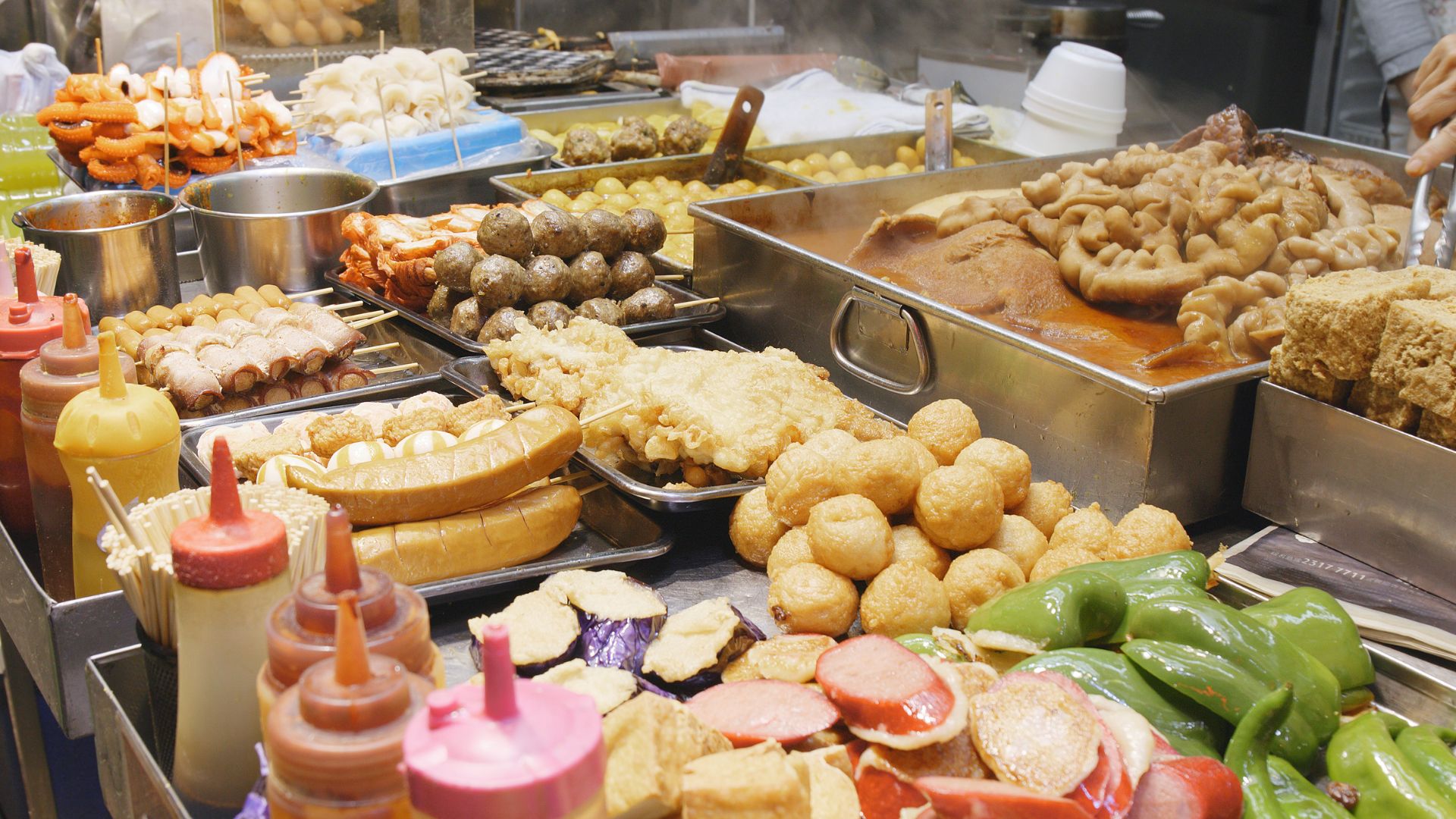
Chinese street food is not just cheap but comprehensively, gloriously, almost offensively cheap. The same meal that costs 80 yuan in a restaurant costs 15 yuan from a street stall, and frequently tastes better because the vendor has been making the same dish for thirty years and has perfected it in ways that restaurant chefs, cooking twenty different dishes, cannot match. Understanding street food transforms budget travel from endurance to pleasure. It also transforms the trip itself — some of the most vivid memories of China are made standing at a stall at seven in the morning, eating something you cannot name, surrounded by people doing exactly the same thing on their way to work.
Breakfast options multiply once you know what to look for. Jianbing (savoury crepes with egg, sauce, and crispy wonton) cost 6-10 yuan and fuel entire mornings. Baozi (steamed buns with various fillings) run 2-3 yuan each. Congee (rice porridge) with various toppings costs 5-10 yuan. Soy milk and fried dough sticks (youtiao) provide the classic combination for under 5 yuan. The breakfast vendors cluster near residential areas and metro stations; follow the queues to find the good ones. A useful rule: the longer the queue, the better the food. Street vendors in China do not survive on passing trade — they survive on regulars, which means quality is not optional. Getting to a good breakfast stall before eight in the morning puts you ahead of the rush and guarantees the freshest batch; arriving after nine means you are eating what is left, which is sometimes perfectly fine and sometimes a lesson in timing.
Lunch and dinner options vary by region, which is part of the joy. Northern China means noodles — hand-pulled, knife-cut, thick, thin, in soup or dry, with lamb or beef or vegetables. Central China means rice dishes and the regional specialties that each province guards jealously. Southern China means dim sum, congee, and preparations that Cantonese cuisine has refined over centuries. Sichuan means spice that approaches violence. Everywhere means dumplings, in varieties that defeat cataloguing. A single afternoon wandering the streets of Xi’an, Chengdu, or the hutong neighbourhoods of Beijing will teach you more about Chinese food than any guidebook. More importantly, it will make you hungry in a way that has nothing to do with appetite and everything to do with curiosity.
Snacks deserve their own category. Candied hawthorn skewers (tanghulu) appear on street corners throughout northern China, their lacquered red surface concealing a sourness that cuts through winter cold. Scallion pancakes, cooked fresh on flat griddles, are among the most satisfying things that can be purchased for two yuan. Roujiamo — slow-braised meat stuffed into a flatbread — is Xi’an’s contribution to the global sandwich canon and deserves recognition far beyond the city’s walls. Stinky tofu, fermented and fried, smells catastrophic and tastes extraordinary; do not let the name or the smell make the decision for you. Roasted sweet potatoes, sold from carts throughout winter, cost next to nothing and taste like the season itself. These are not tourist attractions. They are what people eat, every day, without ceremony.
The night markets provide the full spectrum. Every major city has streets that transform after dark into food carnivals: skewers of meat and vegetables grilled over coals, noodles pulled to order, regional specialties that vendors have brought from their home provinces. The atmosphere is half the experience — the sizzle of grills, the shouts of vendors, the press of locals who know which stalls are worth queuing for. Follow them; they know. The crowds thin after ten, at which point the same stalls become more relaxed, the vendors more talkative, and the experience shifts from carnival to something closer to a neighbourhood kitchen operating under open sky.
Practical street food advice: look for crowds (high turnover means fresh food), watch what locals order (they know what is good), point at what others are eating if you cannot read menus, carry hand sanitiser (not all stalls have handwashing facilities), and accept that you will occasionally eat things you cannot identify. The unidentified things are usually delicious. Budget 40-60 yuan per day for eating entirely from street stalls and local restaurants; budget 80-100 yuan if you add occasional restaurant meals. The difference between budget eating and mid-range eating in China is marginal; the quality of street food makes economising feel like strategy rather than sacrifice.