Weather and When to Visit

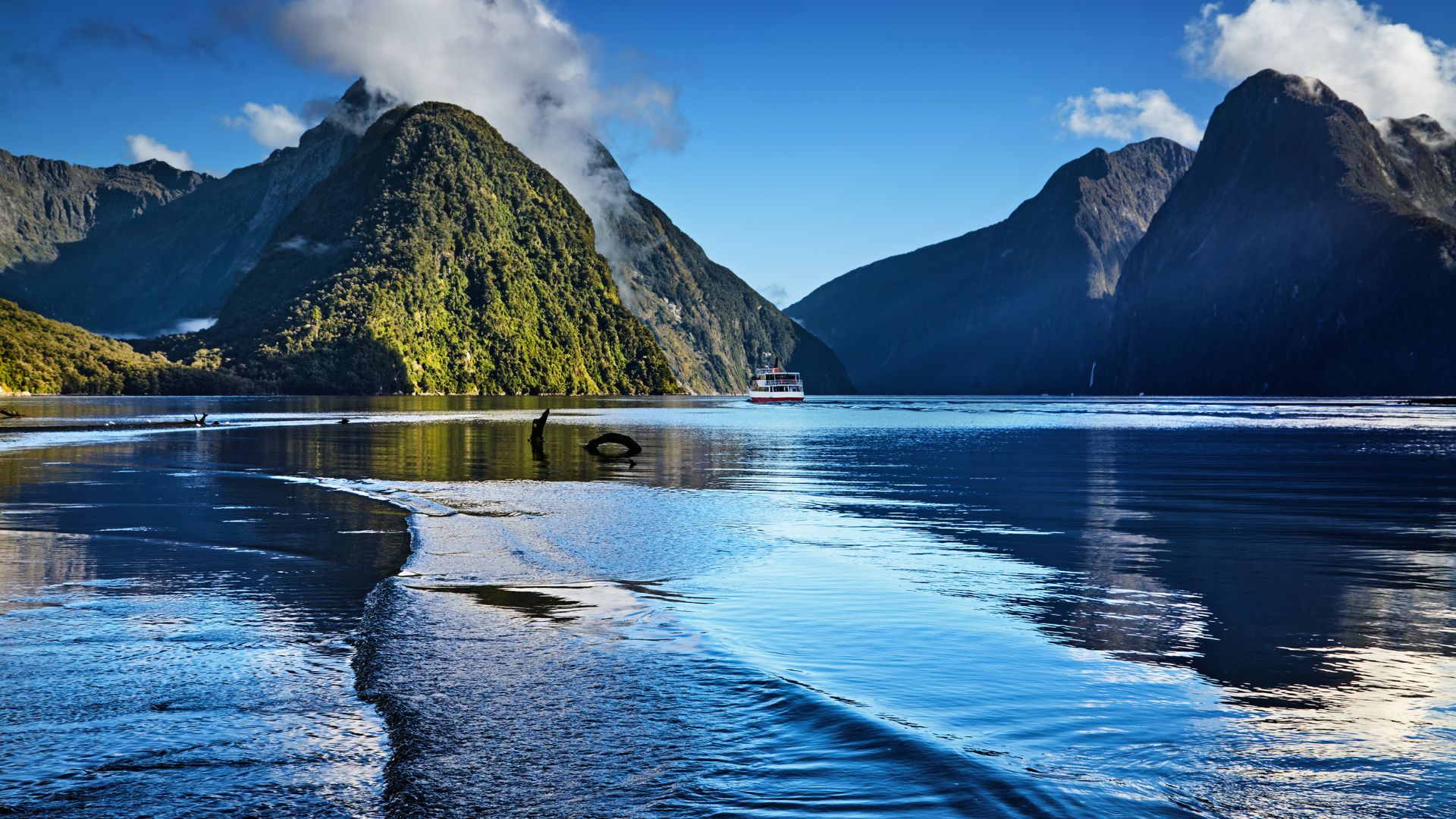
New Zealand’s weather confounds expectations. The country sits in the Roaring Forties — the band of westerly winds that circle the Southern Hemisphere unimpeded by any significant landmass between South America and Tasmania — which means weather systems arrive fast and frequently, often without the gradual build-up that visitors from larger continents expect. The Southern Alps form a 500-kilometre spine running down the South Island that traps westerly moisture on its western flank (Fiordland and the West Coast can receive over 7,000mm of rain a year, more than almost anywhere on Earth) and starves the eastern side of it (Central Otago is a near-desert by comparison, with summer temperatures over 30°C). Four seasons in one day is not a cliché but a regular occurrence, especially in the South Island where you can move from coastal subtropical to alpine in a forty-minute drive. Understanding this changes how you plan, what you pack, and why flexibility matters more here than in stable-climate destinations.

Summer (December–February) brings the best weather on average: longer days, warmer temperatures (20–25°C in most places, often higher in Marlborough, Hawke’s Bay, and Central Otago), and the possibility — never the guarantee — of extended fine spells. This is peak season, with corresponding crowds and prices. School holidays from mid-December to late January see Kiwi families everywhere; February calms slightly but remains busy. Book accommodation ahead in popular areas; freedom camping spots fill early; the Great Walks require booking months in advance (Milford and Routeburn tracks open for online booking the previous May and sell out within hours). Summer also brings the country’s most punishing UV — New Zealand has among the highest UV indexes in the world thanks to the thin ozone layer over the Southern Hemisphere and the unusually clean atmosphere, and a sunburn from a December afternoon in Wellington can rival what an equivalent latitude in Europe would deliver in July.

Autumn (March–May) often delivers the best travel conditions. The tourists thin out; the weather remains decent through March and into April; autumn colours transform the South Island’s deciduous valleys, with Arrowtown’s golden willows and Wanaka’s poplars drawing photographers from across the world in late April. April is harvest season in wine country, with festivals and casual work opportunities. May brings cooler temperatures and shorter days, but also lower prices and emptier roads. Serious budget travellers often target these months. The tropical cyclone season in the southwest Pacific peaks January to April, and the country occasionally absorbs the tail-end of a system — Cyclone Gabrielle’s devastation of Hawke’s Bay and Northland in February 2023 demonstrated that “tropical” can reach far enough south to matter.

Winter (June–August) transforms Southern options while leaving the North relatively unchanged. Queenstown becomes a ski town; accommodation prices actually rise around the ski fields while dropping elsewhere. The South Island’s alpine passes (Lewis, Arthur’s, and Haast) can close with snow at short notice; the West Coast receives even more rain than usual; chains may be required on hire cars by law in some areas. The North Island stays mild — Rotorua, Tauranga, and the Bay of Islands remain pleasant year-round, with average winter highs of 14–16°C and occasional days that wouldn’t disgrace an English May. Winter nights are long (dark by 5pm in the south, 5.30pm in the north), which affects how much you can see and do each day. The flip side: cosy lodges with open fires, crisp clear days that deliver the best mountain photography of any season, and the country’s domestic tourism focused on the ski fields rather than the wider landscape.

Spring (September–November) brings unpredictable conditions but genuine rewards. Lambing season covers the countryside in photogenic newborns; wildflowers bloom; waterfalls run at full power from spring melt. The weather remains unsettled — rain interrupts fine spells regularly, and the Foehn wind (the Norwester) can spike Canterbury temperatures by 10°C in an hour while making everyone irritable — but flexibility rewards. Late spring (November) often provides summer-like weather before summer crowds arrive. For backpackers without fixed schedules, this shoulder season offers the best balance of weather, cost, and availability.

The practical conclusion: dress in layers, regardless of season. A waterproof shell is essential year-round. Sun protection is essential summer-and-autumn (factor 30+ and a wide-brimmed hat). Allow buffer days for weather delays on driving routes through alpine areas. Check forecasts the morning of any planned hike — and accept that the morning forecast may be wrong by afternoon. New Zealand’s weather is part of the experience, not an obstacle to it.

Practical information

MetService — New Zealand's national weather service. Detailed regional forecasts, severe weather warnings, marine and mountain forecasts. The standard daily check for any traveller.

NIWA Weather — National Institute of Water and Atmospheric Research. Longer-term forecasts, climate data, and seasonal outlooks; useful for itinerary planning months in advance.

SunSmart NZ — UV Index — Cancer Society of New Zealand. Real-time UV index, daily protection advice, and explanation of why New Zealand UV is so intense. Essential reading before any summer trip.

Department of Conservation — Track and Park Alerts — Current weather closures, avalanche advisories, river crossings, and track conditions across all national parks and Great Walks. Check before any backcountry plan.

NZ Transport Agency — Road Conditions — Real-time road closures and chains-required notices, particularly important in winter for South Island alpine passes (Lewis, Arthur's, Haast, and Crown Range).