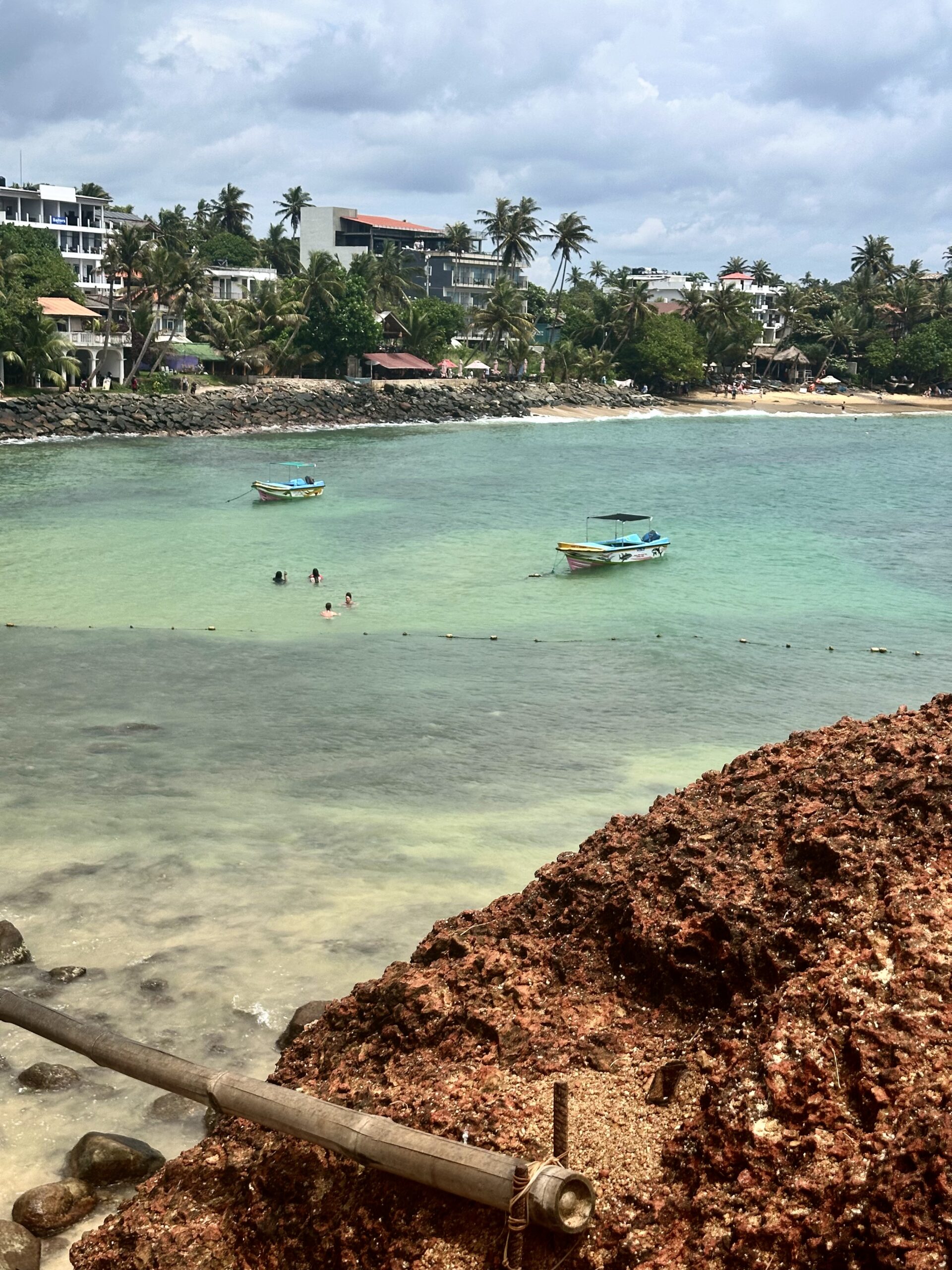
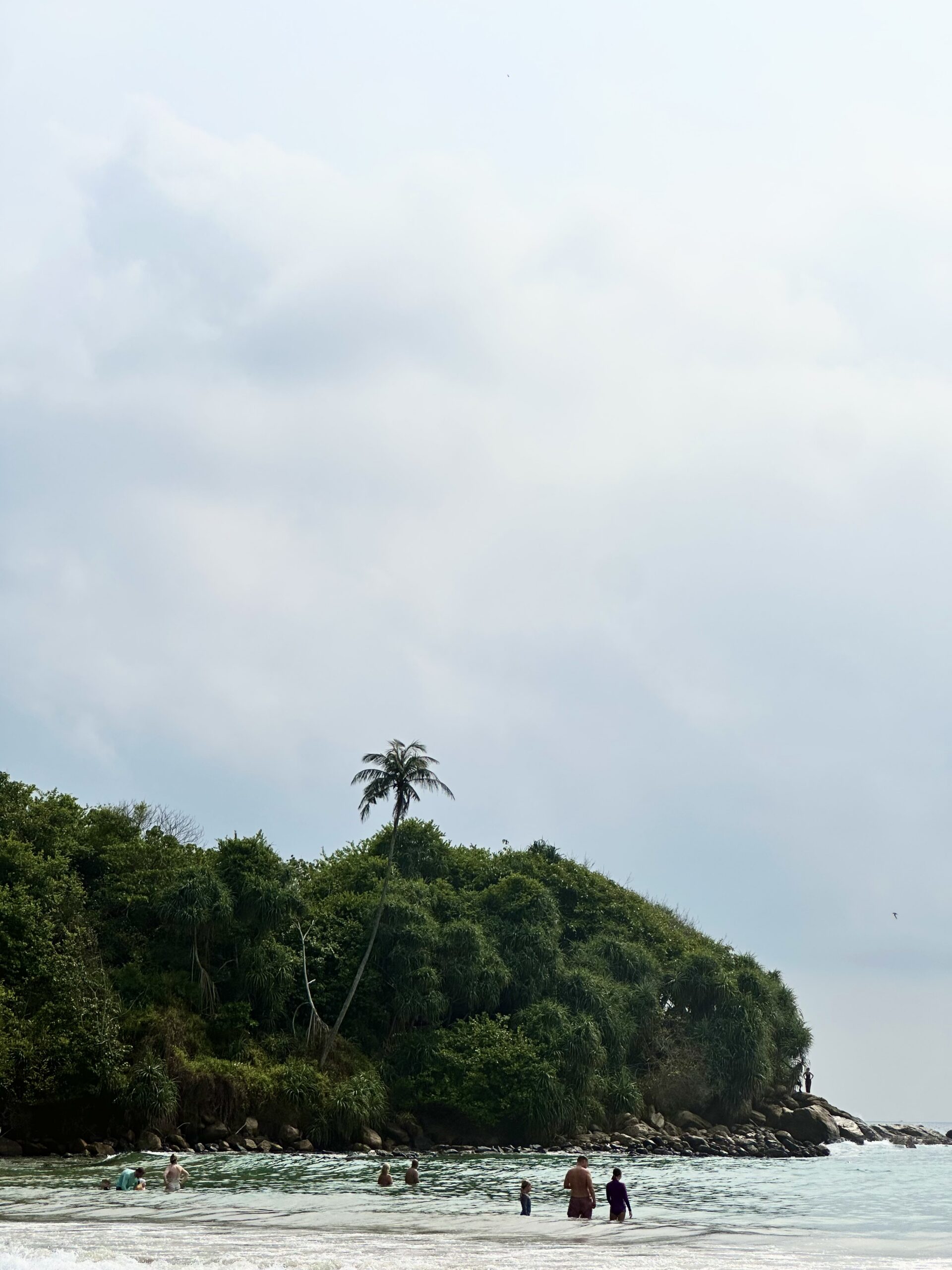
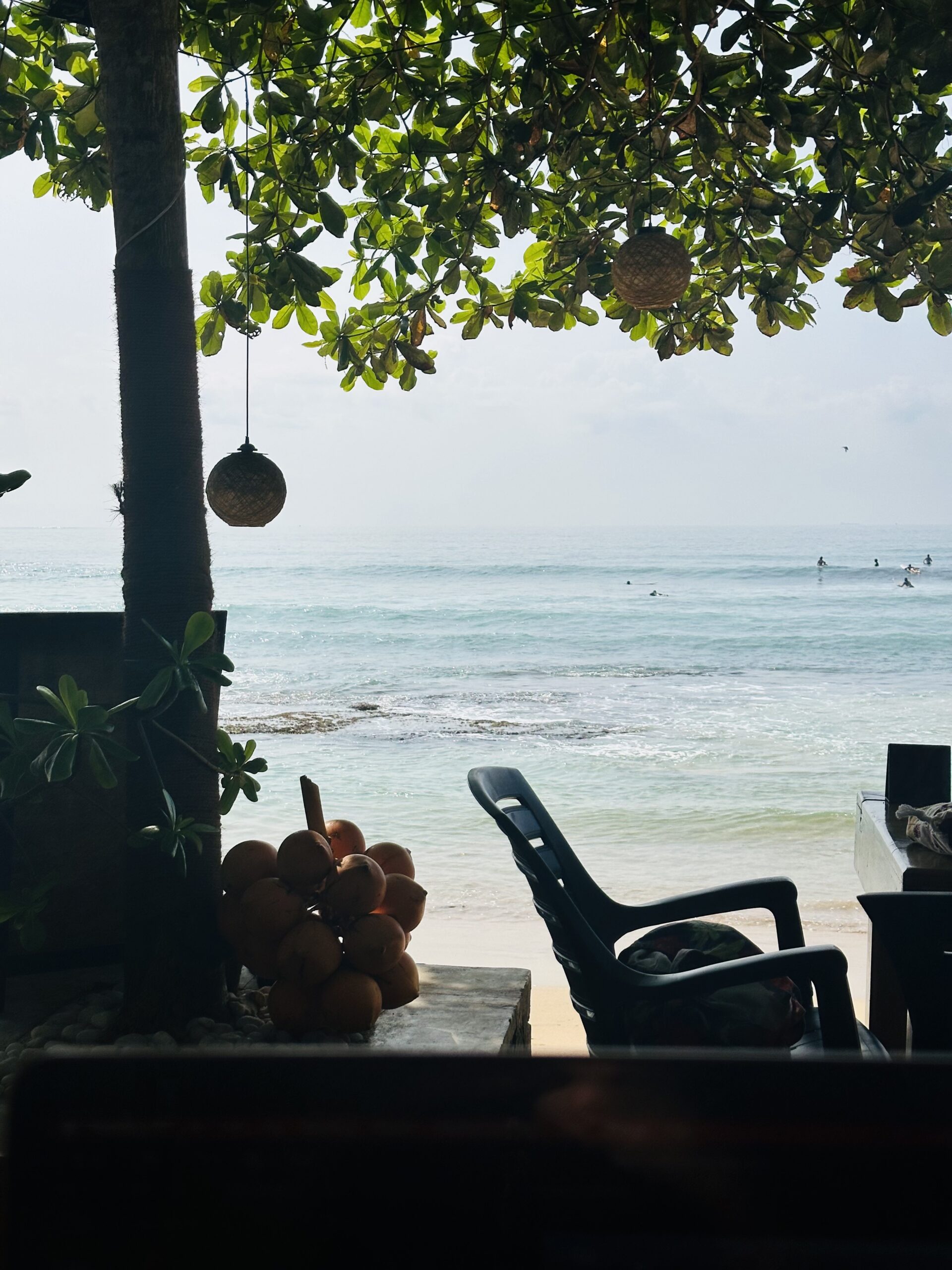
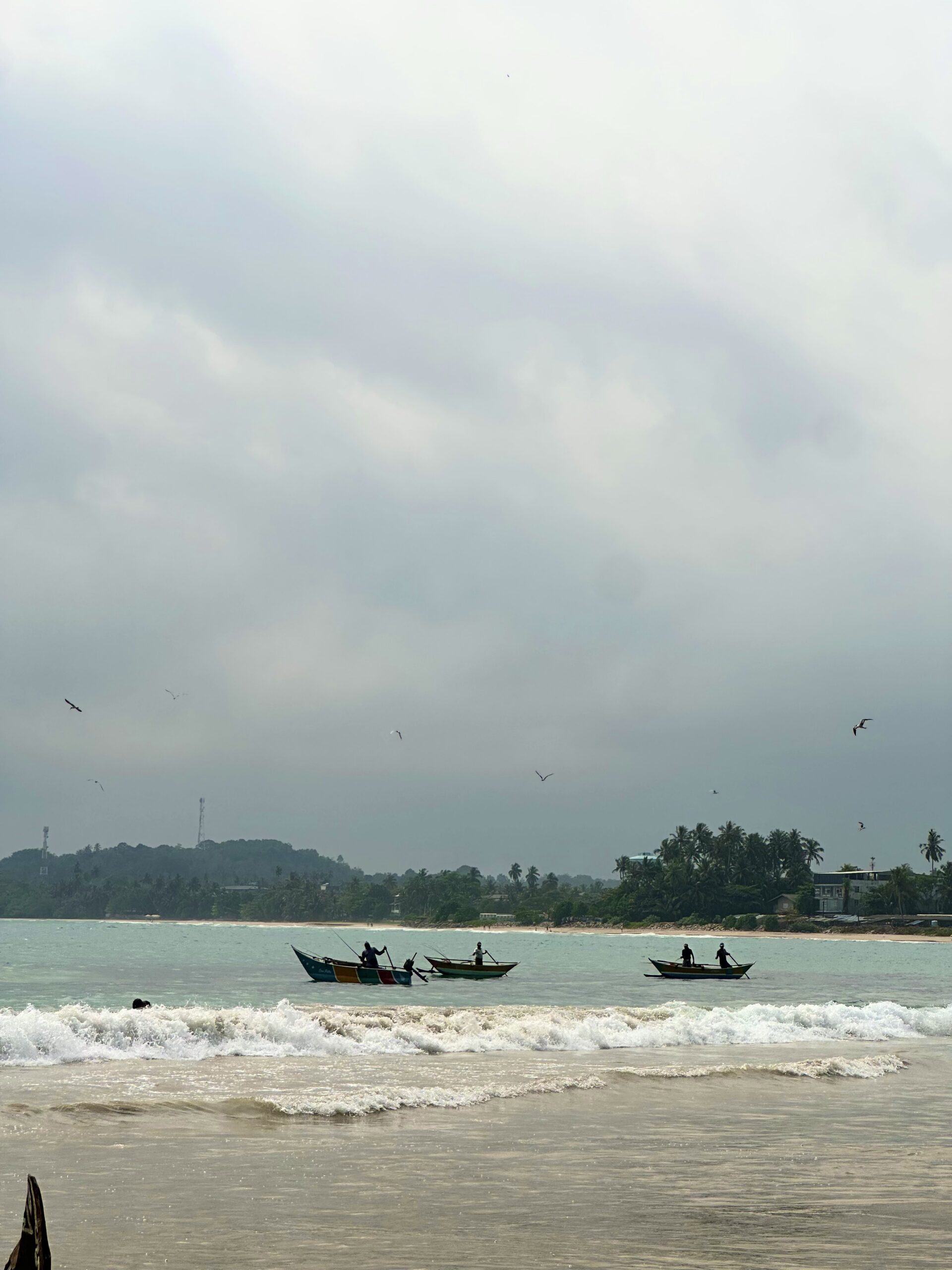
Mirissa draws whale watchers for the blue whales that migrate past between December and April. The boats depart at dawn from Mirissa harbour, charge 6,000–8,000 rupees (£15–20) per person on shared big boats (or USD 150+ for the private speedboat experience that gets you to the whales faster), and deliver encounters with the largest animals that have ever existed. Book the day before through your guesthouse or directly with established operators like Whale Watching Mirissa rather than the touts on the beach — the difference in boat quality and crew experience justifies it, and the established operators follow ethical observation guidelines that some smaller boats ignore. The experience is worth every rupee. The town itself offers waves for intermediate surfers, Coconut Tree Hill for the obligatory Instagram photograph, and a beach that fills with travellers each evening for one of Sri Lanka's reliably spectacular sunsets.
Tangalle, further east, offers what Mirissa had a decade ago: long stretches of beach with minimal development, guesthouses tucked behind palm groves, and the kind of pace that makes a week feel like a fortnight. The waves at Goyambokka and Medaketiya are too strong for swimming but excellent for body-boarding and walks; Rekawa, a few kilometres east, hosts the turtle nesting that the south coast is famous for, with conservation-led night visits during the laying season (March to September). The town itself is unromantic but functional, and the guesthouses along the coast road provide a base for the kind of trip where the to-do list is "read a book."
Galle Fort presents the budget traveller's dilemma: atmospheric Dutch colonial walls, boutique shops, prices that reflect location rather than value. The fort is a UNESCO World Heritage site for good reason — the 1663 ramparts still enclose a working community of churches, mosques, courthouses, and homes — but accommodation inside has climbed beyond budget territory. Stay outside the fort (Beach Haven, Sea Star, Pedlar's Inn Hostel, and similar guesthouses for 3,000–4,000 LKR / £7.50–10) and walk the twenty minutes to the ramparts. The sunset walks along the fort walls are free; the fishermen casting nets from the rocks are genuine; the photography opportunities are unlimited. The Dutch Reformed Church, lighthouse, and old hospital building reward a slow circuit. Eat inside the fort once at one of the heritage cafes for the experience; eat outside thereafter, for the budget, with the local rotti shops near the bus station delivering kottu and string hoppers at a fifth of the fort's prices.