
The Great Wall: Finding Solitude on History’s Most Famous Structure
The Great Wall of China is simultaneously the world’s most famous tourist attraction and a genuine wilderness experience, depending entirely on where you visit it. The sections closest to Beijing — Badaling, Mutianyu — receive millions of visitors annually, complete with cable cars, souvenir shops, and crowds that reduce one of humanity’s great achievements to an elaborate selfie backdrop. The wilder sections — Jinshanling, Jiankou, Gubeikou — receive a fraction of the visitors and deliver the Wall as it has stood for centuries: crumbling, atmospheric, and stretching toward horizons that seem to have no end.
The Wall is not one structure but many, built over two thousand years by successive dynasties with varying materials and purposes. The Ming dynasty walls that most visitors see date from the 14th to 17th centuries; earlier walls survive in various states of ruin across northern China. The total length, depending on how you count it, exceeds 20,000 kilometres — not a continuous barrier but a series of walls, fortifications, and natural features that collectively marked and defended the empire’s northern boundary. It was never, in any era, truly finished. Each dynasty that inherited it also extended it, repaired it, or simply built alongside whatever came before, which is part of why the Wall resists simple description. It is less a monument than a living record of anxiety, ambition, and the recurring human instinct to define where something ends and something else begins.
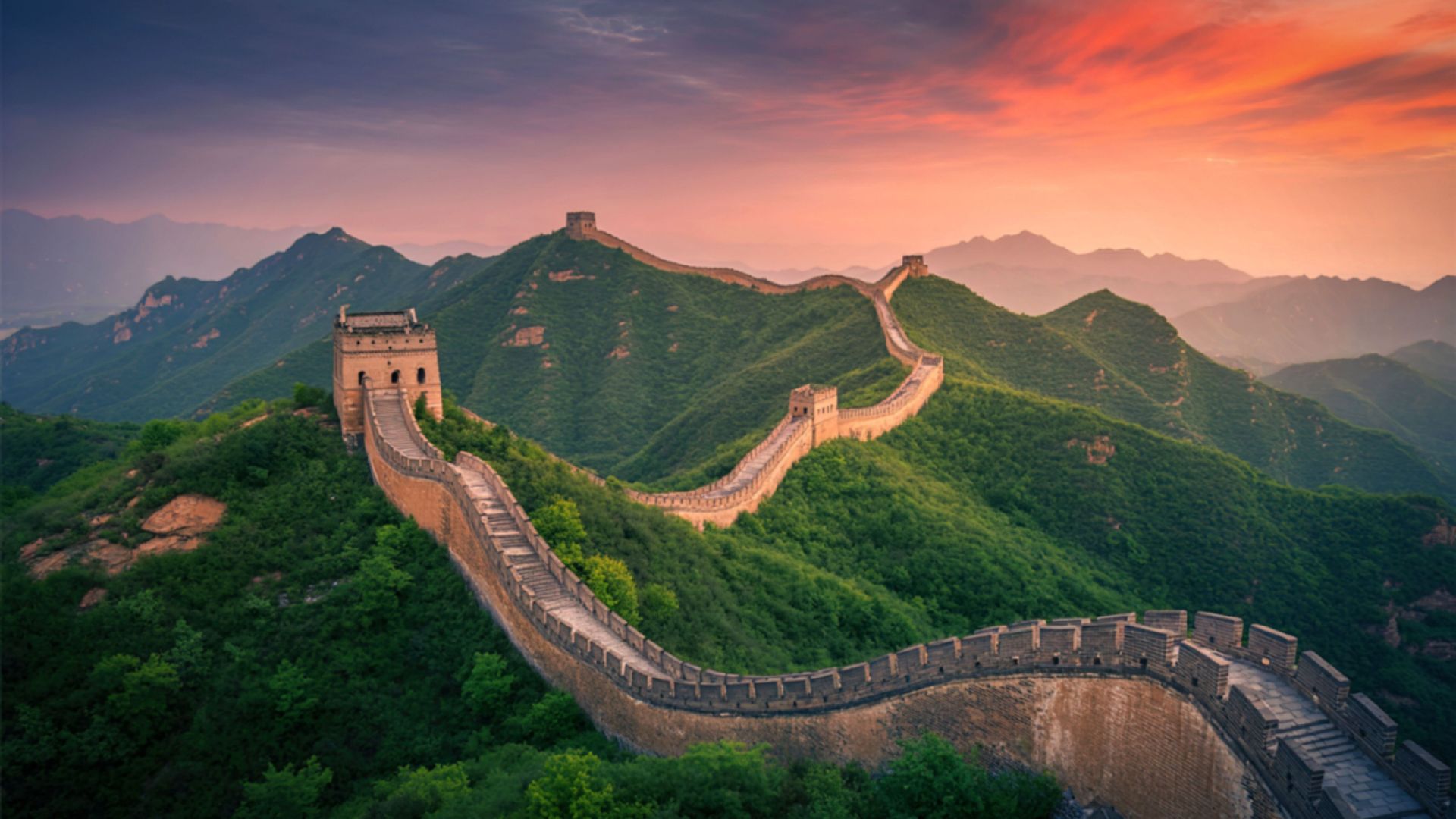
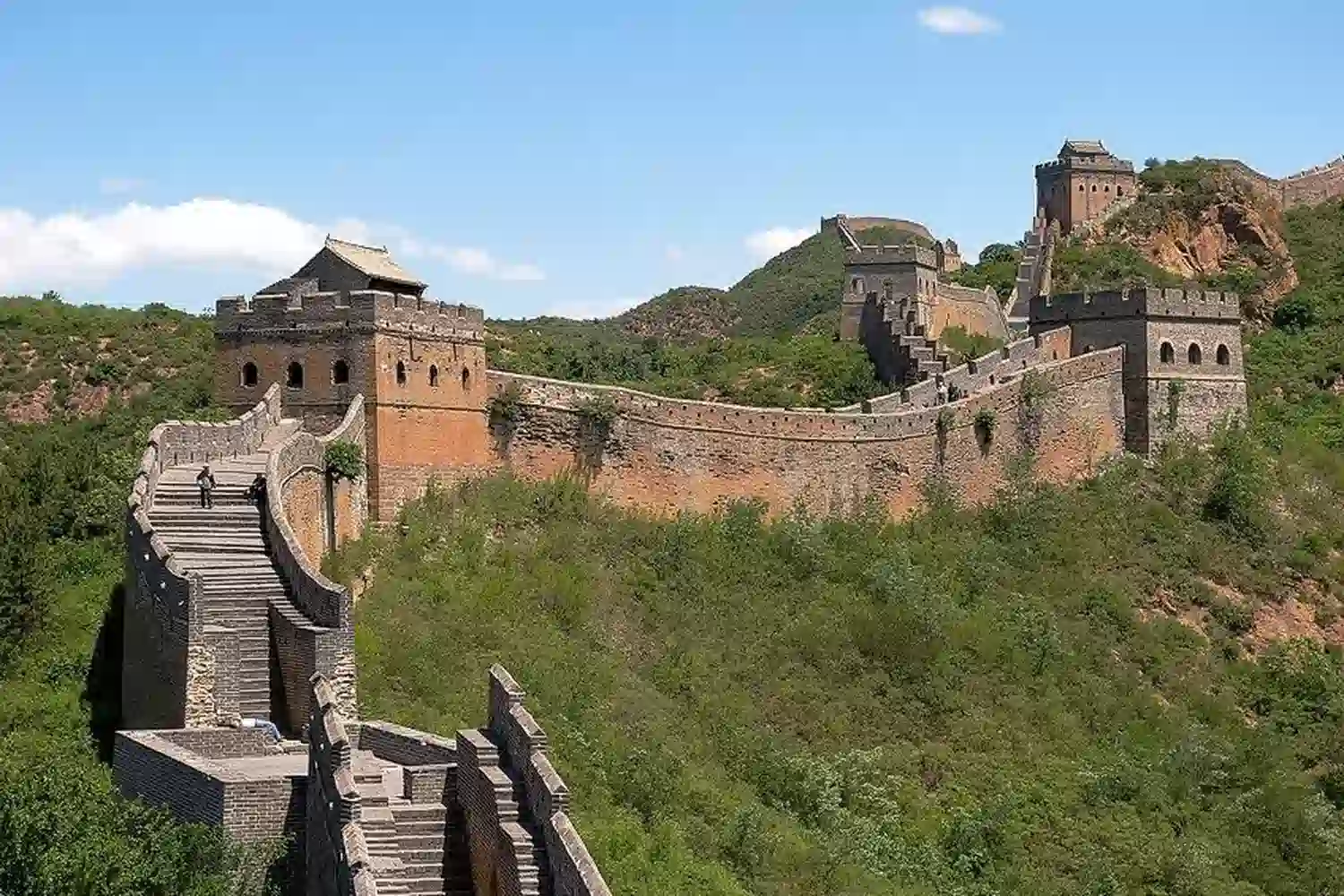
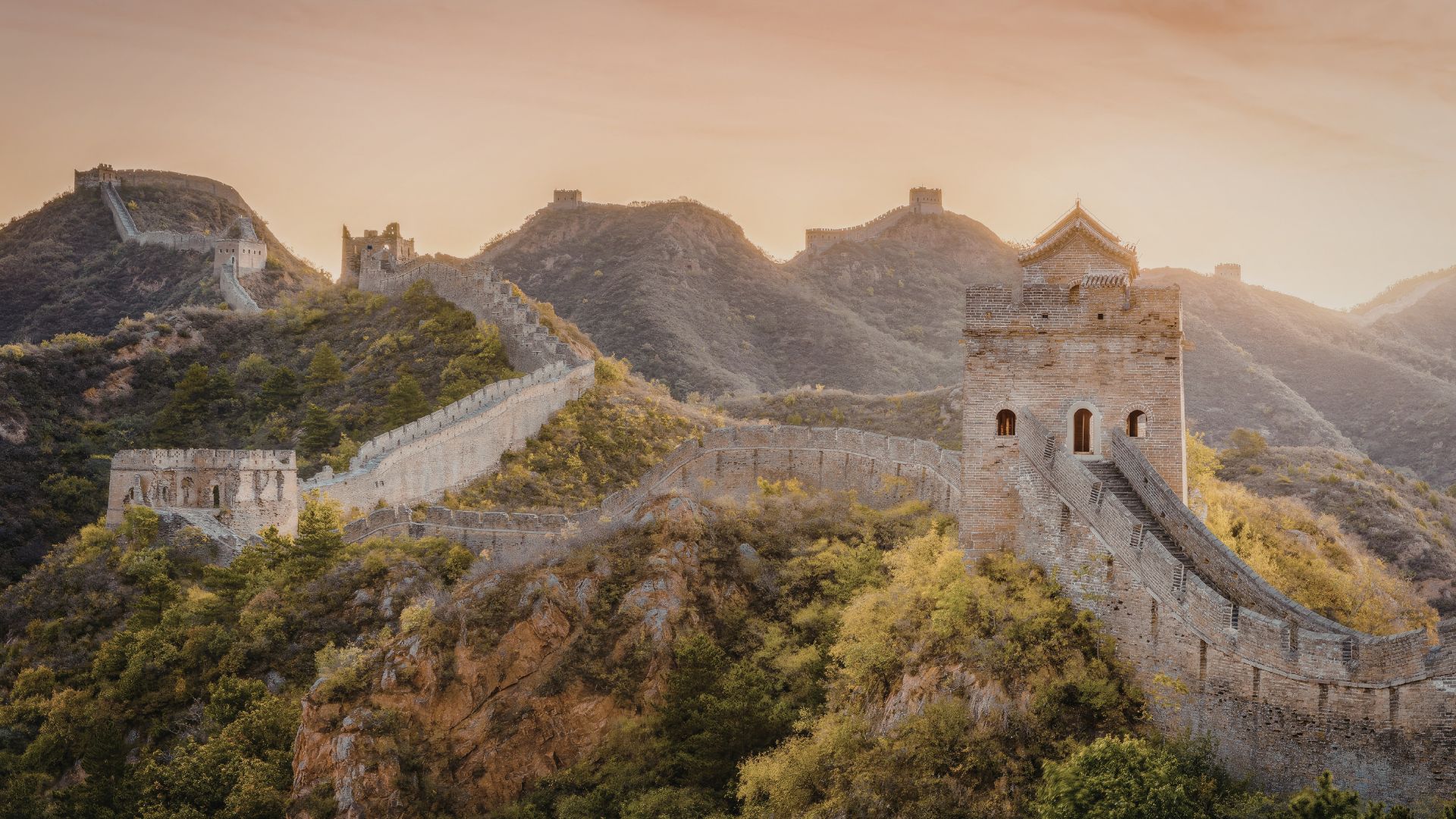
Jinshanling provides the ideal first experience for visitors seeking drama without crowds. The two-hour drive from Beijing leads to a section where watchtowers mark regularly spaced intervals, the Wall rises and falls with mountainous terrain, and weekend mornings can pass without another visitor in sight. The hiking is genuine — steep stairs, uneven footing, sections that require hands — but the rewards match the effort. Photographers arrive before dawn for mist-shrouded shots that capture what the Wall represents. In autumn, when the surrounding hillsides turn amber and the morning light arrives at a low angle across the battlements, Jinshanling produces images that have nothing to do with tourism and everything to do with scale — the particular vertigo of standing on something that stretches further than vision can follow. In winter, the same section becomes a different proposition entirely: cold, silent, and stripped of any remaining romanticism about what it means to stand on a fortification wall at altitude with no one else around for miles.
The truly wild sections require more commitment. Jiankou’s rugged, unrestored Wall attracts serious hikers willing to navigate crumbling stairs and overgrown paths. The overnight hike from Jinshanling to Simatai (which ends at a section controversially restored for night visits) covers terrain that induces appropriate humility. Multi-day hikes along remote sections exist for those who want wilderness that happens to include historical fortifications. These are not casual days out. The Wall in its unrestored state is genuinely dangerous in places — loose stone, exposed drops, sections where the path disappears entirely — and should be approached with proper footwear, sufficient water, and realistic expectations about what wilderness actually involves. It is not a managed experience. It is the real thing.
Gubeikou deserves particular mention for travellers willing to combine history with something stranger. The village that sits beneath this stretch of Wall has changed little in decades; the Wall here is partially Ming, partially earlier, and the layering of different eras is visible in the stonework. Local guesthouses offer overnight stays that allow early morning access before day visitors arrive. The silence at dawn, broken only by birdsong and the occasional distant farmer, is the Wall at its most powerful. There is also a quality of compression that these quieter sections deliver — centuries of human effort made visible in a single crumbling watchtower — that the restored and crowded sections cannot replicate. A night spent here, with the Wall visible from a guesthouse window and no other visitors anywhere in sight, is worth considerably more than a dozen efficient day trips from the capital.
The choice of section determines the experience. Mutianyu offers accessibility with restored sections, cable cars, and a toboggan run down — suitable for families and those with limited time or mobility. Badaling is closest to Beijing and most crowded but allows those with minimal time to say they have seen the Wall. The wilder sections require research, sometimes guides, and always more time — but deliver an experience that transforms tourist obligation into genuine adventure. The Wall endures; how you experience it remains entirely a choice.
Practical Information
1. Mandatory Documentation & Booking Platforms
- Passport is required: You must carry your original passport to buy or collect tickets at the wall and for entry.
- Where to book tickets:
- Mutianyu: Pre-book online via the Mutianyu Great Wall website or through international apps like Trip.com.
- Badaling: Reserve online via the "八达岭长城" (Badaling Great Wall) WeChat official account, or use travel aggregator sites. (https://theroamingrenegades.com/the-great-wall-of-china-mutianyu-beijing-toboggan/)
2. Best Sections & Logistics
- Mutianyu: Best for families and those who want beautiful, restored wall views with fewer crowds. You can pre-book cable car and toboggan tickets.
- Badaling: The most popular, accessible, and crowded. It is the only section directly reachable by train (from Beijing North Station).
- Unrestored (Wild) Walls: Sections like Jiankou or Jinshanling. These are far more rugged and require proper gear, pre-arranged private guides, and sometimes overnight stays in rural guesthouses. (https://elprismadefer.com/en/como-visitar-la-muralla-china-desde-beijing-mutianyu-y-otras-secciones/)
3. Transport Options
- Private Tours: For a stress-free experience, book a guided day trip or private transfer via platforms like Viator or GetYourGuide. This handles your driving, tickets, and guide all in one go.
- Public Transit: You can take the S2 train or dedicated tourist buses (e.g., Qianmen to Badaling/Mutianyu). Be mindful that direct train tickets may sell out in advance on holiday weekends. (https://elprismadefer.com/en/como-visitar-la-muralla-china-desde-beijing-mutianyu-y-otras-secciones/)
4. Important Timings & Avoiding Crowds
- Peak Times: Avoid booking during Chinese New Year (late Jan/early Feb), Labour Day (May 1-5), and National Day Golden Week (Oct 1-7).
- Best Days: Tuesdays, Wednesdays, and Thursdays are your best bet to beat the domestic weekend rush.
- Weather: Dress in layers, wear sturdy walking shoes, and be prepared for drastically changing weather on the mountains. (https://fanketravel.com/blogs/things-to-do/how-to-visit-the-great-wall-of-china-insider-guide-2026-ditch-the-crowds-and-conquer-the-wall-like-a-pro)

James Calloway is a British travel writer currently based in Shanghai with a passion for uncovering the China that most visitors never get to see. Drawing on years of living and travelling across the country, he shares honest guides, hidden discoveries and the kind of local knowledge that only comes from truly being there.