
Going Dutch — A Motorhome’s Tale of Windmills, Wadden and Wild Cheese
A country shaped by 400 years of arguing with the sea — and the perfect place to take a motorhome.
There’s a moment, somewhere between the ferry ramp at Hook of Holland and your first proper cup of coffee, when you realise this country was practically built for the motorhome traveller. Flat roads. Clear signposts. Cycle paths everywhere. And a national attitude to campers that ranges from genial tolerance to outright welcome — try finding that on the Amalfi Coast!
I’ve driven through more European countries than I care to count, and I keep coming back to the Netherlands. Partly because it’s so easy. Partly because, for such a small place, it changes character every fifty miles. And partly because, as I discovered on my first morning in a meadow outside Workum, the Dutch invented the art of the perfect overnight pitch and have been quietly perfecting it ever since.
A Country Shaped by Water
The whole of the Netherlands is, when you stop to think about it, a 400-year argument with the sea. The Dutch have been winning that argument — mostly — since the seventeenth century, and the evidence of their victory is everywhere; in the dykes, the polders, the canals, the windmills, and the spectacularly tidy fields that sit several metres below the waves you can see beyond the dunes. It’s faintly unsettling and rather brilliant.
It also means that wherever you point your motorhome, water is never far away. You’ll cross it, drive alongside it, eat from it, cycle past it, and — if you’re brave — swim in it. Plan your trip around the water and you can’t really go wrong.
The Wadden Coast — Where the Sea Goes for a Walk
Start north. Drive up the coast to Den Helder and catch the TESO ferry over to Texel, the largest of the Wadden Islands. Twenty minutes on the boat, and you’re in a different country.
Texel is what England’s coast might have looked like if we’d preserved it properly. Wide beaches, dune trails, lighthouses, sheep grazing on salt-marsh grass (the lamb is exceptional — order it everywhere you find it!), and Ecomare, a seal sanctuary at De Koog that handles the rescue and rehabilitation of grey and harbour seals from across the Wadden Sea. Go for the 11.30 feeding. You won’t regret it.
If you fancy something wilder, push on to Terschelling. Hundreds of kilometres of walking and cycling trails, a working lighthouse called the Brandaris that’s been guiding ships home since 1594, and seal colonies that haul out on the Noordsvaarder sandbanks at low tide. Take the binoculars. Then take them out again at sunset because you’ll see things you didn’t think you were looking for.
And for the truly adventurous? Try wadlopen — Wadden mud-walking — a guided hike across the exposed seabed at low tide from the mainland out to the islands. It’s muddy, theatrical, slightly mad, and absolutely unforgettable. Just don’t try it without a guide. The tide comes in fast and it doesn’t care who you are.
Smoked Eel and Other Pleasures of the IJsselmeer
Back on the mainland, point the motorhome towards the IJsselmeer — the great inland sea that used to be the Zuiderzee until the Dutch decided, in 1932, that they’d had quite enough of it flooding and built a 32-kilometre dyke across the mouth. Now it’s a freshwater lake the size of a small county, ringed by fishing villages that haven’t quite worked out the sea has gone.
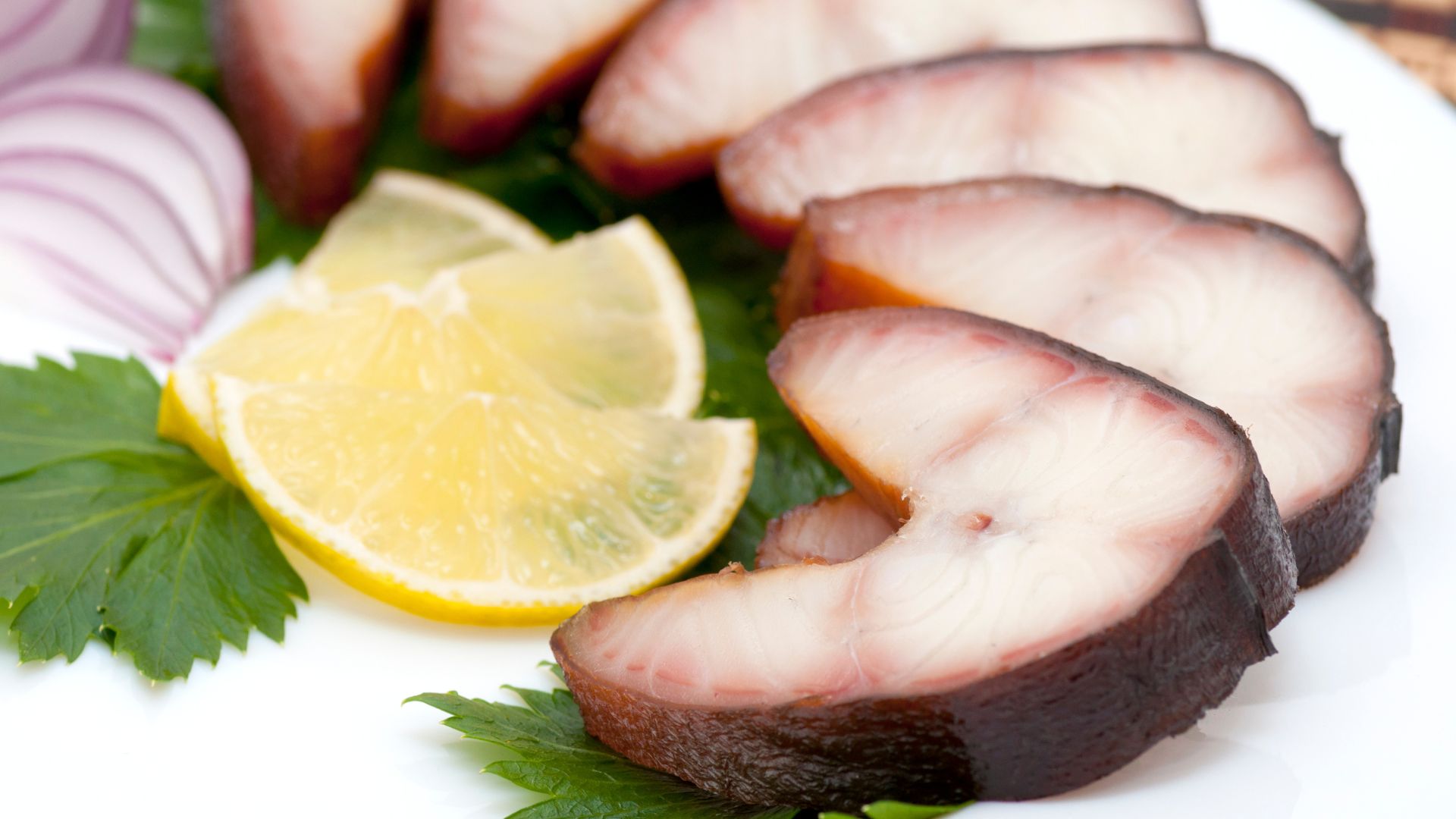
Volendam is the famous one. Marken’s the prettier one. Hoorn and Enkhuizen are the ones the coach tours forget about, and they’re where I’d send you for an overnight. But wherever you stop, find Smit-Bokkum. The family has been smoking eel in Volendam harbour since 1856, and one bite of their dark, silky, oak-smoked fillet on a slice of brown bread will tell you why the IJsselmeer fishermen never quite gave up.
For something heartier, Hotel Spaander’s restaurant is wood-panelled, packed with nineteenth-century paintings that artists traded for bed and board, and serves the kind of mussels that ruin you for mussels anywhere else.
Deer, Van Gogh and 1,800 White Bicycles
Now here’s something most visitors never do. Drive ninety minutes east into Gelderland, to the Hoge Veluwe National Park, and prepare to have your assumptions about the Netherlands quietly dismantled.
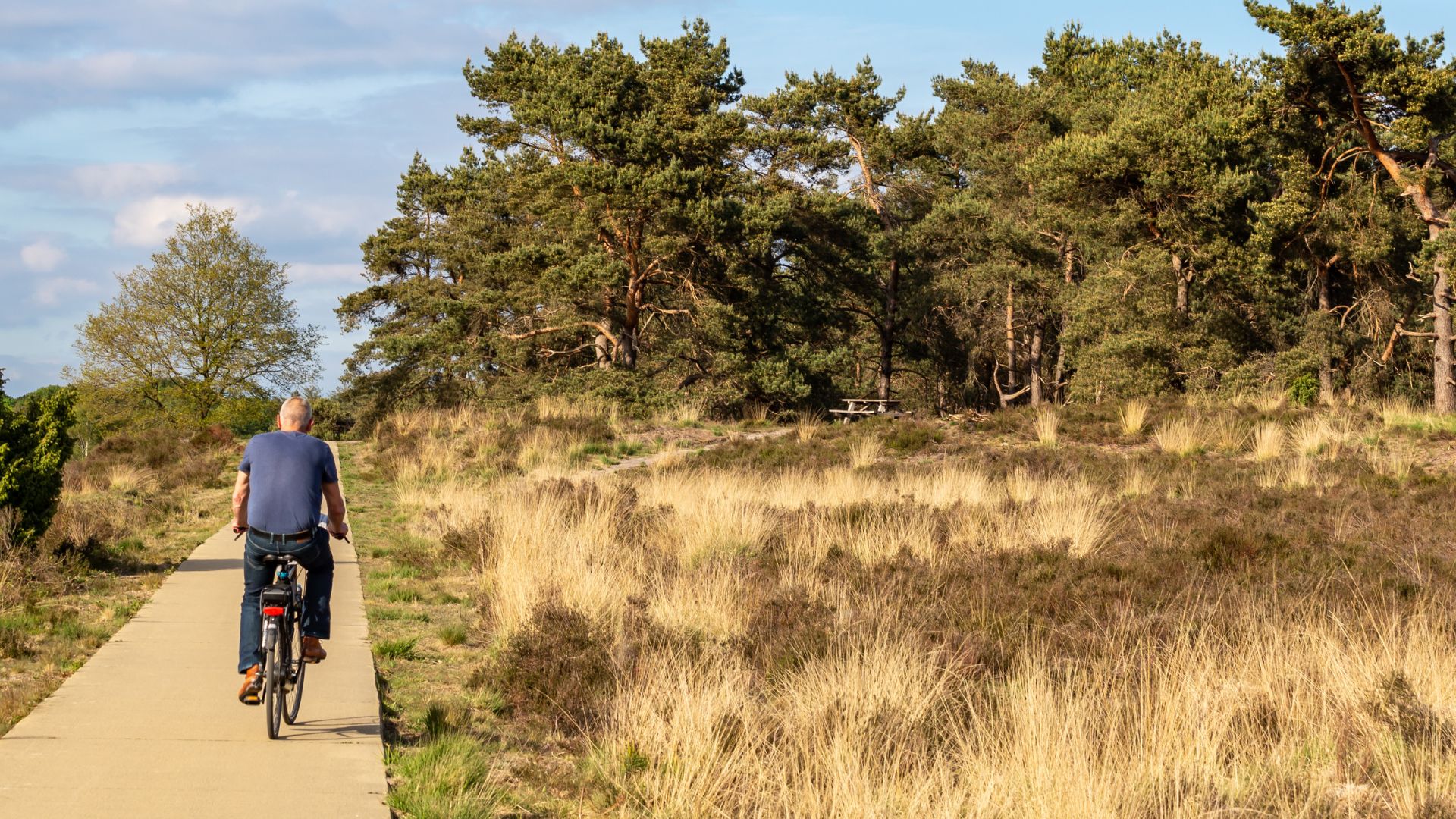
It’s enormous — 5,400 hectares of woodland, heath and drifting sand, with red deer, wild boar and mouflon roaming freely. Park up at the Otterlo entrance, grab one of the park’s free white bicycles (they’ve had them since 1975 — there are 1,800 of them, no locks, no booking, just pick one up and ride), and cycle to the Kröller-Müller Museum in the middle. Inside? The world’s largest private collection of Van Goghs, plus a sculpture garden that’s the equal of any in Europe. All in a forest. With deer wandering past. In Holland.
I told you. It’s not the country you think it is.
Bulbs, Blades and the Postcard Moments
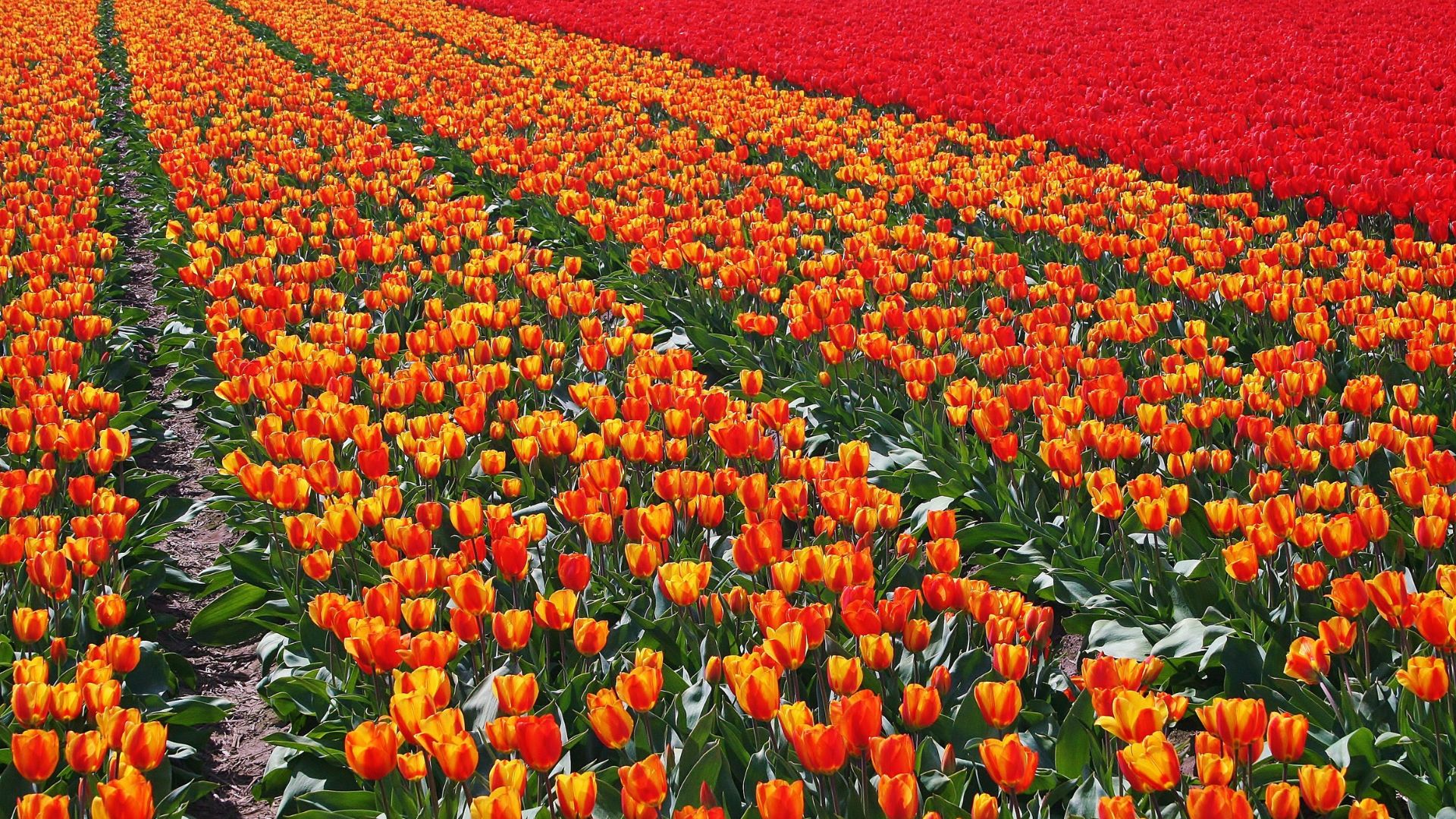
You can’t write about the Netherlands without mentioning Keukenhof and Kinderdijk, so here goes. Yes, Keukenhof is touristy. Yes, it’s only open from late March to mid-May. Yes, it’s also genuinely spectacular and worth the visit — but if you’re driving the Bollenstreek lanes between Lisse and Noordwijk, just stop the van and look. The working tulip fields are a horizontal kaleidoscope and they cost nothing.
Kinderdijk’s nineteen windmills are a UNESCO World Heritage Site and they’re at their best at dawn — before the Rotterdam day-trippers arrive on the river boats. Set the alarm. Make a flask. Thank me later.
Off-grid or On-grid? Pick Your Tribe
Here’s where the motorhome world divides into two.
If your van has rooftop air-con, a satellite dish, a tow-along smart car and the patience for a hook-up bollard, you’ll be in heaven. The Dutch camperplaats network is one of the most developed in Europe — clean, well-priced, frequently in walking distance of a town centre, and almost always next to a body of water. The KCK, ANWB and Campercontact directories list thousands. Show up, plug in, put the kettle on.
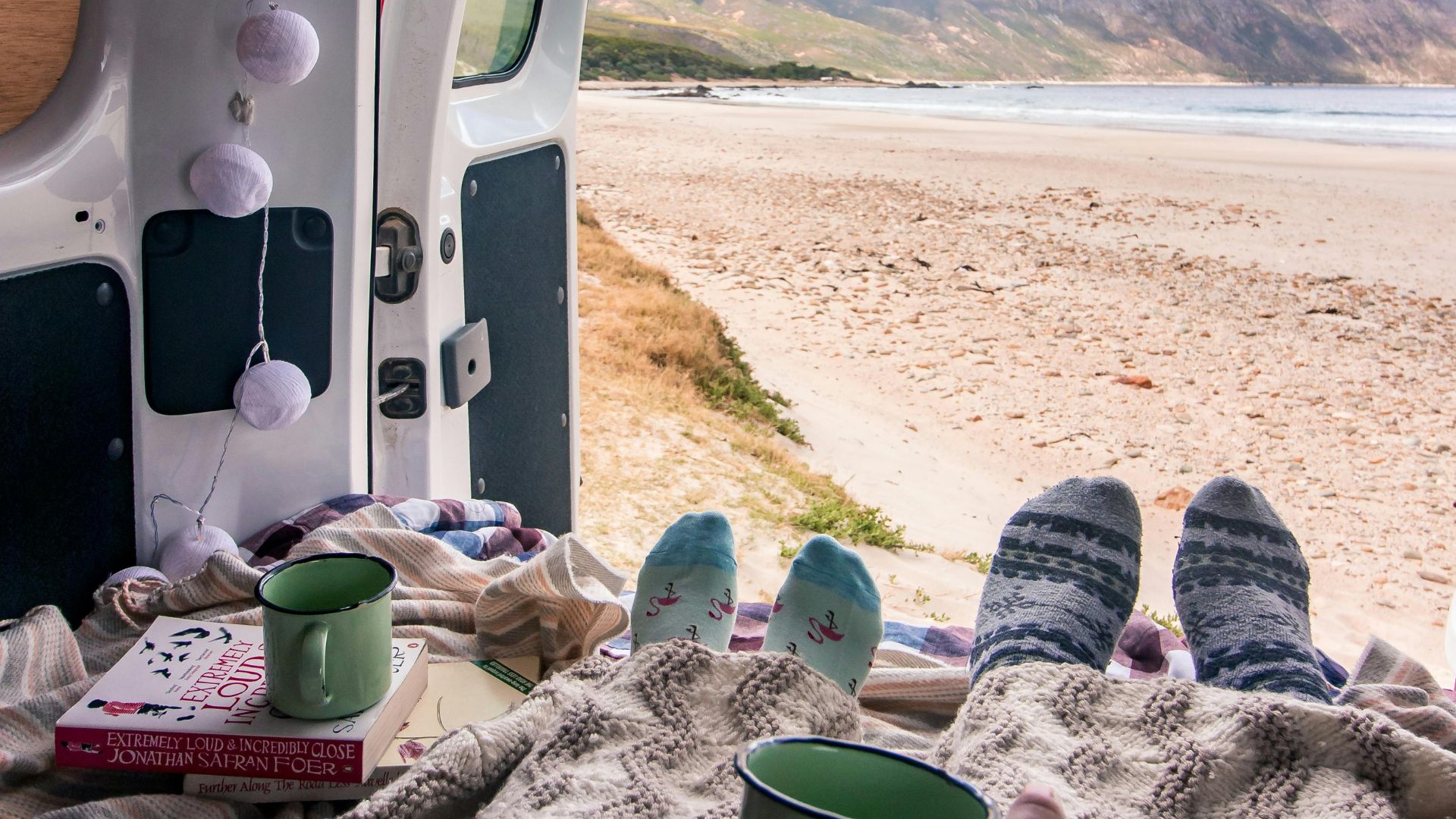
But if, like me, you prefer your overnight to come with silence, stars and a slightly unkempt meadow, the Netherlands does that beautifully too. True wild camping isn’t legal, but the Boerencamping and Campspace networks let you park up on a working farm, vineyard or estate — small-scale hosted pitches, often a handshake and a wave at the herb garden — for a tenner a night. The Frisian back-country and the polders north of Groningen are where you’ll find the version of this country that nobody photographs. Silent. Cathedral-skied. Mine all mine, at least until morning!
The Last Word
As the old saying goes, “Twenty years from now you will be more disappointed by the things you didn’t do than by the ones you did do.” The Netherlands isn’t going anywhere, but the motorhome years for any of us are finite. Don’t keep saving it for next summer. Go.
Bon voyage — or as the Dutch say with their wonderful flair for getting straight to the point, goede reis.
Practical Information
TOP TIPS
- Book your ferry early. P&O, DFDS and Stena all run from Hull, Harwich and Newcastle to Dutch and Belgian ports — prices and availability vary wildly by season, so book the moment you’ve decided on dates.
- Download the Campercontact and Park4Night apps before you leave. Both work offline. Campercontact is the directory; Park4Night is where you find the hidden gems.
- Buy binoculars if you don’t already own them. Between the seals, the bird reserves and the deer in the Hoge Veluwe, you’ll use it daily.
- Cash is increasingly rare. Most camperplaatsen, ferries and attractions take card-only or contactless — bring a Wise or Revolut card to dodge the exchange fees.
- The cycle paths are sacred. Pedestrians give way to bikes, not the other way round. Look both ways before you step off the kerb!
- Don’t try to wild-camp. It’s illegal, the fines are steep, and the alternative — a meadow on a Dutch farm with eggs at the door — is better anyway.
- Texel lamb. Frisian cheese. Smoked eel. Stroopwafels straight off the griddle. Eat the country, don’t just drive through it.
QUICK FACTS
All prices are indicative for the 2026 season. Operators’ fees, opening times and ferry timetables change frequently — confirm directly before booking.
Getting there
https://www.poferries.com — Hull to Rotterdam Europoort, from around £180 each way for a 6m motorhome with two adults
https://www.dfds.com — Newcastle to IJmuiden (Amsterdam), from around £200 each way
https://www.stenaline.co.uk — Harwich to Hook of Holland, from around £160 each way
Where to park up
https://www.campercontact.com — 60,000+ camperplaatsen across Europe, free to browse, paid Pro tier for routing
https://www.anwbcamping.nl — the Royal Dutch Touring Club’s vetted listings, shared with ADAC and TCS
https://www.park4night.com — community-driven app for off-grid pitches and lay-bys
https://www.boerencamping.nl — farm-stay network, around €10–15 a night
https://www.campspace.com — private hosted pitches on woodland and estate land
Typical pitch costs
Simple municipal camperplaats: from €10 a night
Mid-range with electric hook-up and waste disposal: €15–25 a night
Full-service holiday park (peak summer family rate): up to €49 a night
Farm pitch (Boerencamping/Campspace): €10–15 a night
Motorhome hire (if flying in): €90–215 a night, depending on vehicle size and season
Tourist information
https://www.holland.com — the national tourism board (NBTC)
https://www.texel.net — VVV Texel
https://www.visitfriesland.com — for Terschelling and the Frisian coast
https://www.visitveluwe.nl — for the Hoge Veluwe and surrounds
The big sights
https://www.hogeveluwe.nl — Hoge Veluwe National Park, admission around €13 per adult plus vehicle charge
https://www.krollermuller.nl — Kröller-Müller Museum, separate admission, around €25 per adult including park entry
https://www.keukenhof.nl — Keukenhof bulb garden, open late March to mid-May only, around €22 per adult
https://www.kinderdijk.com — Kinderdijk windmills, around €20 per adult
https://www.zuiderzeemuseum.nl — Zuiderzeemuseum, Enkhuizen
https://www.ecomare.nl — Ecomare seal sanctuary, Texel
Wadden Island ferries
https://www.teso.nl — Den Helder to Texel
https://www.rederij-doeksen.nl — Harlingen to Terschelling and Vlieland
https://www.wpd.nl — to Ameland and Schiermonnikoog

Steven Emmett is a campervan blogger and enthusiast based in Buckinghamshire with a passion for uncovering the open road in all its scenic, slow-travel glory. Drawing on years of life on four wheels, he shares honest route guides, kit reviews and the kind of practical know-how that only comes from genuinely living the van life.