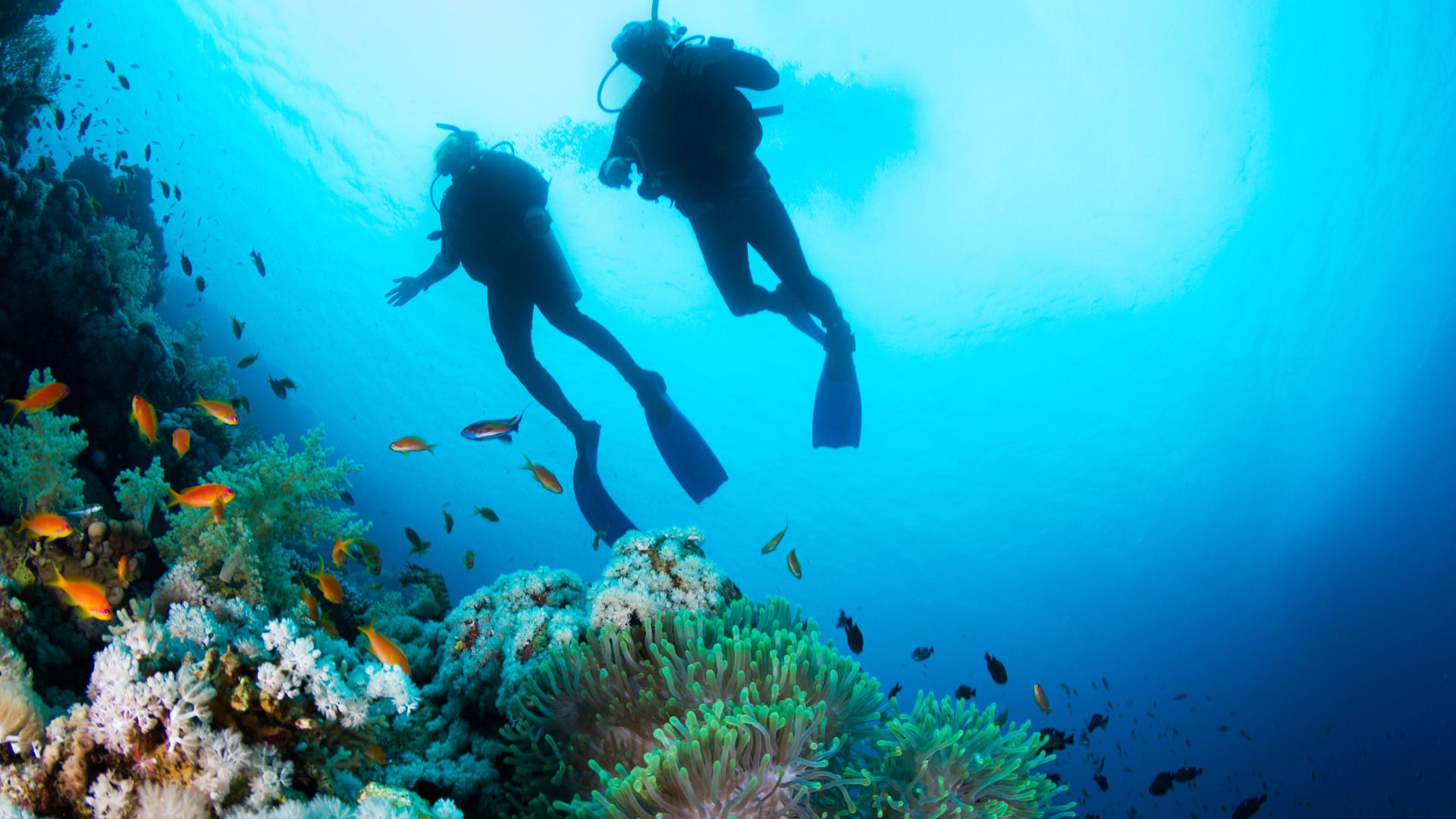
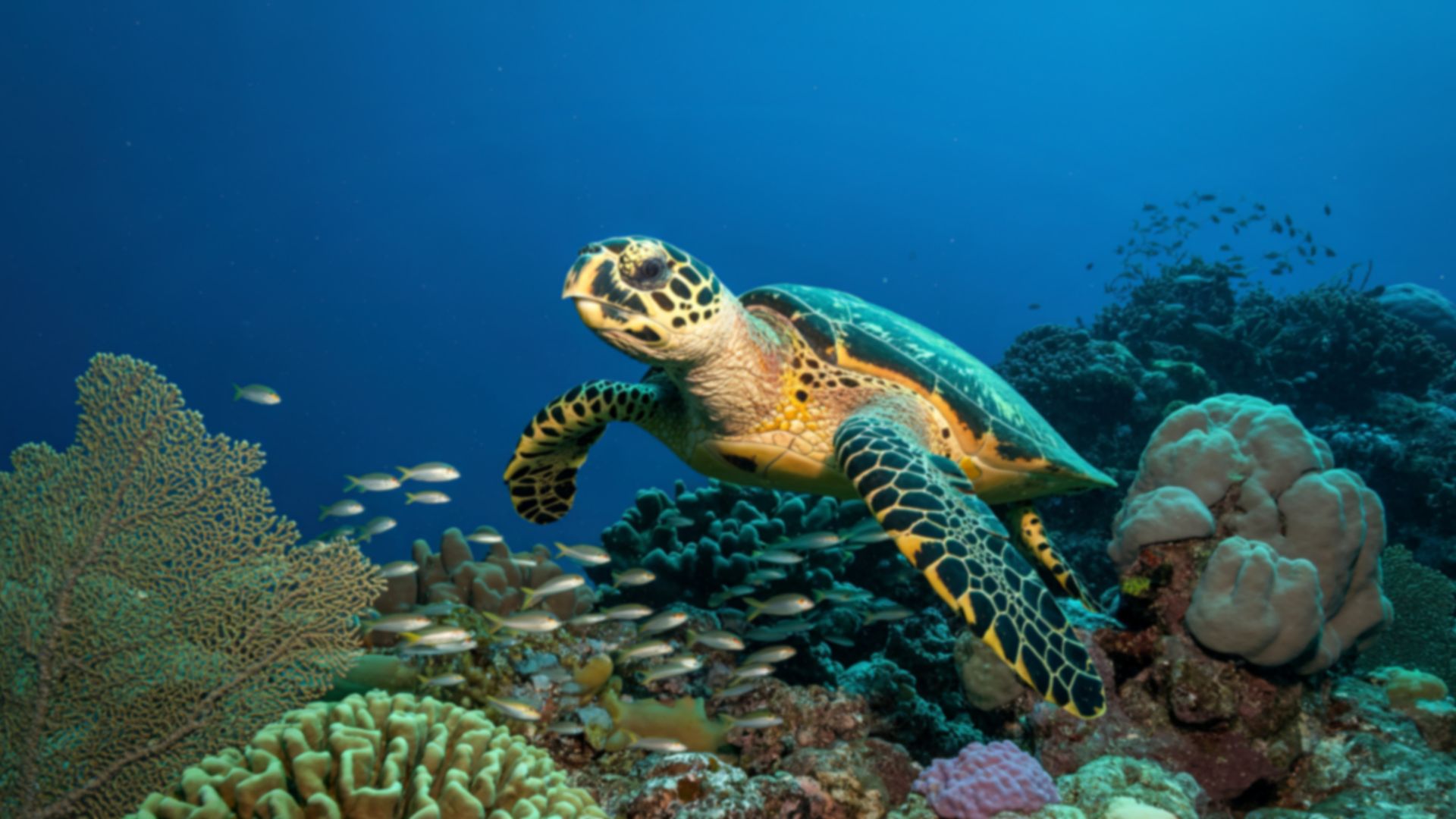
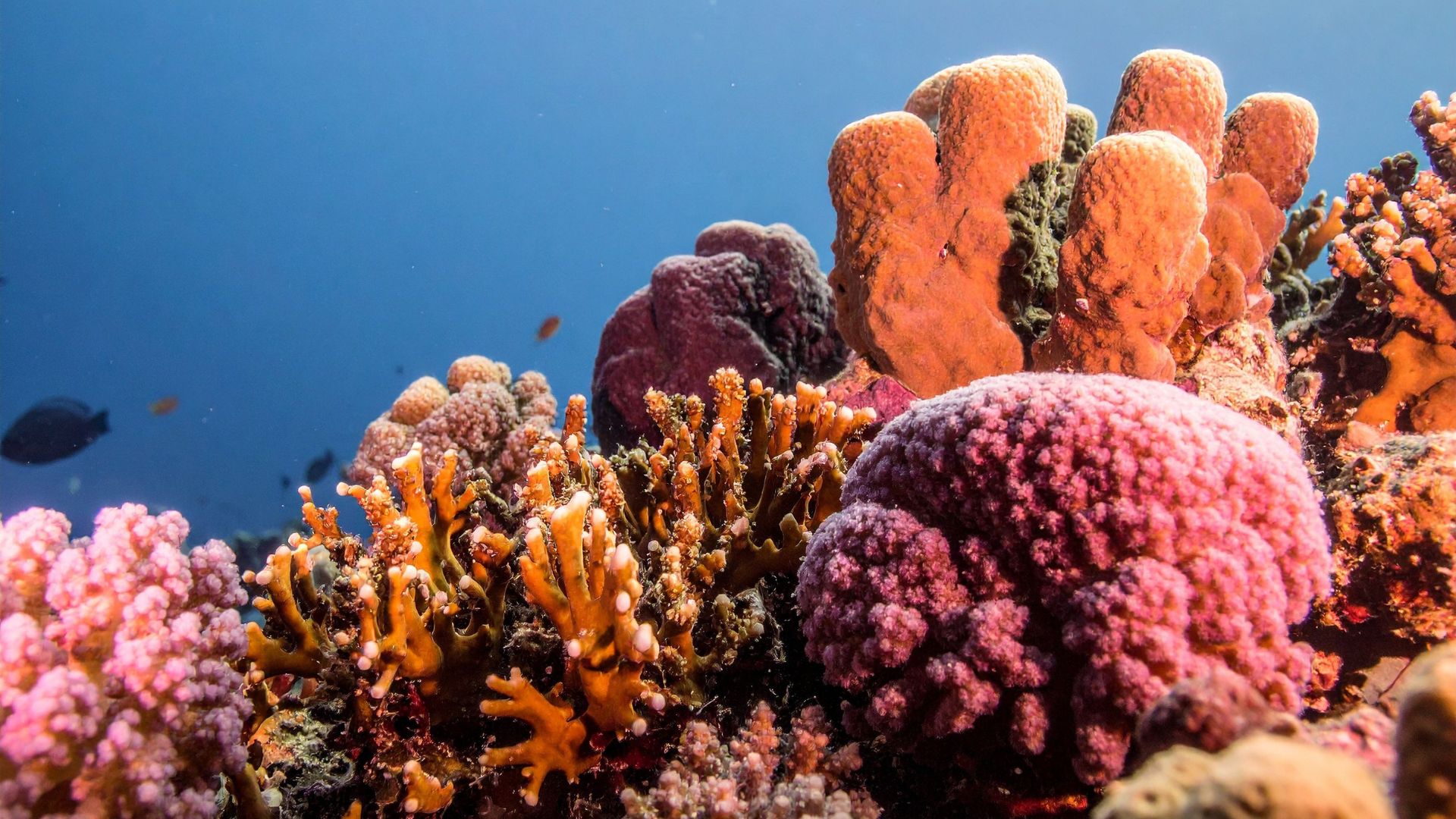
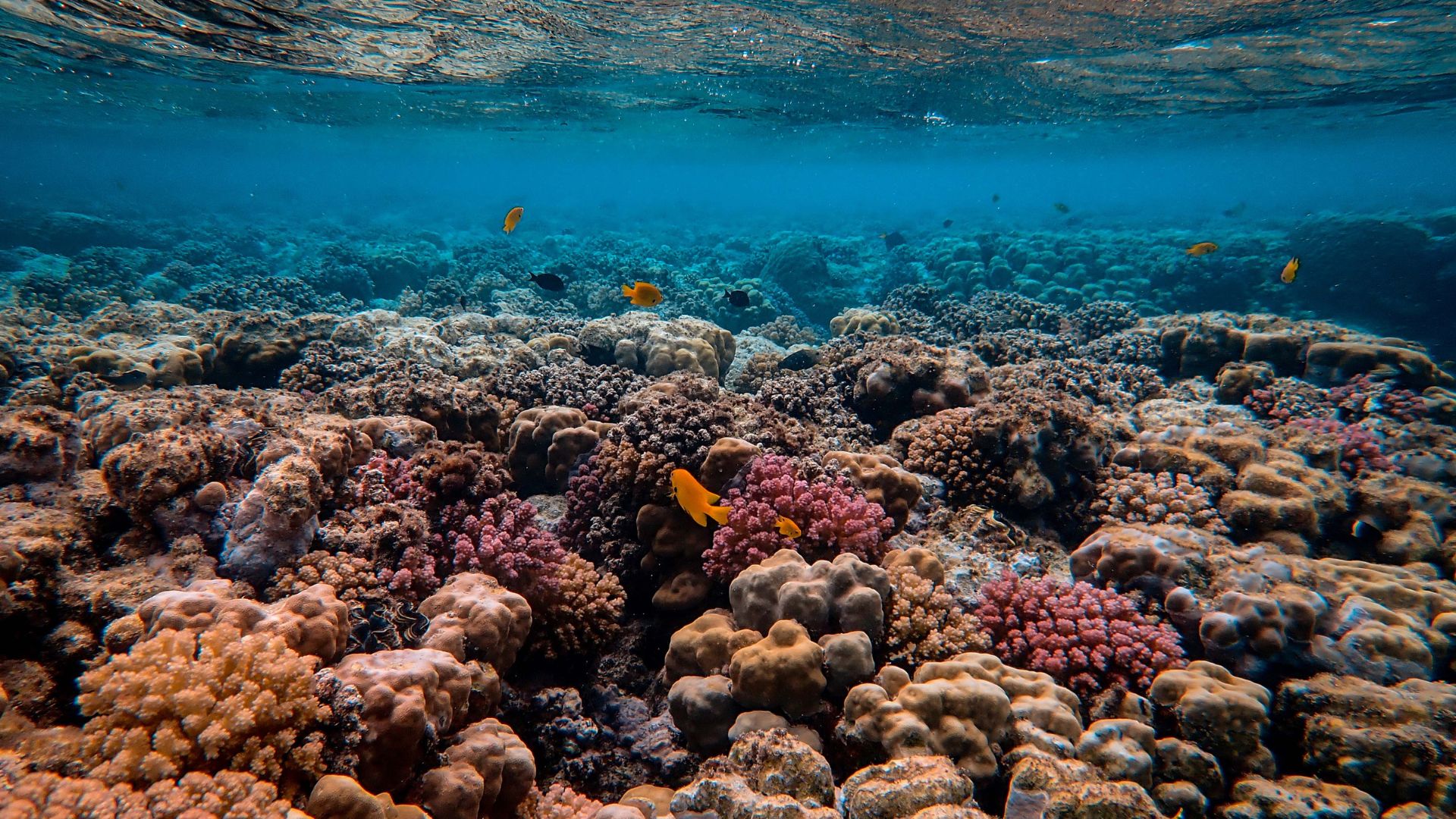
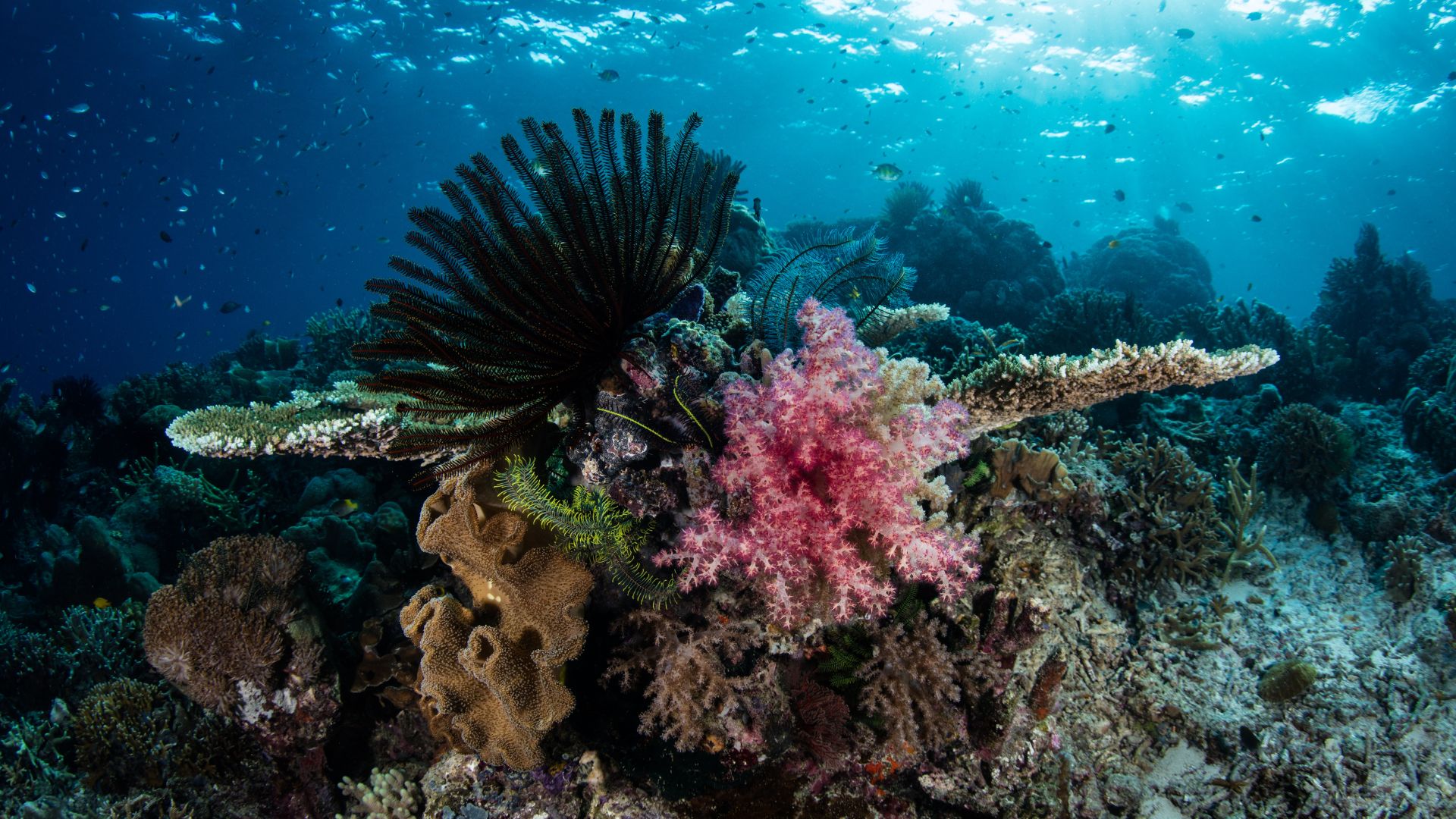
The Coral Triangle encompasses the waters of Indonesia, Malaysia, the Philippines, Papua New Guinea, Timor-Leste, and the Solomon Islands — a region of ocean that contains 76% of the world’s coral species and over 2,000 reef fish species. Indonesia sits at the triangle’s heart, and Indonesian waters provide some of the planet’s most extraordinary diving. The statistics alone are impressive; the experience of descending into these waters and seeing the statistics come alive is something else entirely. The biodiversity is not abstract — you see it on every dive, in the density of fish that obscures visibility, in the variety of soft and hard corals that no Caribbean or Red Sea reef can match, in the encounters with megafauna that have become rare elsewhere.
Raja Ampat represents the pinnacle. The islands of West Papua contain more marine species than anywhere else on Earth, in waters so rich that scientists continue discovering new species with regularity. The fish counts at sites like Cape Kri — 374 species in a single dive, a world record — seem implausible until you descend and start counting yourself. The soft corals display colours that cameras cannot capture, particularly the pink, yellow and purple gorgonians that hang from underwater cliffs. The manta rays and reef sharks appear with frequency that suggests the oceans as they existed before industrial fishing degraded them, and the local conservation work — much of it driven by resorts like Misool, which converted former shark-finning camps into protected reserves — has begun to demonstrate what recovery looks like at scale.
Komodo National Park provides more accessible but no less impressive diving. The currents that flow between the Pacific and Indian oceans concentrate marine life in channels and along walls that support exceptional biodiversity. The manta rays at sites like Manta Alley and Karang Makassar visit cleaning stations with reliability that makes encounters almost guaranteed during the right season. The drift dives through channels like Shotgun and Cauldron require experience but deliver thrills that static diving cannot match — diving feet-first through a current rip that accelerates from one to four knots within seconds, surrounded by reef sharks doing the same. The contrast between Komodo’s warmer northern sites and the colder southern reaches around Padar adds variety; the cold water draws different species and supports the larger pelagics that the warm reefs lack.
The diving options extend across the archipelago. The Lembeh Strait in North Sulawesi specialises in muck diving — the patient search for bizarre creatures (mimic octopus, hairy frogfish, blue-ringed octopus, pygmy seahorse) that hide in sandy and rubble bottoms, where the absence of conventional reef beauty is more than compensated by the strangeness of what does live there. The Banda Islands, central to the Spice Islands history that drew Europeans across oceans, now host some of Indonesia’s least-crowded world-class diving including hammerhead encounters at the right time of year. The islands around Flores provide variety from walls to reefs to macro sites within easy reach of Labuan Bajo. And destinations like Wakatobi and Alor offer world-class diving with substantially fewer visitors than the famous sites receive — particularly Alor, where the local Bajo communities still practise traditional free-diving.
The diving infrastructure ranges from basic to luxurious. The liveaboard operations provide the best access to remote sites — days aboard comfortable vessels, diving four or five times daily, reaching locations that land-based operations cannot. Many liveaboards split their year between Raja Ampat (December to April) and Komodo (June to October), with transition routes through the Banda Sea, Alor and Maumere in between. The premium resort-based diving — Misool in Raja Ampat, Wakatobi Resort, the various Komodo luxury operators — combines excellent diving with accommodation that matches. Diving seasons matter: book well in advance for the prime windows, and check whether your trip falls in the operator’s preferred conditions rather than their shoulder season. For certified divers, Indonesia offers experiences that justify the journey; for non-divers, the snorkelling at many sites — particularly in Raja Ampat’s shallow lagoons and around the Gilis — provides remarkable encounters without the certification requirement.