
Women of Substance: Jax Palmer
Don't Make Yourself Smaller: Jaxs Palmer's Yorkshire Story!
The Piece Hall Trustee, founder of Henrys Ark Management Consultants, Chartered Fellow of the CIPD, and one of the most articulate voices in Yorkshire, on women in leadership. She also, once, wanted to be a journalist. Shannon Palmer meets Jaxs Palmer.
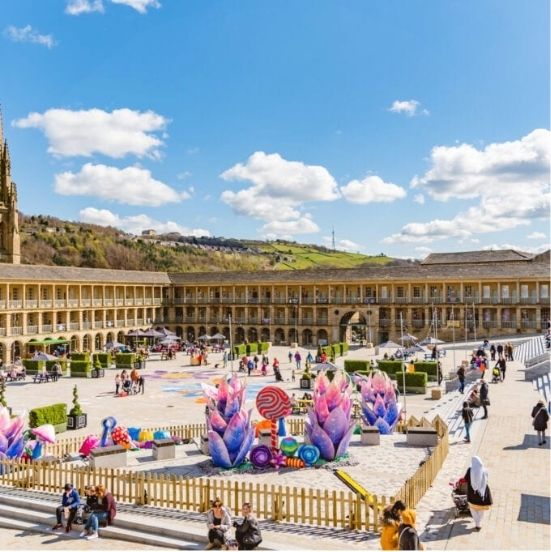
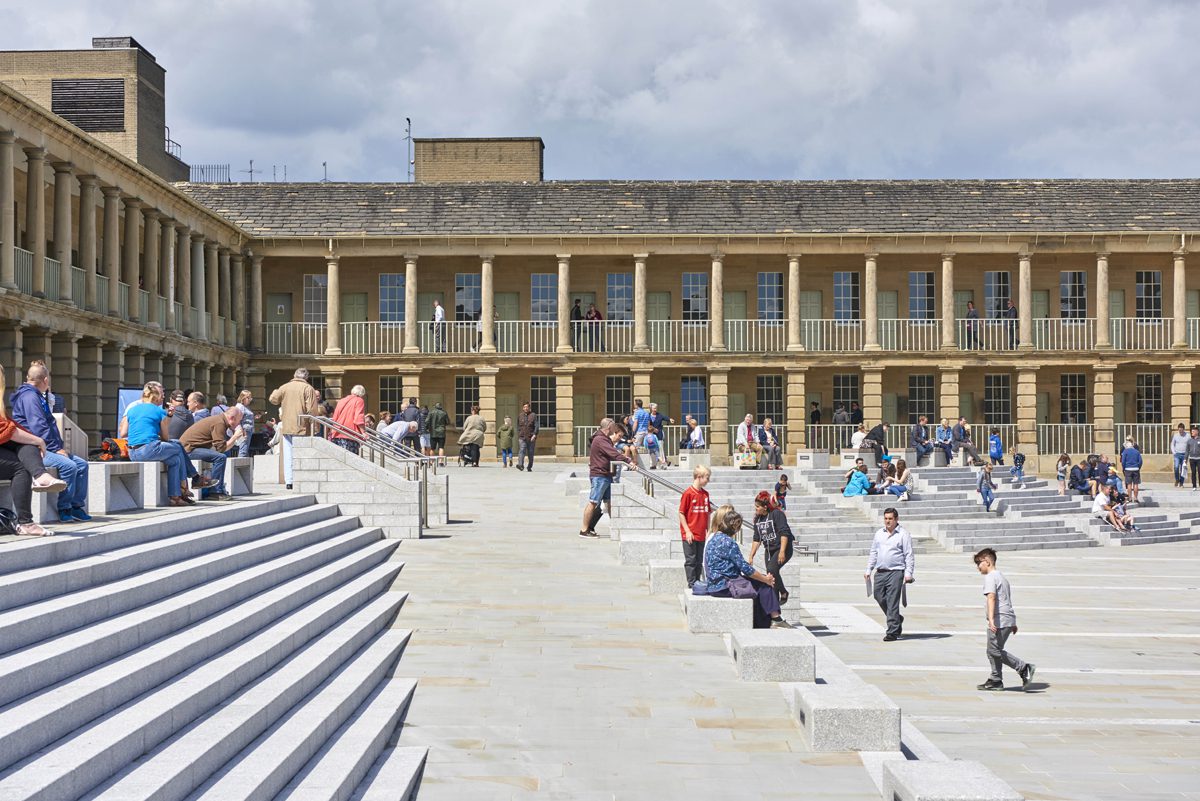
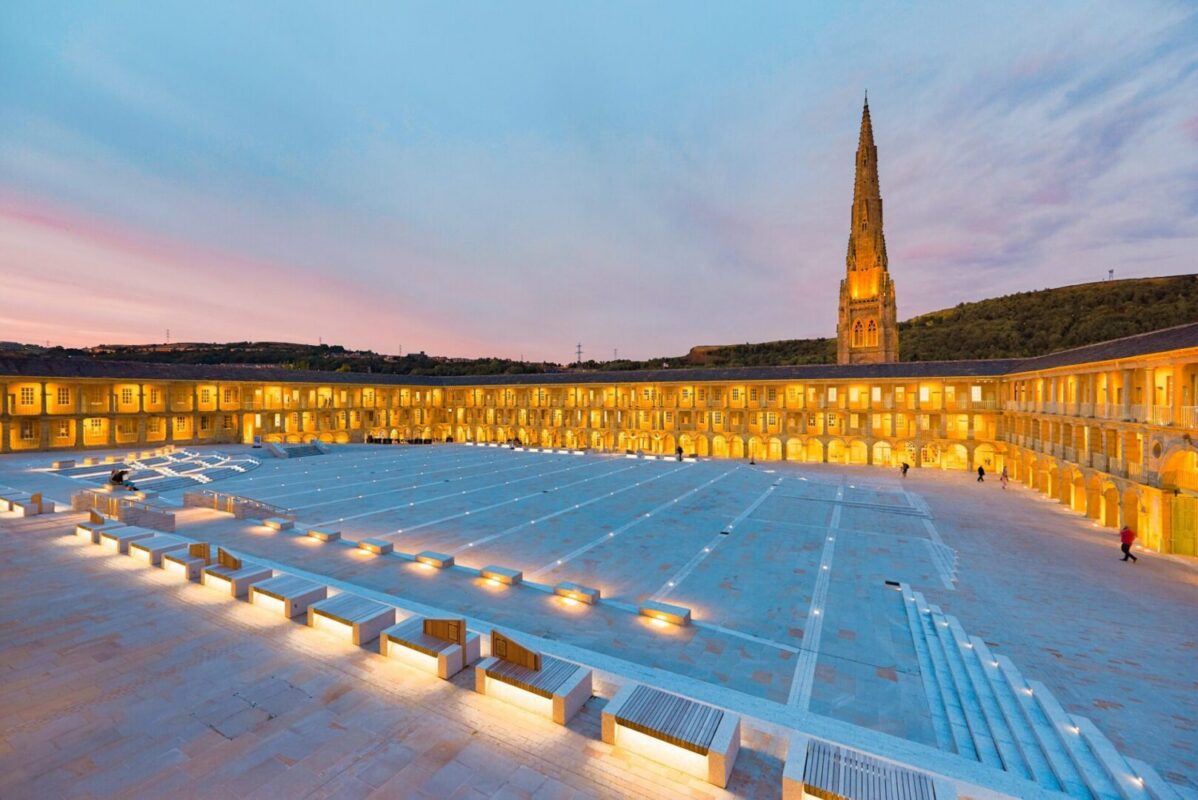
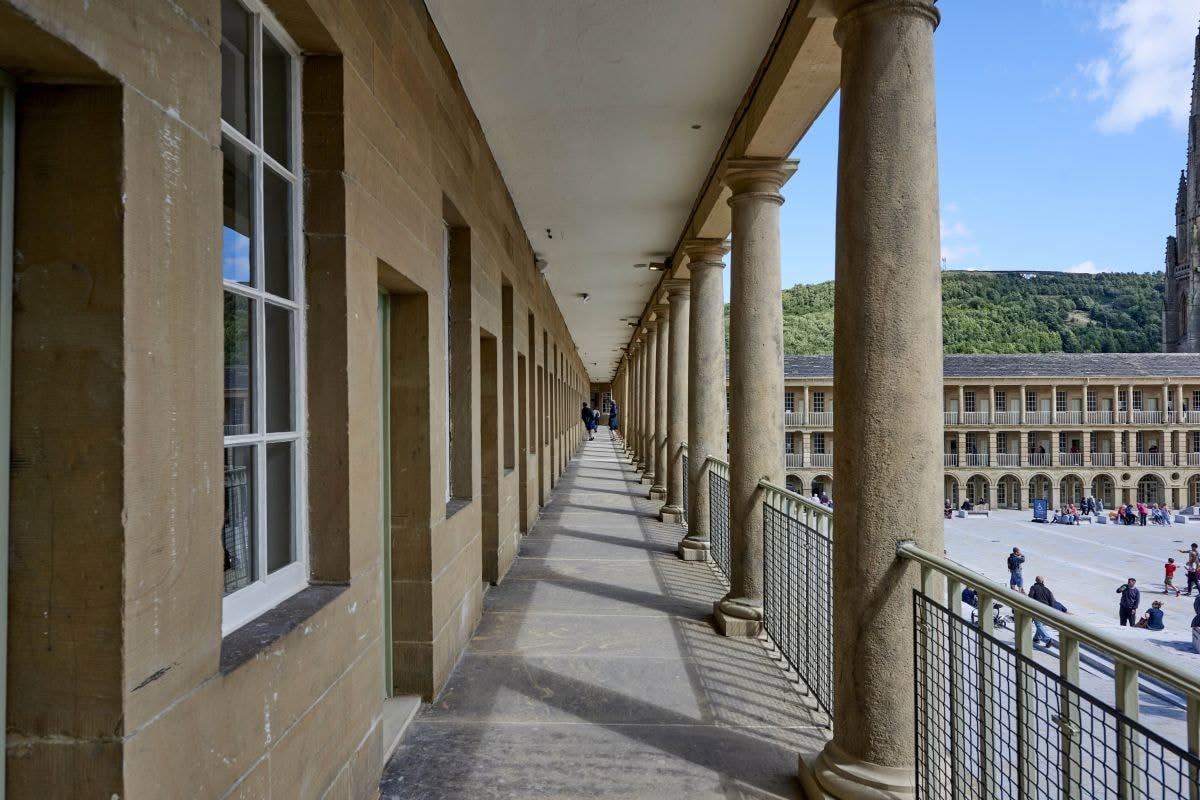
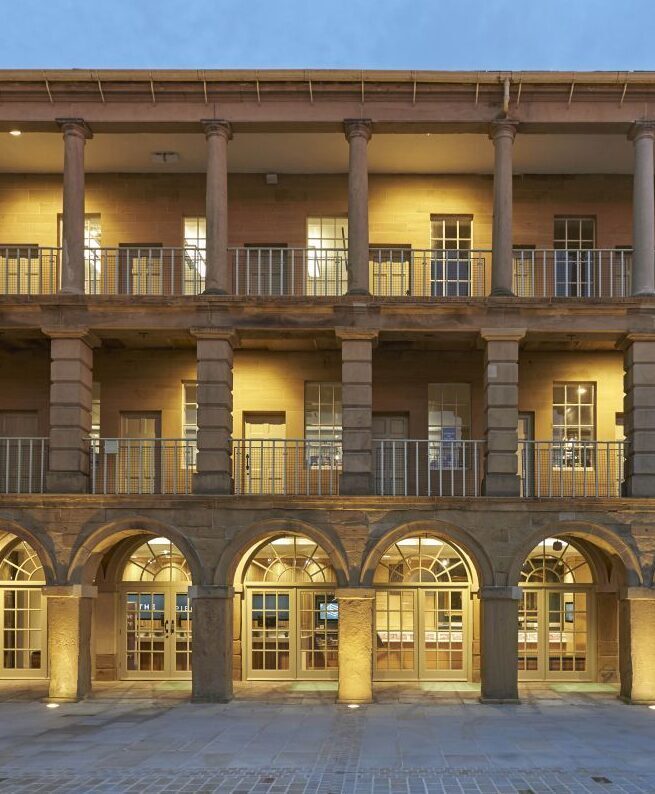
Stand in the centre of The Piece Hall on a quiet Halifax morning and you can hear the past. Three arcaded levels, Arcade, Rustic and Colonnade, rise around a 66,000-square-foot courtyard, and behind each of the 315 doorways once stood a clothier with a piece of woollen cloth thirty yards long, sometimes a fortnight's work, waiting for a merchant's nod.
When this place opened its doors on New Year's Day 1779 — after a silver key, a brass band, and a firework display set off, improbably, by a pigeon, it was already the most ambitious commercial building in the north of England. It is now the only Georgian cloth hall of its scale left standing anywhere in the world. It is Yorkshire's cathedral of trade.
And it is here, beneath the same gritstone arches that watched West Riding clothiers haggle by candlelight, that Jaxs Palmer is helping rewrite the building's next chapter.
The woman across the table
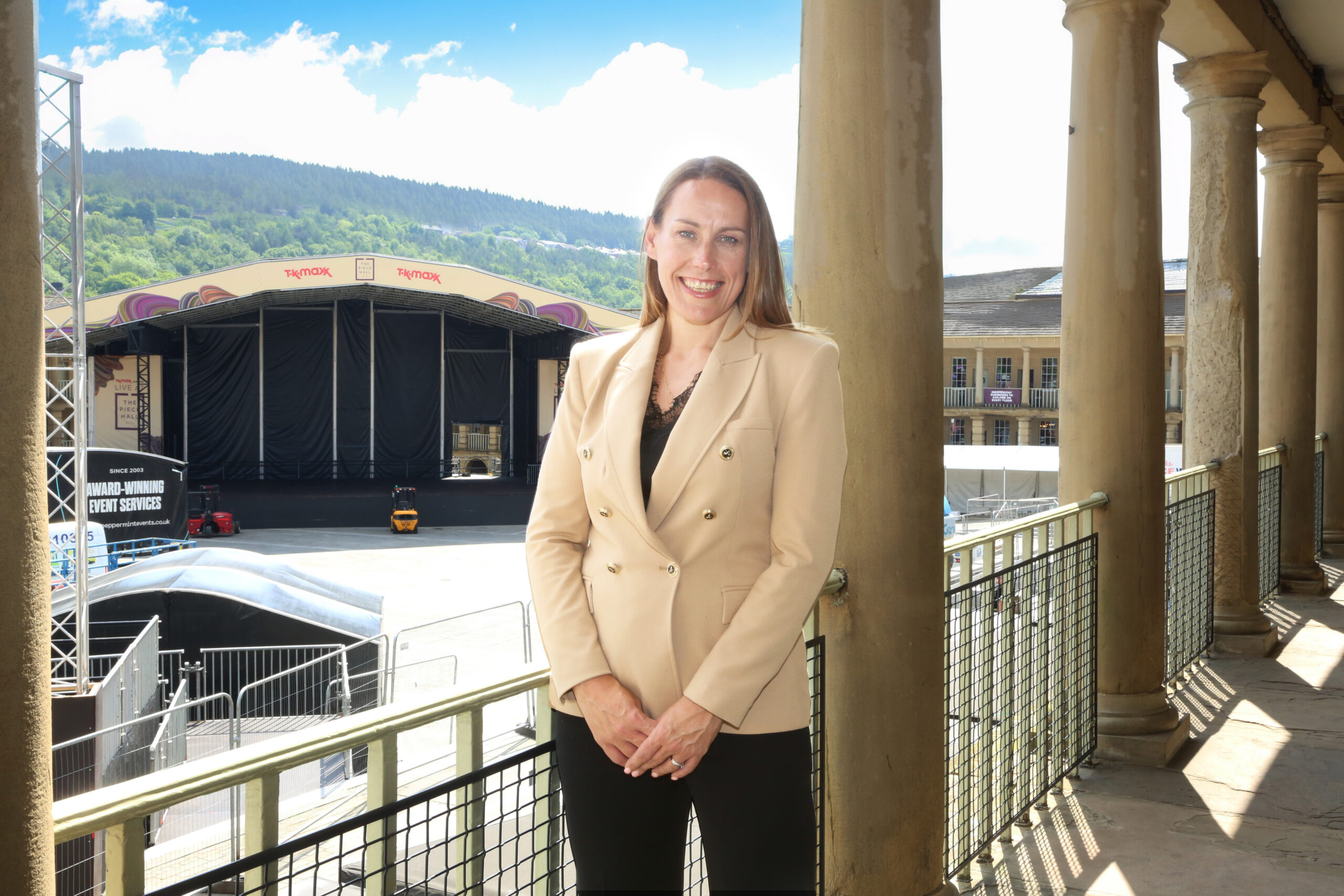
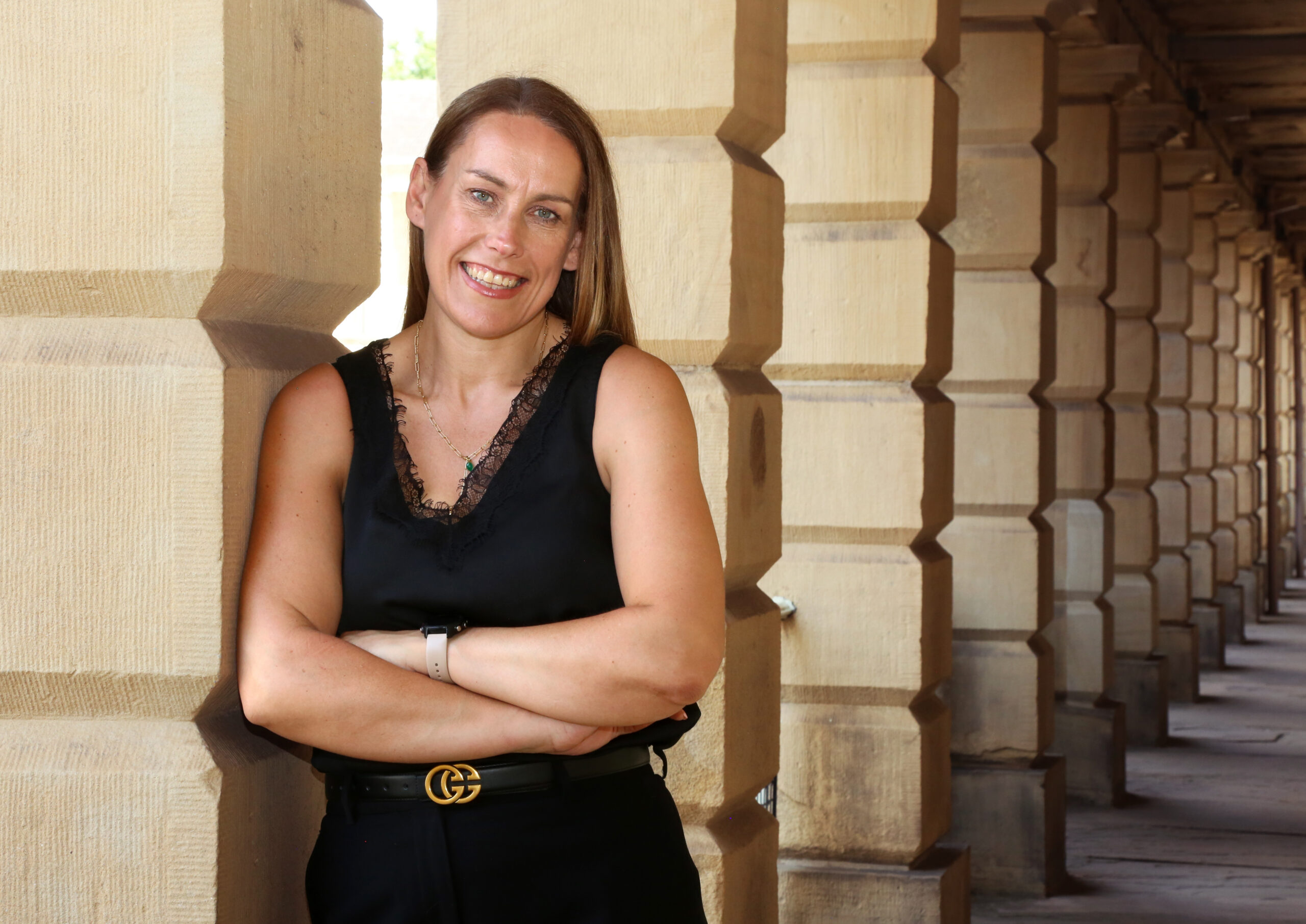
You meet Jaxs and within sixty seconds you have her measure. She is northern, she is funny, she is direct, and she is, and you suspect she would not thank you for the word — luminous. The professional CV is substantial: founder and chief executive of Henrys Ark Management Consultants; Chartered Fellow of the CIPD; HR Director; non-executive director; Trustee of The Piece Hall Trust, sitting on a board chaired by Orphy Robinson MBE, alongside chief executive Nicola Chance-Thompson MBE DL.
Her own professional title anchored in Leadership Development and Empowering Females, reads less like a role and more like a manifesto.
The story behind the manifesto is the most interesting part.
The boys behind the name
There is another part of Jaxs’s story that rarely makes it into the professional biography — she is a mum to two teenage boys, Henry, and Noah. They are, she says, the quiet engine behind everything she does, including the name of her business.
“Henrys Ark came from them. Henry is a keen cyclist — racing nationally, part of a team I now sponsor — and Noah is a taekwondo and running whirlwind. Between the two of them, I’ve learned a whole new set of skills: pit crew mechanic, taxi service to races at ridiculous hours, and, thanks to Noah, a very patient self defence dummy who gets thrown to the floor more often than I’d like to admit.”
She laughs, but the meaning underneath is clear.
“They’re the reason I work the way I do. They’re the reason I push. They’re the reason I want women to take up space. I want them to grow up seeing a mum who didn’t make herself smaller.”

"Never make yourself smaller"
Ask Jaxs what she would never do again, and she does not pause.
"The one decision I'd never repeat — and I'd say this to any woman in leadership, to any young girl coming up — is to not make yourself smaller. Never quieten your voice. When everything within you wants to be seen and wants to have a voice, don’t you allow the masses to silence you and be little you."
She has the rooms in mind where this happens.
"You talk a bit too loud. Northern. You weren't privately educated. What do you know?" She recites the lines, lightly. They have clearly been said. "All those kind of moments that make you feel small instead of actually just being proud. I am northern. I'm proud that I come from a Durham pit village. My dad was a policeman, my mum was a home carer. I'm proud of that. But in my career I kept it quiet. I allowed myself to be embarrassed and belittled."
She pauses.
"My biggest regret is that I allowed that behaviour to happen for longer than I should have done."
The grandmother in Belfast
If you want to understand where the eventual refusal came from, you have to go to Belfast.
“My grandma was a typical Northern Irish matriarch. She grew up beside what they now call the peace walls — they weren’t then; they were simply walls built to keep communities apart. She married an English sailor during the war and faced discrimination because of it. They left and settled in South Shields, his hometown. They were proper working class — shipped over from Ireland with very little, relying on parcels of spare clothes sent from relatives back in Belfast as they built a life renting a single room with a toddler — my Mam.”
She is the influence Jaxs returns to.
“Along with my parents, she built my reserve. She built my resilience. That passion — just do what you want, put yourself out there and see what happens. She’s the one nobody knows about. And she’s the one I think about every day.”
When Jaxs talks about the women whose names everyone in Yorkshire does know — the chief executive of The Piece Hall Nicky is up their on that list, her often unseen hard work in the background working all hours, in London most weeks seeking for funding, worrying about who gets paid and how they will keep the lights on — while often navigating the persistent bias that continues to shape leadership environments for women. There is huge admiration in her voice. But the woman she lifts onto the page first is the one in the photograph nobody else has.
That is, you suspect, how Jaxs does business: by lifting first the people in the room that most others haven’t noticed or have got wrong.
The Quiet Transformation Behind The Arches
Behind those arches, another story has been unfolding — one of resilience, reinvention, and quiet determination
Her work at The Piece Hall – a charitable trust began, quietly, around 2020.
“I came in during COVID, helping in the background. We started to develop what we were really aiming for. And it hasn’t been an easy journey. We don’t charge to enter. We don’t have a car park. We don’t have large reserves. Public funding has reduced over time, which has meant we’ve had to be more dynamic and creative in how we sustain The Piece Hall — alongside generous donations from the public and funding bodies.”
The board has had to be, in her phrase, “really dynamic” in its thinking — and braver still about structure. What The Piece Hall looks like; how it operates; what works and what doesn’t. New trustees were brought in last year: a chairman from the world of music, and others from sectors as varied as music venues, arts, heritage, and place based regeneration. It’s a mixed board with different backgrounds, and it’s working well — focused on doing better things to help grow and sustain the Piece Hall for the future.
About a year ago, that refreshed board sat around a table in London and rewrote the mission and vision.
“We came together under the new chair and said, this is who we are, this is where we’re going. And it was ambitious. To put Halifax on the map. To put The Piece Hall on the map. To get us onto the world stage. We’d always seen ourselves as the exemplary shining star in Yorkshire — and now we thought, no, we’re bigger than Yorkshire.”
The numbers caught up. Loss making accounts turned, recently, to a small profit. More than fifty per cent of the people who work at the venue are female — including the board. “It’s a statistic many organisations would be envious of,” she says, “and as a female leadership coach, it fills me with pride.”
“I’m also really proud of what we’re doing to grow the next generation. The Piece Hall Academy is a big part of that. It’s our way of backing young people — giving them free chances to learn, be mentored and get proper handson experience in music, performance and live events. And with Aaron Casserly Stewart leading it — thirty years in the industry, Grammy winning work, all of that experience — our young people are getting world class support right here in Halifax. That matters. It’s how we make sure the future of this place is even stronger than its past.”
“Every time I walk into The Piece Hall, especially on a summer’s day, I stand on the balcony and look at what we’ve achieved — and smile at the big things still to come.”
Turning fifty
There is a quieter pivot in her story that arrives, as these things often do, with a birthday.
“When I hit fifty — and this was only a year ago — I started to think differently. You spend your career pushing back against criticism, but there comes a point where you decide to stop shrinking yourself. I asked myself: am I going to allow this self defeating behaviour to continue? And I didn’t.”
There was an idea she had been carrying for years but had never had the confidence to push forward — so Elevate Female Leaders was brought to life and became the natural next chapter — a space for women who want to lead without shrinking themselves.
“People think it’s bizarre because they see me as confident. But I was frightened of failure. Frightened of not pleasing people. And I just parked that and worked through it. What if I fail? Well — I’ve failed before. I’ve got over it. What if I make a success of it?”
The “what if” mindset, she says, has become the engine.
The barriers she still sees
Jaxs has worked across leisure and hospitality, retail, sales, and, for the best part of a decade, in construction. The barriers, she says, were not where outsiders would expect them.
“I faced more barriers in the hospitality sector than I ever did in construction. I was at a Tier 1 firm — they’d done a lot of work on female inclusion over the years. I worked with a lot of men: engineers, designers, quantity surveyors — who were, in the main, considerate, decent people. There’s a safety culture, which means there’s a caring culture.”
The worst of it, she says, was in sales and hospitality.
“Misogyny and sexism of the worst kind. Harassment of the worst kind. Some of it quite dangerous. And it wasn’t one place — it was across several roles early in my career, in sectors that hadn’t yet caught up with the world we were trying to build.
‘You can’t do that because you’re a woman.’ ‘Sit there, little girl, know your place.’ ‘Go and make the tea.’
I’m fifty now, and it has made me very resilient. But what worries me is that some of that behaviour is creeping back in. We spent years trying to get rid of it. My nieces and my friends’ daughters shouldn’t have to face it — but they do.”
The newer barriers are quieter and harder to name.
“The meeting set for five o’clock on a Friday in London. The childcare unfriendly diary. The double bind — ‘be more assertive’, but the moment you show authority, it’s ‘oh no, that’s a bit aggressive for a woman’. It’s not unique to women, but my lens as a female means I see it. I’m a bit of a battle fighter. I go into battle for people when I see them face those barriers.”
A slice of Yorkshire
Jaxs’s slice of Yorkshire is not entirely an obvious one.
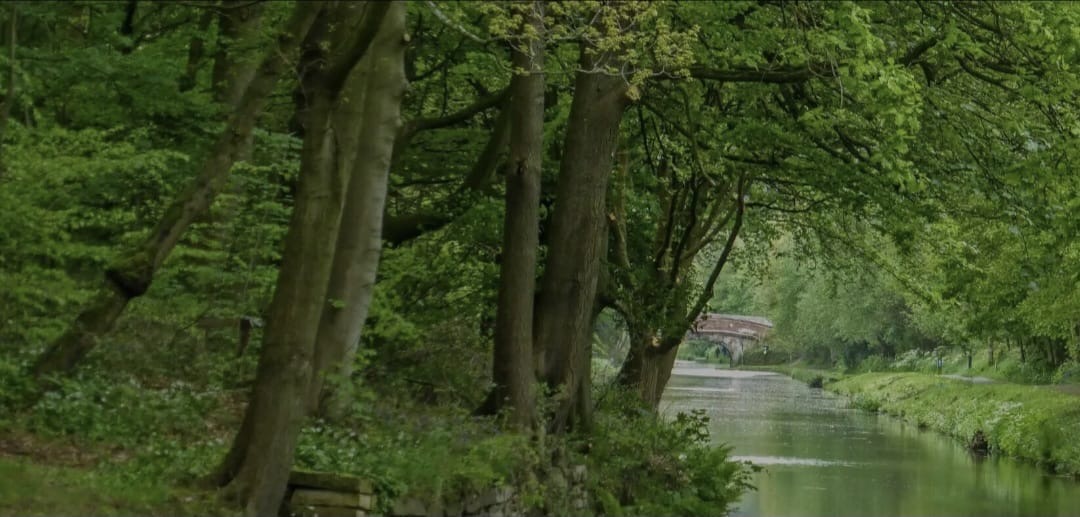
"The canal at Brighouse is my go-to for those inspirational moments. You get on at Brighouse and you can go through Halifax, through Mytholmroyd, through Hebden Bridge, through Todmorden, all the way to Littleborough. It's the most underrated part of Calderdale. If you're having a bad day, go for a walk or a run on the canal. If you need to think, go on the canal. I defy anybody to walk it for ten minutes and still feel unhappy."
Movement, she says, is her anchor.
“I run, I do CrossFit — it’s how I reset. It’s where I get my head straight. The canal, the moors, the hills… Yorkshire gives you space to breathe.”
Her perfect Yorkshire day out is Whitby: the length of the beach, fish and chips at The Magpie, an ice cream at the end. Or, more recently, Oliver’s Mount at Scarborough, with what she calls one of the best views in the county. Yorkshire has something for everyone, whether it’s the beach, a small, secluded village, the moors or a forest walk. Her favourite food, immovable since childhood, is mince and dumplings with mint sauce. Only her mother makes it properly.
"I wanted to be a journalist"
At the end of an hour that has covered grandmothers and boardrooms, discrimination and the world stage, she lets a different sentence slip out.
“I wanted to be a journalist. That was the plan. But life took a turn, I studied business instead, and I built a career in HR to make a living — not because it was my passion.”
She says it lightly. She is not regretting it; she is too clear eyed for that. But the sentence does what good sentences do: it sits in the room for a moment afterwards.
The advice she gives to young women coming up — and she gives a lot of it — is built directly out of that sentence.
“Don’t let anybody put you down. Don’t let other people define who you are or what you should do. Work somewhere whose values match yours. And if the culture or job doesn’t reflect you, walk away. Don’t sit and wait for it to change.”
The Piece Hall: A room of one's own
When you visit the Piece Hall this summer my advice is walk slow. Touch the gritstone. Look up at the rusticated piers, the Tuscan columns, the precise mathematics of an eighteenth century that believed in commerce as a civic theatre. Remember the pigeon and the pyramid. Remember the building was saved, in 1972, by a single council vote.
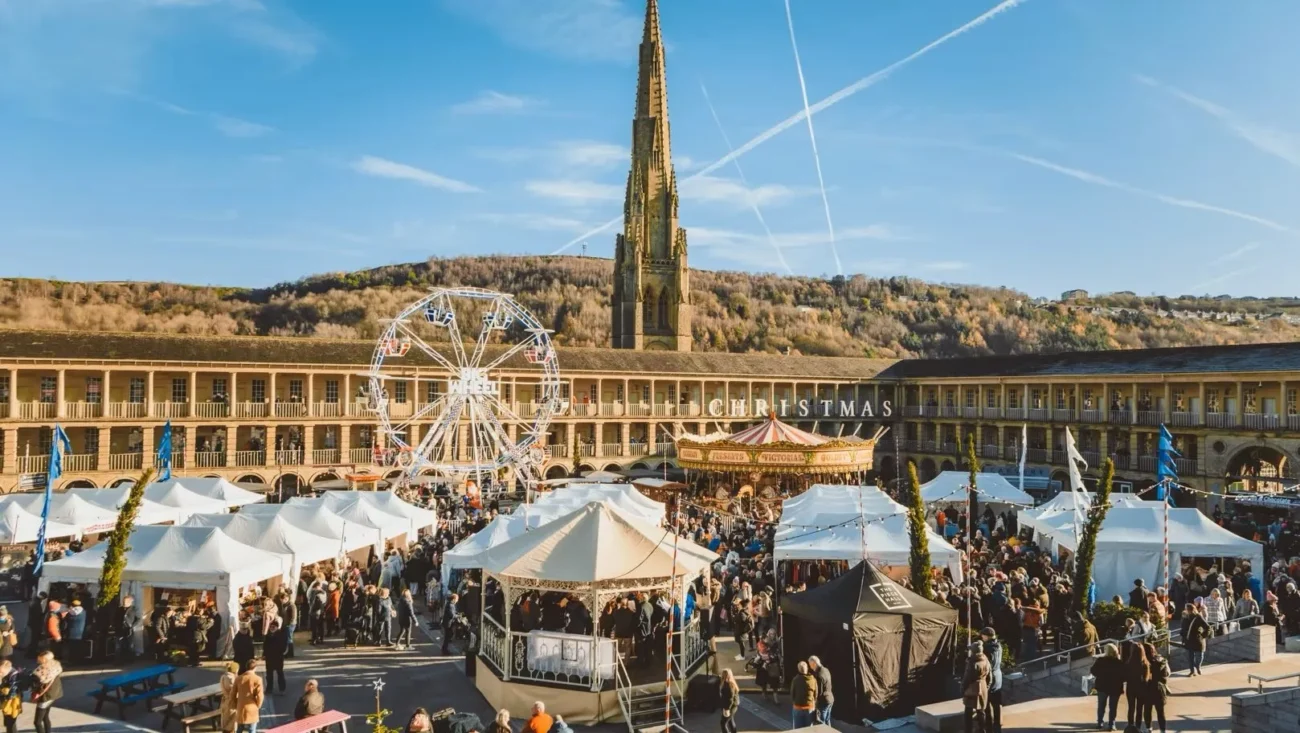
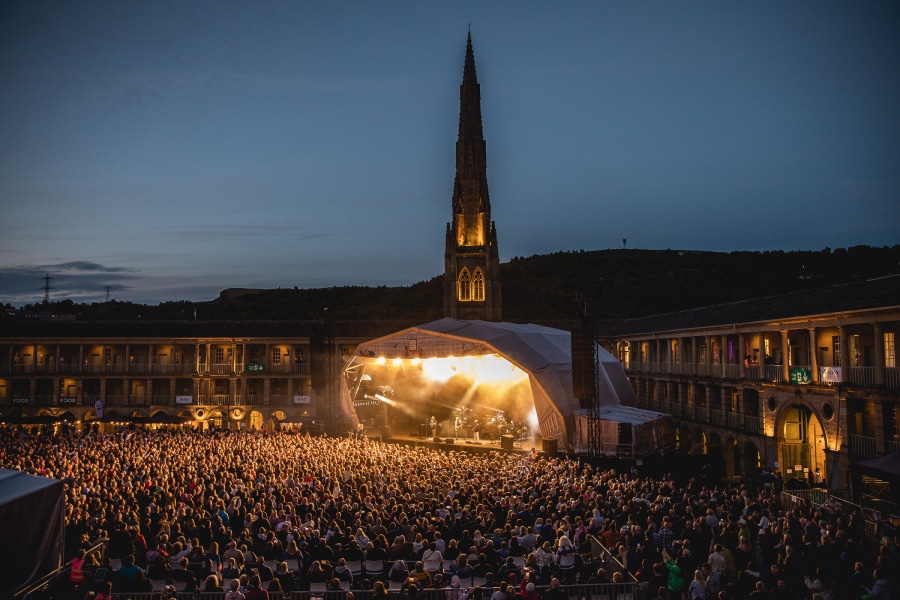
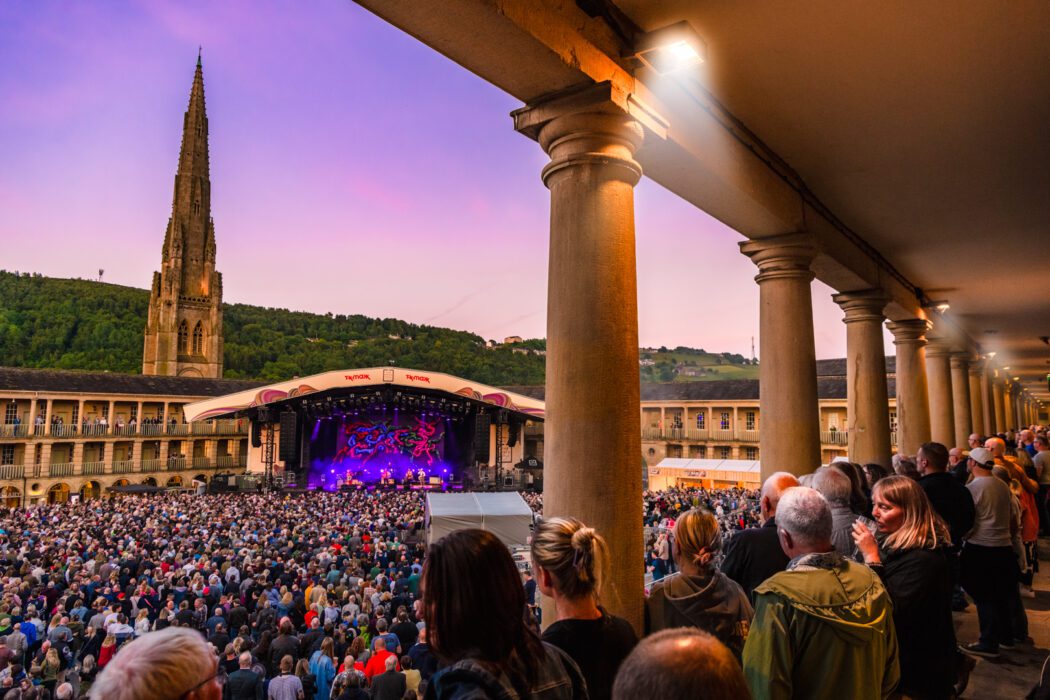
But the building is no relic behind glass. The courtyard that once rang with the haggle of clothiers now fills, every summer, with something just as loud. This year TK Maxx presents Live at The Piece Hall brings forty-two open-air concerts beneath the arches, the courtyard turned arena for the likes of Madness, Paul Weller, David Byrne, Shed Seven, Embrace and Billy Ocean. In December the place becomes a wintry wonderland of its own: six weekends of Christmas markets and more than fifty independent stalls, a vintage carousel and a big wheel, community choirs, local schools and up and coming local talent on the bandstand beneath the biggest Christmas tree they can fit under the sky.
For the rest of the year The Piece Hall simply gets on with being itself. The 315 former traders rooms are now independent shops, boutiques and makers’ studios; there are bars, cafés around the colonnade, regular artisan and food markets, craft workshops, heritage tours, and, on the ground floor, The Piece Hall Story, where the building tells its own. Entry, as Jaxs is quick to point out, is free.
And know that somewhere in the building, in a meeting room, or a quiet corner of the courtyard… A Trustee called Jaxs’ Palmer is making sure the next two centuries belong, in part, to the people who until now were not always given a room of their own.
That, in the end, is the Yorkshire story — and the one Jaxs Palmer is still writing.
© The Travelling Telegraph

Shannon Palmer is The Travelling Telegraph's Yorkshire blogger with a passion for uncovering the county that most visitors never get to see. Drawing on years of life across God's Own County, she shares honest guides, hidden discoveries and the kind of local knowledge that only comes from truly being there.