
Vatican City: A Sovereign State of Wonders
The world’s smallest country contains its greatest concentration of artistic treasures — a guide to navigating the heart of Christendom
The Vatican is not merely a museum or a church or a pilgrimage destination — it is a sovereign state, the world’s smallest, ruled by an absolute monarch who happens also to be the spiritual leader of 1.3 billion Catholics. Within its 44 hectares lie treasures that would be the envy of any nation: the Sistine Chapel ceiling, St Peter’s Basilica, the Vatican Museums’ collection of antiquities and Renaissance masterpieces, gardens that have provided contemplative space for popes since the Middle Ages. To visit the Vatican is to confront the accumulated power — spiritual, political, artistic — of two millennia of Christianity.
St Peter’s Basilica
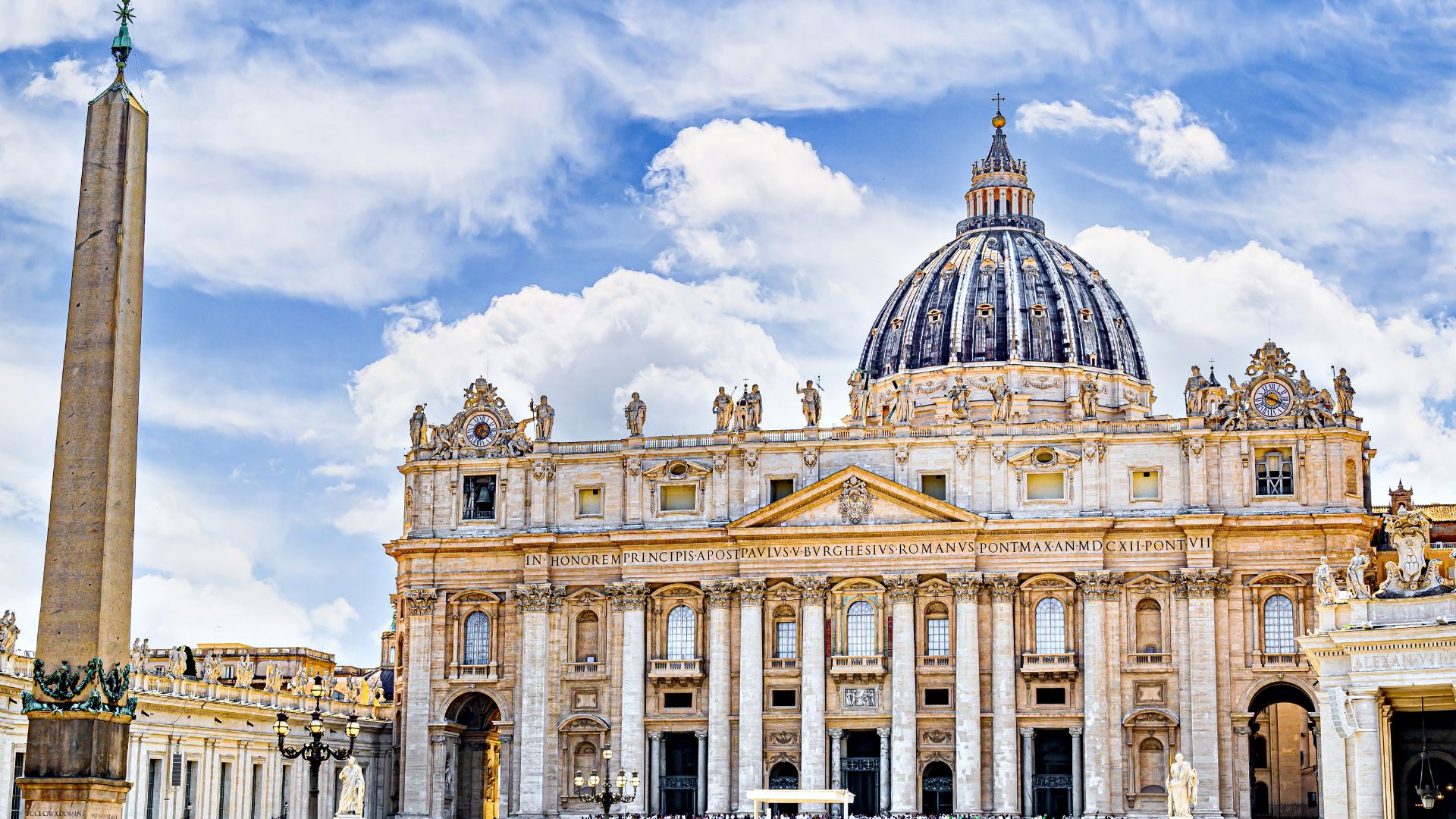
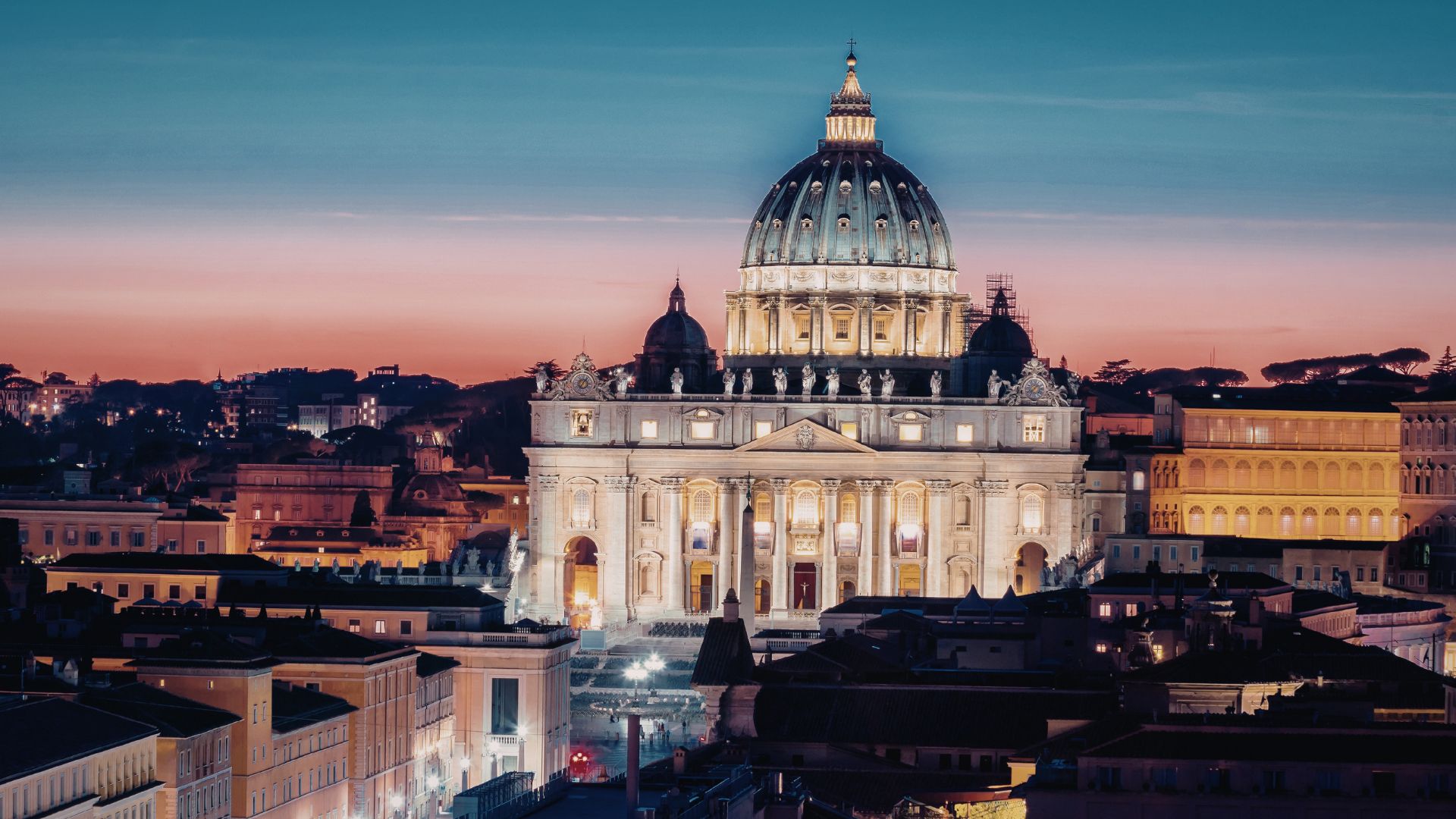
The largest church in Christendom occupies the site where Saint Peter, the first pope, was martyred and buried in Nero’s circus. The current basilica — the second on the site — took 120 years to build and involved virtually every major architect and artist of the Renaissance: Bramante designed the initial plan, Raphael and Sangallo modified it, Michelangelo designed the dome that defines Rome’s skyline, and Bernini created the theatrical approach and the baldachin that crowns the papal altar.
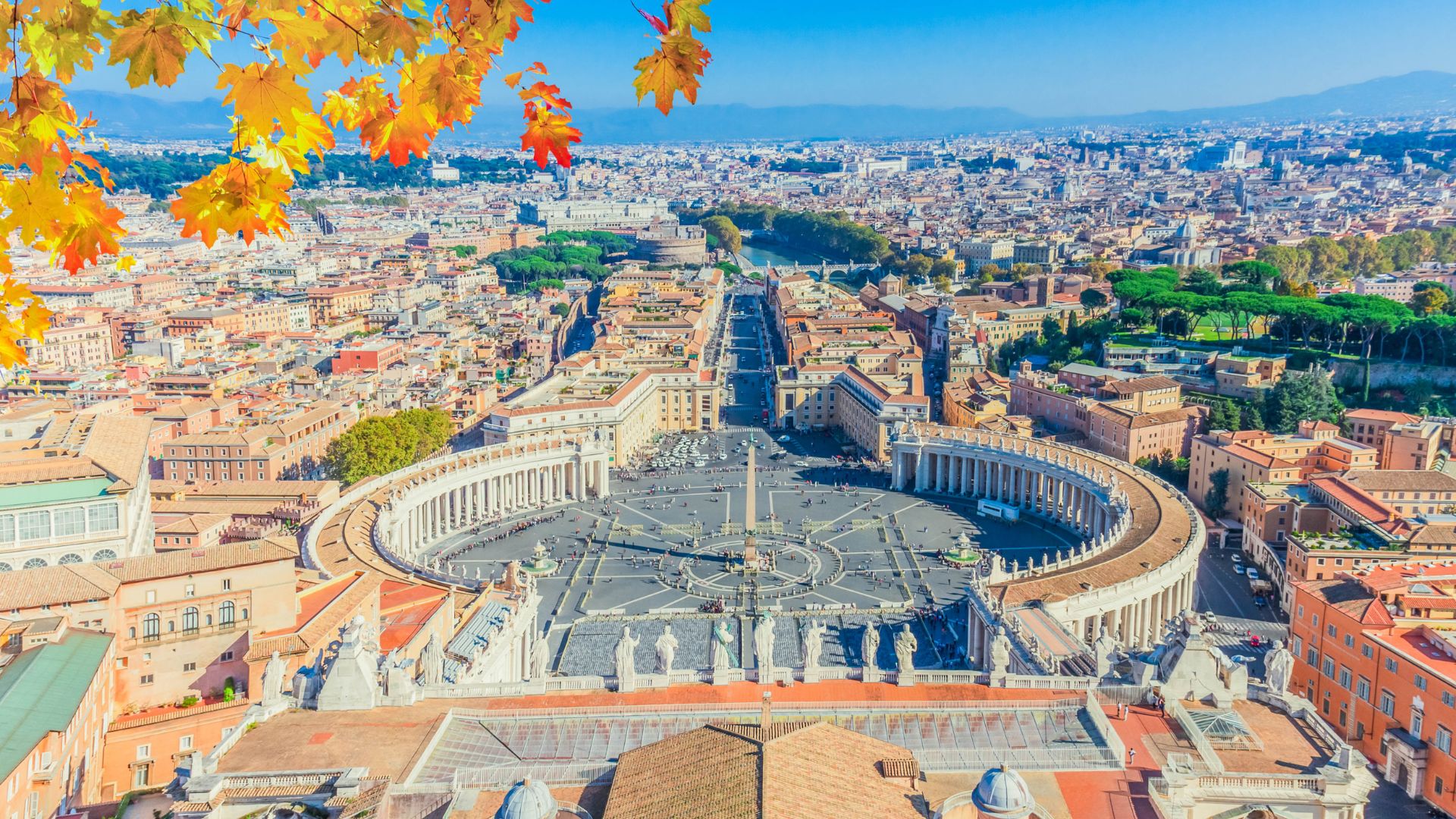
The scale overwhelms. The nave stretches 186 metres from entrance to apse; the dome rises 136 metres from floor to lantern; the letters around the interior are each two metres tall. Floor markers indicate where other famous churches would fit inside — St Paul’s London, Notre-Dame Paris — and still leave room to spare. And yet, despite the scale, the proportions are so perfect that the building feels harmonious rather than oppressive. Bernini’s colonnade embraces arriving pilgrims like the arms of the church itself; the light through the dome illuminates the altar with theatrical precision; Michelangelo’s Pietà — carved when he was 24 and the only work he ever signed — offers human tenderness amid the institutional grandeur.
The grottoes beneath the basilica contain the tombs of popes from Peter to the present, though the excavations beneath even those — the scavi, accessible only by advance booking — reveal the original 4th-century basilica and, archaeologists believe, the bones of Saint Peter himself. To descend through the layers is to descend through history: Renaissance floor giving way to medieval foundations giving way to Roman cemetery, and finally to a simple grave that tradition identifies as the apostle’s resting place. Whether you believe or not, standing beside that grave — directly beneath the papal altar, directly beneath Michelangelo’s dome — induces a kind of awe that has nothing to do with architecture.
The Vatican Museums
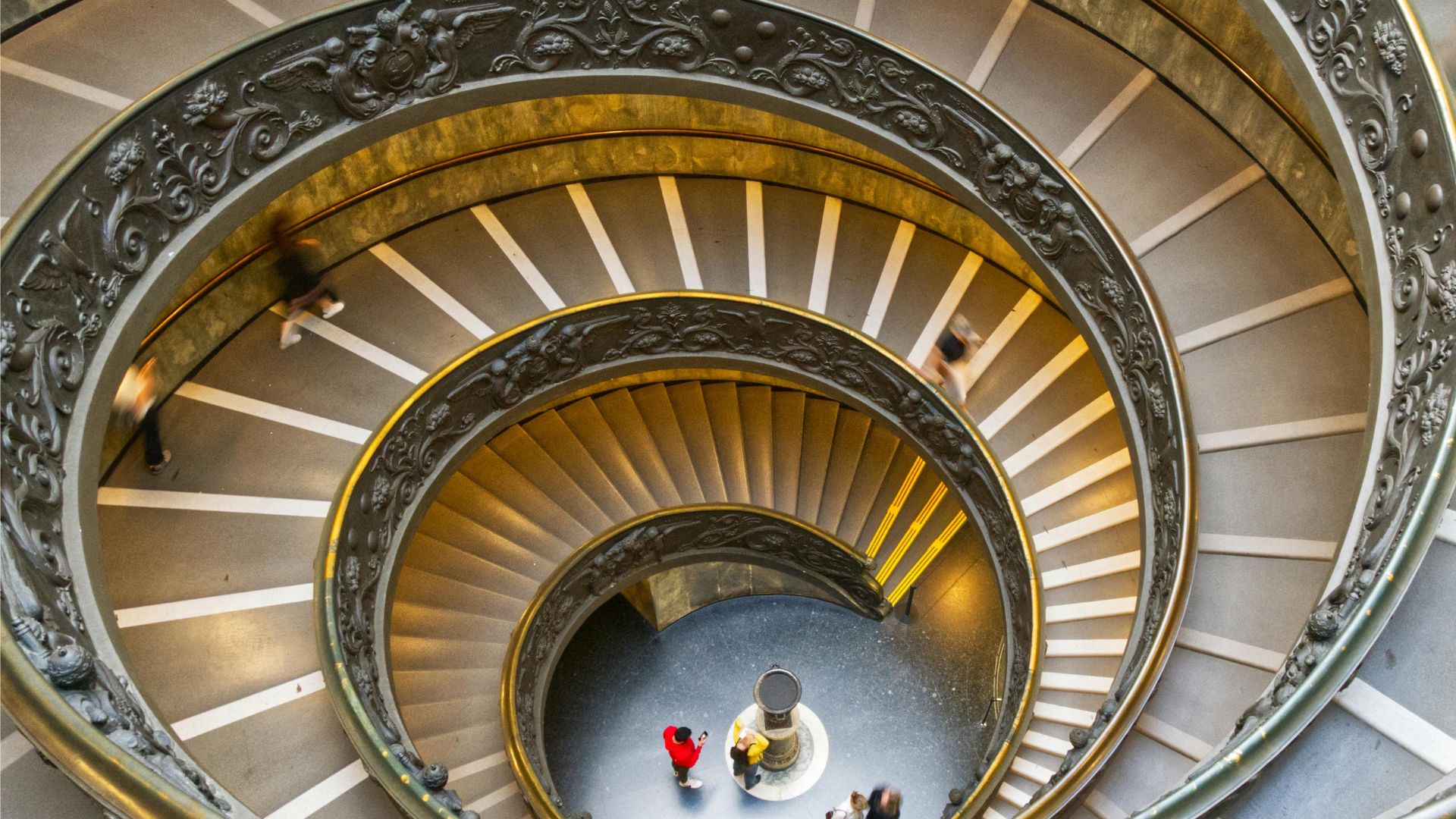
The museums stretch for seven kilometres through galleries, courtyards, chapels, and apartments that together constitute one of the world’s great collections. The challenge is not finding things to see but choosing among them — and surviving the crowds, which can exceed 25,000 visitors on peak days. Our advice: book the earliest possible timed entry, or — for a premium — the after-hours tours that provide access when the general public has departed.
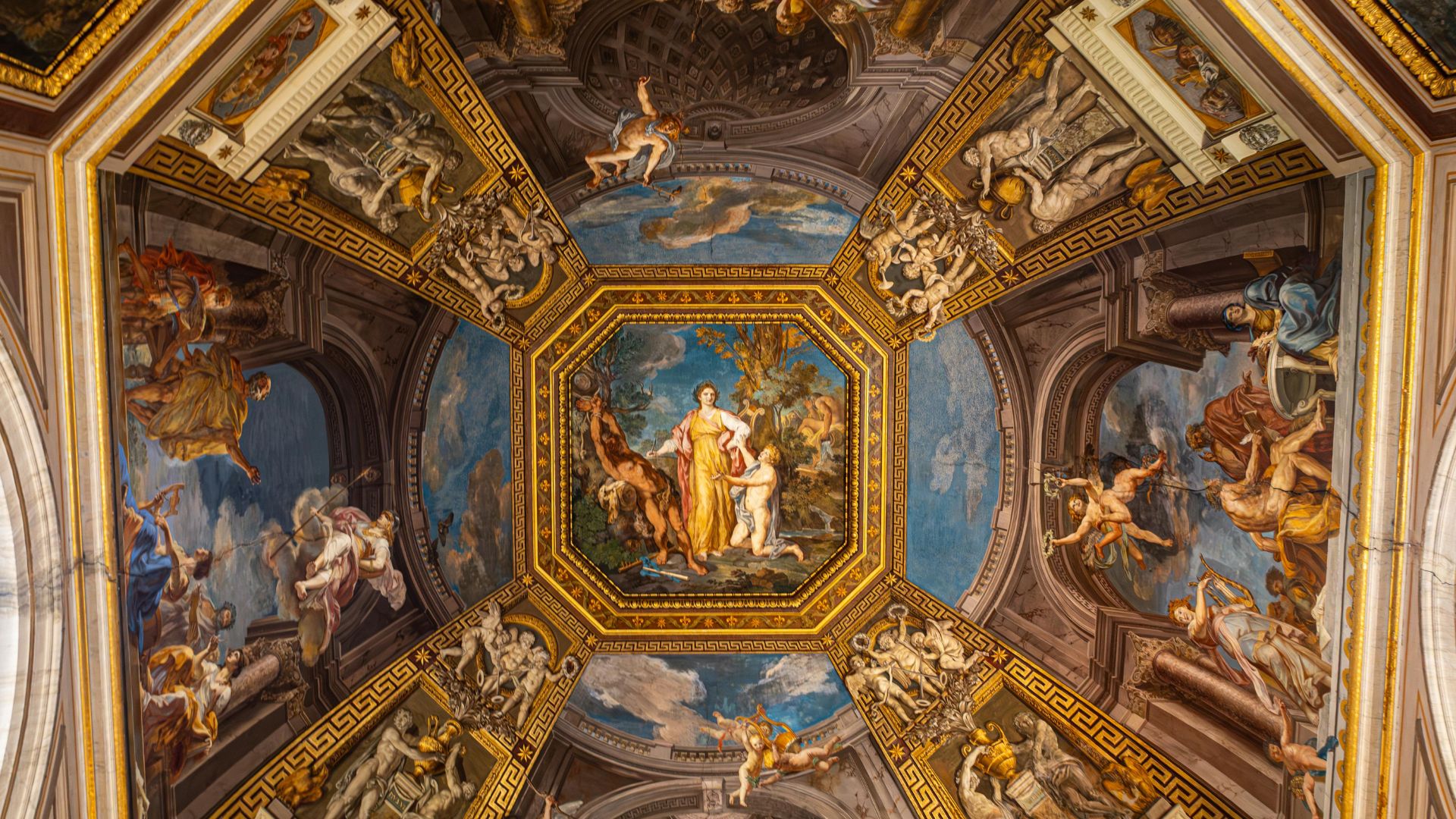
The Museo Pio-Clementino houses the classical antiquities that drew Grand Tourists to Rome for centuries: the Laocoön, that writhing masterpiece of Hellenistic sculpture; the Apollo Belvedere, once considered the pinnacle of human beauty; the Belvedere Torso, which Michelangelo studied so intensely that its influence pervades his own figures. These works inspired the Renaissance and continue to inspire anyone with eyes to see.
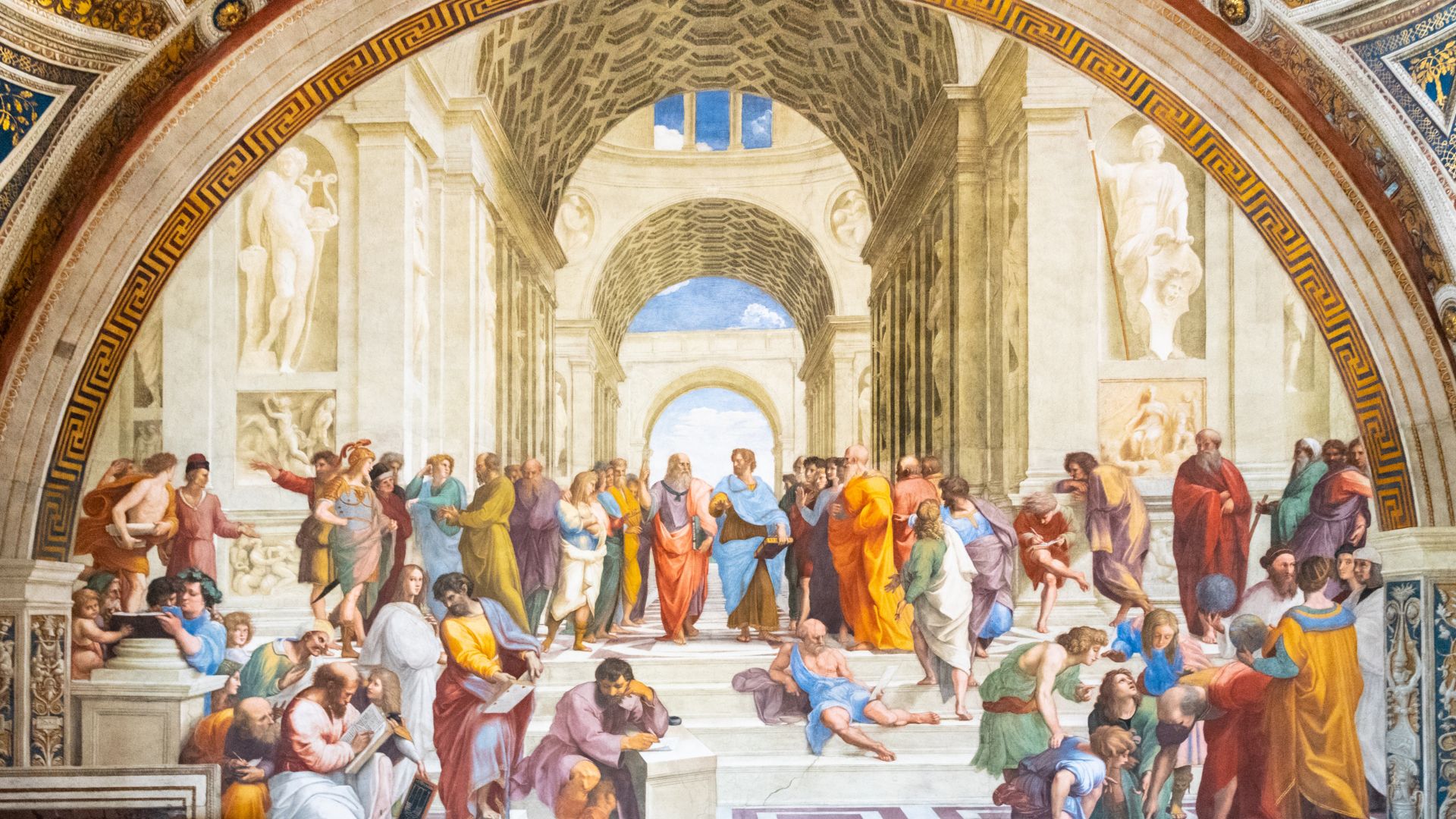
The Raphael Rooms — the private apartments of Pope Julius II — contain frescoes that rival the Sistine Chapel for importance if not for fame. The School of Athens, with Plato and Aristotle at its centre surrounded by every philosopher of antiquity, represents the Renaissance ideal of classical wisdom baptised into Christian service. The Disputation of the Holy Sacrament offers the theological counterpart: Christian thinkers arranged in a similar composition, with heaven opening above them. Raphael painted these at the same time Michelangelo was painting the Sistine ceiling in the next building; the rivalry between them pushed both to heights neither might have achieved alone.
The Pinacoteca — the picture gallery — often receives less attention than it deserves, overshadowed by the Sistine Chapel that lies ahead. But here hang works that would anchor any museum: Raphael’s Transfiguration, his final painting and perhaps his greatest; Caravaggio’s Deposition, with its dramatically lit Christ being lowered from the cross; Leonardo’s unfinished St Jerome, which Napoleon stole and the Vatican eventually recovered.
The Sistine Chapel
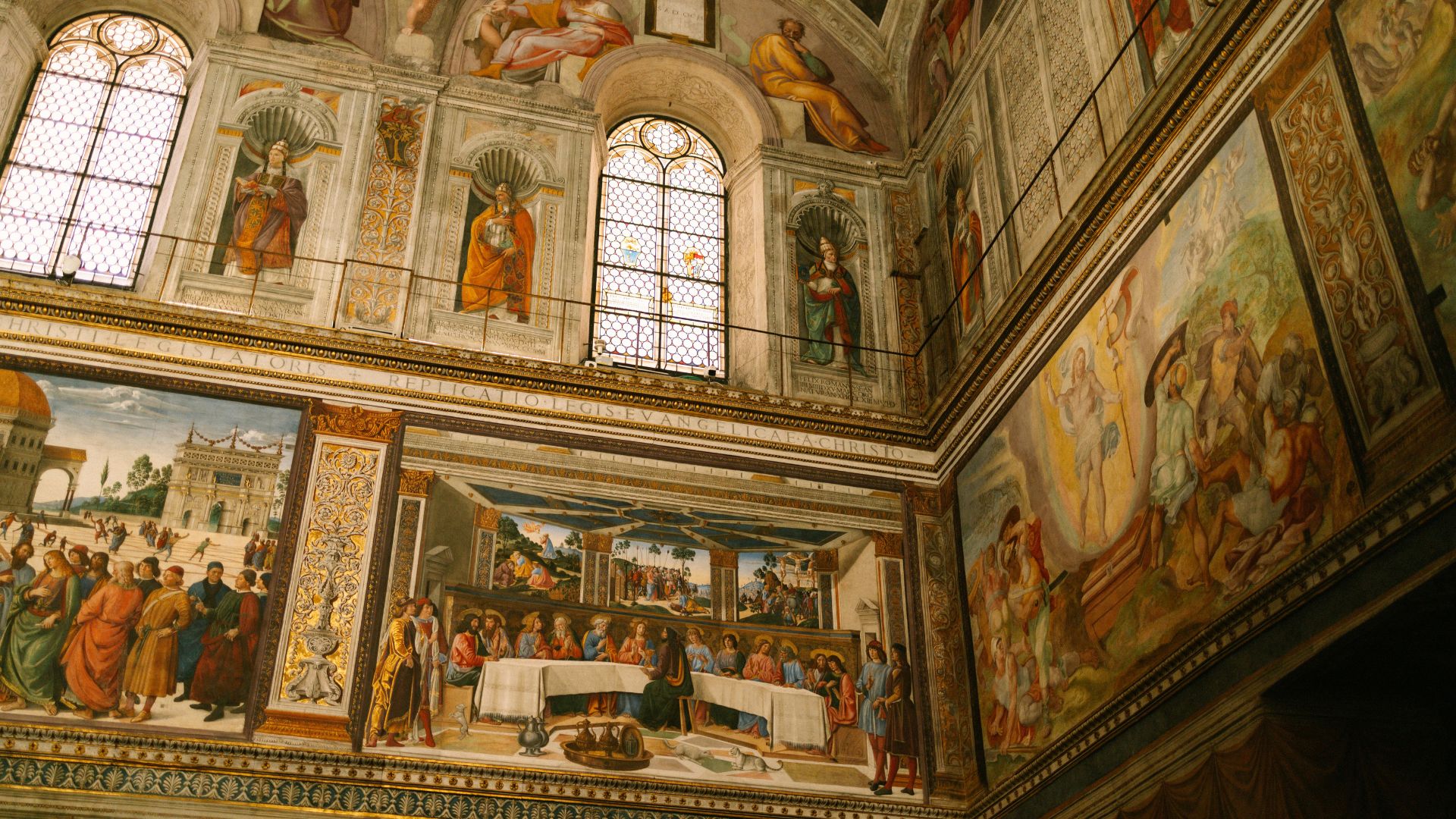
The culmination of any Vatican visit is the Sistine Chapel, where Michelangelo’s ceiling and Last Judgment have been drawing pilgrims and art lovers since their completion in the 16th century. The ceiling — painted between 1508 and 1512, with Michelangelo working largely alone on scaffolding of his own design — depicts the creation of the world and humanity, from the separation of light and darkness through Noah’s drunkenness. The Creation of Adam, with its reaching fingers that never quite touch, has become perhaps the most recognisable image in Western art.
The Last Judgment on the altar wall came later — 1536 to 1541 — and reflects a different Michelangelo, older, disillusioned, living through the Reformation that was tearing Christendom apart. Christ here is not the gentle shepherd but the terrifying judge, muscles tensed as he divides the saved from the damned. The saved rise on the left; the damned tumble into hell on the right, their faces contorted with despair. Michelangelo included his own face — flayed skin held by Saint Bartholomew, a grim self-portrait expressing the artist’s own anxieties about salvation.
The chapel itself remains a working space — the site where papal conclaves elect new popes, where cardinals gather for important liturgies, where the weight of history presses down on every ceremony. Photography is forbidden (to protect the frescoes, and also to enforce the Japanese company’s restoration rights), and guards regularly shush the crowds that tend toward reverent murmuring. The result is an experience that manages to be both overwhelming and frustrating — too crowded for proper contemplation, yet too magnificent to resent the crowds. Those who can arrange private access — through official tours or well-connected guides — gain something precious: the chance to look upward in silence, to trace Michelangelo’s narrative from creation to judgment, to understand why this chapel, more than any other room on earth, represents the height of human artistic achievement.
Practical Information for Visiting the Vatican
- Booking: Reserve timed tickets online at least two weeks ahead for peak season. The official site (museivaticani.va) charges a booking fee but guarantees authenticity.
- Timing: The first entry slot (typically 8am) offers the lightest crowds. Wednesday mornings see reduced numbers due to the Papal Audience in St Peter’s Square.
- Dress Code: Strictly enforced. Shoulders and knees must be covered for both St Peter’s and the Museums. Carry a scarf or light jacket regardless of weather.
- Papal Audience: Free tickets available through your diocese or the Prefecture of the Papal Household. Wednesday mornings in St Peter’s Square (or Paul VI Hall in bad weather). Arrive by 8am for decent seats.
- Vatican Gardens: Accessible only by guided tour, booked separately from the Museums. Two hours of manicured peace away from the crowds.
- Scavi Tour: The excavations beneath St Peter’s require separate booking through excavations@fsp.va, often months in advance. Limited to small groups; profoundly moving regardless of faith.