
Three Weeks in the Archipelago: A Journey Through Indonesia’s Many Worlds
In which the traveller discovers that Indonesia is not a country but a constellation
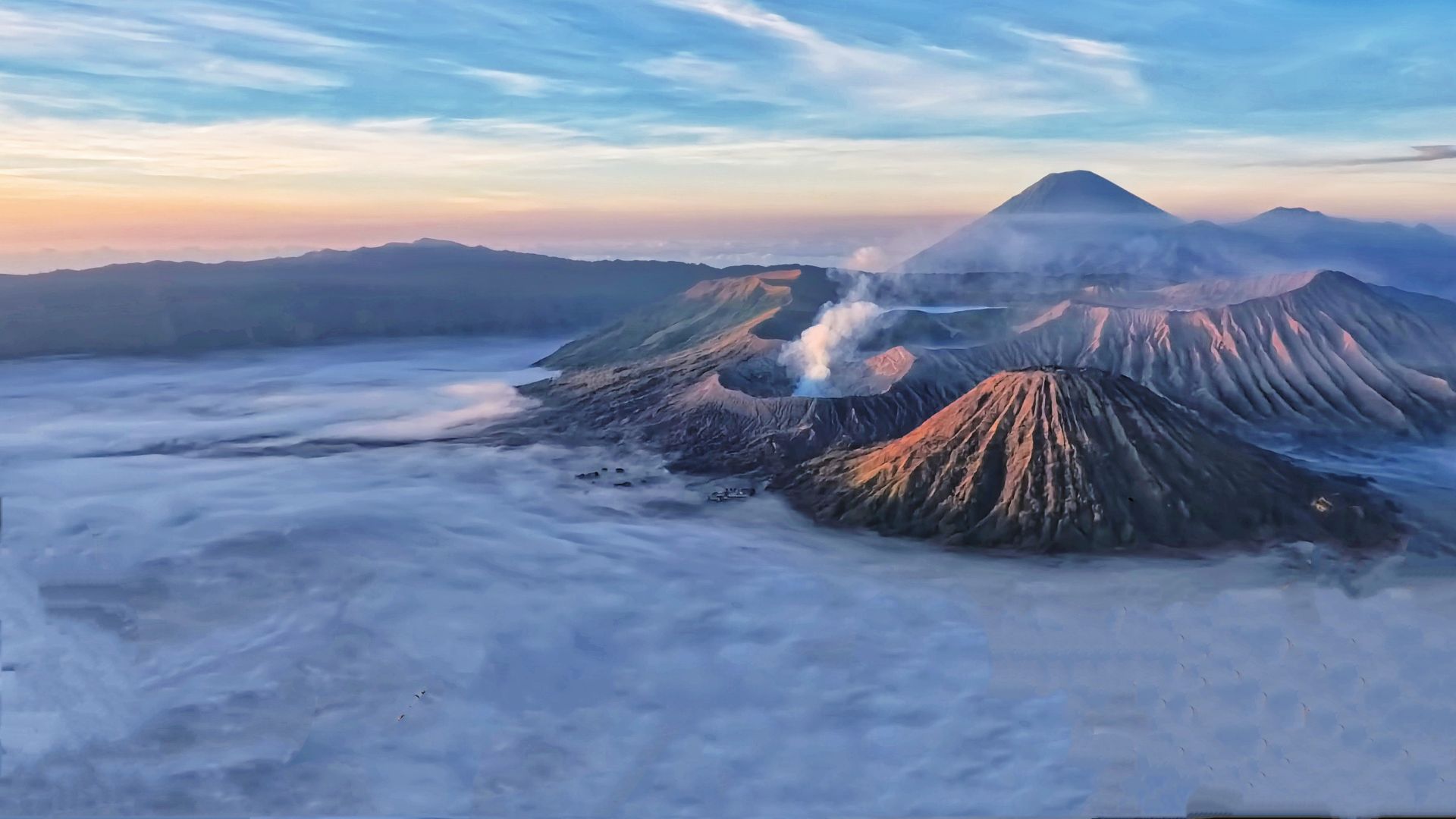
I had been in Indonesia for three days before I understood that I had been thinking about it entirely wrong. Standing on the rim of Mount Bromo at dawn, watching sulphurous smoke rise from the crater while the sun illuminated a landscape that resembled nothing so much as the surface of another planet, I realised that Indonesia is not a destination but a category error. We speak of visiting Indonesia as though it were a single place, when in fact it comprises 17,508 islands scattered across 5,000 kilometres of equatorial ocean, home to 700 languages and several distinct civilisations. Visiting Indonesia is like visiting Europe and expecting coherence.
This multiplicity is both the challenge and the gift. The challenge lies in choosing — three weeks allows perhaps four islands, five if you rush, and rushing defeats the purpose. The gift lies in returning, knowing that you have barely begun, that the islands you did not reach this time will wait. Indonesia rewards the traveller who accepts incompleteness, who understands that the goal is not comprehensive coverage but deep encounter with places that remain, despite everything, genuinely elsewhere.
The luxury infrastructure has matured considerably in recent years. The Aman resorts that pioneered high-end Indonesian travel have been joined by properties that push the category further — Nihi Sumba, consistently ranked among the world’s best hotels, operates on an island that most travellers have never heard of. Capella Ubud reimagines the jungle lodge. The dive operators of Raja Ampat provide expedition-level experiences with boutique-level comfort. These properties share a philosophy: that luxury in Indonesia means immersion rather than insulation, that the point is not to recreate Western comfort in tropical settings but to provide Western comfort as a platform for Indonesian experience.
Week One: Bali and the Nusa Islands
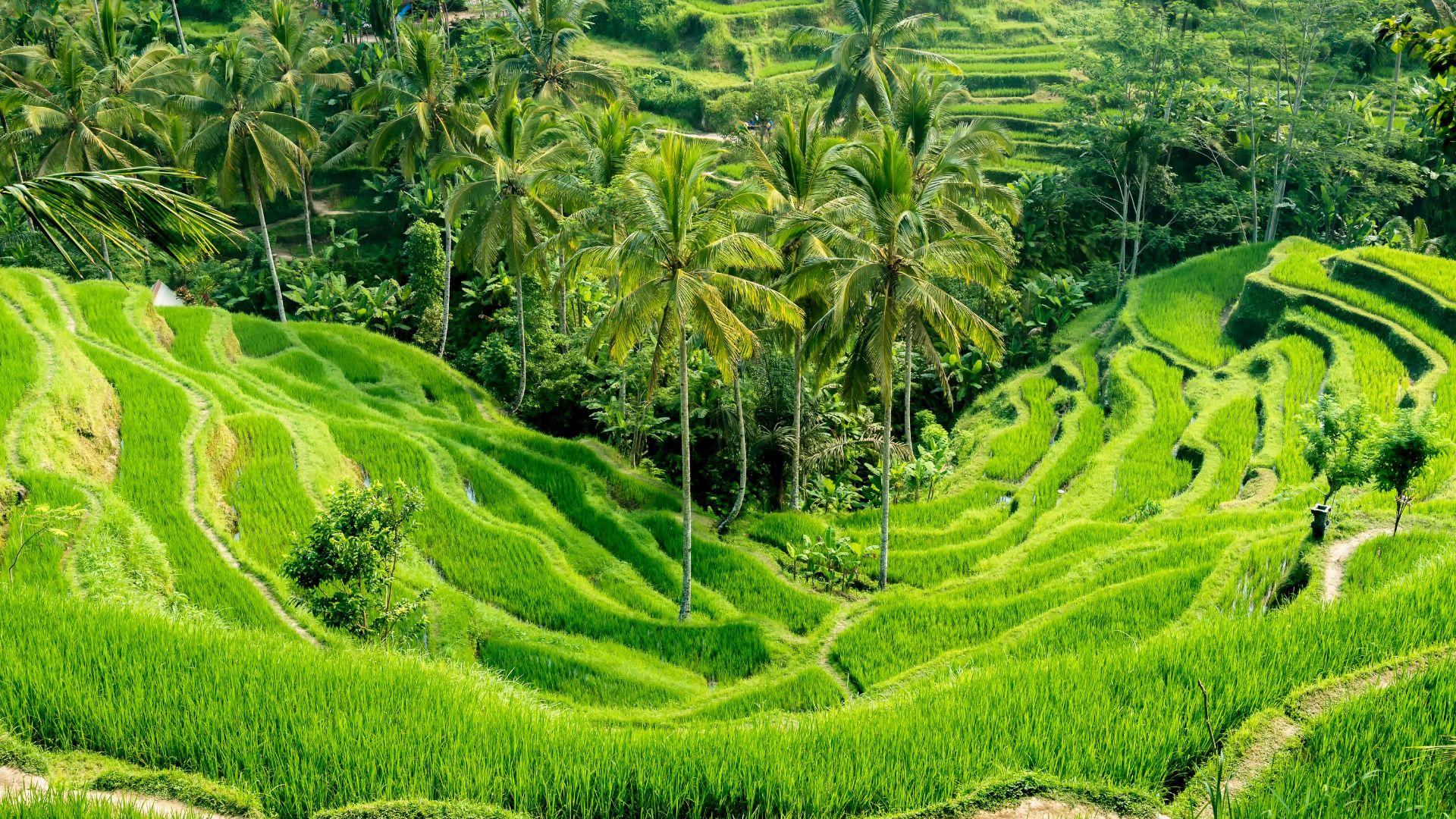
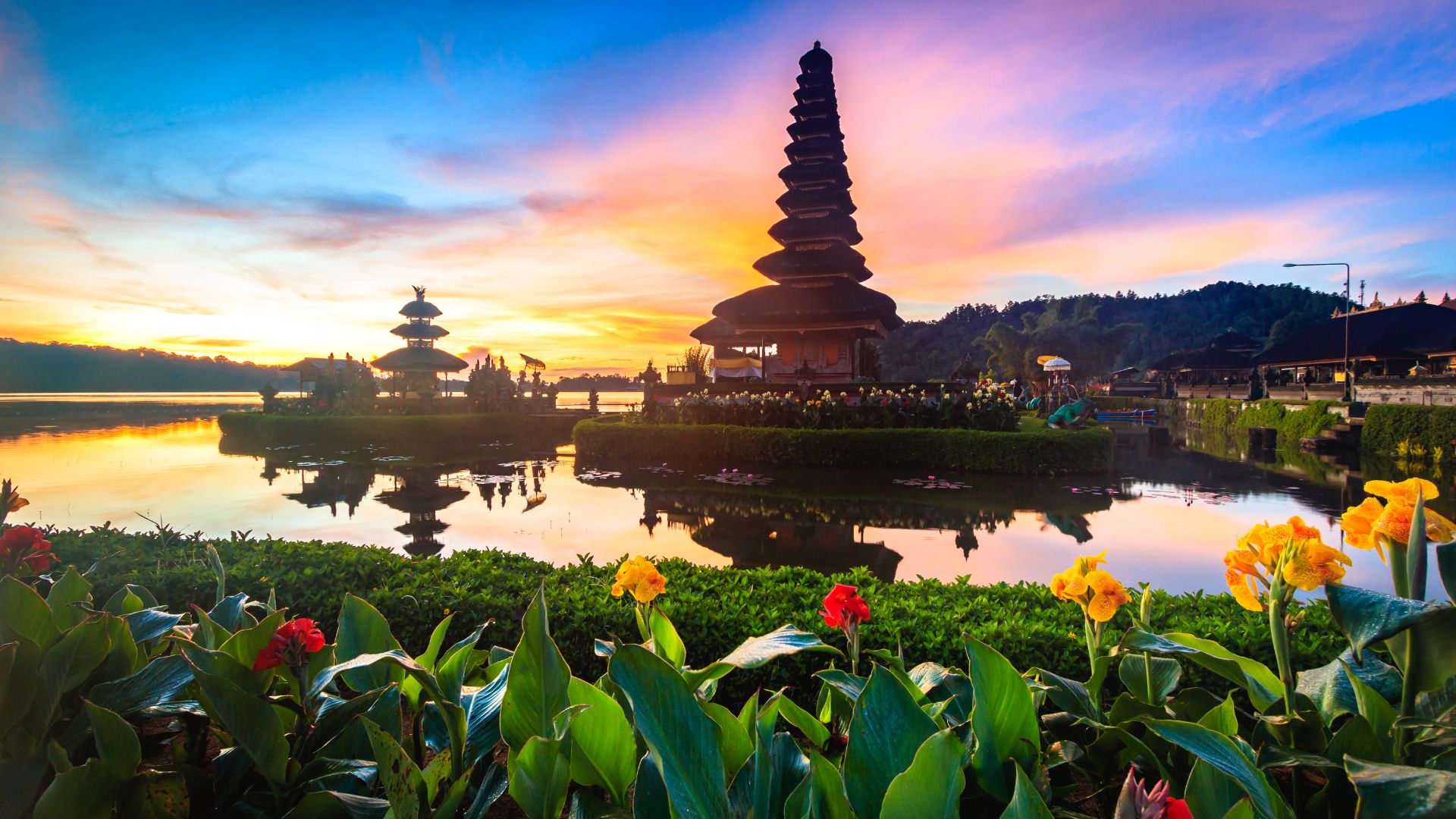
Bali carries contradictions that other Indonesian islands avoid through obscurity. The temples remain genuine centres of Hindu practice on an island that receives six million visitors annually. The rice terraces that attracted artists in the 1930s still produce rice, though now overlooked by cafes serving flat whites. The beach towns of the south have become something between Ibiza and Benidorm; the cultural heartland around Ubud has become something between artists’ colony and wellness retreat. Navigating these contradictions requires accepting that Bali is not one place but several, and that the version you experience depends entirely on where you stay and what you choose to see.
We began at Amandari, the original Aman resort on Bali, positioned above the Ayung River gorge near Ubud. The property has aged gracefully over three decades, its architecture now wrapped in vegetation that makes the suites feel carved from the hillside rather than constructed on it. The location provides what Bali does best: mornings watching mist rise from the river valley, afternoons exploring temples where offerings appear fresh each day, evenings with gamelan music floating up from the village below. The crowds exist — Ubud’s main streets can feel oppressive at peak hours — but the Amandari operates at sufficient remove that they register as background rather than foreground.
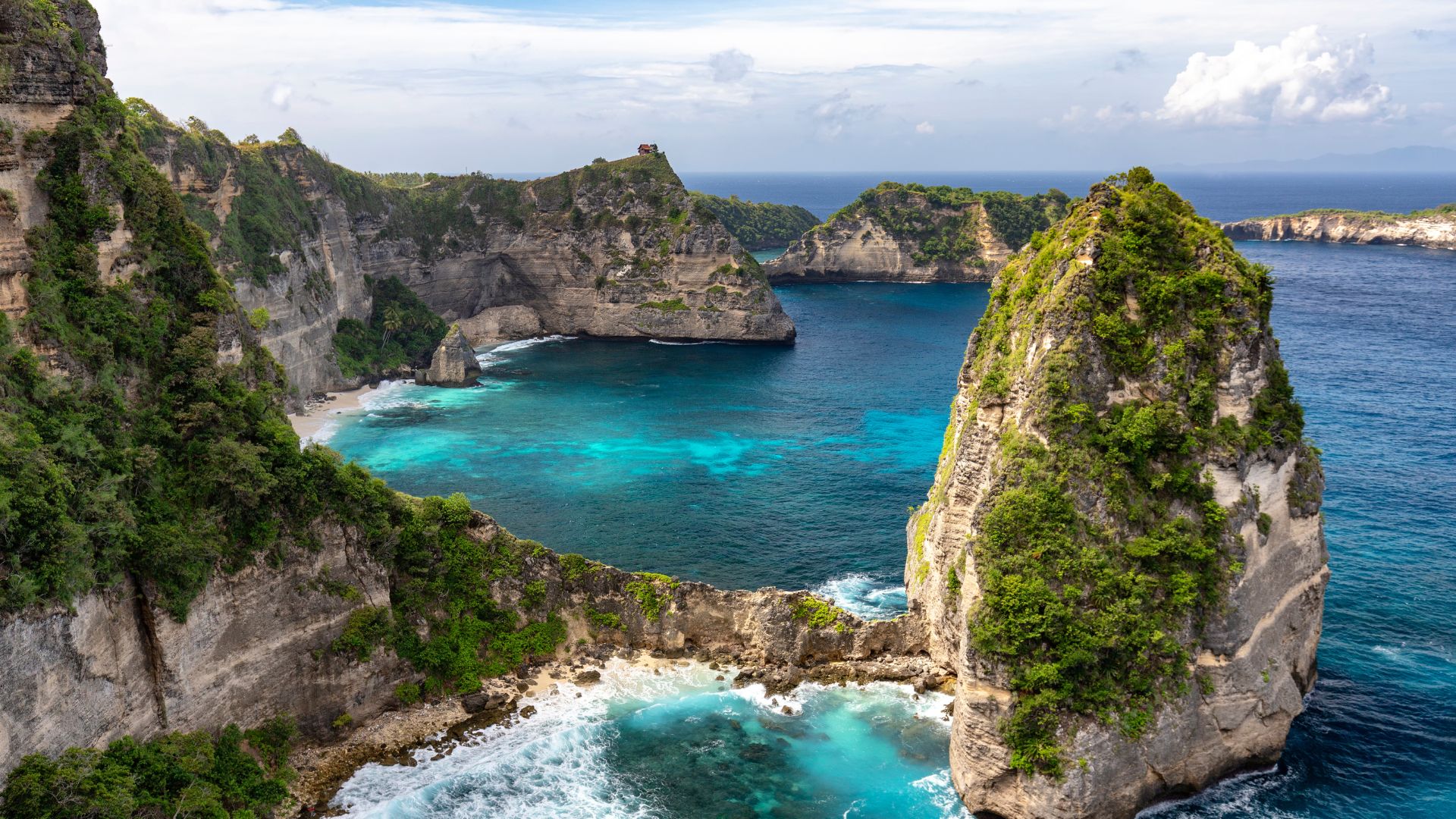
The Nusa islands — Lembongan, Ceningan, Penida — lie thirty minutes by fast boat from Bali’s southeast coast and provide what the main island has largely lost: the sense of discovery. Nusa Penida in particular has emerged as a destination in its own right, its dramatic coastline and manta ray populations attracting visitors willing to accept rougher infrastructure for wilder rewards. The diving here ranges from excellent to world-class; the snorkelling with mantas at Manta Point delivers exactly what it promises. We stayed at a small property overlooking the strait, watching the sun set behind Bali’s volcano and wondering why it had taken so long to make the crossing.
Week Two: Java — Temples, Volcanoes, and the Weight of History
Java is Indonesia’s soul, even if it is no longer quite its heart. The island houses sixty percent of the country’s population and most of its history — the Hindu-Buddhist empires that built Borobudur and Prambanan, the Islamic sultanates that followed, the Dutch colonial apparatus that ruled for three centuries, the independence struggle that ended it. Jakarta, the capital, is a megacity of eleven million people that functions despite every indication it should not. But the Java that rewards luxury travellers lies elsewhere: in the cultural capitals of Yogyakarta and Solo, in the volcanic landscapes of East Java, in the temple complexes that predate European cathedrals.
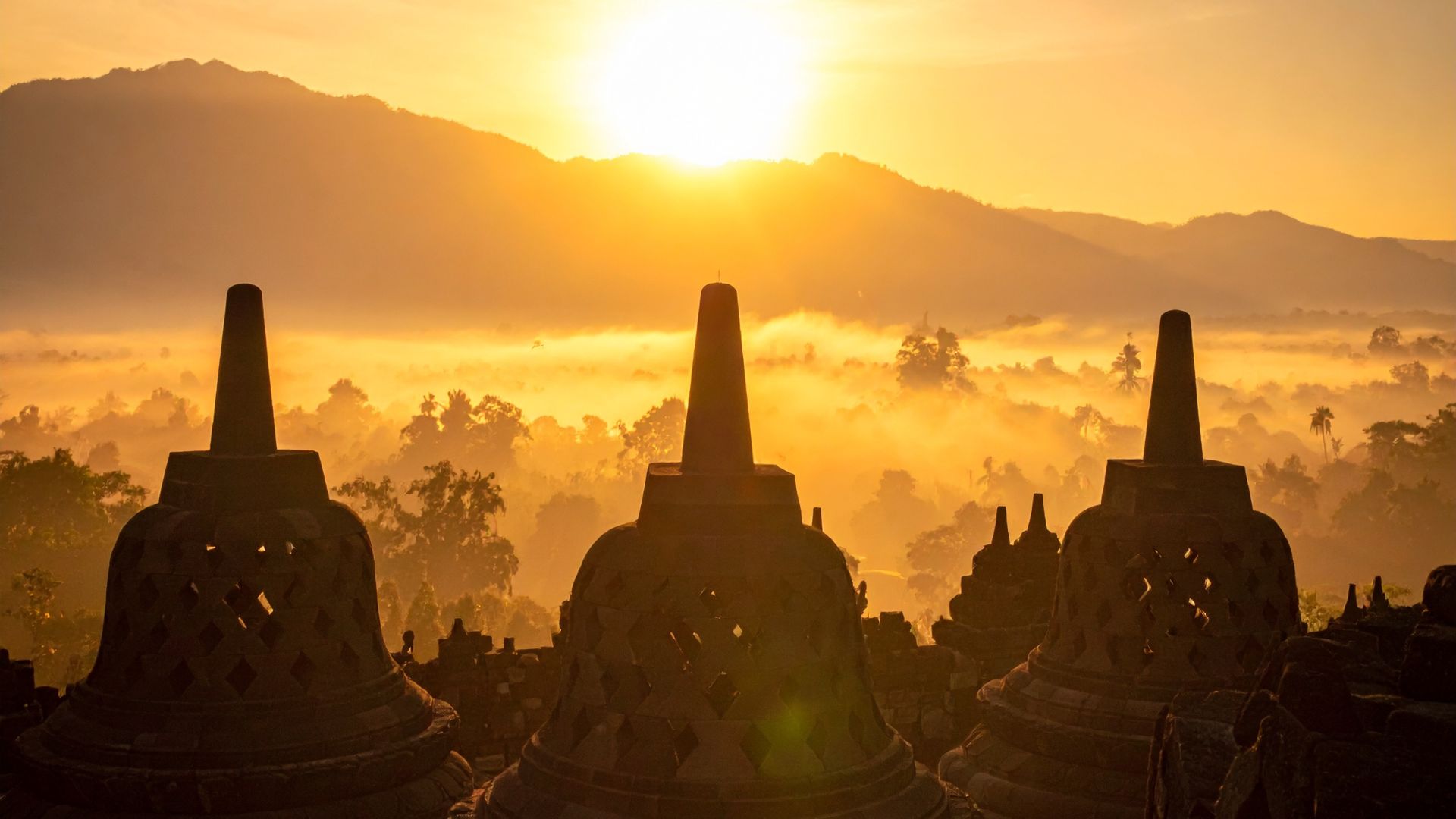
Borobudur at sunrise remains one of those experiences that deserves its reputation. The 9th-century Buddhist temple rises from the Kedu Plain in central Java, its nine platforms representing the path to enlightenment, its 2,672 relief panels telling stories that monks spent decades carving. The luxury approach involves staying at Amanjiwo, the Aman resort positioned to frame the temple against the hills, and arranging dawn access before the general opening. Walking the temple’s levels as light fills the valley, watching the stupas emerge from mist, you understand why the Sailendra dynasty invested what must have been staggering resources in its construction.
East Java provides drama of a different order. Mount Bromo and Mount Ijen are both active volcanoes; both offer experiences that approach the sublime. Bromo’s moonscape caldera, reached by jeep before dawn and then by foot across the sand sea, delivers views that cameras struggle to capture. Ijen’s sulphuric lake and blue flames — burning sulphur that can only be seen before sunrise — attract miners who carry impossible loads of solidified sulphur up from the crater floor. The contrast between luxury accommodation and the miners’ brutal labour creates discomfort that perhaps should not be resolved too easily.
Week Three: The Outer Islands — Komodo and Beyond
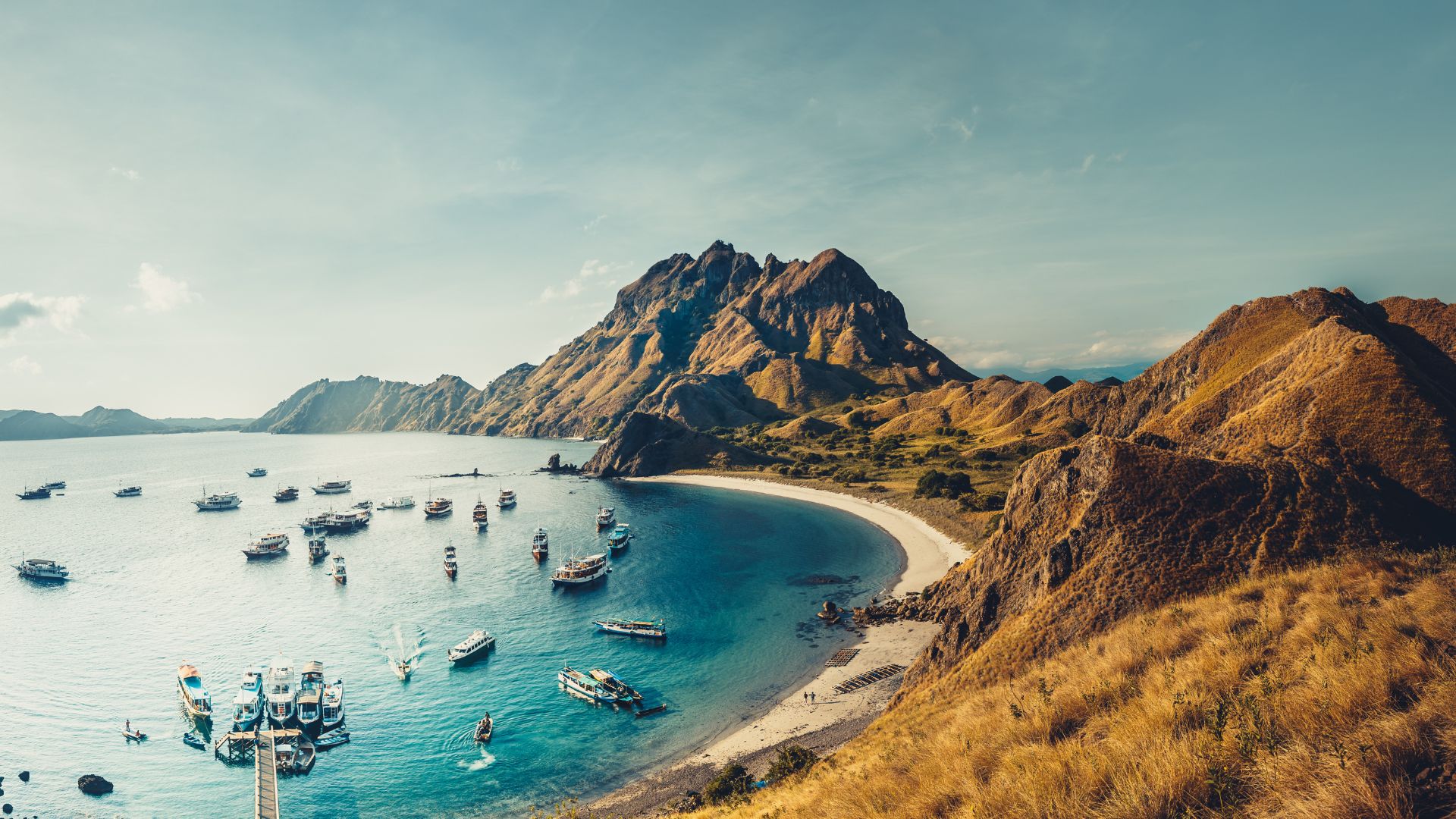
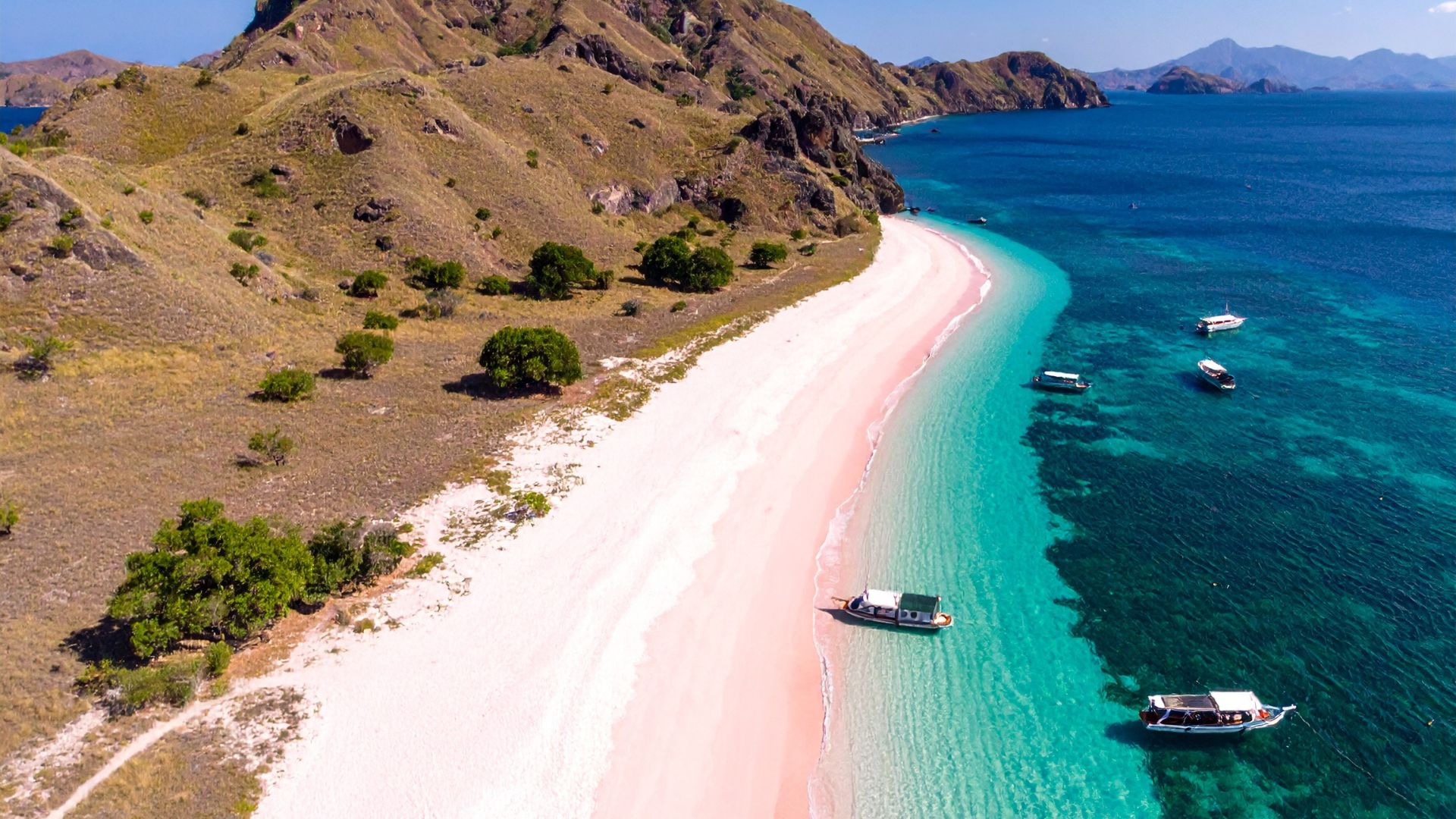
The Komodo archipelago lies between Sumbawa and Flores, part of the Lesser Sunda chain that stretches east from Bali toward Papua. The islands are famous for their dragons — the Komodo monitor lizards that grow to three metres and occupy the top of the local food chain — but the marine environment is equally remarkable. The waters here form part of the Coral Triangle, the global centre of marine biodiversity, where currents from the Pacific and Indian oceans meet in conditions that produce diving and snorkelling of exceptional quality.
We sailed on a traditional phinisi, the wooden boats that Bugis craftsmen have built for centuries, now converted for luxury cruising. The format suits the archipelago: islands accessible only by water, anchorages that change with conditions, the flexibility to follow wildlife and weather. The dragons impressed — watching an apex predator that has remained essentially unchanged for millions of years creates perspective that the rushed day-trip format cannot provide. The diving impressed more: walls dropping into blue water, manta cleaning stations, reef sharks circling in channels where current concentrates the life.
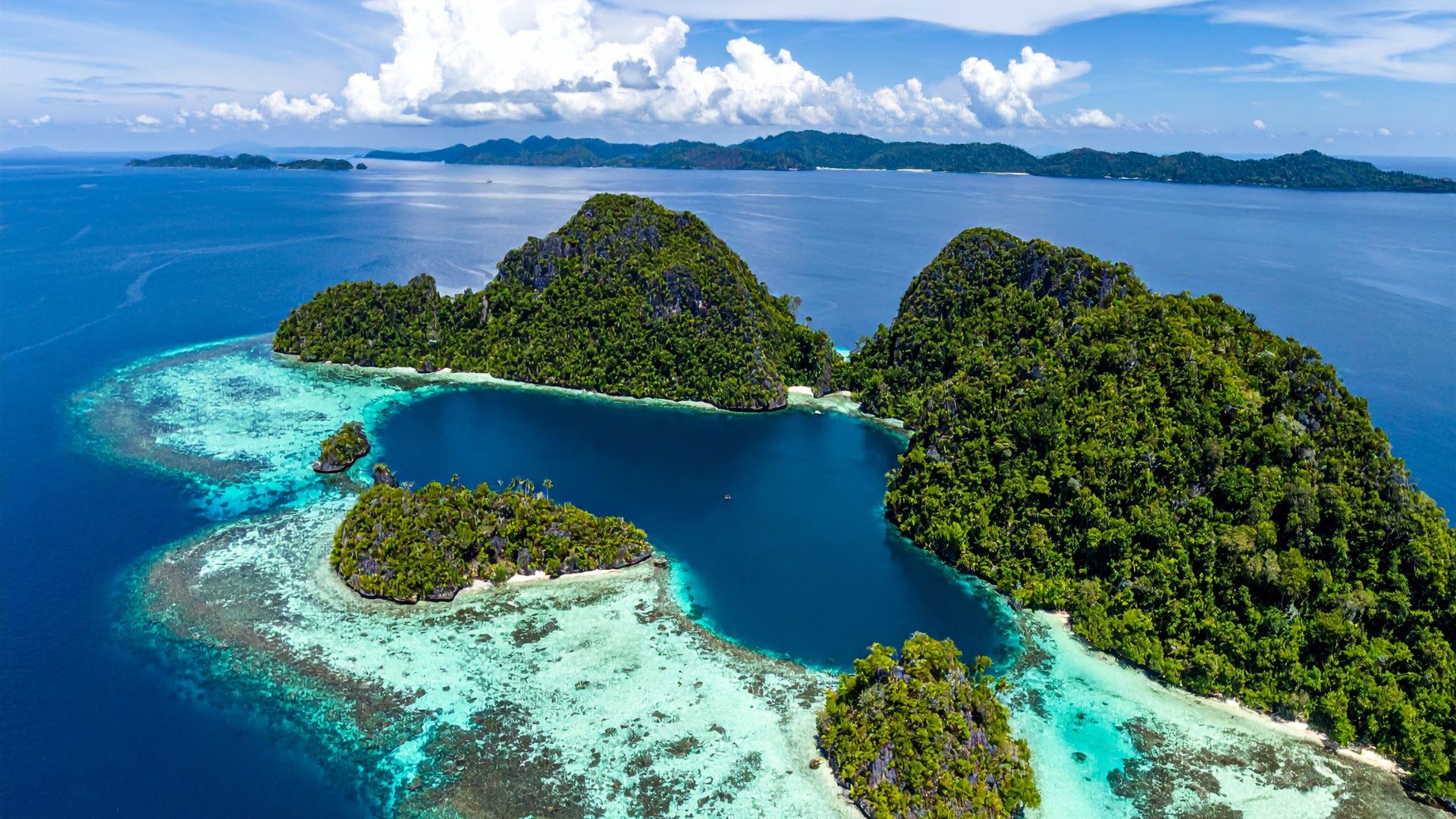
Raja Ampat, in West Papua, represents the frontier that lies beyond. The islands here contain more marine species than anywhere else on Earth — over 1,500 fish species, 75% of all known coral species — in waters that until recently saw almost no visitors. The journey requires commitment: flights to Sorong, boat transfers to remote resorts, costs that reflect both quality and logistics. The reward is diving in waters so rich that veteran divers struggle for comparisons, and the knowledge that you have reached somewhere that remains, despite everything, genuinely at the edge of the known world.
Practical Information
Getting There: Direct flights from London to Jakarta (14 hours) and Bali (16 hours). Singapore and Hong Kong provide connection options. Internal flights on Garuda Indonesia and Lion Air connect the archipelago; private charters increasingly available for remote destinations.
When to Visit: The dry season (April-October) offers the most reliable weather across most regions. Raja Ampat is best October-April. Bali is pleasant year-round. The shoulder months often provide the best balance of weather and crowds.
Budget: Premium properties range from USD 800-2,500 per night. Liveaboard diving cruises from USD 500-1,000 per day. Internal flights USD 100-300 per sector. Three weeks at luxury level: approximately GBP 15,000-25,000 per person excluding international flights.