
The Royal Parks: London’s Green and Pleasant Breathing Spaces
“To walk alone in London is the greatest rest.”
— Virginia Woolf
In a city of eight million souls, the Royal Parks represent collective sanity—5,000 acres of green space preserved through centuries of development pressure, maintained for public enjoyment despite real estate values that would make any developer weep. Hyde Park, Regent’s Park, St James’s Park, Kensington Gardens, Greenwich Park, Bushy Park, Richmond Park, The Green Park: eight parks, once royal hunting grounds and private gardens, now open to all and beloved by Londoners with a passion that approaches the sacred.
The designation ‘Royal’ is not merely historical; these parks remain technically Crown property, managed by a government agency but belonging to the sovereign. The arrangement has preserved them through periods when lesser parks fell to building or neglect. When developers eyed Hyde Park in the 19th century, royal ownership provided protection that private or municipal land could not command. London’s lungs survive because the Crown held its breath.
Hyde Park
Hyde Park, at 350 acres, dominates central London’s geography. Henry VIII seized it from the monks of Westminster Abbey in 1536; it opened to the public in 1637 and has served as London’s principal gathering space ever since. The Great Exhibition of 1851, housed in Joseph Paxton’s Crystal Palace, brought six million visitors. Suffragettes rallied here; the Rolling Stones played here; protesters of every cause have exercised their right to assembly within its bounds. Speakers’ Corner, near Marble Arch, continues the tradition of open-air oratory that has operated since 1866.
The Serpentine, that sinuous lake created by damming the Westbourne river in 1730, provides the park’s recreational centrepiece. Swimming in the Serpentine Lido continues year-round for members of the Serpentine Swimming Club, including the famous Christmas Day race. Rowing boats can be hired in summer; the Diana, Princess of Wales Memorial Fountain invites paddling on hot days. The landscape is Capability Brown–influenced, though subsequent modifications have altered his original vision.
“I am sure there is no place in the world where every class of person can find pleasure and recreation suited to their taste as in Hyde Park.”
— 19th-century observer
Regent’s Park
Regent’s Park offers different pleasures: more ornamental, more varied, more self-consciously designed. John Nash laid out the park in the early 19th century as part of a grand scheme connecting the Prince Regent’s residence to the new development of Regent Street. The terraces that ring the park—Chester Terrace, Cumberland Terrace, and others—represent Nash’s vision of urban elegance, their stuccoed façades creating a wall of white that frames the green within.
London Zoo occupies the park’s northeastern corner, a presence since 1828 and home to one of the world’s most important animal collections. Queen Mary’s Gardens, in the park’s inner circle, displays over 12,000 roses of 400 varieties. The Open Air Theatre presents Shakespeare each summer, audiences wrapped in blankets against the English evening chill. Primrose Hill, technically a separate park but contiguous and managed together, provides one of London’s finest viewpoints—particularly at dusk, when the city lights begin to glitter.
St James’s Park
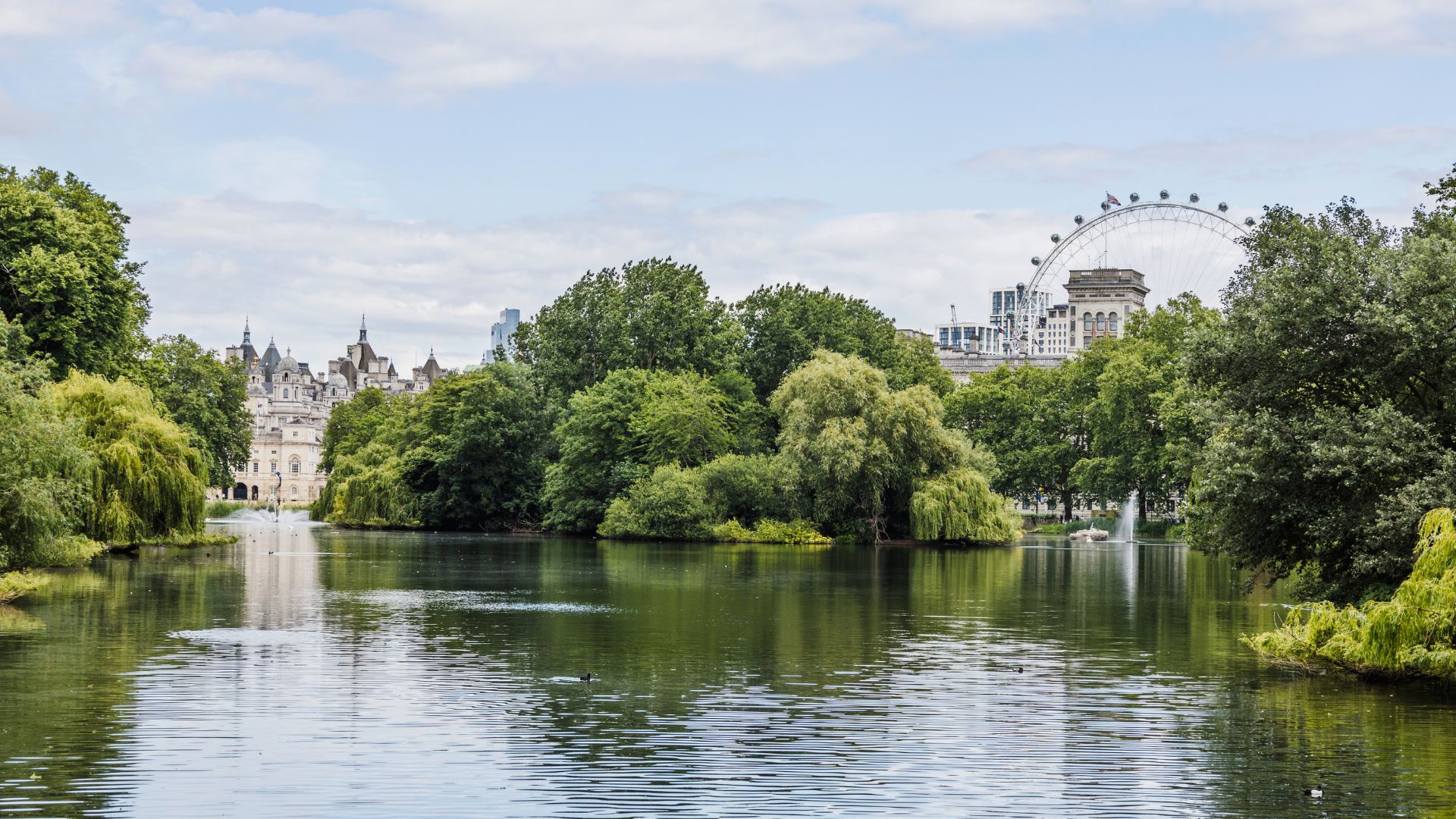
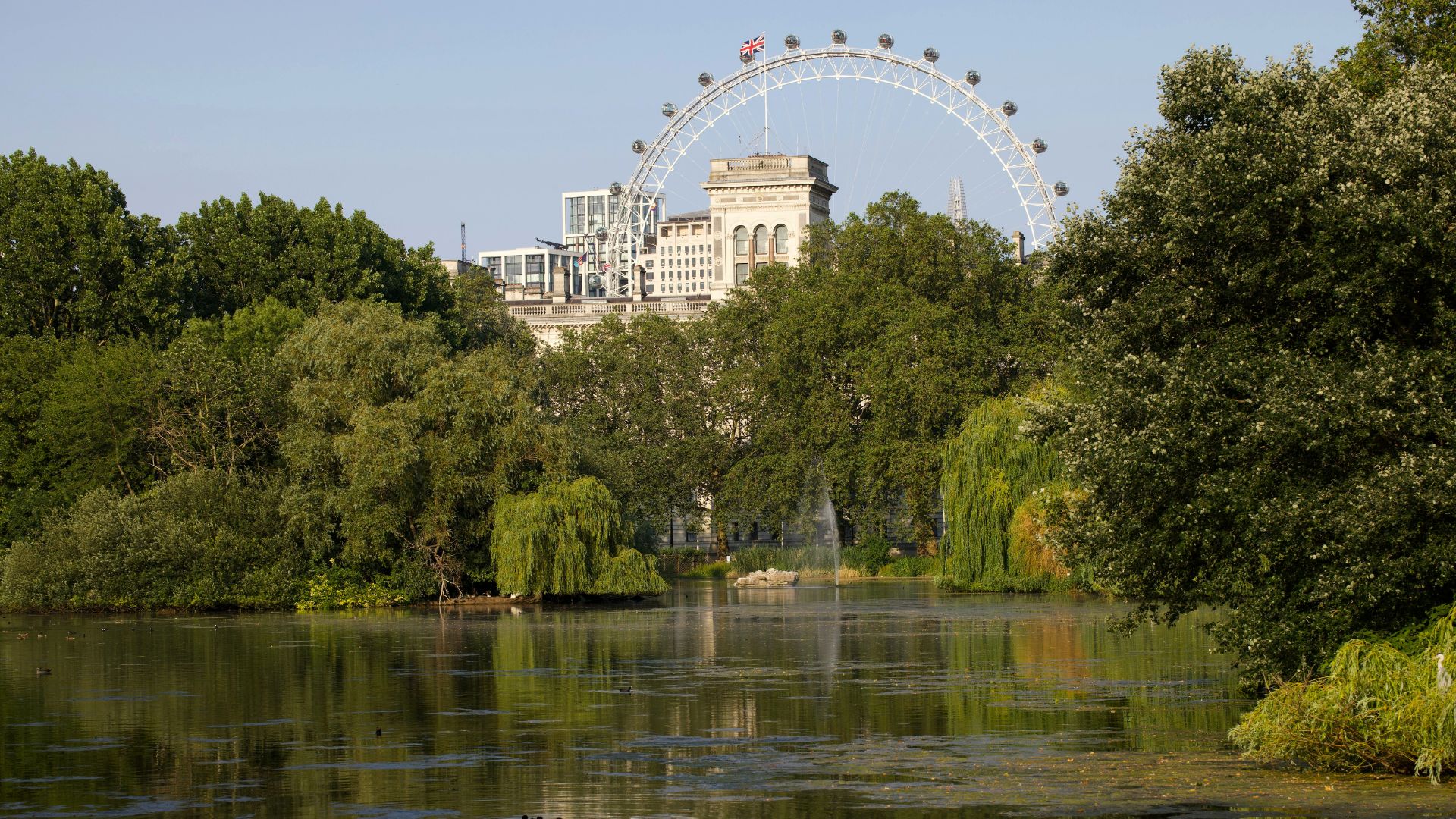
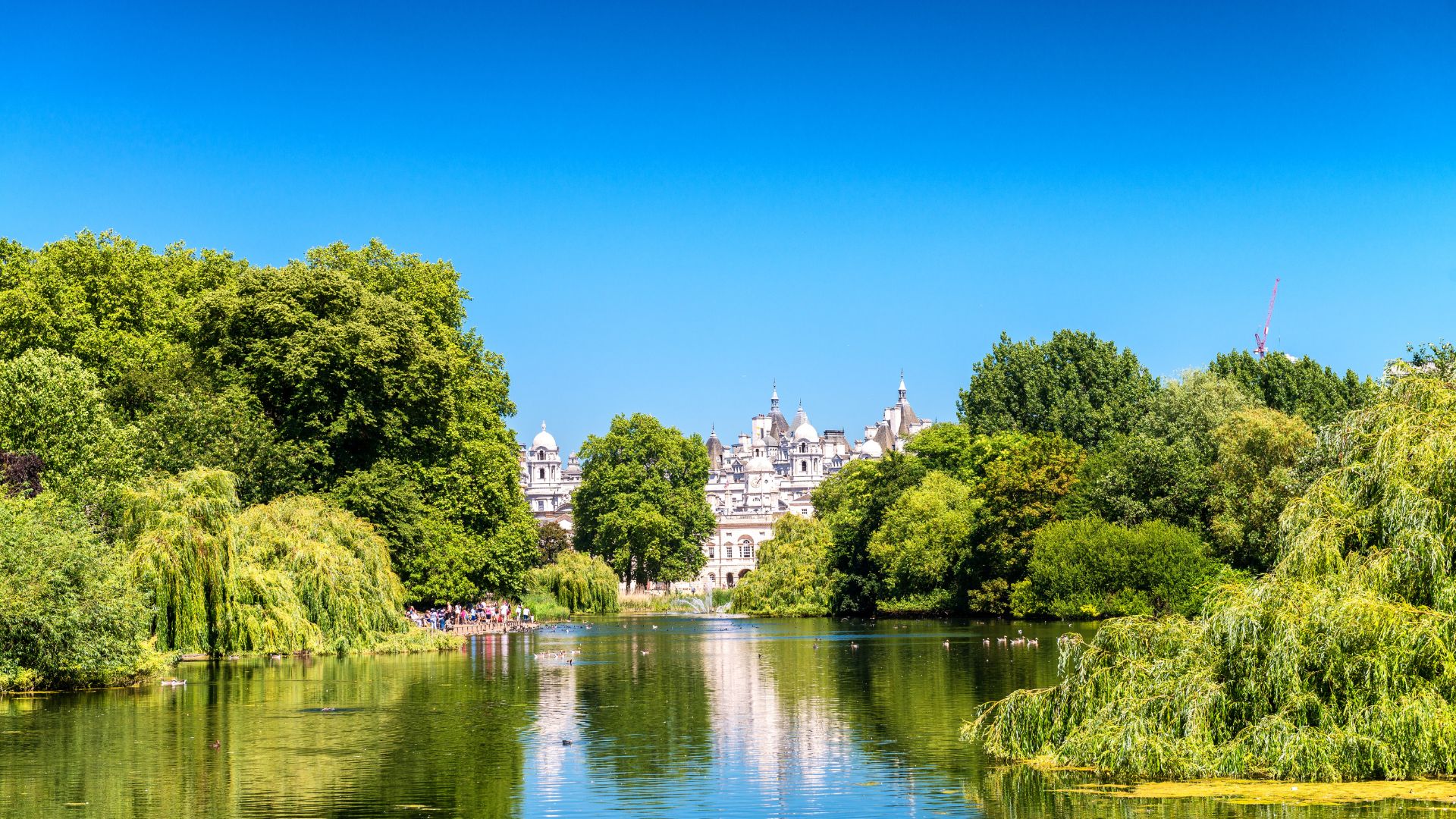
St James’s Park, the oldest of the Royal Parks, lies at the ceremonial heart of London. From its bridge, you can see Buckingham Palace in one direction and Whitehall’s towers in the other; the view appears on countless postcards and establishing shots. The pelicans that patrol the lake—a tradition since 1664, when a Russian ambassador presented the first pair to Charles II—have become celebrities, fed daily at 2:30pm to appreciative crowds.
The park’s role in state ceremonial is unmatched. Trooping the Colour passes along its northern edge; royal salutes are fired here on significant occasions; the Mall, that grand processional avenue from Admiralty Arch to Buckingham Palace, defines its boundary. Yet St James’s also serves everyday purposes: office workers eating sandwiches, tourists consulting maps, lovers conducting the conversations that parks invite. The juxtaposition of grandeur and ordinariness captures something essential about London.
Richmond Park
Richmond Park, at 2,500 acres, dwarfs its central London counterparts—and feels genuinely wild in ways they cannot match. Created by Charles I in 1637 as a deer park, it still supports over 600 red and fallow deer, descendants of the original herd, roaming freely across grassland and ancient woodland. The Isabella Plantation, a carefully tended woodland garden, blazes with azaleas and rhododendrons each spring. King Henry’s Mound offers a protected view of St Paul’s Cathedral, ten miles distant, preserved by planning regulations since 1710.
Cyclists and runners have claimed Richmond Park as their own, its circuit roads providing challenging gradients and traffic-free miles. Wildlife thrives: stag beetles in the deadwood, skylarks in the grassland, parakeets (those noisy, improbable green invaders) in increasing numbers. The park feels like countryside, and Londoners treat it accordingly—escaping the city without leaving it.
The Royal Parks are London’s gift to itself: spaces that could have been sold, developed, built upon, but instead were preserved and protected for public benefit. They represent something admirable about the city’s self-image—a recognition that citizens need green spaces, that density requires relief, that nature belongs even in the world’s great metropolises. Enter any Royal Park on a fine afternoon and you will see London at its most contented.