
The Royal Mile: A Street With More Stories Than Sense
“The accidents of Edinburgh’s architecture have made Edinburgh one of the most picturesque places in the world.”
— G.K. Chesterton
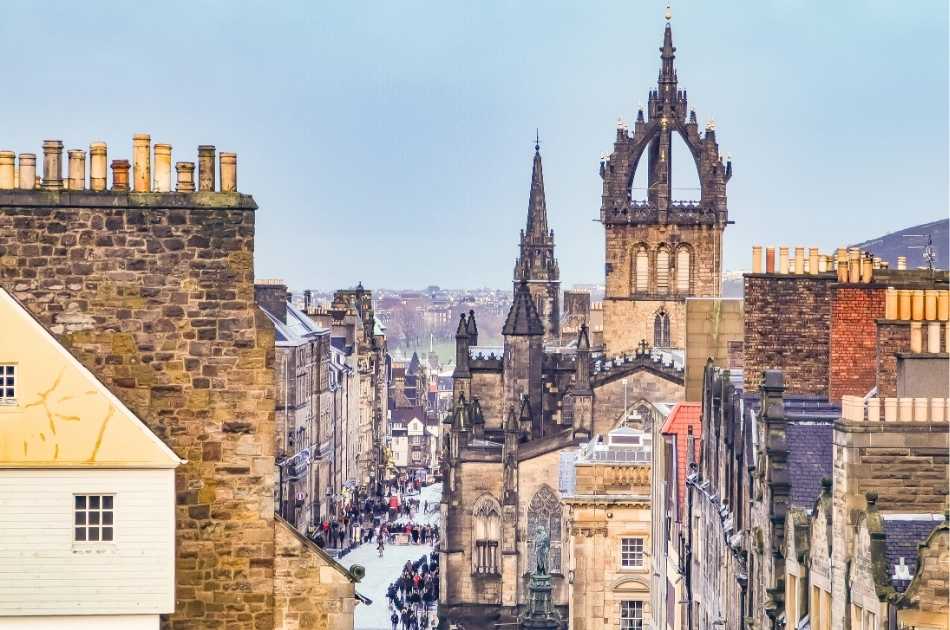
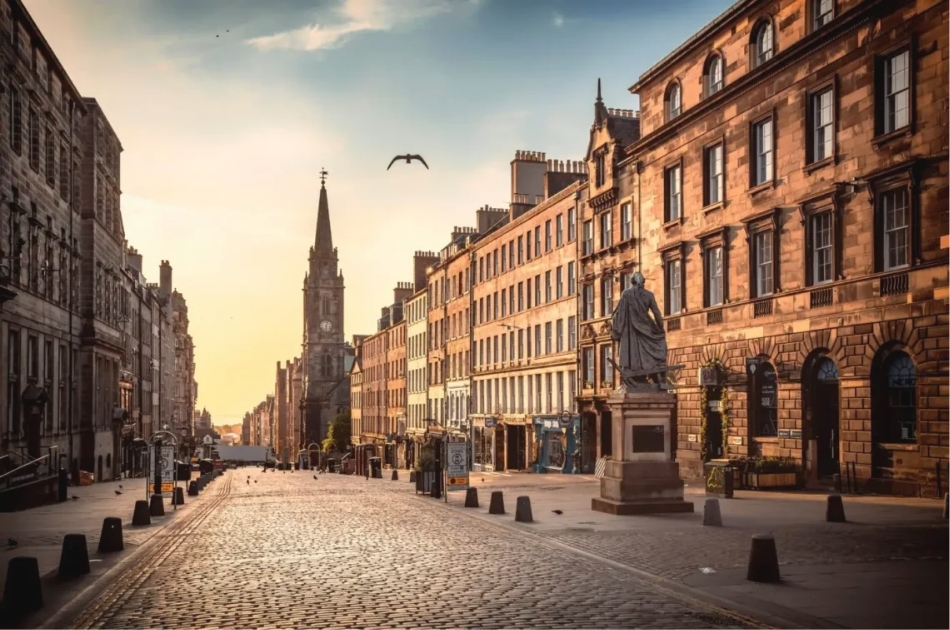
If streets could talk, the Royal Mile would never shut up—and frankly, given half a chance, it doesn’t. This famous thoroughfare runs from Edinburgh Castle to the Palace of Holyroodhouse, and in that single Scots mile (which, as any local will inform you with evident satisfaction, is longer than an English mile by 107 yards) lies compressed the entire drama of Scottish history. Kings have processed here, mobs have rioted, reformers have preached, and plague carts have rumbled over these same cobblestones.
The Royal Mile is not one street but five, each with its own character: Castlehill, Lawnmarket, High Street, Canongate, and Abbey Strand. Together they form the spine of Edinburgh’s Old Town, and from this spine radiate the closes and wynds that gave the medieval city its distinctive, slightly claustrophobic character. These narrow passages—more than 100 of them—once led to the tenements where Edinburgh’s population lived in proximity that modern sensibilities would find intolerable.
The Vertical City
Medieval Edinburgh was a city that grew upward because it could not grow outward. Constrained by defensive walls—the Flodden Wall, built after the catastrophic defeat of 1513, defined the city’s boundaries for centuries—and by the natural geography of the volcanic ridge, Edinburgh became one of Europe’s first high-rise cities. Tenements of ten, twelve, even fourteen storeys lined the Royal Mile, with the wealthy occupying the middle floors (above the street-level filth but below the exhausting climb to the upper reaches) and the poor crammed into attics and cellars.
This enforced intimacy created a distinctive social atmosphere. Lords and labourers shared the same staircases. Professors and prostitutes were neighbours. The cry of ‘Gardyloo!’—a corruption of the French ‘gardez l’eau’—warned pedestrians below of the imminent arrival of chamber pot contents from windows above. Daniel Defoe, visiting in 1723, declared Edinburgh ‘perhaps the largest city in the world to live so compactly.’
“The Old Town of Edinburgh is the most picturesque in the world, though in an earlier period it was also the dirtiest.”
— Henry, Lord Cockburn, Memorials of His Time
Closes and Their Secrets
The closes that descend from the Royal Mile are where Edinburgh keeps its secrets. Each name tells a story: Advocate’s Close recalls the legal profession that has shaped the city; Fleshmarket Close was once the site of the meat market; Anchor Close housed the printing press that produced the first editions of the Encyclopaedia Britannica. Some names hint at darker histories: Bloody Mackenzie’s is associated with Sir George Mackenzie, the Lord Advocate whose persecution of Covenanters earned him a reputation that haunts his tomb in Greyfriars Kirkyard to this day.
Writers have been drawn to these shadowy passages for generations. Robert Louis Stevenson, Edinburgh’s most famous literary son, set scenes of The Strange Case of Dr Jekyll and Mr Hyde in locations clearly inspired by the Old Town’s dual nature. More recently, Ian Rankin’s Inspector Rebus novels have made the Royal Mile’s darker corners familiar to millions of crime fiction readers. In Rankin’s hands, the closes become places of menace and memory, where Edinburgh’s past refuses to stay buried.
Mary King’s Close, now partially underground, offers the most vivid encounter with the old vertical city. Sealed and built over in the 18th century when the Royal Exchange (now the City Chambers) was constructed above, the close preserves rooms and streets exactly as they were left. Ghost tours have made this a popular attraction, but beyond the theatrical frights lies genuine archaeological significance—a snapshot of 17th-century life in all its cramped, precarious detail.
A Street of Ceremony and Spectacle
The Royal Mile has witnessed coronations, executions, riots, and revolutions. Mary, Queen of Scots rode its length to her wedding at Holyrood Abbey in 1565, dressed in mourning white for her first husband—a choice that set tongues wagging then and has intrigued historians since. John Knox thundered his sermons from St Giles’ Cathedral, transforming Scotland’s religious landscape with words that still echo in Presbyterian theology. Jenny Geddes, according to legend, threw her stool at a preacher in the same cathedral in 1637, sparking riots that would eventually lead to civil war.
The Tolbooth, which stood near St Giles’ until its demolition in 1817, served as prison, parliament, and place of execution. Sir Walter Scott preserved its door and keys for posterity—they can be seen at Abbotsford, his Border home—and marked its location with a heart-shaped pattern in the cobblestones. Locals spit on the Heart of Midlothian for luck; visitors often copy them without quite knowing why. Superstition and sentiment blend seamlessly here.
“I wander through each chartered street, near where the chartered Thames does flow… but I prefer the Royal Mile, where charter means something else entirely.”
— Adapted from William Blake, with Edinburgh modifications
Modern Mile
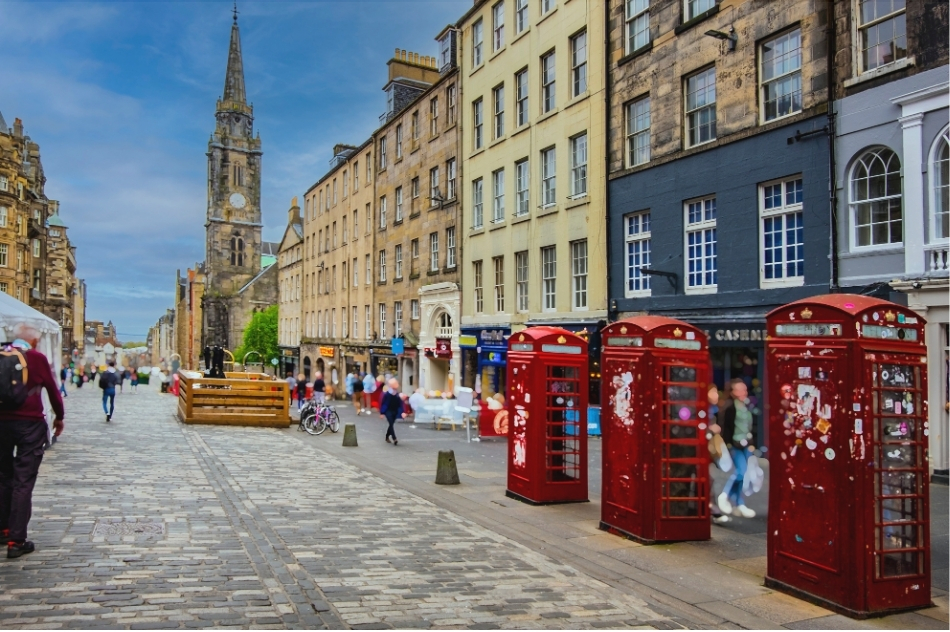
Today’s Royal Mile presents a different face to the world. Tartan shops proliferate (locals call them ‘tartan tat,’ but they acknowledge the economic necessity), buskers perform, and tourists navigate the cobbles with varying degrees of success. During August, the Festival Fringe transforms the street into an open-air theatre; you cannot walk ten yards without someone pressing a flyer into your hand or performing comedy outside a chip shop.
Yet beneath the commercial surface, the authentic Royal Mile survives. The Writers’ Museum, tucked into Lady Stair’s Close, celebrates Burns, Scott, and Stevenson with manuscripts and personal effects. Gladstone’s Land, preserved by the National Trust for Scotland, shows how a 17th-century merchant’s home actually looked—painted ceilings, cramped rooms, and all. The Scottish Storytelling Centre continues traditions of oral history that predate the printed word.
Film location scouts have never been able to resist the Royal Mile’s photogenic appeal. One Day (2011), the adaptation of David Nicholls’ bestselling novel, used the street for scenes featuring Anne Hathaway and Jim Sturgess. The Illusionist (2010), Sylvain Chomet’s animated love letter to Edinburgh, captured the Mile’s atmosphere in beautifully melancholic detail. And countless television productions, from Rebus to Outlander, have sent cameras down these cobbles in search of authentic Edinburgh atmosphere.
Walk the Royal Mile slowly—Edinburgh always prefers that. Duck into closes, peer into courtyards, and resist the urge to see everything in a single visit. As the Gaelic proverb has it: ‘Is fheàrr Gàidhlig bhriste, na Gàidhlig sa chiste’—broken Gaelic is better than Gaelic in the coffin. The same applies to exploration: an imperfect visit, taken at your own pace and following your own curiosity, will reward you far more than any exhaustive itinerary.