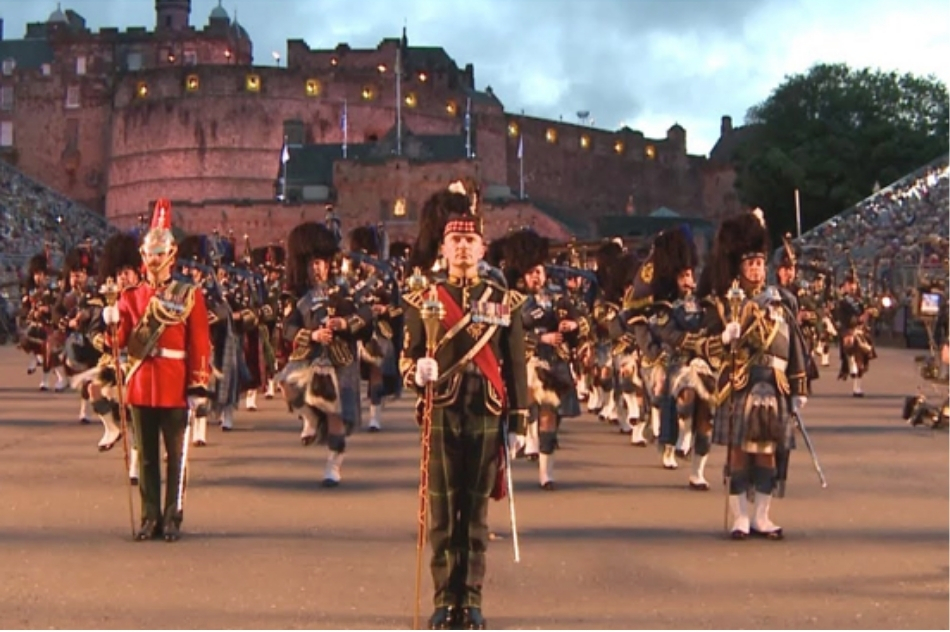
“No audience can fail to be moved by the sight of massed pipes and drums against the floodlit castle. It is, quite simply, one of the world’s great spectacles.”
— The Times
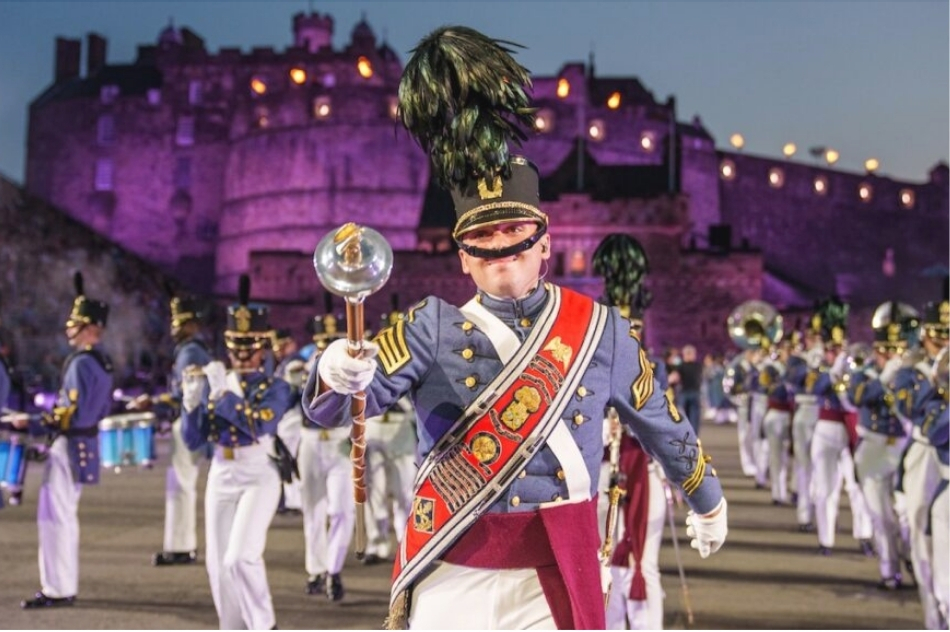
Every August, as dusk settles over the city and lights rise on Edinburgh Castle’s esplanade, something extraordinary happens. The Royal Edinburgh Military Tattoo transforms this ancient parade ground into a global stage where music, marching, and military tradition collide with theatrical flair. Even the most determinedly unimpressed visitor will find it difficult to suppress the shiver that runs down the spine when 200 pipers and drummers launch into ‘Scotland the Brave’ beneath a floodlit castle.
The word ‘tattoo’ derives from the Dutch ‘doe den tap toe’—turn off the taps—the signal for tavern keepers to stop serving and for soldiers to return to barracks. Edinburgh’s interpretation of this military tradition began modestly in 1950 as part of post-war recovery efforts. What happened next exceeded all expectations. The show sold out. And then sold out again. And has continued selling out virtually every performance since.
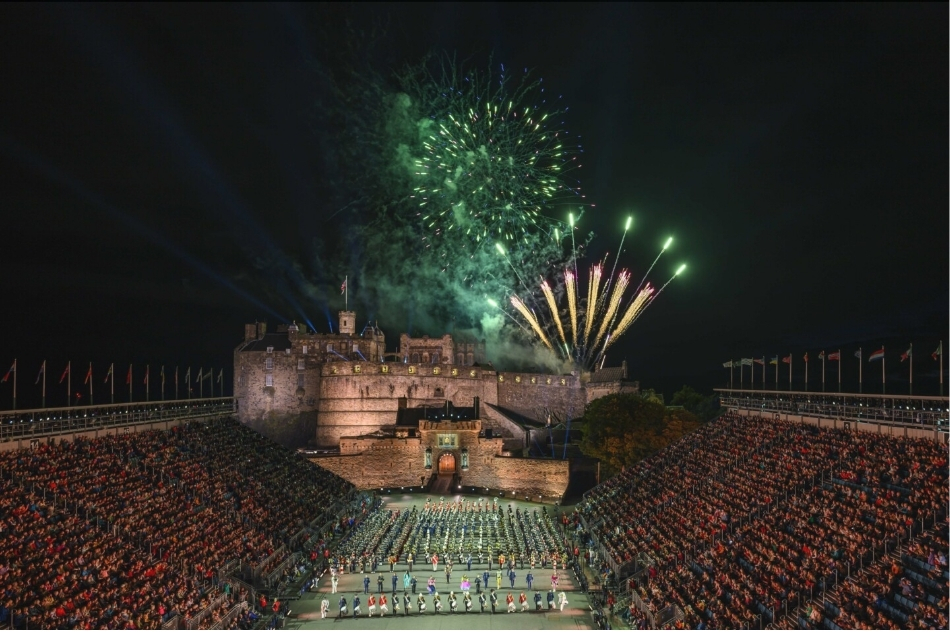
Modern Tattoo statistics are staggering. Each August, approximately 220,000 people attend the 25 performances. The worldwide television broadcast reaches 100 million viewers in 30 countries. Over 1,000 performers from around the globe participate. The setting is irreplaceable—the castle esplanade provides a natural amphitheatre against the most dramatic possible backdrop. When the castle walls turn blood red with projected lighting, or the gates open to reveal performers emerging from apparent antiquity, the theatrical potential of the space becomes apparent.
At the heart of every Tattoo are the massed pipes and drums. The sound of 200 pipers playing in unison is not music in any conventional sense; it is physical experience, felt as much as heard. The finale follows an unvarying ritual: a lone piper on the castle battlements plays a lament in the silence following the show’s climactic crescendo. The moment is deliberately, unapologetically emotional—representing fallen comrades, Scottish diaspora, and collective memory. Very few audiences remain entirely dry-eyed.
Tickets are among the most sought-after in Edinburgh’s festival calendar. They go on sale in December and sell rapidly. Book early, dress warmly, and arrive early to absorb the atmosphere. When the show finally begins, you will understand why Edinburgh has been doing this for over seventy years.