
The Ones Who Stayed
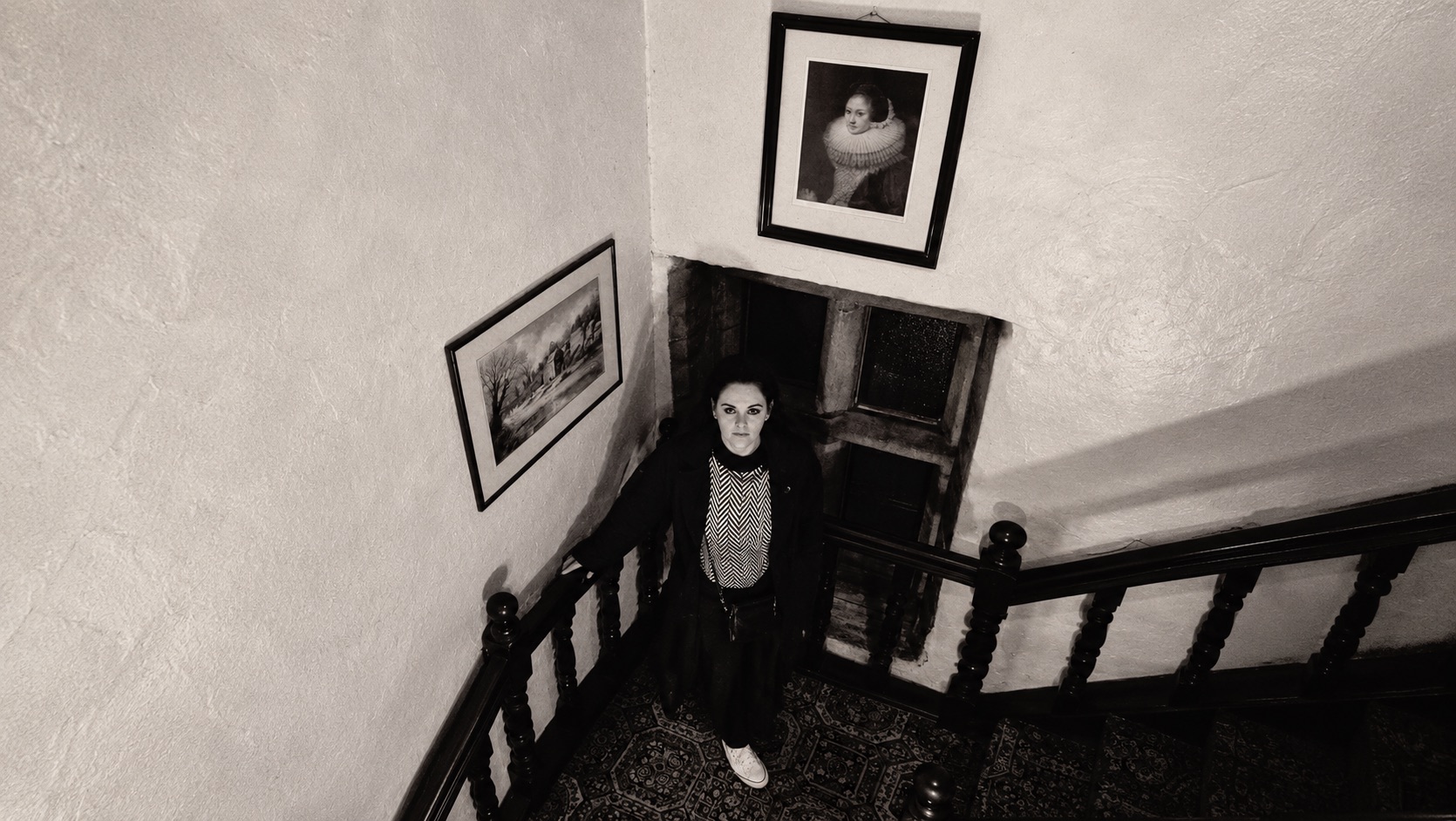
There is a moment in a Yorkshire October when daylight seems to withdraw without explanation. The Pennines turn pewter-grey; the last light slips from the mill windows; and the wind finds its way through the oldest streets. Then the lamps come on, one by one, like candles being lit for someone expected home.
This is the hour when Yorkshire’s ghost stories feel closest. Not because every cold corridor conceals a spirit, or every unexplained sound belongs to the dead, but because the county’s old buildings have held so many lives: loves kept secret, crimes remembered, children lost, fortunes made and communities swept away.
Follow the stories and a pattern emerges. The ghosts are rarely frightening simply for the sake of it. They are people who, the legends insist, left something unfinished. And sometimes the strangest detail is not the haunting itself, but the small piece of history at its heart.
The hands at the West Gate
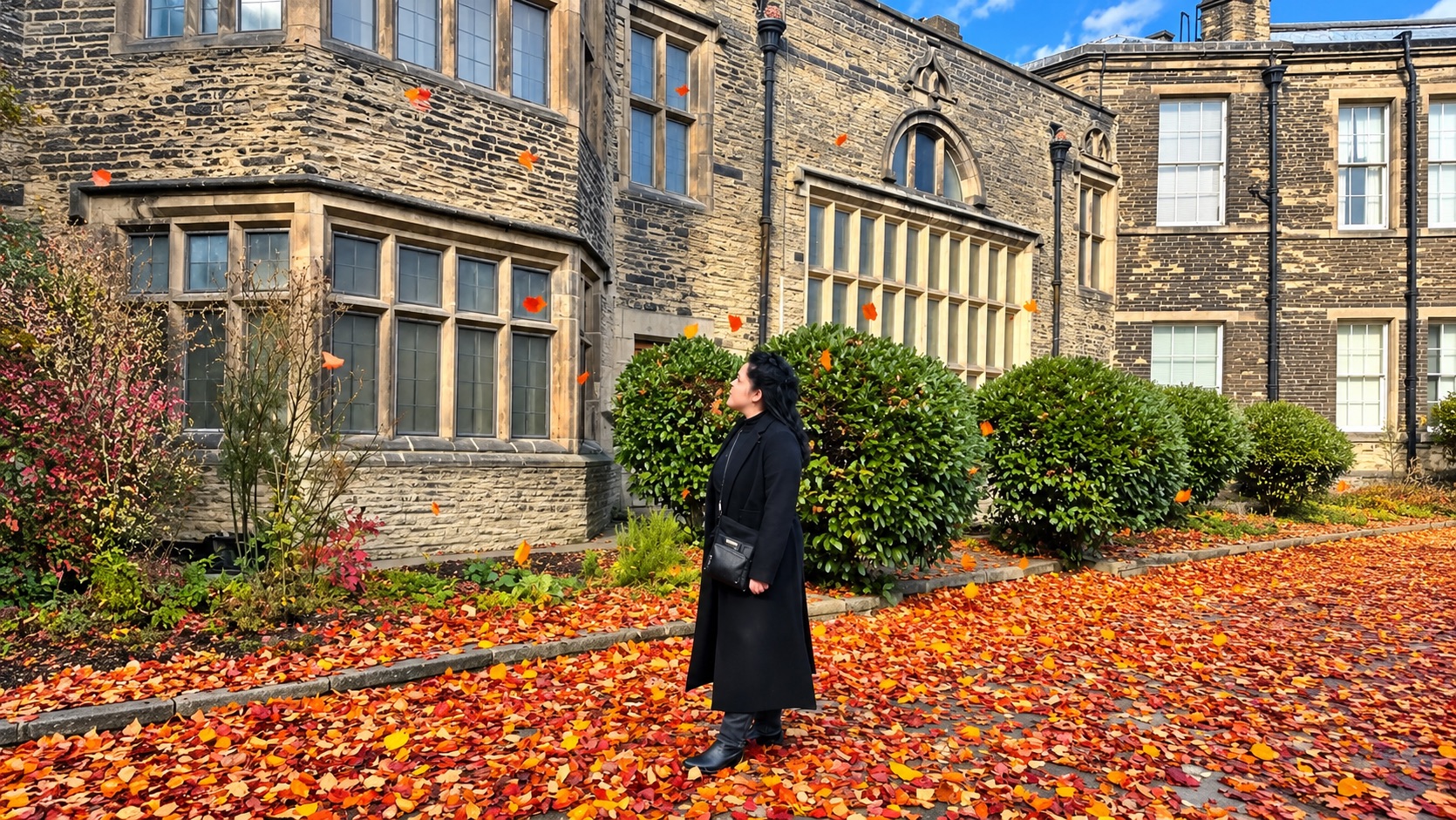
At Halifax’s Piece Hall, the past is usually loud with life. The great Georgian courtyard opened on New Year’s Day 1779, built for handloom weavers to sell their ‘pieces’ of cloth. Today, cafés and independent shops occupy the rooms once used by traders. But at the West Gate, look to the stone pilaster just above eye level. There, if the light is right, faint hand-shaped marks remain.
The old explanation was darker. A murderer, fleeing over the wall, had supposedly clawed at the stone; others blamed a witch. The marks seemed to defy the grime that blackened the surrounding masonry, as though the building had chosen not to forget.
A more human explanation emerged from papers kept by Halifax pianist Harry Maude. A note recalled an evening in 1890 when Maude and friends found cleaning materials left at the Piece Hall. One young man dipped his hands in the acid used on the stone and pressed them against the wall. The account is local history rather than proof beyond doubt, but it gives the mystery an unexpectedly intimate ending: not a murderer, perhaps, but a reckless boy trying to leave his mark. Stone-cleaning during the Hall’s restoration made the prints less distinct; they have not vanished entirely.
And the stories do not stop at the gate. Traders have spoken of a little girl called Amy, while visitors on late tours have described footsteps, lights and sudden chills in the galleries and cellars. These are reports, not verified events. Still, the idea of voices lingering in a place built around the labour of thousands has its own quiet pull.
Beside the Hall, the solitary spire of Square Church rises like a warning finger. The church opened in 1857, closed in 1969 and was badly damaged by fire in January 1971. Most of the remains were demolished in 1976, leaving the spire standing for decades before the site was incorporated into the Central Library. Ghost-hunters have reported a dark figure at its upper windows. Perhaps the shape belongs to the imagination; perhaps, after so much loss, Halifax simply sees a watcher in the dark.
Calderdale after dark
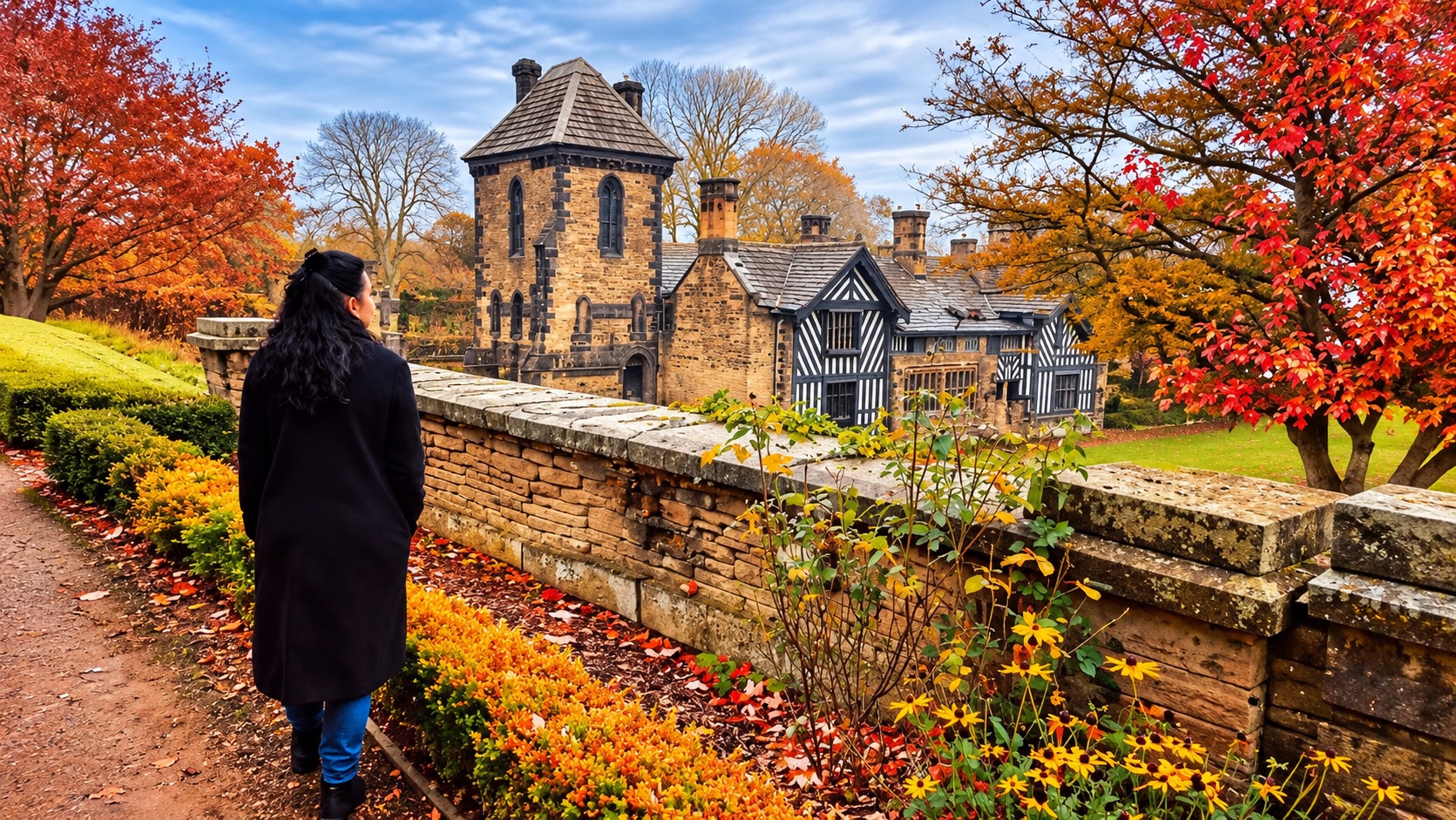
Shibden Hall has stood since the early fifteenth century, its timbered frame carrying the marks of generations. Its most famous resident was Anne Lister, the formidable diarist whose coded journals recorded a life and loves that she could not openly describe. The Hall’s documented history is extraordinary enough without a ghost: behind its doors, Lister remade the house and pursued a life on her own terms. Later visitors and staff have reported figures in old-fashioned clothing, unexplained whispers and pockets of cold air. None is proof of a haunting, but the building’s layered past gives the stories somewhere to take root.
In Elland, the Fleece Inn has a different reputation. The seventeenth-century pub became a television stop for Most Haunted in 2017, when the crew reported a dramatic investigation involving thrown objects and apparent poltergeist activity. The programme made compelling viewing; it did not establish a supernatural cause. Yet a pub after closing time (empty glasses, dark stairs, old beams settling overhead) hardly needs much help from the imagination.
Bradford: a plea in the night
In 1643, after the Royalist victory at Adwalton Moor, Bradford faced the threat of an assault. At Bolling Hall, where parts of the building date to the medieval period, a story took hold that would outlive the siege itself.
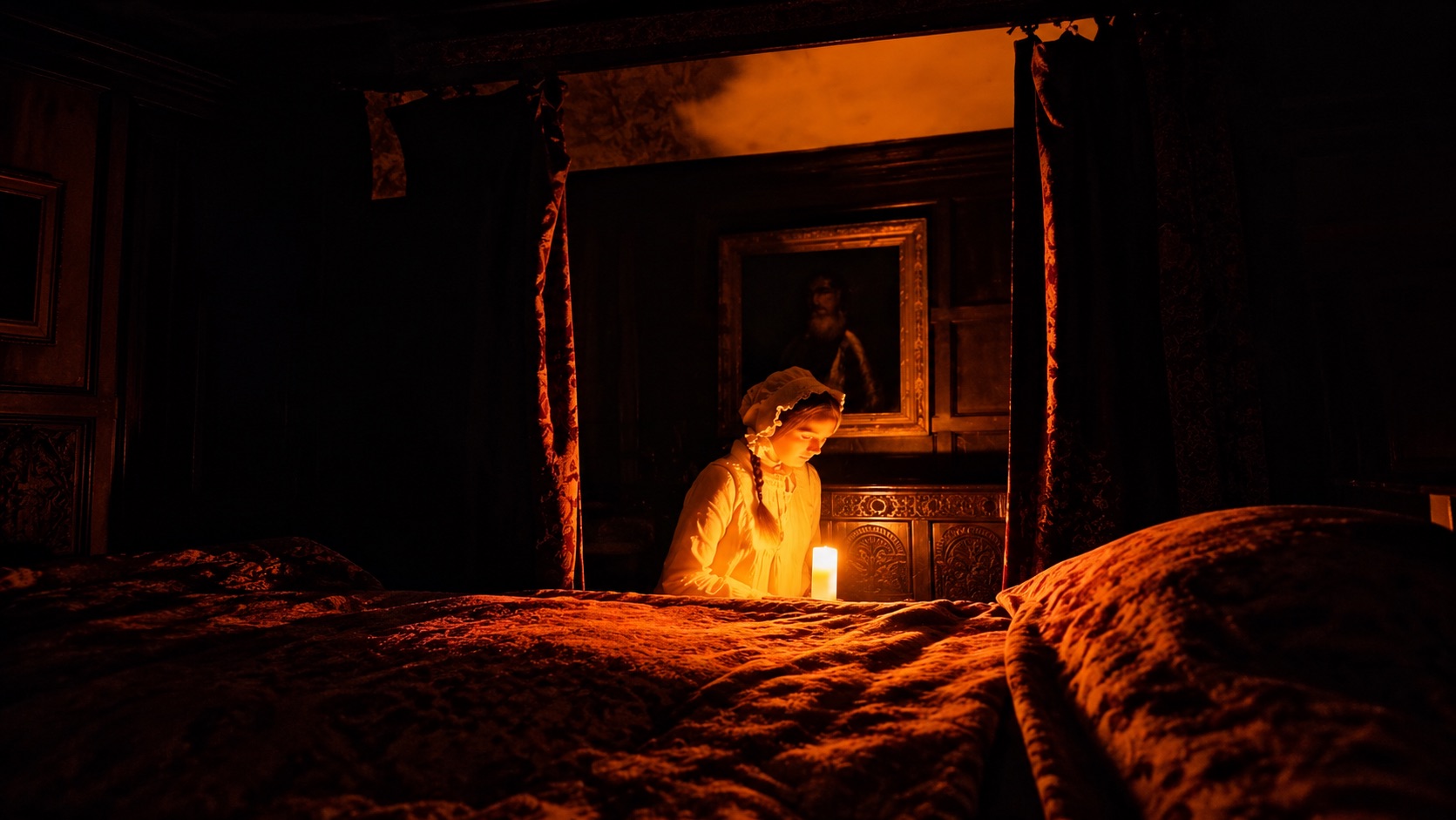
On the night before the town was supposedly to be destroyed, the Earl of Newcastle was said to have been woken by a woman in white. She tugged at his bedclothes and cried, ‘Pity poor Bradford!’ The apparition vanished; the Earl, according to the legend, changed his orders and spared the town.
There is no need to decide whether the visitor was a ghost, a dream or a story shaped by later generations. Its power lies in the reversal: a frightened town saved, not by an army, but by a plea in the dark. Bolling Hall is now a museum, and reports of children’s voices, footsteps and a tall figure in a black coat continue to circulate. They remain reported experiences, not established facts.
Across Bradford, the Midland Hotel carries a real and melancholy theatrical memory. On 13 October 1905, the celebrated actor Sir Henry Irving collapsed after performing in Becket at the Theatre Royal and died at the hotel. His manager, Bram Stoker, the future author of Dracula, was with him. The two men had worked together for many years. That connection has encouraged speculation about whether Irving influenced Stoker’s image of the Count, but it cannot be proved. Guests have since described a dignified figure on the staircase. In a city that once welcomed a great actor for his final performance, it is an evocative story: the leading man, still making one last entrance.
Fair Becca: the woman on the hill
Some legends belong to no house at all. Around Great Horton, Lidget Green, Allerton and Thornton, the name Fair Becca has travelled through generations. An old newspaper account, sent in by a Great Horton correspondent named James Parker, places her at Hew Clews Farm, near Hollingwood Lane. One morning, the story goes, her sweetheart rode up to her cottage and told her to put on her bridal clothes, for he was taking her to the kirk to be married. Delighted, Rebecca dressed and climbed up behind him on the pillion.
They rode out towards Wilsden. Near a lonely lane at Old Allen, where old pits lay disused, he told her to prepare for death. She begged for mercy. He galloped round the shaft and tried to throw her from the horse, but she clung to him, shrieking, and it took three circuits before he flung her into the dark.
That evening he sat in an old inn at Hunt Yard, Great Horton, under the sign of Robin Hood and Little John, his head in his hands, rising now and then to pace the room as if something were burning inside him. Suspicion grew. He was brought to justice, made a full confession before he died, and Becca’s body was found at the bottom of the pit.
She had sworn she would come again for as long as holly grew green, and Horton believed she kept her word. For years she was seen from the first grey twilight until midnight, chiefly by moonlight, wandering by a brook or beneath the trees around Hew Clews and Hollingwood Lane, still in her bridal dress. Her name became the great scare of the district, told round winter hearths. When the sightings faded, local people said she had been frightened away by the whirr of machinery at Cliffe Mills.
She has never strayed far, though. In 1982 the Telegraph & Argus still marked her on its map of haunted Bradford at Hew Clews, and others say she waits at Pitty Beck Bridge on Allerton Lane. Later tellings moved her to the soaring arches of Thornton Viaduct, where children dared one another to stand after dark and speak her name three times.
Rebecca. Rebecca. Rebecca.
The words are easy enough to say in daylight. But as the last light drains from the valley and the dark gathers beneath the arches, few are willing to discover whether the old warning is merely a story, or a mistake they will regret making.
Leeds: lost pearls and a silenced scream
At Temple Newsam, one of Leeds’s best-known ghost stories begins with a necklace. Mary Ingram, aged fourteen in the traditional account, was robbed by highwaymen while returning from a journey. Among the stolen possessions was a treasured necklace said to have been given to her by her grandfather. The story says she became consumed by the loss and died soon afterwards. Her spirit, the Blue Lady, is said to wander the house and grounds, still searching.
Leeds Museums and Galleries retells the legend, while recognising how stories grow and change. The historical setting and portrait of Mary are real; the supernatural explanation remains folklore. That distinction does not make the story less affecting. A lost object becomes a symbol of the one thing grief cannot return.
Another Temple Newsam legend is more brutal. Phoebe Gray, a young maid, was said to have been murdered in 1704 by William Collinson, who was later hanged. In the haunting tradition, a scream still breaks the silence of the house. The details should be treated as a historical ghost story rather than a verified recurring event, but its starkness is hard to shake.
Elsewhere, the old industrial city has its own spectral soundtrack. At Armley Mills, once among the world’s largest woollen mills, visitors have reported small voices near the machinery. The Thackray Museum occupies the former Leeds Union Workhouse, where a nurse in Victorian dress is said to linger on the stairs. At Kirkstall Abbey, the roofless medieval ruins catch the last of the light; local ghost stories speak of a White Lady by the river and shadowy monks moving through the cloister.
South-east of Leeds, Pontefract’s 30 East Drive became notorious for the poltergeist case reported there in the 1960s, associated in popular accounts with a ‘Black Monk’. Claims included moving furniture and flying objects. The case remains controversial, and reports should not be mistaken for proof. But its setting, a very ordinary suburban house, makes the story feel uncomfortably close to home.
Haworth and the moors
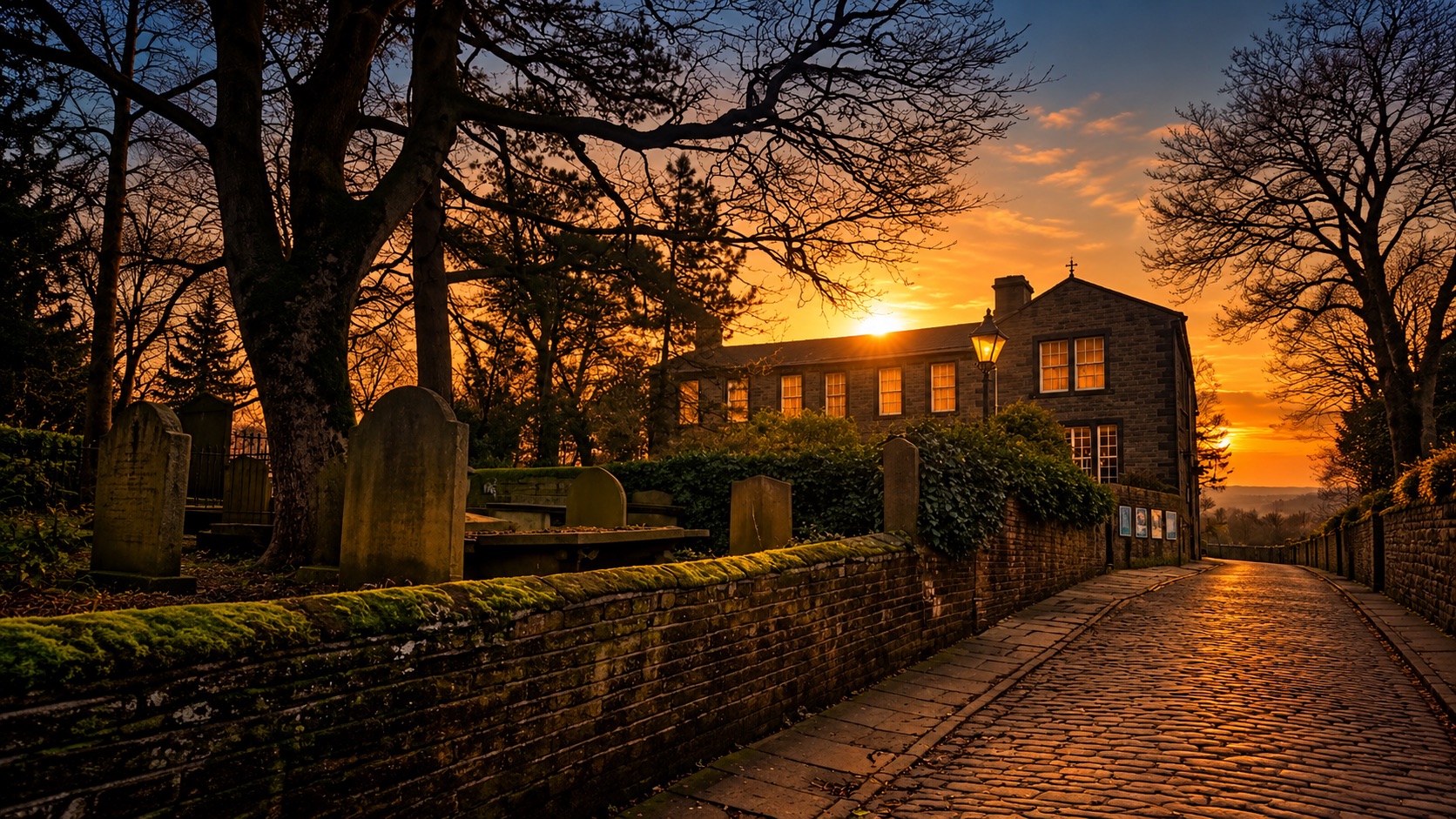
On a wet October evening, Haworth seems to have been made for ghost stories. Rain shines on the cobbles; the moors rise behind the rooftops; and the Brontë Parsonage stands where Charlotte, Emily and Anne wrote books full of passion, loss and restless spirits. Visitors have reported seeing a figure believed to be their brother Branwell, while at the Black Bull, where he was a familiar presence in life, legend seats him once more beside the fire.
The churchyard is often said to contain around 40,000 burials, a frequently repeated estimate rather than a precise count. The overcrowding and poor sanitation associated with nineteenth-century burial grounds were real concerns. At dusk, ghost-hunters describe pale lights and whispers among the stones. High on the moors, the ruined farmhouse of Top Withens is often linked with Wuthering Heights, though the extent of its influence on Emily Brontë’s novel is debated. Walkers have reported sudden cold and cries carried on the wind. The moors can produce strange sounds without help from the supernatural; the story is that someone, or something, is calling from the ruins.
At East Riddlesden Hall near Keighley, the Grey Lady is said to be a wife imprisoned by a jealous husband. A second story tells of an empty cradle rocking by itself in the nursery. Neither tale is established history. Both draw on a fear older than the buildings themselves: what happens when a home becomes a place of confinement rather than safety?
York: the city beneath the city
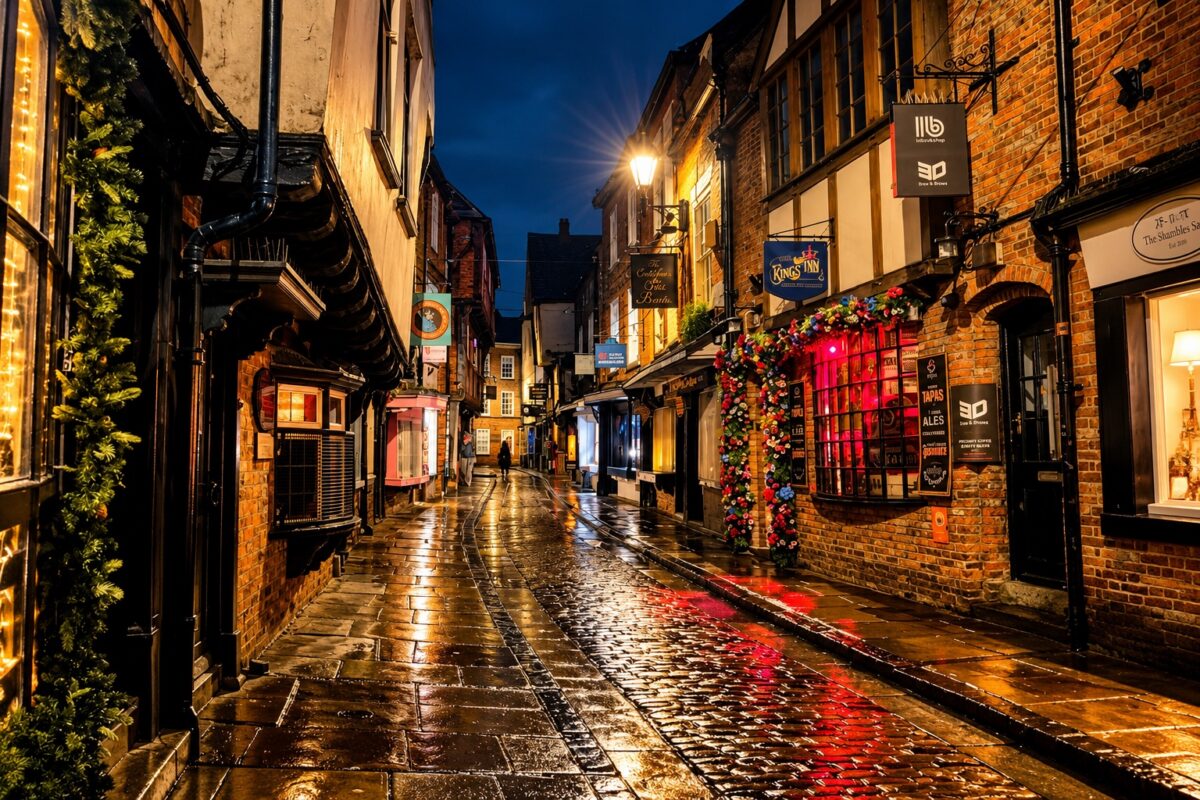
York is often promoted as one of Europe’s most haunted cities, and its streets make a persuasive case. Roman, medieval and Georgian layers lie beneath the modern city. In the cellar of Treasurer’s House, the most famous story begins with a trumpet note.
In 1953, eighteen-year-old apprentice heating engineer Harry Martindale was working below the house when he heard a sound like a distant horn. He said a Roman soldier emerged through the wall, followed by a horse and a column of soldiers. They appeared only from the knees up, as though their feet were walking on a road below the cellar floor, before disappearing into the opposite wall.
A Roman road does run beneath the area, and later archaeological work confirmed York’s deep Roman foundations. That does not prove Martindale saw an apparition, nor that the soldiers matched a real troop passing at that exact point. The National Trust records his account and other reports, while acknowledging that visitors and staff have not all experienced anything unusual. The story’s most enduring detail is the one that seems impossible to forget: a marching column that never noticed the living man watching it.
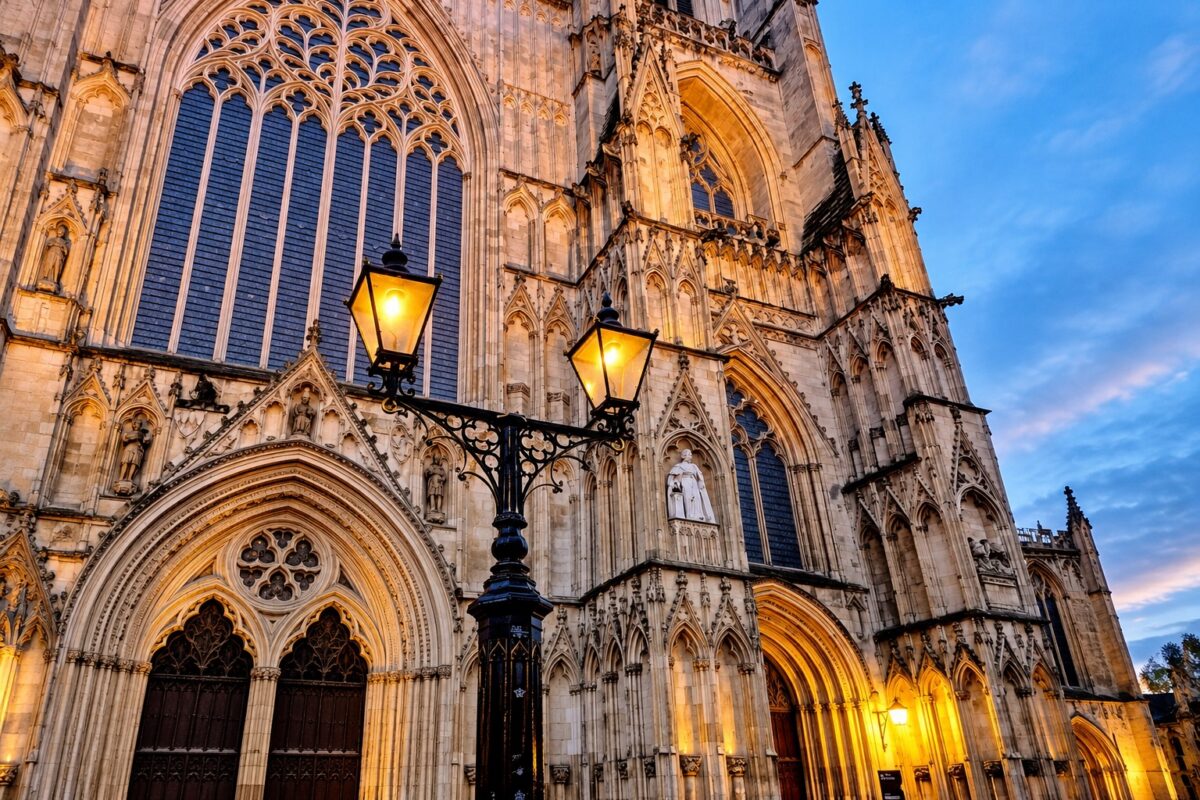
Nearby, the Golden Fleece has its own collection of reported spirits, including a figure known as One-Eyed Jack and a woman referred to as Lady Peckett. At York Minster, stories tell of organ music after the doors are locked. In a timber-framed house on Stonegate, a presence known as Tom is said to occupy the upper floors. These are local reports and traditions, not verified supernatural events.
Off Low Petergate, the narrow passage now called Lund’s Court was once popularly known as Mad Alice Lane. The legend says Alice Smith was hanged in 1825 after killing an abusive husband, and that her face still appears at a window. Visit York itself describes the story as more urban legend than confirmed fact. Perhaps that uncertainty is part of its staying power: a dark lane, a disputed past and a woman whose story refuses to be settled.
At York Theatre Royal, another tale tells of a Grey Lady: a nun supposedly walled up alive for loving a nobleman. Theatre lore says her appearance in the dress circle foretells a successful production. It is a cruel story, but the theatre has turned its ghost into something like a patron saint of opening night.
Why they stay
Travel through these places and the pattern becomes difficult to ignore. The ghosts are said to search for necklaces, plead for towns, return to familiar rooms and walk roads buried beneath the present. They are figures caught at the instant when something was taken from them: a future, a home, a voice, a chance to say goodbye.
Of course, a reported chill is not proof of a spirit, and a legend is not the same thing as a documented event. Yorkshire’s ghost stories are best read with both curiosity and care: history gives them their setting; folklore gives them their shape; imagination keeps them alive.
Return, finally, to the West Gate at Halifax. The handprints are faint now, and the boy who may have made them in 1890 is long gone. Stand there as evening gathers and look again at the stone. Perhaps there is nothing there but the residue of an old prank. Perhaps that is precisely why the marks endure. For a moment, someone who lived more than a century ago is still reaching towards us.
And somewhere in Yorkshire, another light is going out in an upstairs window. A door is closing in an empty room. A footstep sounds where no one should be. The old stories are waiting, not necessarily for us to believe them, but to listen.
Practical Information
- Piece Hall handprints: The local account links the marks to a note in Harry Maude’s papers describing an 1890 prank with acid used by stone cleaners. The story is plausible local history, not conclusive forensic proof. The 1976 account says the marks were pale against pollution-darkened stone and became less distinct after cleaning.
- Square Church: The church opened in 1857, closed in 1969, suffered a major fire on 3 January 1971 and was mostly demolished in 1976. Avoid confusing it with Square Chapel.
- Shibden Hall: Historic England dates the timber-framed hall to around 1420 and confirms Anne Lister’s documented connection. Ghost sightings are folklore/reported experiences, not historical facts.
- Bolling Hall: The ‘Pity poor Bradford’ episode is a longstanding tradition linked to the 1643 siege. It should not be presented as an independently verified event.
- Henry Irving and Bram Stoker: Irving died on 13 October 1905 after performing in Bradford; Stoker was his manager. The idea that Irving directly inspired Dracula is speculative and is labelled as such.
- Fair Becca: Now based on the newspaper account by James Parker of Great Horton (clipping supplied; publication title and date to be confirmed) and the Telegraph & Argus haunted Bradford map, 30 October 1982, p.13, which places her at Hew Clews. Hew Clews Farm, Hollingwood Lane, Old Allen, Wilsden, Hunt Yard, the Robin Hood and Little John inn and Cliffe Mills all come from the Parker account. Pitty Beck Bridge on Allerton Lane comes from local knowledge (Mark M) and is not yet confirmed in print. The names Rebecca Whaley and Thomas Foster remain unverified and are not used.
- Temple Newsam: Leeds Museums and Galleries recounts the Blue Lady tradition and Mary Ingram story. The supernatural element is legend. Phoebe Gray’s murder story is also presented as a house legend; verify the underlying case against primary/local archival records before treating every detail as settled.
- Treasurer’s House: The National Trust records Harry Martindale’s 1953 account, including the trumpet-like sound and soldiers visible from the knees up. Roman remains and roads are documented, but archaeology does not prove the apparition.
- Mad Alice: Visit York describes the story as more urban legend than confirmed fact. Avoid asserting Alice Smith’s identity and execution as certain.
- Other hauntings: Amy, Mary and Joseph at the Piece Hall; reported spirits at Bolling Hall; sightings at Armley Mills, Kirkstall Abbey, East Riddlesden Hall, the Golden Fleece and York Theatre Royal; and the Pontefract poltergeist should all remain clearly attributed to stories or reports.

Shannon Palmer is The Travelling Telegraph's Yorkshire blogger with a passion for uncovering the county that most visitors never get to see. Drawing on years of life across God's Own County, she shares honest guides, hidden discoveries and the kind of local knowledge that only comes from truly being there.