
The Edinburgh Festival Fringe: Controlled Chaos at Its Finest
“August in Edinburgh is proof that the Scots can throw a party—they just prefer to call it a festival and charge admission.”
— Billy Connolly
Every August, Edinburgh undergoes a transformation so complete that residents speak of the city in seasonal terms: there is Edinburgh, and then there is Festival Edinburgh—an entity altogether wilder, louder, and significantly more exhausting. For approximately three weeks, the Scottish capital becomes the beating heart of the performing arts world, hosting the largest arts festival on the planet. The numbers alone induce a certain breathlessness: over 3,000 shows, 300 venues, 25,000 performers, and audiences exceeding three million.
The Fringe began, appropriately enough, as a gatecrash. In 1947, the Edinburgh International Festival was established as a post-war gesture of cultural healing—a gathering of classical music, theatre, and opera designed to restore European artistic connections. Eight theatre companies, uninvited and undeterred, turned up anyway and performed ‘on the fringe’ of the official programme. That rebellious gesture became a tradition, and the tradition became an institution. Today, the Fringe dwarfs the Festival that inspired it.
The Open Access Revolution
What makes the Fringe unique is its fundamental principle: anyone can perform. There are no artistic directors curating the programme, no selection committees passing judgment, no gatekeepers of any kind. If you can find a venue, pay the fees, and convince someone to watch you, you can be part of the Edinburgh Festival Fringe. This open-access philosophy has remained unchanged since 1947, and it produces exactly what you might expect: extraordinary highs, bewildering lows, and everything imaginable in between.
The democratisation has real consequences. Cambridge Footlights and Oxford Revue perform alongside first-time comedians trying material in borrowed function rooms. Established theatre companies share listings with experimental work that defies categorisation. You might see the next big thing in a converted lecture theatre, or you might sit through an hour of interpretive dance involving household appliances. The uncertainty is part of the appeal—and part of the exhaustion.
“The Edinburgh Fringe is where comedy goes to be tested by fire—sometimes literally, when the electrical systems in these old buildings give up.”
— Stewart Lee
Comedy’s Proving Ground
For comedians especially, Edinburgh represents the ultimate proving ground. A successful Fringe run can transform a career; a disastrous one can recalibrate ambitions. The names who emerged from Edinburgh read like a history of British comedy: Rowan Atkinson, Stephen Fry, Hugh Laurie, Emma Thompson, the Pythons, Eddie Izzard, Jo Brand, Dylan Moran, the League of Gentlemen, Phoebe Waller-Bridge. American comedians, too, have discovered that Edinburgh offers something unavailable elsewhere: concentrated audiences, industry attention, and three weeks of performing the same show nightly until it either works or breaks you.
The Comedy Awards (formerly the Perrier, now sponsored by various entities) have become a significant accolade. Past winners include Steve Coogan, Frank Skinner, Lee Mack, and Hannah Gadsby, whose show ‘Nanette’ began its journey to international acclaim on the Fringe before conquering Netflix. The competition is fierce, the reviewing is relentless, and the financial stakes are considerable—many performers lose money even on successful runs, treating Edinburgh as an investment in future bookings.
Theatre, Music, and the Unclassifiable
Comedy dominates the headlines, but the Fringe encompasses far more. The theatre programme ranges from Shakespeare to new writing, from solo shows to large-scale productions. Physical theatre, dance, circus, and children’s shows fill their own categories. Music spans classical recitals to experimental soundscapes. And then there are the shows that resist categorisation entirely—the ones listed simply as ‘Events’ or ‘Spoken Word’ because nothing else quite fits.
The venue list has grown to encompass every conceivable space. The Pleasance and Assembly Rooms anchor the programme with multiple stages and professional infrastructure. Underbelly colonises spaces beneath George Street. But the Fringe spirit lives equally in the church halls, pubs, cafés, and converted shipping containers that host shows throughout August. The joke goes that any Edinburgh resident who leaves their front door open risks returning to find a one-person show about mental health performing in their living room.
“At the Edinburgh Fringe, every phone box is a potential venue, every bus stop an opportunity for flyering, and every conversation an unintentional review.”
— Mark Watson
The Fringe Experience
Navigating the Fringe is an art form in itself. The programme—published both in traditional paper format and online—runs to hundreds of pages. Word of mouth remains the most reliable guide: if multiple unconnected people recommend the same show, pay attention. Reviews in The Scotsman, The List, and dedicated Fringe publications help sort wheat from chaff, though reviewers themselves are overwhelmed by the sheer volume of work demanding attention.
The rhythm of a Fringe day develops its own logic. Morning shows tend toward the gentler: children’s entertainment, cabaret brunches, hungover comedians doing ‘work in progress’ sets. Afternoon brings the meat of the programme, with shows running back-to-back from noon until midnight. Late-night slots, starting at 10pm or later, attract audiences willing to take risks—and performers eager to experiment away from the reviewing mainstream.
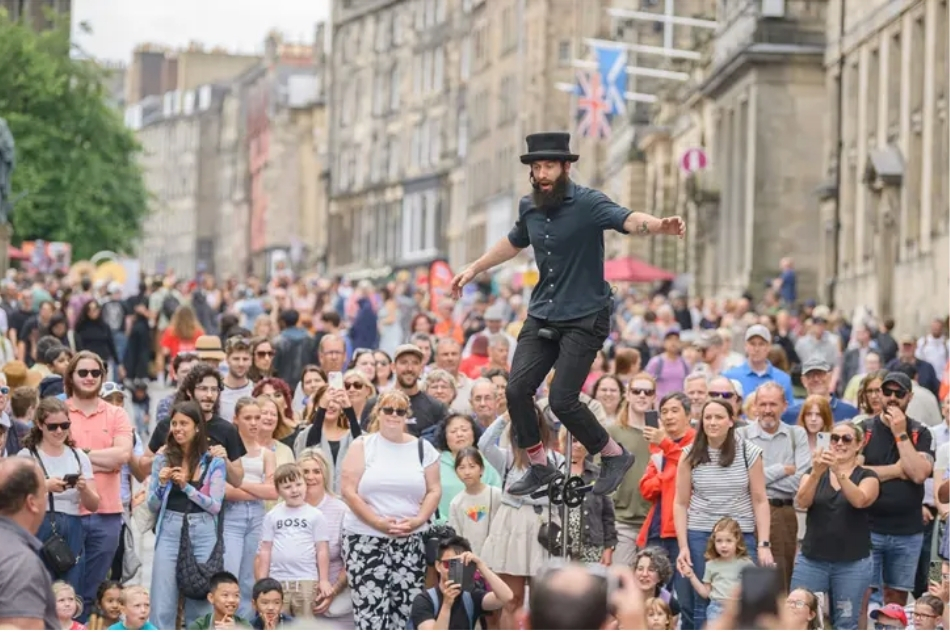
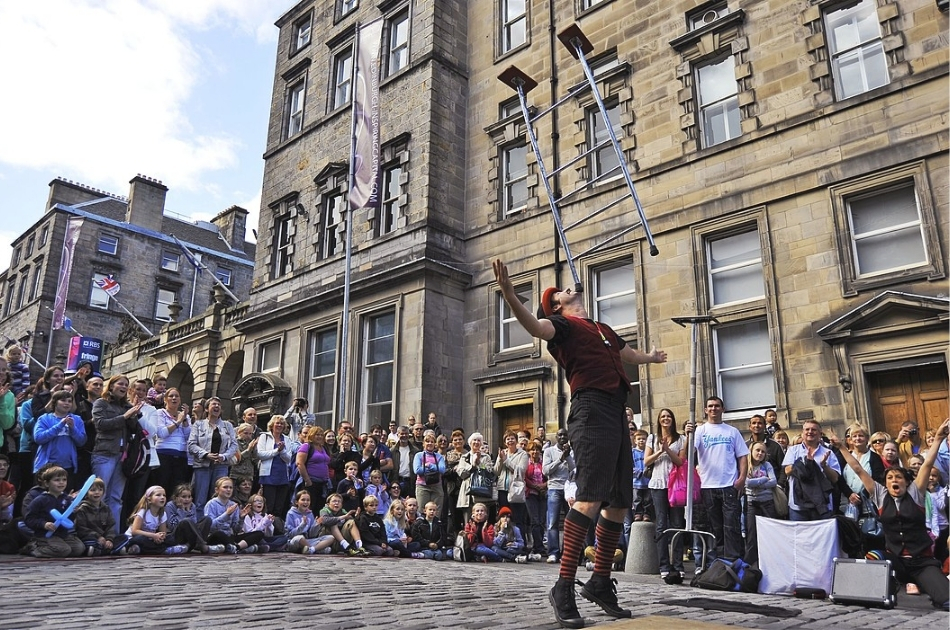
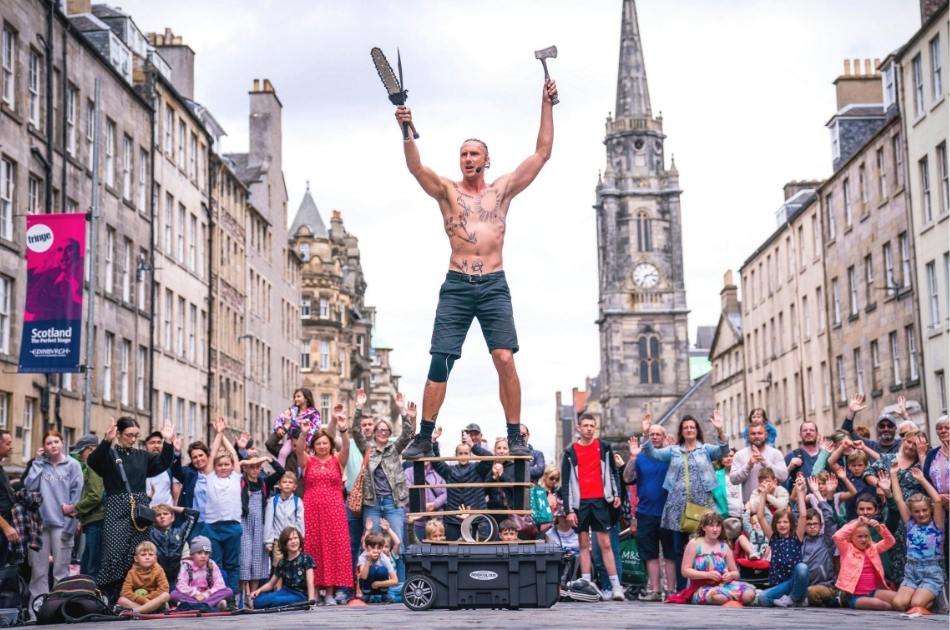
Between shows, the Royal Mile becomes a continuous performance space. Street performers, flyering performers, and performers who cannot quite distinguish between the two compete for attention. Fire-eaters, bagpipers, living statues, and improvised comedy troupes create an atmosphere somewhere between carnival and chaos. It is, depending on your mood and stamina, either exhilarating or overwhelming—often both within the same hour.
The Local Perspective
Ask Edinburghers about August and you will receive answers ranging from affectionate enthusiasm to weary tolerance. Some residents embrace the festival spirit, attending dozens of shows and revelling in the transformed city. Others flee entirely, renting their flats to performers (at considerable profit) and escaping to quieter corners of Scotland. Most fall somewhere between: appreciating what the Fringe means for the city while acknowledging the practical challenges of navigating crowds, finding parking, and maintaining any semblance of routine.
The economic impact is substantial. Studies estimate that August brings over £300 million to Edinburgh’s economy, supporting jobs and businesses throughout the year. Yet the relationship between festival and city remains complicated. Housing pressures, infrastructure strain, and questions about who really benefits from the Fringe animate local discussions. The love is real, but it comes with conditions.
“The Fringe is Edinburgh’s gift to the world. Some years, we want to ask for it back—but only until September, when we miss it terribly.”
— Local resident
Come to the Edinburgh Festival Fringe expecting confusion and come prepared for brilliance. Book accommodation months in advance. Wear comfortable shoes. Leave room in your schedule for spontaneity—the best Fringe experiences are often unplanned. And accept that you cannot see everything; the attempt would be both impossible and inadvisable. The Fringe rewards curiosity and punishes completism. Choose wisely, laugh often, and remember that exhaustion is part of the package.