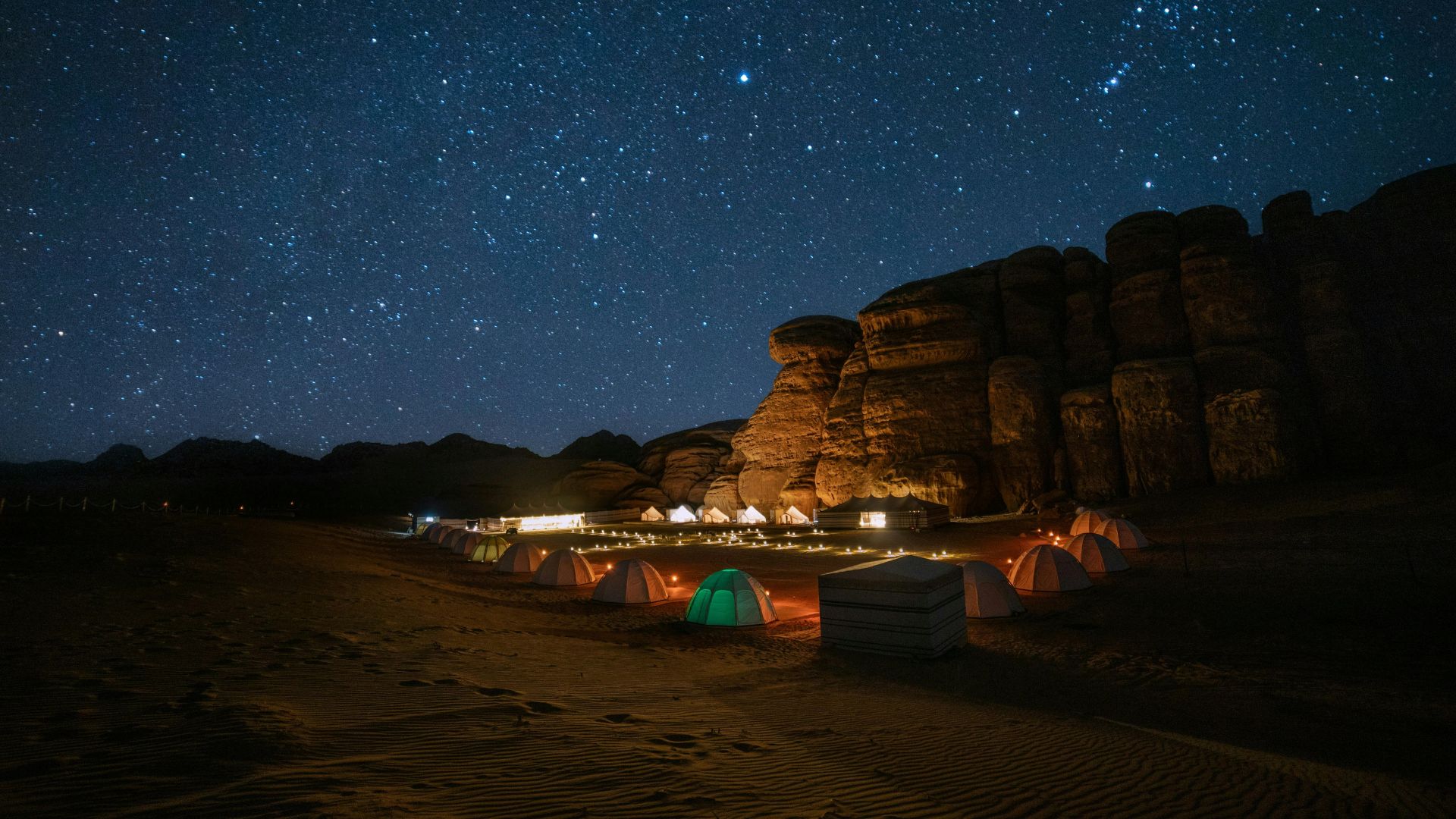
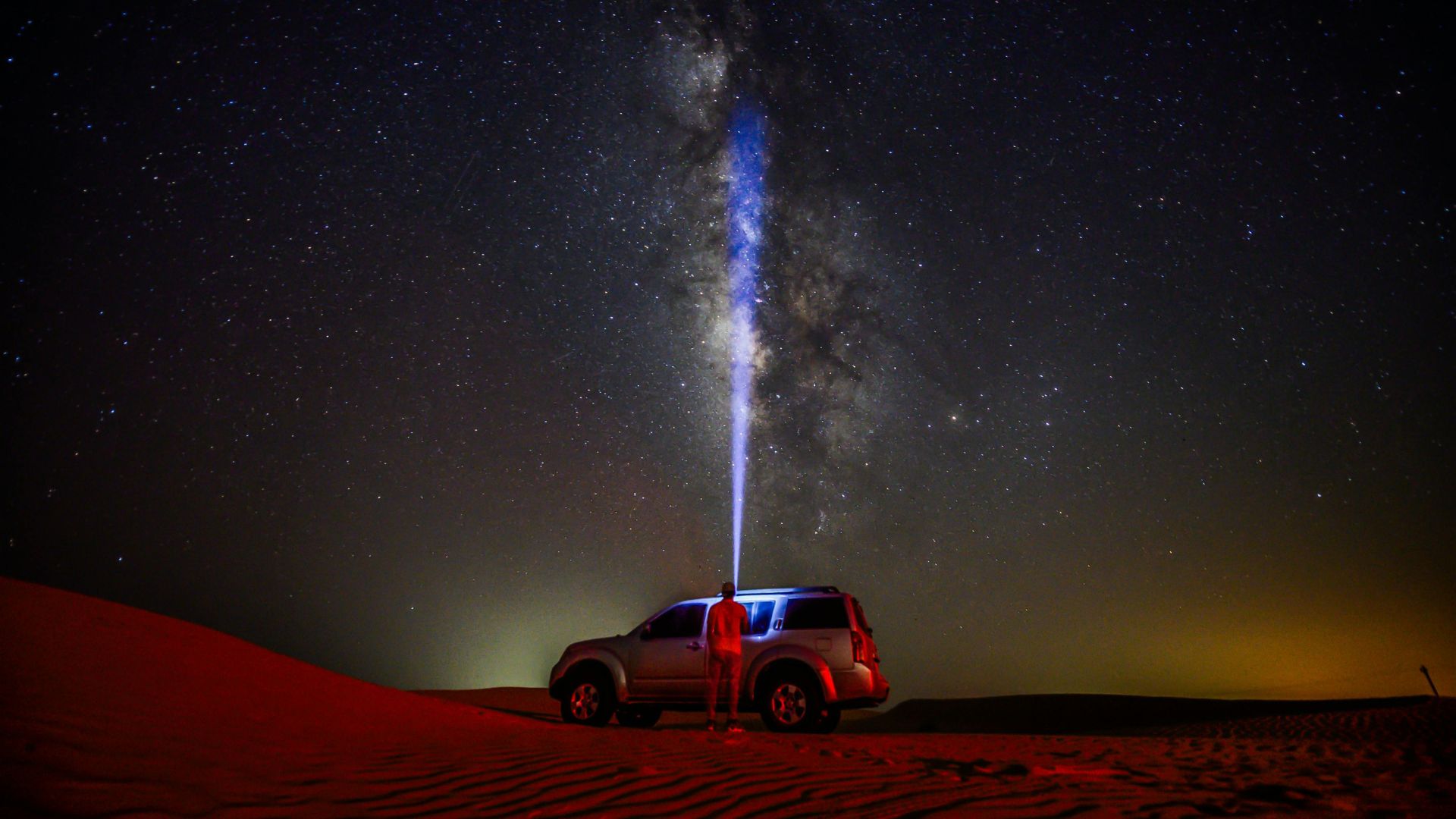
The Empty Quarter — Rub’ al Khali in Arabic, the world’s largest contiguous sand desert — begins south of Abu Dhabi and extends into Saudi Arabia, Oman, and Yemen. It is, as its name suggests, empty: no permanent settlements, no roads worth the name, and, crucially for our purposes, no light pollution. We drove two hours from the city, then twenty minutes on sand, and emerged into a darkness so complete that the sky seemed to vibrate.
The Milky Way here is not a suggestion but a presence — a ribbon of light that stretches from horizon to horizon, dense enough to cast shadows on the dunes. Our guide, an amateur astronomer who had been leading desert stargazing trips for a decade, set up a telescope and began pointing out the constellations that Arab astronomers named: Aldebaran, Altair, Betelgeuse, names that sound like fantasy but describe stars that burn trillions of kilometres away. The poetry felt appropriate; so did the silence.
We lay on the cooling sand — still warm from the day’s heat but no longer unbearable — and watched satellites transit the sky in lines that seemed too regular for nature and too slow for aircraft. The temperature dropped; the tea our guide provided warmed; and the desert revealed itself as the opposite of empty. Stars beyond counting; sand that held heat and released it gradually; and the silence that cities have made rare. ‘This is why we love the desert,’ our guide said. ‘Not for what it does not have. For what it has.’ He gestured at the sky, the dunes, the nothing that was everything. He did not need to say more.