
Philippines: Eat Like a Local
Eat Like a Local
- Lechon — Street Food / Celebration Dining
Expect to pay: £5–£10 per portion street-side; £15–£25 in restaurants
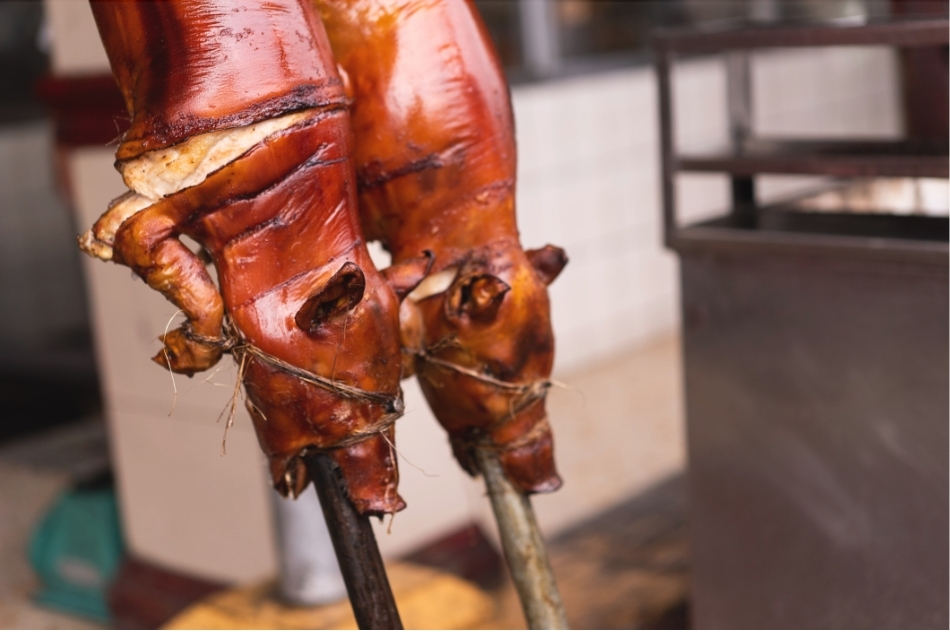
The undisputed king of Filipino feasting, lechon is a whole pig spit-roasted over charcoal for hours until the skin achieves shattering crispness while the meat remains impossibly juicy. Cebu claims supremacy, but arguments rage nationwide. Street vendors carve portions to order—always request extra skin, the prize cut. Paired with vinegar dipping sauce and steaming rice, it’s revelatory. Festival gatherings and family celebrations orbit around the lechon; for visitors, it represents Filipino hospitality made edible. Find a queuing crowd, join them, and experience pork at its absolute pinnacle.
- Kamayan Feast — Fine Dining / Experiential
Expect to pay: £25–£50 per person at restaurants; £60–£100 for premium experiences
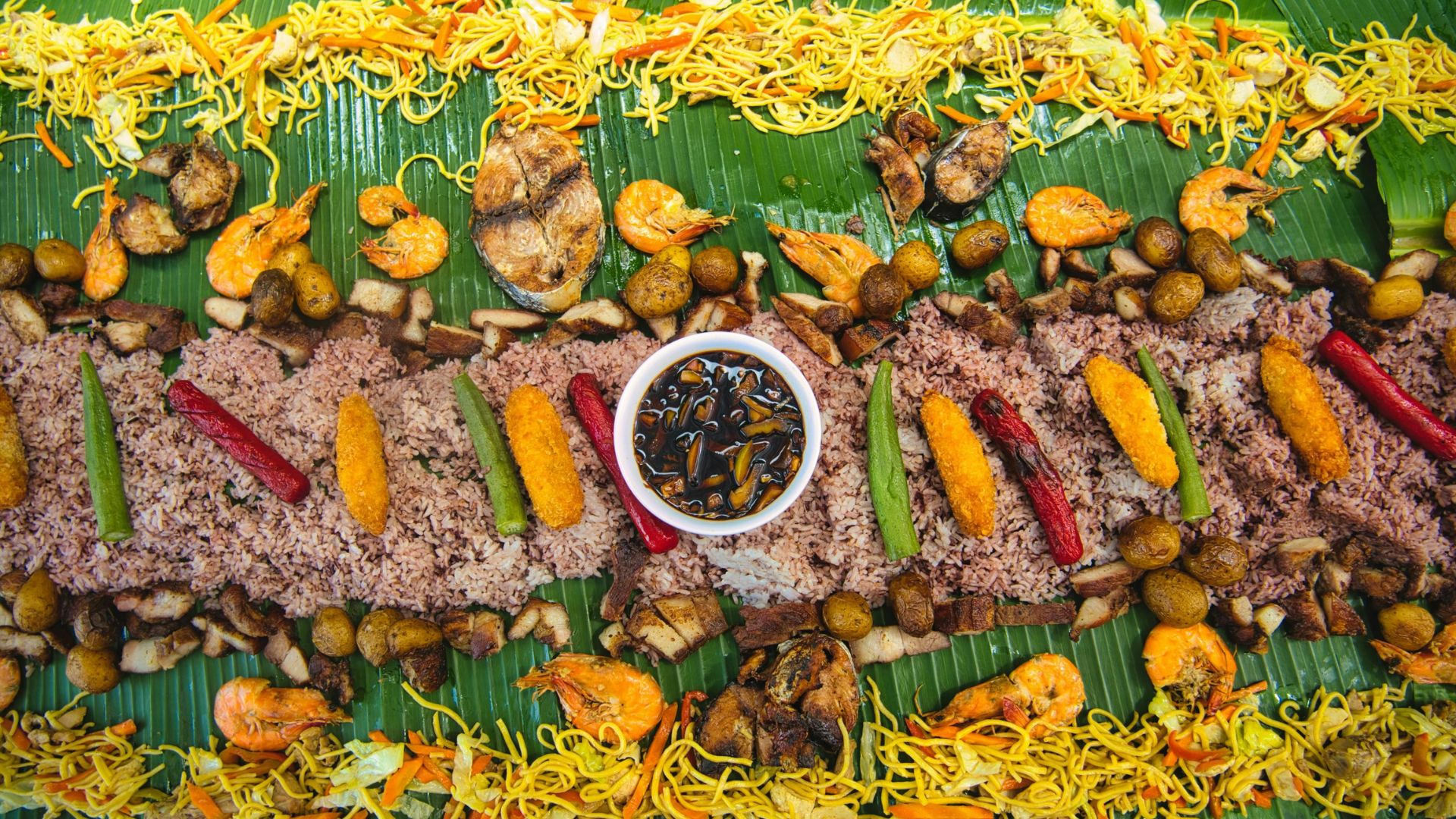
Eating with your hands from banana leaves isn’t just permitted—it’s essential. A kamayan feast spreads grilled seafood, lechon, pancit noodles, rice, and countless accompaniments across the table, inviting communal eating that breaks down formality entirely. Upscale Manila restaurants have elevated this tradition, offering premium ingredients and curated presentations while preserving the joyful, interactive essence. Scoop rice with your fingers, tear into prawns, share everything. The intimacy of hands replacing cutlery creates connections between diners that conventional dining rarely achieves. Come hungry, leave messy, remember it always.
- Adobo — Casual Dining / Home-Style
Expect to pay: £4–£8 at local eateries; £10–£18 at quality restaurants
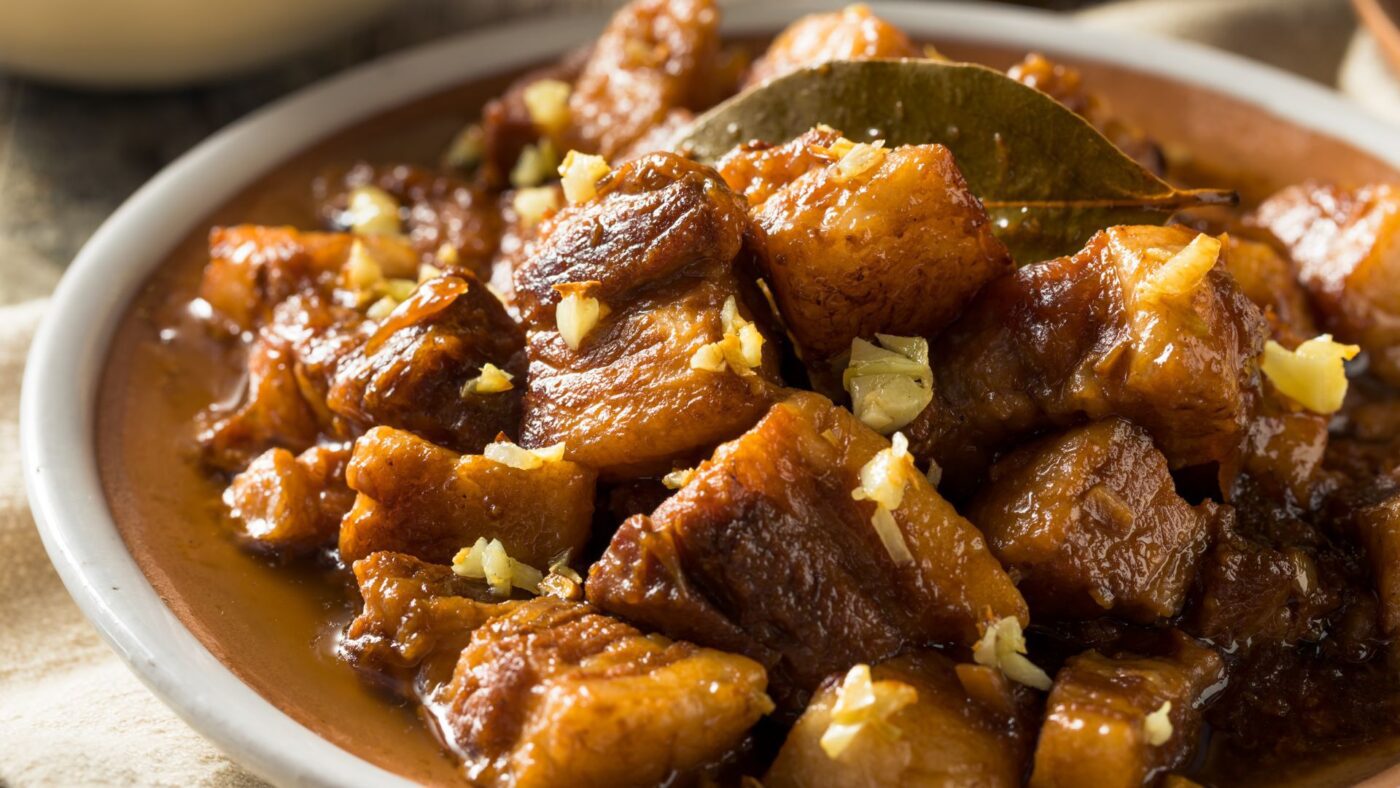
Every Filipino family guards their own adobo recipe, making this the country’s most debated dish. Chicken or pork (or both) braises slowly in vinegar, soy sauce, garlic, bay leaves, and black peppercorns until falling-apart tender. Regional variations abound—Batangas uses no soy sauce, Visayans add coconut milk, some finish under fierce heat for crispy edges. What unites them is soul-deep comfort, the alchemy of acid and savour, and perfect marriage with steaming rice that absorbs the dark, aromatic sauce. Eat at any carinderia (local eatery) for authentic versions that would honour any grandmother.
- Fresh Seafood at Dampa — Casual Dining
Expect to pay: £15–£30 per person for a seafood feast
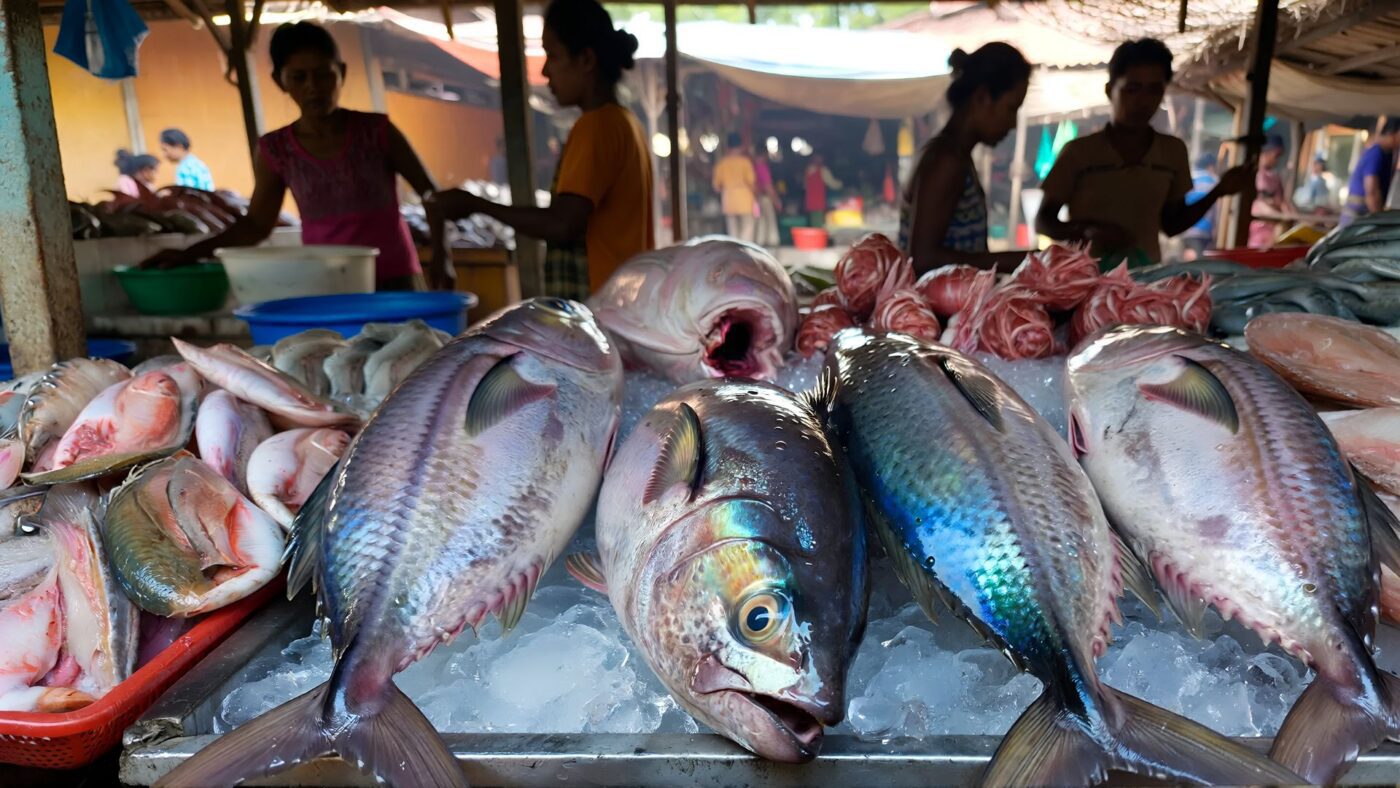
The dampa experience inverts conventional dining: you visit the wet market first, selecting live crabs, prawns, lobsters, and fish still swimming in tanks. Negotiate prices per kilo, then carry your haul to adjacent open-air restaurants that cook to order for a modest fee. Specify your preferred preparation—grilled with calamansi, steamed with ginger, butter-garlic-chilli, sinigang soup. Watch your choices transformed, then feast at plastic tables as families and friends share enormous platters. It’s raucous, delicious, and about as fresh as seafood can possibly be. The Seaside Dampa near Mall of Asia remains the classic Manila destination.
- Sinigang — Casual Dining / Home-Style
Expect to pay: £4–£8 at local eateries; £12–£20 at quality restaurants
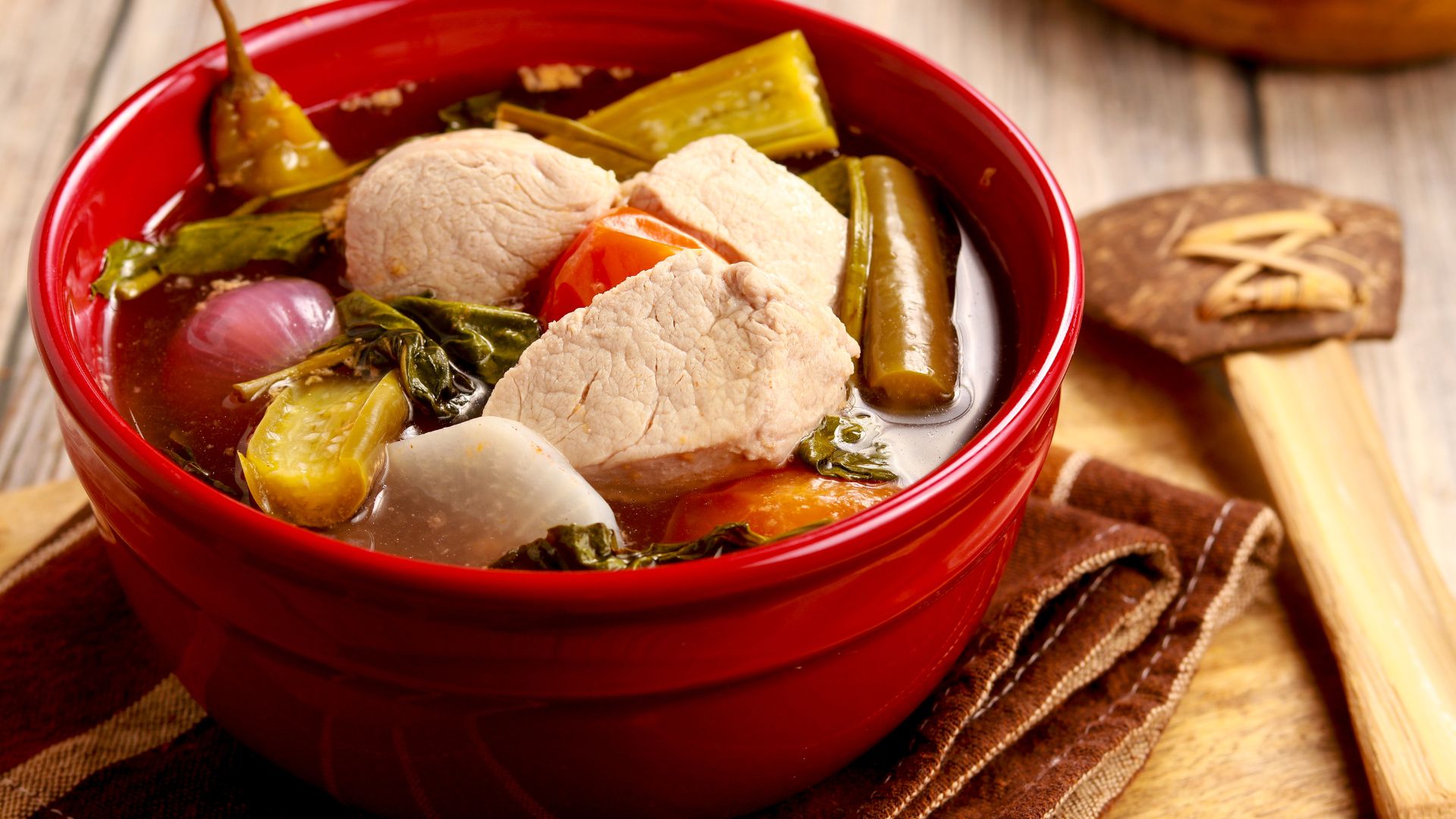
This sour soup defines Filipino comfort—tamarind provides the signature tartness, though green mango, guava, or kamias (bilimbi) create regional variations. Pork belly, prawns, or fish simmer with tomatoes, onions, and water spinach until the broth achieves perfect balance between sour and savoury. Served in a communal bowl for ladling over individual rice portions, sinigang cuts through humid heat and satisfies completely. Every restaurant offers their version; the best ones taste like someone’s grandmother has been stirring the pot since dawn. The antidote to everything, Filipinos say, and they’re not wrong.
- Kare-Kare — Fine Dining / Special Occasion
Expect to pay: £15–£25 at quality restaurants; £30–£50 at fine dining establishments
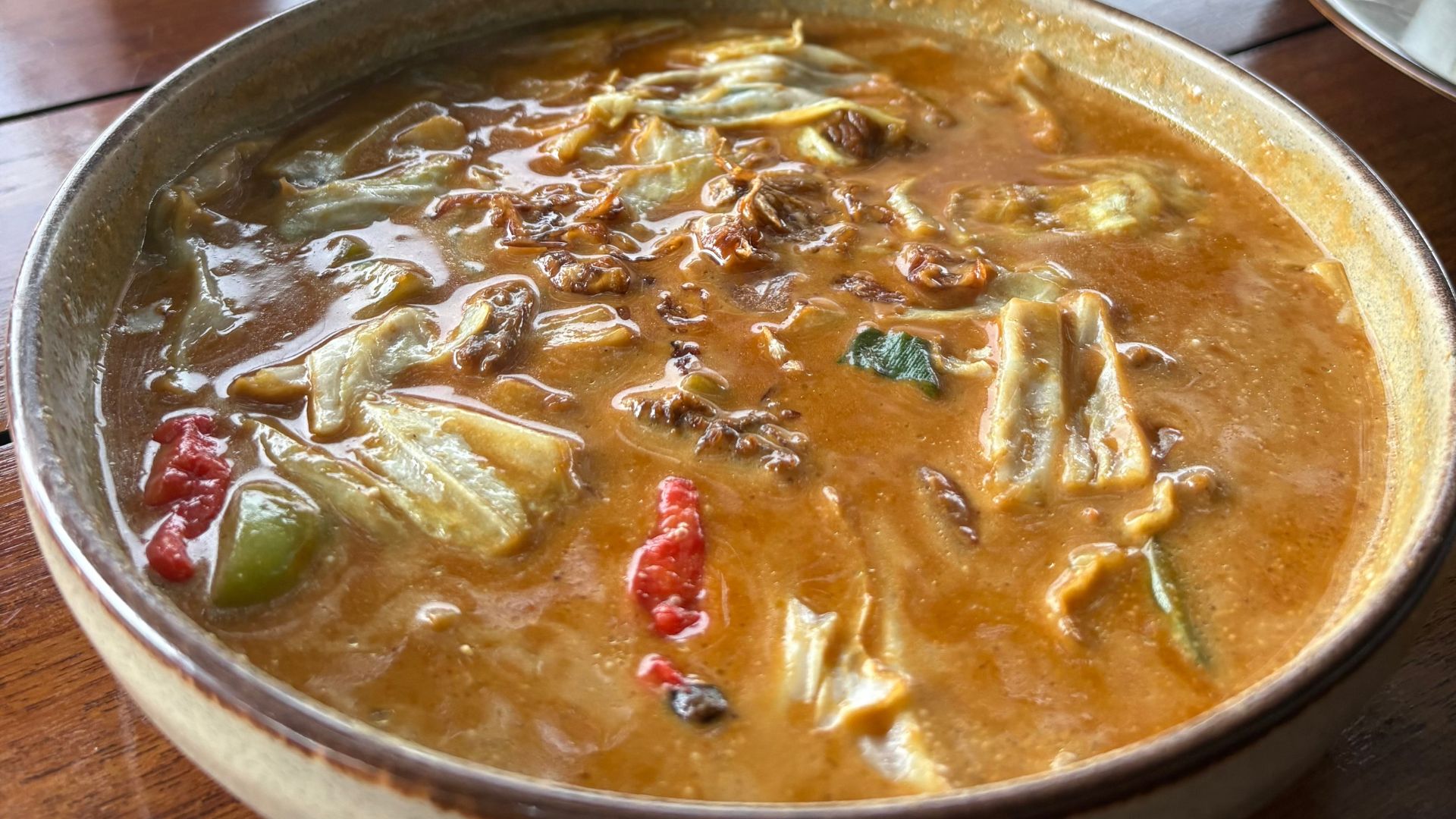
Oxtail, tripe, and vegetables simmer in a lustrous peanut sauce coloured sunset-orange with annatto, creating one of Filipino cuisine’s most distinctive dishes. The texture is silky, the flavour nutty and subtly sweet, demanding fermented shrimp paste (bagoong) alongside for salty counterpoint. Colonial-era origins gave way to celebration-table status—this is fiesta food, reward food, the dish that announces an occasion. Fine dining restaurants now present refined interpretations, but the essence remains unchanged: rich, complex, and quintessentially Filipino. Not for the timid, but unforgettable for the adventurous.
- Isaw and Street Skewers — Street Food
Expect to pay: £0.50–£2 per skewer; £5–£10 for a full street food experience
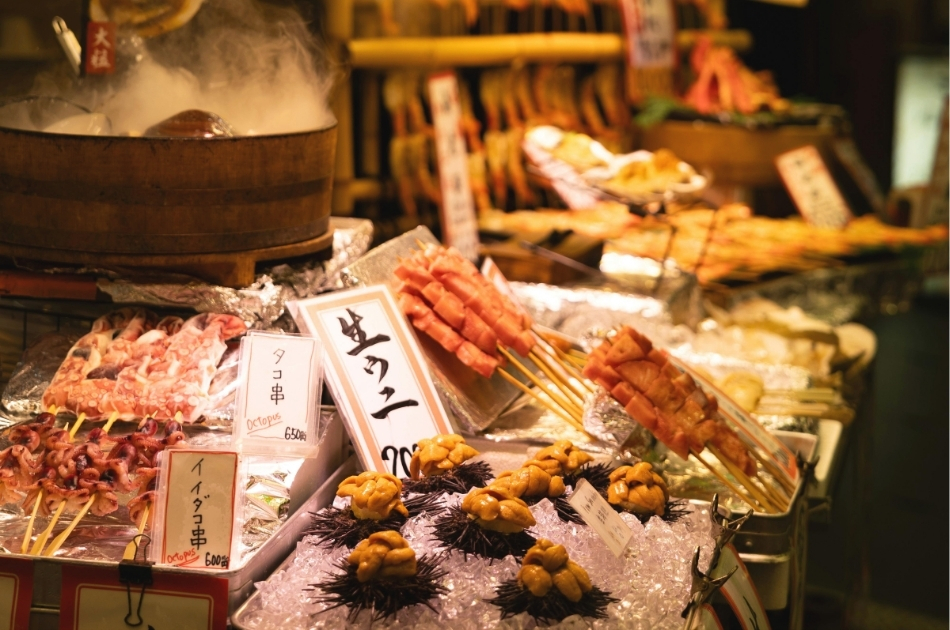
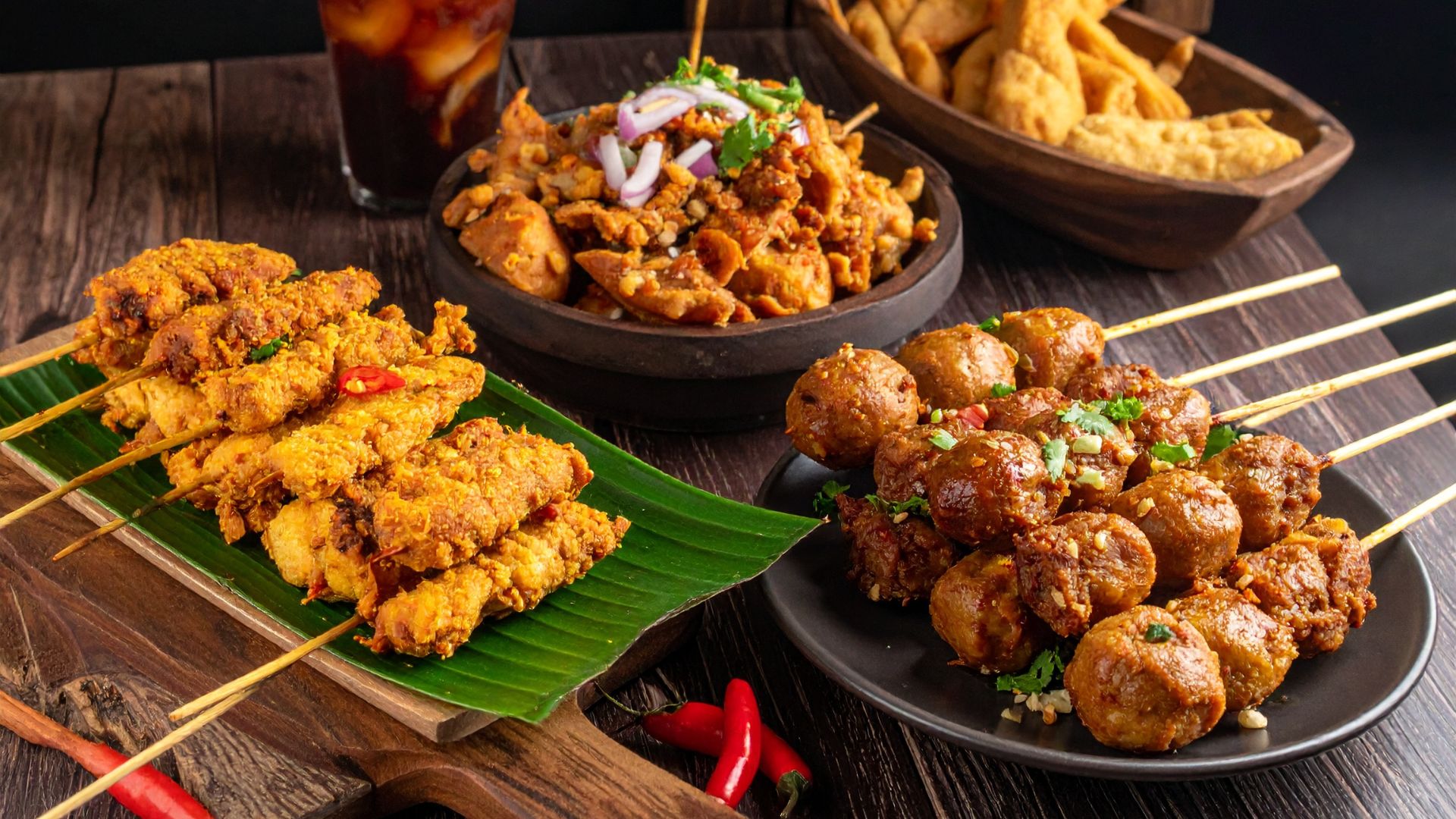
Evening transforms Filipino streets into open-air grilling theatres. Isaw (chicken intestines) coils on bamboo sticks, achieving smoky char outside and mild chewiness within. Alongside you’ll find betamax (cubed blood), adidas (chicken feet), and helmet (chicken heads)—adventurous eating that locals devour without hesitation. More accessible options include pork barbecue glazed with sweet sauce and chicken skin cooked impossibly crispy. Dip in spiced vinegar, eat standing by the grill, and embrace the carnival atmosphere. Street food is where Filipino culinary culture lives most authentically—follow the smoke and the crowds.
- Halo-Halo — Street Food / Dessert
Expect to pay: £2–£5 depending on size and venue
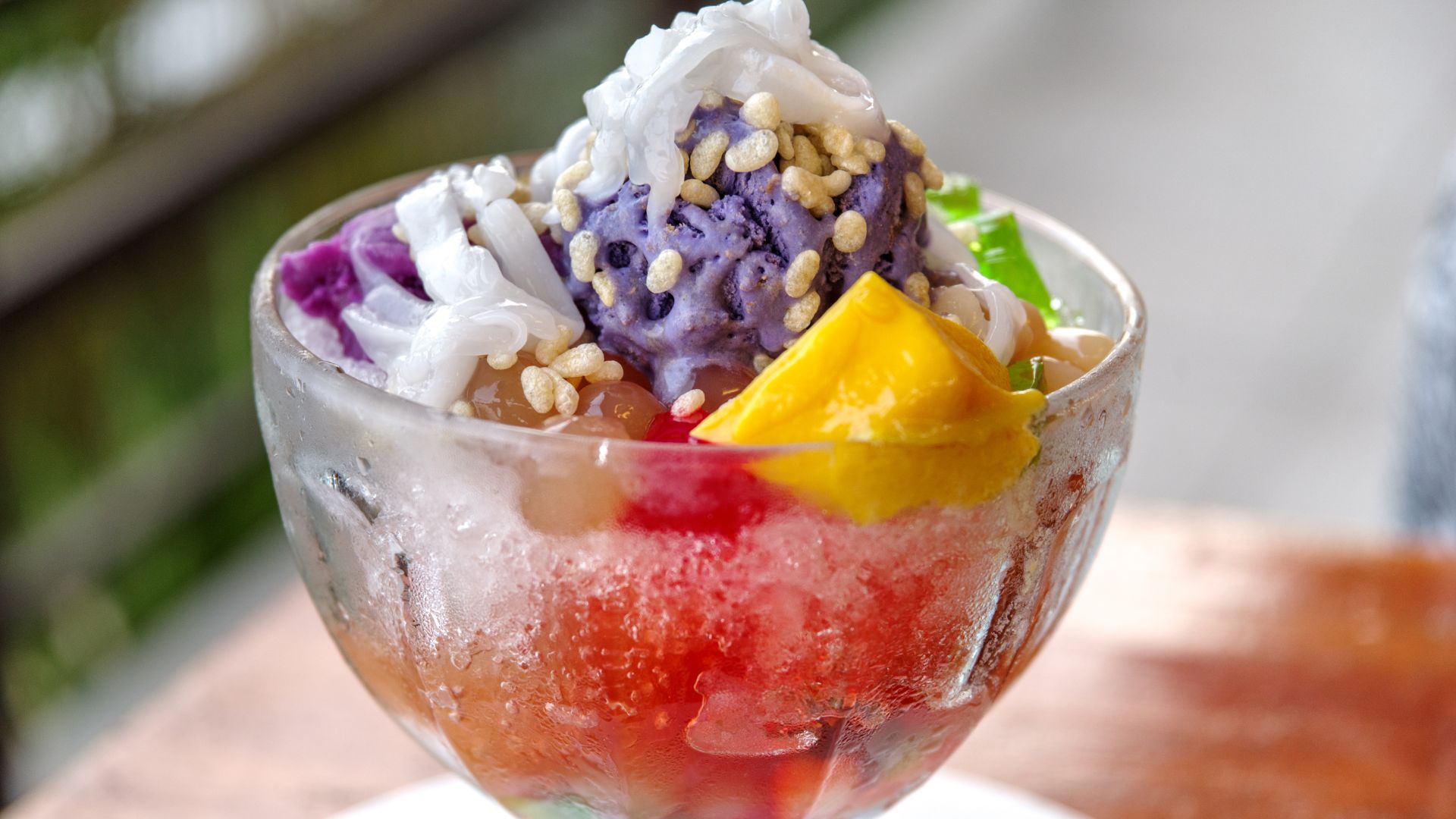
“Mix-mix” is the literal translation, and mixing is precisely what’s required. This towering dessert layers shaved ice over sweetened beans, jellies, coconut strips, jackfruit, leche flan, ube ice cream, and whatever else the vendor desires. Topped with evaporated milk, it arrives as architectural chaos demanding immediate destruction—stir vigorously until the colours merge into purple-tinged bliss. The combination shouldn’t work but triumphantly does, offering cooling relief from tropical heat with textural surprises in every spoonful. Essential afternoon sustenance, preferably from a stall where the queue suggests quality.
- Sisig — Casual Dining / Bar Food
Expect to pay: £5–£10 at local eateries; £12–£20 at restaurants
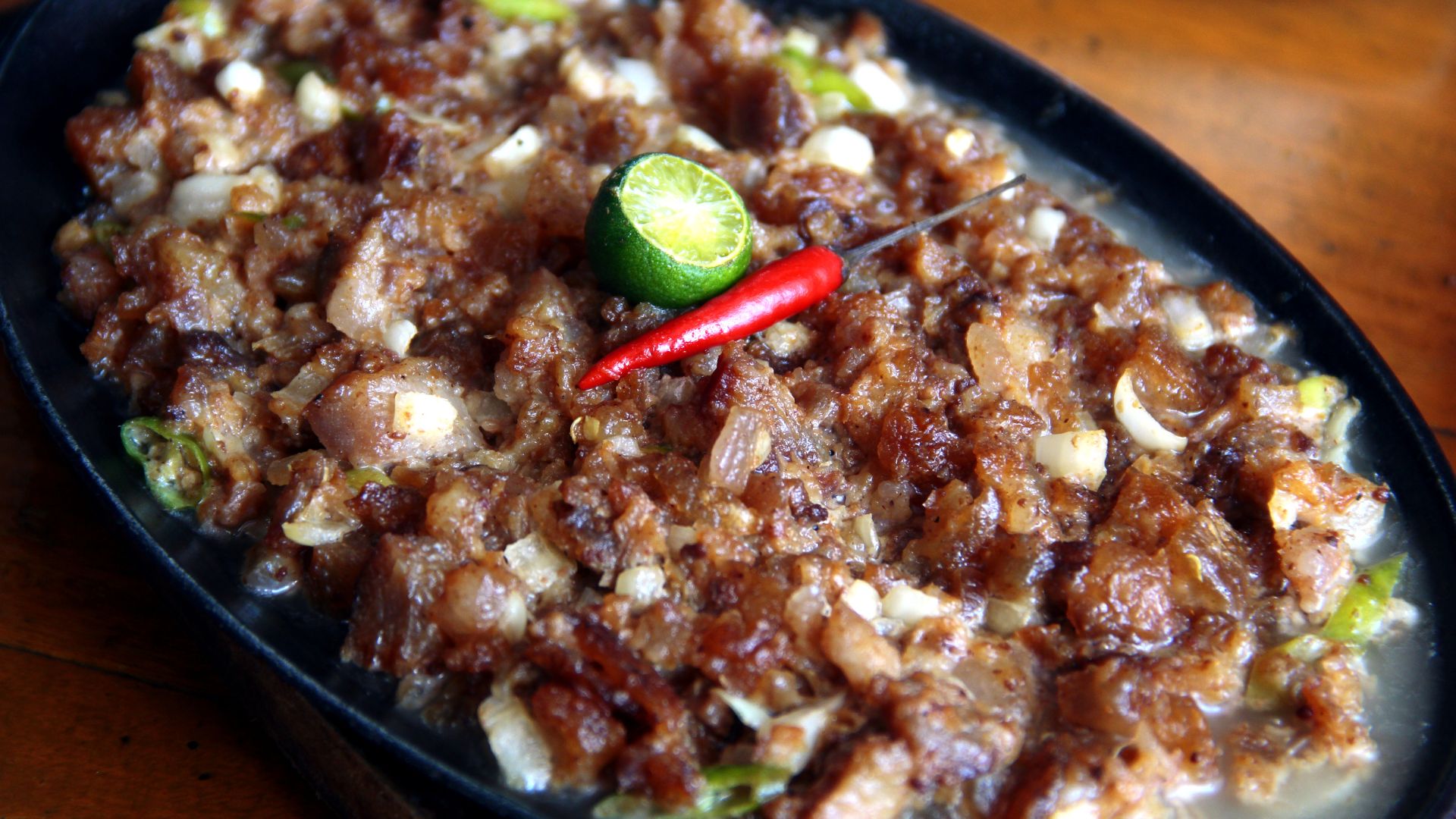
Pampanga province created this masterpiece from pig face and ears—chopped, grilled until crispy, then sizzled on a hot plate with onions, chilli, and calamansi. A raw egg stirred through adds richness as it cooks from residual heat. Modern versions use pork belly or even alternative proteins, but the traditional recipe remains unbeatable: fatty, crispy, sour, spicy, impossible to stop eating. Served with ice-cold San Miguel beer, sisig is the ultimate Filipino drinking food. The sizzle as it arrives announces something special; the empty plate confirms it.
- Boodle Fight — Experiential Dining
Expect to pay: £20–£40 per person depending on menu
Borrowed from Philippine military tradition, a boodle fight arrays food directly on banana leaves—no plates, no utensils, just soldiers (or civilians) standing shoulder to shoulder, eating together in democratic chaos. Grilled fish, fried chicken, shrimp, vegetables, and mountains of rice create a feast demanding team effort. The ritual builds camaraderie; rank disappears when everyone’s hands reach for the same food. Restaurants now offer civilian boodle experiences, often beachfront, preserving the communal joy while adding culinary refinement. It’s messy, memorable, and captures Filipino hospitality’s generous, inclusive spirit.
Quick Reference: Budget Summary
Experience Type | Budget Range (per person) |
Street Food | £2–£10 |
Casual / Local Dining | £5–£15 |
Quality Restaurant Dining | £15–£35 |
Fine Dining / Experiential | £35–£100 |
Boutique Resort (per night) | £80–£200 |
Luxury / Private Island Resort | £300–£1,200+ |
Prices based on 2024/25 rates.
Useful Links:
Street Food (Eat Like a Local)
🔗 Tropical Hut — Classic Filipino fast-food favourite, beloved for local burgers and comfort bites.
https://www.facebook.com/TropicalHutOfficial
🔗 Manila Night Market Experiences — Various official markets where you can walk and buy Filipino street snacks (official Manila tourism page).
https://www.manilatourism.ph
🔗 Binondo Chinatown Food Tour — Official culinary exploration of Manila’s street snacks including lumpia & pancit (book via official Manila tourism).
https://www.manilatourism.ph
Instagram-Worthy Restaurants With Websites
🔗 Helm (Makati, Manila) — Two Michelin-star creative contemporary cuisine.
https://joshboutwood.net/restaurants/helm
🔗 Gallery by Chele (Taguig) — Modern Filipino tasting menu experience.
https://gallerybychele.com
🔗 Toyo Eatery (Makati) — Celebrated Filipino fine dining.
https://toyoeatery.ph
Delicacies & Filipino Food Culture Spots
🔗 Bohol Bee Farm Restaurant — Local and organic Filipino-inspired cuisine.
https://www.boholbeefarm.com
🔗 Ilongo (Iloilo) Local Cuisine Hub — Traditional dishes like La Paz batchoy & kinilaw (official Iloilo tourism site).
https://iloilotourism.ph
🔗 Adobo Connection (Manila) — Dedicated Filipino adobo restaurant highlighting national dish variations.
https://www.adoboconnection.com
Notes
• El Nido’s dramatic limestone cliffs and island waters are among the Philippines’ best coastal scenery.
• Siargao is globally recognised for its surf culture and laid-back island vibe.
• Bohol’s Chocolate Hills and tiny tarsiers are unique endemic highlights.