
Norway: Eat Like a Local
EAT LIKE A LOCAL
Norway
A Travelling Telegraph guide to the authentic flavours of one of Europe’s most exciting food destinations
Norway’s reputation as a culinary powerhouse has been quietly building for years. With two three-Michelin-starred restaurants, a coastline teeming with the world’s finest seafood, and a food culture rooted in preservation, foraging and farm-to-fork simplicity, this is a country that rewards the adventurous diner. But you don’t need a Michelin budget to eat well here. From the reindeer stews of the north to the fish soup served in every harbour town, Norway’s real magic lies in the food that locals actually eat — hearty, honest and deeply connected to the landscape.
Here’s where to find it.
High-Class Dining
- Maaemo, Oslo
Three Michelin Stars | Tasting Menu: 5,500 NOK (approx. £420)
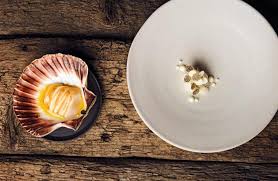
The name means “Mother Earth” in Old Norse, and everything at Esben Holmboe Bang’s extraordinary restaurant is either biodynamic, organic or wild. The seasonal tasting menu — the only option — is a succession of exquisitely crafted courses that tell the story of the Norwegian terroir. King crab from the Arctic, lamb from the western coast, foraged herbs from the mountains. The dining room is deliberately dramatic: high vaulted ceilings, theatrically lit open kitchen, just eight tables. Book months in advance — reservations open on the 1st of each month, two months ahead.
Wine pairings start at 3,400 NOK and the full experience with drinks will set you back around £600–700 per person. Worth every krone for a once-in-a-lifetime Norwegian gastronomic journey.
Book: maaemo.no
- Kontrast, Oslo
Two Michelin Stars | Tasting Menu: 2,300 NOK (approx. £175)
Set in Oslo’s former industrial Vulkan district beside the Akerselva river, Kontrast is the creation of Swedish-born chef Mikael Svensson, who trained in some of Spain’s finest kitchens before settling in Norway. The philosophy here is sustainability without compromise — all fish is wild and line-caught, all meat organic or wild, and food waste is transformed into garum, vinegar and compost. The surprise tasting menu changes constantly based on what local farmers and producers have available that week.
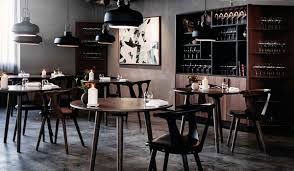
The beverage pairing runs to 1,700 NOK (or 2,450 NOK for the upgraded selection), making the total experience considerably more accessible than Maaemo while delivering cooking of remarkable precision and creativity. The softly lit dining room with its open kitchen feels intimate yet energising.
Book: restaurant-kontrast.no
Where the Locals Eat
- Pingvinen, Bergen
Traditional Norwegian Gastropub | Mains: 200–350 NOK (approx. £15–27)
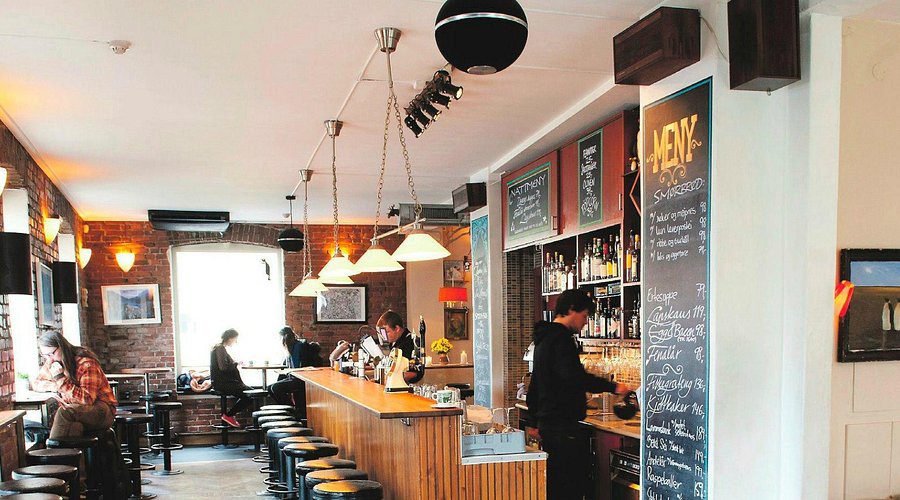
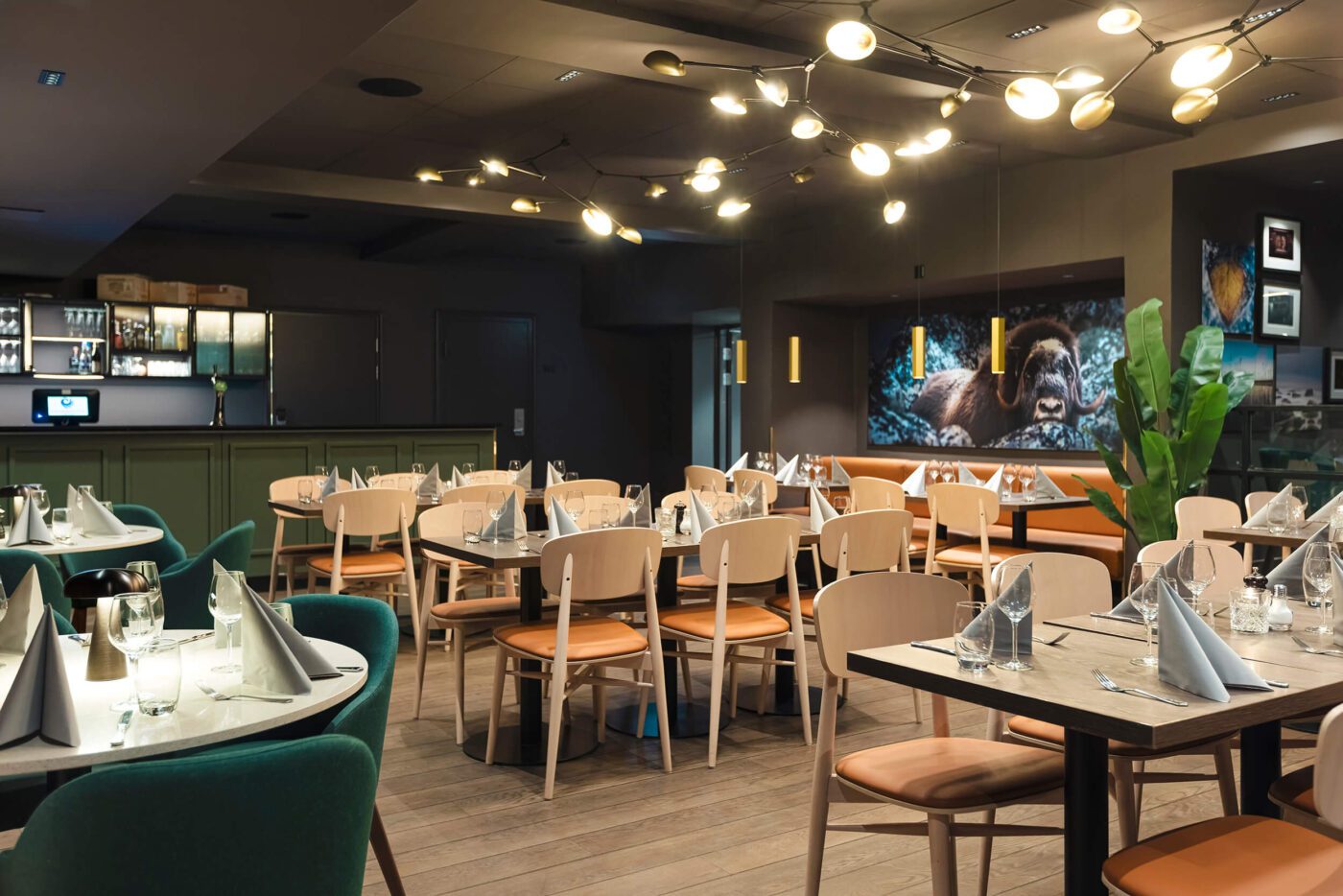
Walking into Pingvinen — “The Penguin” — is like stepping into a Norwegian grandmother’s living room, if grandmother had excellent taste in craft beer. For over 15 years, this much-loved Bergen gastropub has been the standard-bearer for traditional Western Norwegian cooking. The menu changes daily but revolves around classic husmannskost: fish pie with a golden breadcrumb crust, kjøttkaker (meatballs) with lingonberry sauce, plukkfisk (shredded cod with potatoes and bacon), and reindeer stew. The Norwegian craft beer selection is outstanding.
By Friday evening, the vintage furniture-filled room is packed with locals of all ages — from students craving a taste of home to older Bergensere who’ve been coming for years. Book ahead, especially in summer. Main courses sit around 250–350 NOK, making this one of the best-value authentic dining experiences in Bergen.
Book: pingvinen.no | Listed on Visit Bergen
- Kaffistova, Oslo
Traditional Norwegian Cafeteria | Mains: 230–295 NOK (approx. £17–22)
Kaffistova has been serving traditional Norwegian food in central Oslo for over a century, and it remains the city’s most beloved destination for genuine husmannskost. Located on Rosenkrantz’ gate beside Hotel Bondeheimen, this is where Norwegians from across the country come for the potato-and-gravy comfort food they grew up with. The menu features elk patties in mushroom sauce, meatballs with pea stew, arctic char, and bacalao. Each weekday brings a different daily special: smoked haddock on Mondays, potato dumplings (raspeballer) with salt meat on Thursdays.
Portions are enormous and prices are remarkably fair by Oslo standards. The in-house pastry chef bakes all the cakes — the success tart is particularly good. It’s canteen-style service (order at the counter), and the room fills quickly with a loyal mix of regulars, business people, and savvy visitors.
Visit: kaffistova.no | Listed on Visit Oslo
Five Authentic Norwegian Dishes You Must Try
- Fårikål — Norway’s National Dish
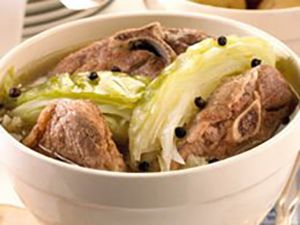
What: Slow-cooked lamb and cabbage stew with whole black peppercorns, served with boiled potatoes.
When: Autumn is prime season. Norwegians celebrate Fårikål Feast Day on the last Thursday of September.
Price guide: 200–350 NOK in restaurants.
The story: Named Norway’s national dish in both 1972 and again in 2014 (narrowly beating meatballs), fårikål is the essence of Norwegian simplicity — just lamb, cabbage, pepper, salt and water. It’s even better the next day. The quality comes from the lamb itself: Norwegian sheep roam vast stretches of untouched mountain pasture, producing meat that is exceptionally tender and richly flavoured.
Fårikål recipe on Visit Norway
- Fiskesuppe — Creamy Norwegian Fish Soup
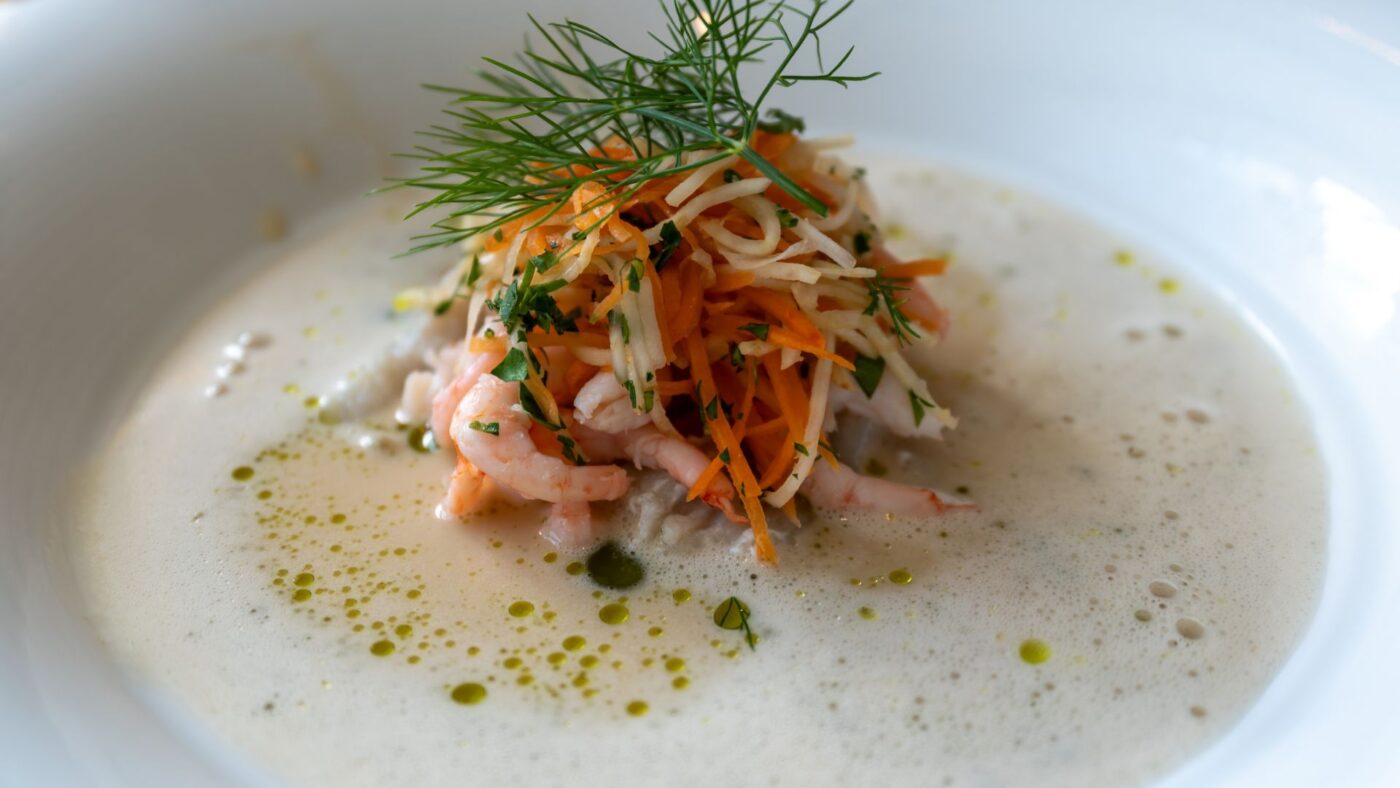
What: A rich, creamy soup loaded with salmon, cod, haddock and prawns, finished with julienned carrots and root vegetables.
Price guide: 150–250 NOK as a starter; 200–300 NOK as a main.
The story: You’ll find fish soup on virtually every restaurant menu in Norway, and remarkably, it tastes wonderful almost everywhere. The Norwegians are intensely proud of their fiskesuppe, and rightly so — with the world’s second-longest coastline, the seafood travels mere metres from harbour to kitchen. Each region has its own variation, but the common thread is a velvety cream base brimming with the freshest catch available.
Norwegian Fish Soup recipe on Visit Norway
- Kjøttkaker — Norwegian Meatballs
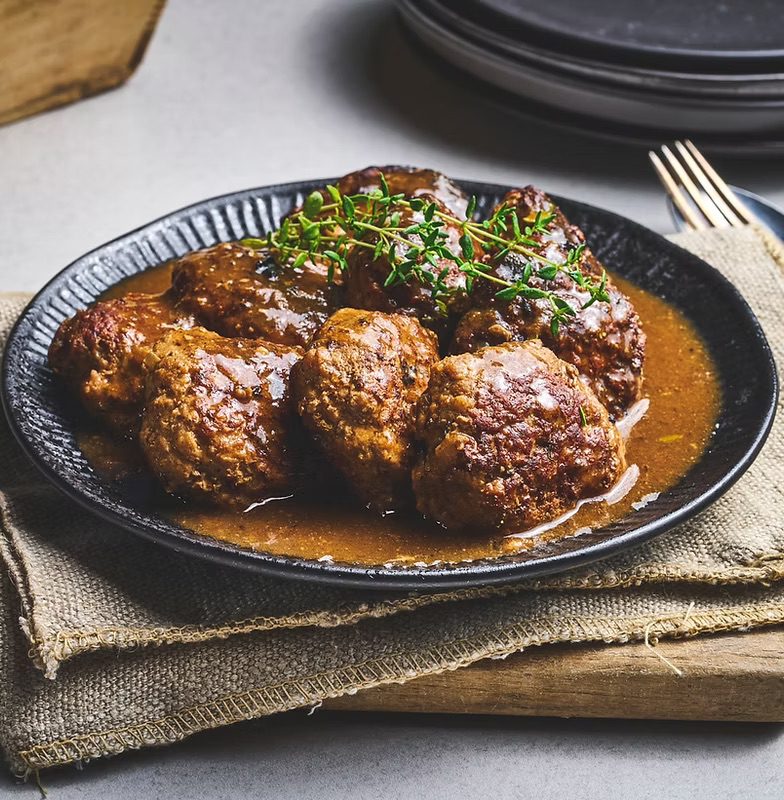
What: Large, hand-formed meat patties made from ground beef with onion, served with boiled potatoes, brown sauce, stewed peas and lingonberry jam.
Price guide: 200–300 NOK in restaurants.
The story: Swedish meatballs get all the international glory, but Norwegian kjøttkaker are a different beast entirely — bigger, heartier, and shaped by generations of family recipes. The best versions are found not in fine dining restaurants but in the traditional Norwegian ‘kro’ (diner) or gastropub, where they arrive with a generous ladle of rich brown sauce and that essential sweet-sharp hit of lingonberry. This is the ultimate Norwegian comfort food.
Norwegian Meatball recipe on Visit Norway
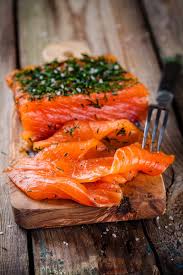
- Gravlaks — Cured Salmon with Dill
What: Fresh salmon fillet cured for 24 hours in a mix of sugar, salt and fresh dill, served thinly sliced with a sweet mustard-dill sauce (hovmestersaus).
Price guide: 150–250 NOK as a starter.
The story: Perhaps Norway’s most internationally recognised dish, gravlaks (literally “buried salmon”) dates back to medieval times when fishermen would cure salmon by burying it in sand above the high-tide line. Today, the curing process is rather more refined, but the result is the same: silky, gently sweet-savoury slices of salmon that showcase Norway’s extraordinary fish in its purest form. The country is one of the world’s largest producers of both farmed and wild salmon, and the quality is outstanding.
Gravlaks recipe on Visit Norway
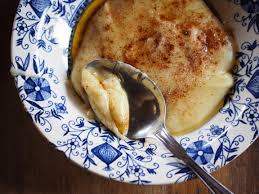
- Rømmegrøt — Sour Cream Porridge
What: A rich, thick porridge made from sour cream, milk and flour, topped with melted butter, cinnamon and sugar, served with cured meat on the side.
Price guide: 150–200 NOK in restaurants; supermarket ready-made versions from around 50 NOK.
The story: Porridge is one of the oldest hot dishes in Norway, and rømmegrøt is the queen of them all. Traditionally a summer dish served at celebrations and on farms, it’s so rich and comforting that Norwegians eat it year-round. It even appears as a signature dish at Maaemo, Norway’s most celebrated restaurant, elevated to high art but still recognisably the same porridge that Norwegian grandmothers have been making for centuries.
Rømmegrøt recipe on Visit Norway
What You’ll Spend
Norway is not a cheap destination, but eating well doesn’t have to break the bank. Here’s a rough guide to food costs:
Experience | Approx. Cost Per Person |
Coffee and a pastry | 70–100 NOK (£5–8) |
Pølse med lompe (hot dog in potato wrap) | 50–80 NOK (£4–6) |
Lunch at Kaffistova or similar | 230–295 NOK (£17–22) |
Dinner at Pingvinen or mid-range restaurant | 300–500 NOK (£23–38) |
Tasting menu at Kontrast (food only) | 2,300 NOK (£175) |
Full experience at Maaemo (food + wine) | 8,900 NOK (£680) |
A pint of craft beer | 80–120 NOK (£6–9) |
Glass of wine in a restaurant | 120–180 NOK (£9–14) |
Prices based on 2025/26 rates. 1 NOK ≈ £0.076 / €0.088
Tipping: Wait staff in Norway earn a fair wage, and tipping is not expected. If you’ve had an exceptional experience, rounding up or leaving 5–10% is appreciated but entirely optional.
Further Reading
For recipes, food trails, and a comprehensive guide to Norwegian cuisine and dining, Visit Norway’s food pages are an excellent resource:
Visit Norway — Food and Drink Guide