
WOMEN OF SUBSTANCE: Lisa Allen
Coated in Steel
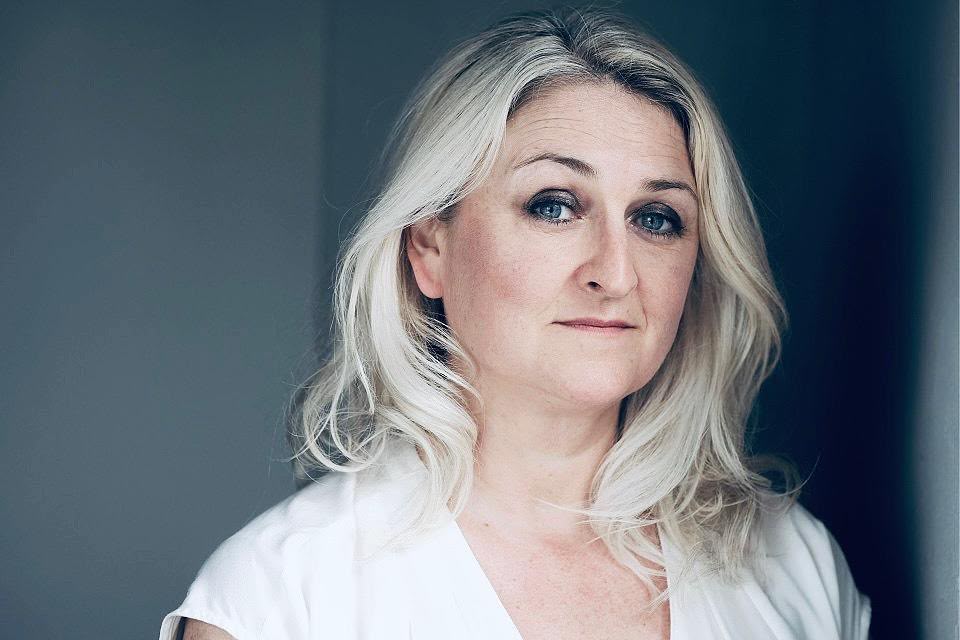
Actress Lisa Allen on fortitude, finally fitting the box, and the pie her grandad ate every day for the rest of his life
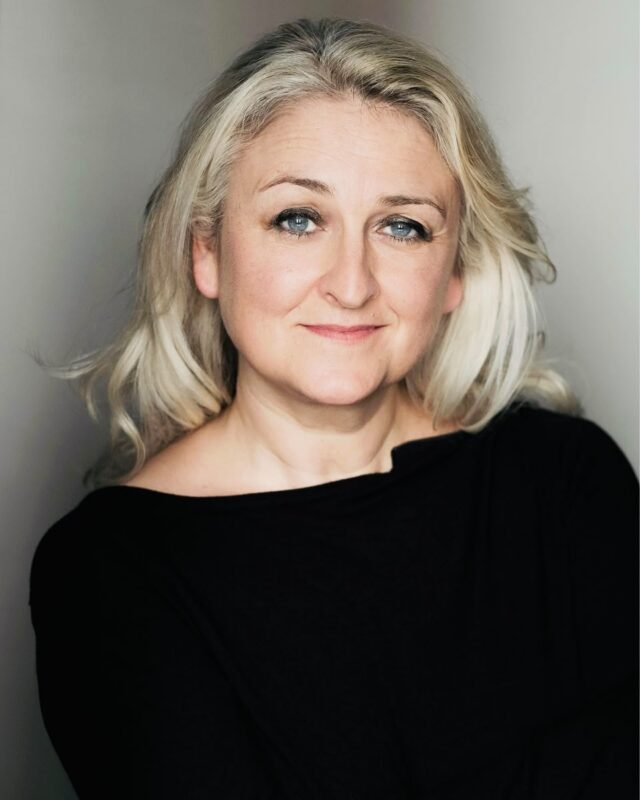
Bolton born, Hebden Bridge based for over 20 years and happiest on a bleak stretch of moor above Haworth, Lisa Allen has spent her career playing the police officers, nurses and gritty northern mothers who hold British drama together. She told The Travelling Telegraph why her fifties have been her busiest decade, why talent is never enough on its own, and why the North deserves to see its own faces on screen.
Not a meritocracy
If you have watched British television over the past three decades, you have almost certainly watched Lisa Allen. Heartbeat, Waterloo Road, DCI Banks, Silent Witness, EastEnders, Emmerdale, Crongton, Alma’s Not Normal, Funny Woman, Passenger and Disney’s The Full Monty, in which she played Kath. She is the face you know before you know why: the copper at the door, the nurse at the bedside. And yes, she laughs, she is still playing nurses.
Ask her for the one role that changed everything and she shakes her head. There wasn’t one. “It’s just a build-up of roles,” she says. “The more you do, the more confident you become. I just love working.”
The catch, of course, is the weeks with no part at all. “You cannot take anything personally, because it’s not a meritocracy,” she says. “One minute you can be flying high in some fantastic television programme. When that’s done, you may be looking at 12 months behind a bar or working in a shop. There’s nothing wrong with that, but you’ve got to be used to the changes.”
The dropout rate is brutal. Of the women in her year at drama school, she knows of just one other still working as an actor, and she is in America. “You’ve got to have this burning need to do it,” Lisa says. “Otherwise, I would say don’t do it.”
Coming into her casting
When she trained at University College Salford, her tutors included Sarah Lancashire during her pre-Corrie days. Early on in her career, Lisa was told many times that she was a character actress and that she would come into her own later in life. They were right. “I’ve worked more as I’ve got older, because I never fitted into the pretty, leading lady bracket when I was younger,” she says. “Someone said to me recently that I’ve come into my casting now.”
Getting there took a thick skin, she laughs. “I’m only just starting to fit into the industry’s box,” she admits. “I never, ever fitted in the box when I was younger.” So, she did what so many of the women in this series have done: she stopped trying to squeeze in and armoured herself instead. Coated in steel, as she puts it. “For an industry that’s seen as having a lot of ego, you really have to rein your ego in, if you’re going to survive.”
As a woman, she is frank. “It’s bloody hard work,” she says. “Especially for a character actor, because it’s completely driven by what you look like.” That, she believes, has only begun to shift in the last ten years, and she points to the adverts on our screens as proof. “Because we’re in a recession and people are struggling, they don’t necessarily want aspirational role or supermodels. The ads are quirkier, more diverse and funnier. People want to laugh, because there’s not a lot to laugh about.”
Comedy is where she is happiest. “It’s so freeing and so much fun. There’s such a wide range of roles and characters to explore.” She’s has just finished filming an eagerly anticipated BBC Comedy, a Channel Four drama and a CBBC series.
It’s been a good year but keeping her head above water between jobs takes discipline. She surrounds herself with positive people, “The right people will help you have fortitude,” and even when she is not working, she gathers a group to read a play together, “to keep the wheels turning, so it’s not a shock when you go back.” Working across television, film, theatre, radio and song has been part of her survival kit. “If you pigeonhole yourself, I think that’s bad for your mental health. I never wanted that.”
Coal in Their Veins
The film that won her Best Actress at Diversity in Cannes, Coal in Their Veins, is personal and political. It tells what happened to the mining communities of the North after the pits closed: generations of men who went underground, then suddenly nothing, and the heroin that moved into the gap. “It’s a subject dear to me, I’ve played Brassed Off in theatre twice and I’ve played Thatcher. Those communities and their resilience fascinate me,” she says.
The story grew out of the True North ITV documentary Children of the Miner’s Strike (2004) about a mother fighting to save her son. Lisa played the fictionalised Alison Buxton. The film won worldwide praise, but that is not what matters most to Lisa. “The film is now being used to help people struggling with addiction, and parents struggling with their children’s addiction. That means more to me than any accolade.”
A library of faces
Character is everything to Lisa, and it started at home. “I loved my grandmas. I loved my great aunts. Growing up, I loved all the characters in my community, even those that weren’t very nice people,” she laughs. “I was always a mimic, from being a kid, and I was always in a play or organising a play.” She likens her love of character to the street photography of Martin Parr: ordinary people, observed with affection and an eye for telling the detail.
Her way into a role is the voice and the face. “If I can get the voice and the face right, the rest comes naturally,” she says. “I have a library in my head of all the people I’ve met. A lot of actors feel comfortable playing themselves. I want to play someone else.” The Stanislavski training is still there bubbling away underneath, automatic like riding a bike.
The spark came as far back as she can remember, was embraced at primary school and ignited further when she arrived at secondary school and met her future drama teacher, Jackie Hamer. “Jackie looked like Marilyn Monroe. I’d never met anyone that flamboyant,” Lisa remembers. Jackie told her she was good, that this was something she should do. They stayed in touch until Jackie died from cancer in her fifties, but her encouragement has stayed with Lisa. “I carry her and my parents in my heart to every job.” Her late working-class parents were very supportive and scrimped and scraped to pay for lessons. Dance lasted “about two minutes.” Singing went rather better, and speech and drama lessons sealed it.
Northern to the core
Lisa is a proud Lancashire lass who has made Yorkshire her home, and the two sit together easily. “The landscape isn’t dissimilar to where I grew up, I’m a girl of the Pennines. I feel so comfortable here,” she says. “The people are warm and wonderful. Sit on a bench and listen to the stories they tell. I love their directness. I don’t like beating around the bush.”
She lived in the Cotswolds for many years, where her husband, the actor Dan Carey is from. “As beautiful as it is, it’s too pretty for me. I missed the moors.” Hebden Bridge won her over because it sat within easy reach of all the major northern cities and had an artistic soul.
She delights in the fact that more and more film and television are being shot in the North, yet she can still walk through a film set in Hebden Bridge and find no local actors on it and that saddens her. Breaking in from a working-class background is harder than ever, she adds, because so few can afford to survive financially while they wait for work, though the growth of Manchester and Leeds as production hubs has eased the old pull to London. “I’d like to see more working-class actors breaking through and more northern based actors working in the north.”
Ask what she is most proud of and, after her daughter Dulcie, the answer comes quickly: being northern.
Her little piece of heaven: Haworth
For her perfect Yorkshire day, Lisa heads for Haworth. Not, she insists, for the Brontës alone. “You feel like you’re on a film set. You feel like you’re walking with art,” she says. “And I like bleakness.”
It is easy to see why. Haworth’s cobbled Main Street climbs steeply past tea rooms and bookshops to the church and the Parsonage, and beyond it the moor opens out, wide and wind scoured, towards Top Withens. On a grey day the steam whistle of the Keighley and Worth Valley Railway drifts up from the valley below, and the whole place feels like the opening shot of a period drama.
It is also where Lisa and her husband Dan have made a quiet tribute. After both lost their parents, they wanted to do something to honour how hard that generation worked, “a small place that can make other people smile when they’re in it.” The result is Winberry Cottage, a holiday let in the village.
The name is a family legend. Her grandad was obsessed with winberries, the little moorland cousin of the blueberry, which grow wild across the hills of Lancashire and Yorkshire. He worked away during the week, and her grandma was not best pleased when he came home at weekends, sat down and expected to be fed. One day he walked in and asked: “No winberry pie?”
And she said to herself, “I’ll give him winberry pie” “And she did, every day for the rest of his life,” Lisa says. “He never complained, not once.” Her grandma was a brilliant baker who could have turned out a Victoria sponge to rival anyone’s, but winberry pie it was, every day, until the end. The family call them mucky mouth pies, for the purple grins they leave behind.
Three things she would tell you
For the young northern women who dream of acting, Lisa offers advice that is honest rather than starry eyed.
- Be sure you have to do it. “Work out whether you want to do it or have to do it. If you have to do it, go for it. Be single minded and immerse yourself. Create your own work, meet people, connect online with people who are doing it. Read, read, read. Watch, watch, watch. And try to find someone in the industry who will mentor you.”
- Get used to the camera. “Keep putting yourself on camera, watch it back and show it to other people. Get brave with it. Don’t be too big. Be subtle.”
- Stick with it. “It’s all about fortitude. If you stick it long enough, you will work. You can’t really make yourself stand out, because one producer will love you and another won’t. It’s not a level playing field, so if you’re looking for fairness, you’re in the wrong game. But keep going.”
Ten lessons from Lisa Allen’s career
Strip away the credits and the awards, and Lisa’s story holds lessons for anyone building a life in a precarious profession, on stage or off.
- Confidence is earned by doing. There was no single breakthrough role. Every part built on the last, and the more she worked, the better and braver she became.
- Never take it personally. Casting is not a meritocracy. Being the best in the room does not guarantee the job, so rejection is not a verdict on your worth.
- Want it badly enough. Only one other woman from her year at drama school is still acting. Without a burning need to do it, Lisa says, don’t.
- Know who you are. She never fitted the leading lady mould, so she owned the character actor’s path. People said she would come into her own later in life, and she has.
- Rein in the ego. In an industry with a reputation for big egos, survival depends on humility, whether that means a bar job between roles or playing yet another nurse.
- Build your armour and choose your people. Coat yourself in steel for the knocks and surround yourself with positive people who help you keep your fortitude.
- Keep the wheels turning. Between jobs, she gathers friends to read plays aloud, so returning to work is never a shock to the system.
- Don’t pigeonhole yourself. Television, film, theatre, radio and song: versatility has kept her working and kept her mentally well.
- Collect people. Her grandmas, her great aunts, the stories told on a Yorkshire bench. Every character she plays draws on a library of real faces gathered since childhood.
- Pay it forward. One drama teacher who believed in her at 11 changed everything. Lisa has mentored young people in the past from all backgrounds, passing that belief on.
- “When you’re working, it’s where you’re meant to be. There is nothing that compares to it. It’s the most wonderful industry in the world.”
Practical Information
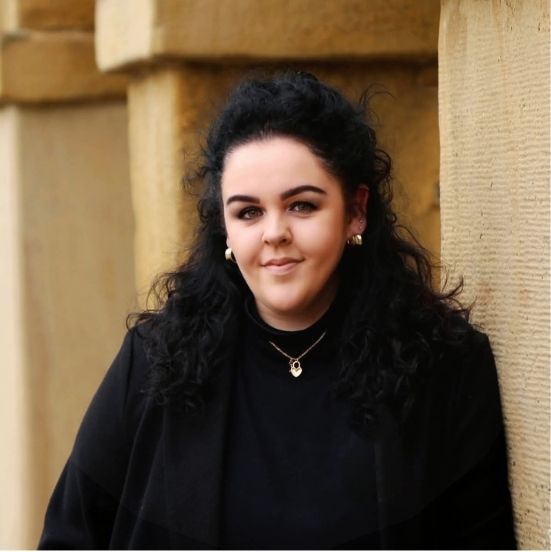
Shannon Palmer is The Travelling Telegraph's Yorkshire blogger with a passion for uncovering the county that most visitors never get to see. Drawing on years of life across God's Own County, she shares honest guides, hidden discoveries and the kind of local knowledge that only comes from truly being there.