
Italy: Eat Like a Local
Italy: Eat Like a Local
A culinary journey through the Eternal City and beyond — from Michelin-starred rooftops to the trattorias where Romans actually eat
In Italy, food is not simply sustenance — it is identity, family, region, and ritual. Every city, every village, every cobblestoned backstreet has a dish that belongs to it and nowhere else. The Italians have a phrase for it: cucina povera — the food of the poor — which, through centuries of ingenuity, has become some of the most celebrated cooking on the planet.
But here’s the truth that every seasoned traveller eventually discovers: the best Italian food is rarely found where the tourists gather. It’s in the trattoria with no English menu, the family-run osteria where nonna still makes the pasta, the neighbourhood spot where the waiter knows your name by your second visit.
This guide takes you to Rome — the beating heart of Italian gastronomy — and offers our picks across three tiers of dining, from special-occasion splendour to the kind of meal that leaves you leaning back in your chair, glass of house red in hand, wondering why you ever eat anywhere else. We also list five authentic dishes you absolutely must try, wherever in Italy your journey takes you.
For the official Italian tourism board’s comprehensive food and wine guide, visit: italia.it/en/italy/things-to-do/food-and-wine
HIGH CLASS: The Splurge-Worthy Experience
For those special evenings when only the very best will do. Book well in advance, dress smartly, and prepare for dining that borders on theatre.
1. La Pergola — Rome’s Only Three-Michelin-Star Restaurant
Rome Cavalieri, A Waldorf Astoria Hotel, Via Alberto Cadlolo 101, Rome
Perched on the ninth floor of the Rome Cavalieri hotel on Monte Mario, La Pergola is not merely a restaurant — it is a pilgrimage. Since 1994, German-born chef Heinz Beck has presided over what remains the only three-Michelin-starred restaurant in the Eternal City, and just one of nine in all of Italy. The panoramic views sweep across the Vatican, the dome of St Peter’s, and the twinkling expanse of the city below.
Beck’s cuisine is a masterclass in lightness and Mediterranean flavour — his signature fagotelli La Pergola, a reimagined carbonara with the sauce encased inside hand-crafted pasta, was famously a favourite of Michelle Obama. The wine cellar holds over 53,000 bottles, overseen by the legendary sommelier Marco Reitano. Expect tasting menus from around €300 per person, with wine pairing adding substantially. Open Tuesday to Saturday evenings only.
Book at: romecavalieri.com/la-pergola | Michelin Guide: guide.michelin.com
Expect to pay: €250–€400+ per person (tasting menu with wine pairing)
2. Aroma — Michelin-Starred Dining with a Colosseum View
Palazzo Manfredi, Via Labicana 125, Rome
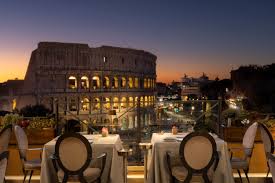
If there is a more extraordinary dining backdrop in Europe, we have yet to find it. Aroma sits on the rooftop terrace of Palazzo Manfredi, a 17th-century villa built upon the archaeological remains of a gladiator barracks. From your candlelit table, the Colosseum fills the view so completely that it feels close enough to touch.
Roman-born chef Giuseppe Di Iorio holds one Michelin star and has been at the helm since Aroma opened in 2010. His menu is built around the finest local ingredients sourced daily from Roman markets, marrying the traditions of Roman and Campanian cooking with modern technique. The intimate 40-seat restaurant offers four tasting menus, including a vegetarian option, with dishes available à la carte. A wine cellar of over 600 labels, curated by sommelier Alessandro Crognale, completes the experience. Smart casual dress is required.
Book at: palazzomanfredi.com | Michelin Guide: guide.michelin.com
Expect to pay: €150–€220 per person (tasting menu; à la carte average €180)
WHERE THE LOCALS EAT: The Real Rome
These are the restaurants where Romans sit down after work, where families celebrate Sunday lunch, and where the menu hasn’t changed in decades — because it doesn’t need to. No English menus, no Instagram lighting. Just honest food, honestly served.
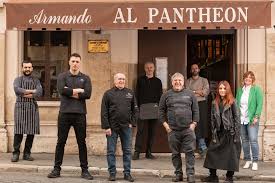
1. Armando al Pantheon — Three Generations of Roman Soul
Salita de’ Crescenzi 31, Rome (steps from the Pantheon)
In 1961, Armando Gargioli took over a fading restaurant a stone’s throw from the Pantheon and transformed it into a bottiglieria con cucina — a wine shop with food. Sixty-four years later, the third generation of the Gargioli family is at the helm, chef Claudio still cooks on the same broad iron stove, and the Michelin Guide recommends it as one of the finest trattorias in Rome.
The menu changes with the seasons, built around Roman classics executed with quiet perfection: cacio e pepe, carbonara, rigatoni all’amatriciana, abbacchio a scottadito (grilled lamb chops), and coda alla vaccinara (braised oxtail). Unusually for a Roman trattoria, vegetarians receive their own extensive menu. Sommelier Fabiana Gargioli curates a thoughtful wine list with a focus on organic Italian labels. Reservations are online only and essential — this place is no secret.
Book at: armandoalpantheon.it | Michelin Guide: guide.michelin.com
Expect to pay: €30–€50 per person (two courses with house wine)
2. Da Enzo al 29 — The Queue That’s Always Worth It
Via dei Vascellari 29, Trastevere, Rome
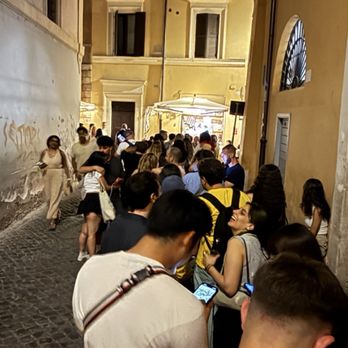
There are no reservations at Da Enzo. There is, however, always a queue — snaking down the cobblestoned lane of Via dei Vascellari on the quieter side of Trastevere, near the Tiber Island. People wait because what arrives at the table is, quite simply, some of the most honest Roman cooking in the city.
Founded in the late 1930s and named after its original owner, the trattoria has lemon-yellow walls, mismatched wine glasses, blue paper tablecloths, and a menu so fiercely traditional it borders on stubborn. The tonnarelli cacio e pepe is handmade and silky. The carbonara is rich and deeply savoury. The carciofi alla giudia (Jewish-style fried artichokes, when in season) are showstoppers. And the tiramisù is cloud-like. Arrive early — ideally 30 minutes before opening — and the staff will bring you a drink while you wait. It is everything a Roman trattoria should be.
Visit: daenzoal29.com | No reservations — walk-in only
Expect to pay: €25–€35 per person (two courses with house wine)
FIVE AUTHENTIC DISHES YOU MUST TRY
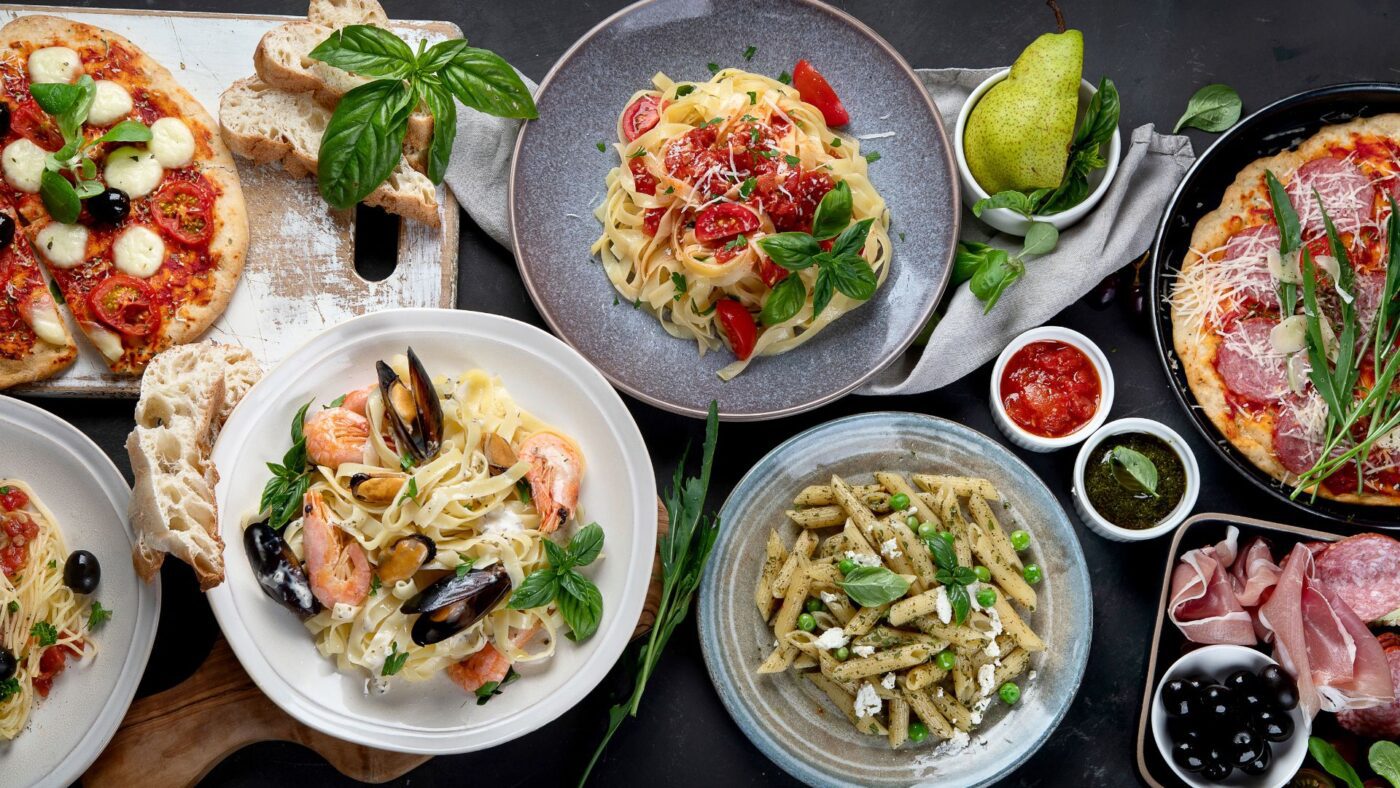
Wherever your Italian journey takes you, these are the dishes that define the country’s culinary soul. Each one is deceptively simple — and impossibly hard to replicate anywhere else. Order them in their region of origin for the most authentic experience.
1. Cacio e Pepe
Region: Rome / Lazio | Typical price: €12–€18 in a trattoria
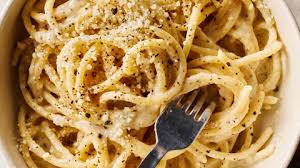
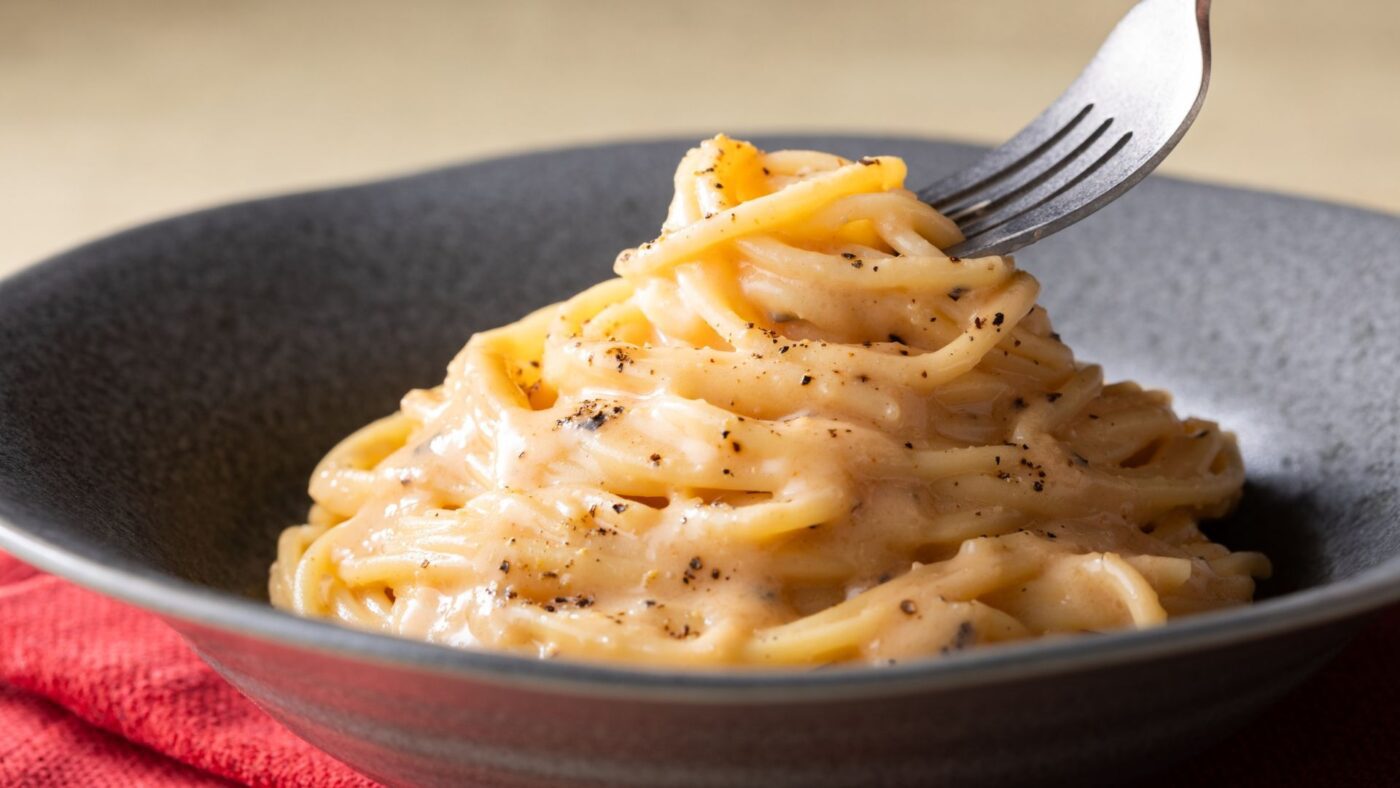
Just three ingredients — pasta, Pecorino Romano cheese, and black pepper — yet in the hands of a skilled Roman cook, cacio e pepe becomes something transcendent. The technique is everything: the starchy pasta water emulsifies with the grated cheese to create a silky, clinging sauce that coats each strand of tonnarelli or rigatoni. It is the dish that separates a good Roman restaurant from a great one. If you order nothing else in Rome, order this.
Where to try it: Felice a Testaccio is famed for preparing it tableside — feliceatestaccio.com
2. Spaghetti alla Carbonara
Region: Rome / Lazio | Typical price: €14–€18 in a trattoria
Forget everything you think you know about carbonara. The authentic Roman version contains no cream whatsoever — it is made with egg yolks, Pecorino Romano, guanciale (cured pork jowl, never bacon), and cracked black pepper. The result is rich, glossy, and deeply savoury. Luciano Monosilio, known as Rome’s “King of Carbonara,” helped define the modern standard for this dish at his restaurant near Campo de’ Fiori.
Where to try it: Luciano — Cucina Italiana, Via del Teatro Pace, Rome — lucianomonosilio.com
3. Pizza Napoletana
Region: Naples / Campania | Typical price: €6–€12 in a pizzeria
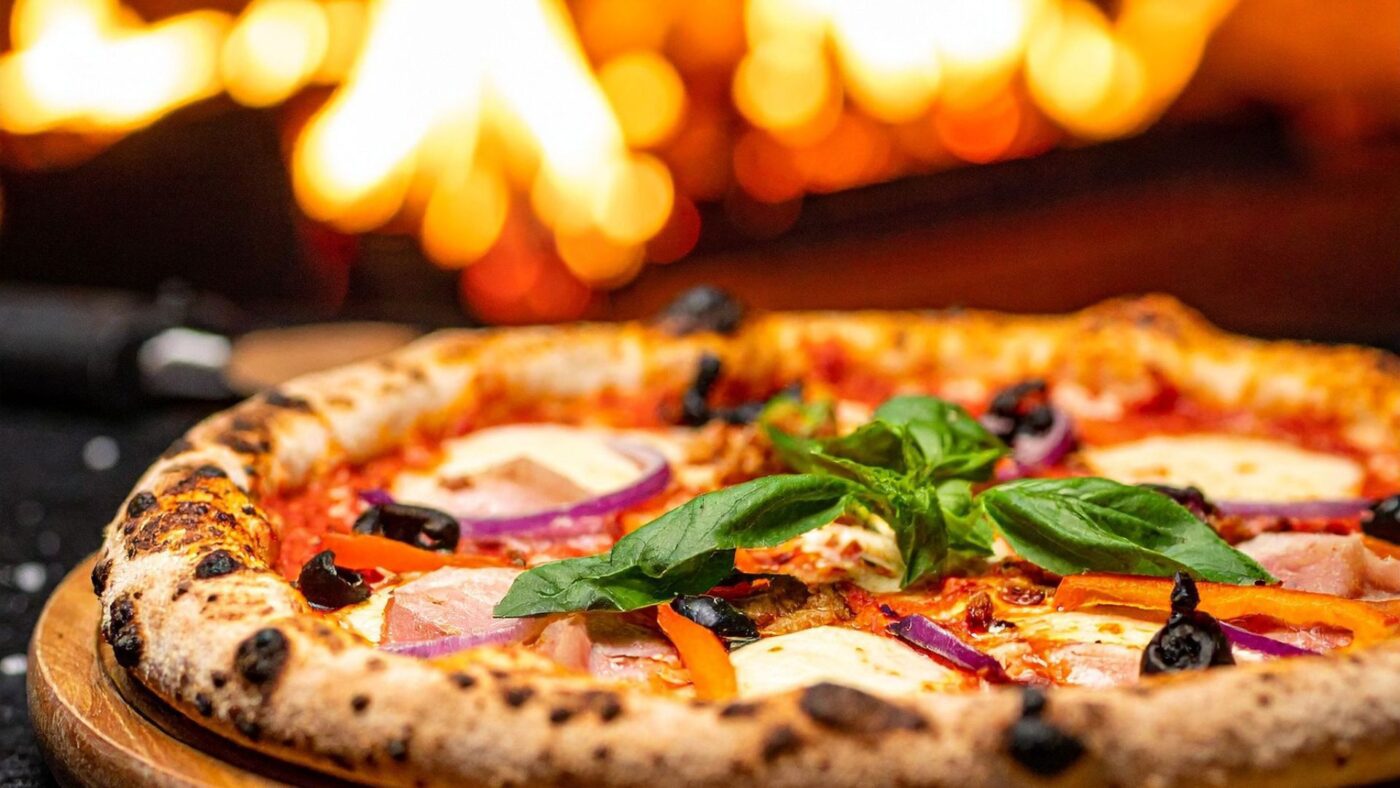
Neapolitan pizza is not merely food — it is a UNESCO-recognised cultural heritage. The dough is made from just flour, water, salt, and yeast, left to rise slowly, then stretched by hand (never rolled) and baked in a wood-fired oven at around 485°C for just 60 to 90 seconds. The result: a soft, pillowy base with charred leopard spots on the crust, topped minimally with San Marzano tomatoes, fresh mozzarella, basil, and olive oil. In Naples, a Margherita costs as little as €5. It is arguably the most perfect food ever invented.
Where to try it: L’Antica Pizzeria da Michele, Naples (since 1870) — damichele.net
4. Tagliatelle al Ragù alla Bolognese
Region: Bologna / Emilia-Romagna | Typical price: €14–€20 in a trattoria
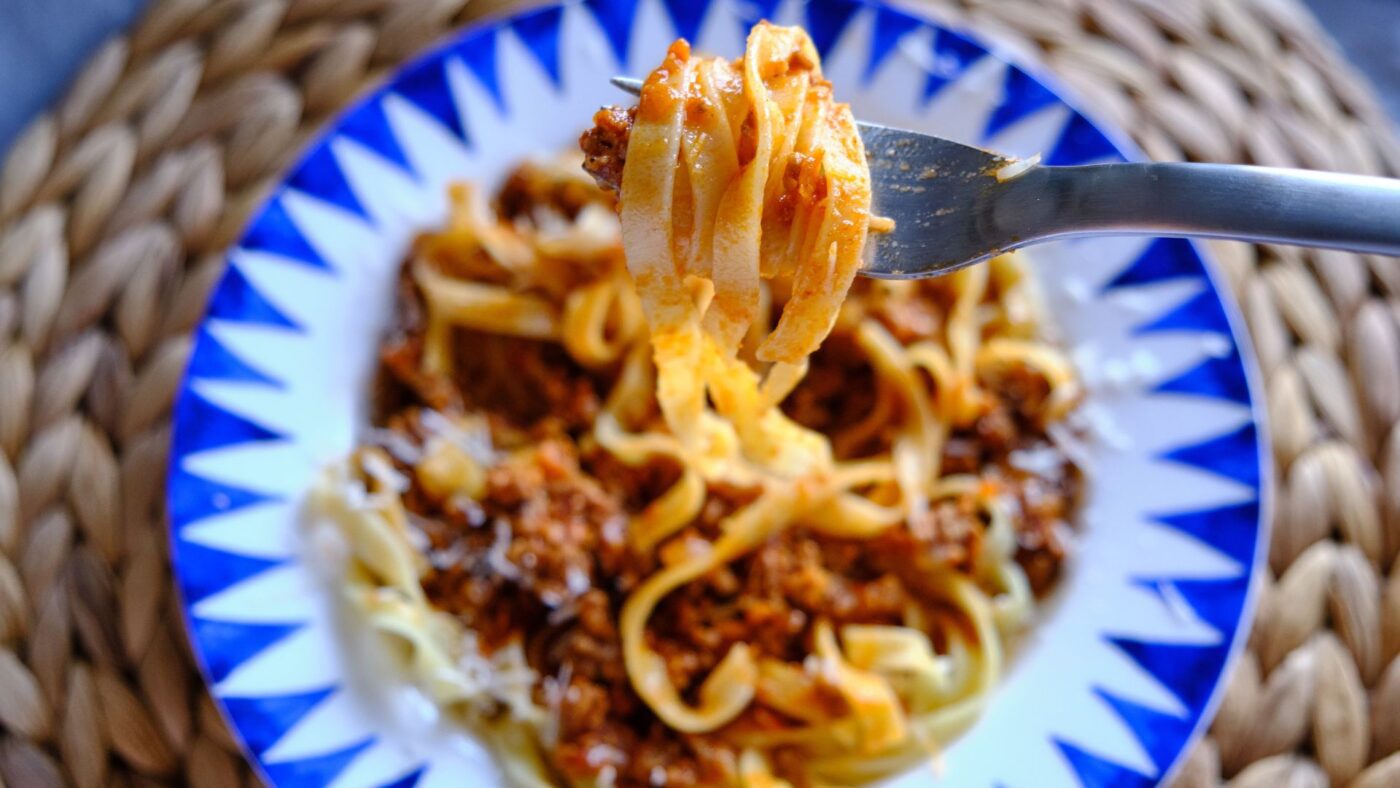
Here’s a fact that horrifies Italians worldwide: the authentic ragù alla bolognese is never served with spaghetti. In Bologna, it comes on fresh, hand-rolled tagliatelle — wide egg pasta ribbons that cling to the slow-cooked meat sauce. The recipe approved by the Italian Academy of Cuisine in 1982 includes a soffritto of onion, celery, and carrot, minced beef and pork, tomato paste, white wine, and milk. It simmers for hours. In Emilia-Romagna — widely considered the food capital of Italy — you’ll also find Parmigiano Reggiano, prosciutto di Parma, and traditional balsamic vinegar, making it arguably the single greatest food region on earth.
Where to try it: Trattoria Anna Maria, Bologna —
5. Insalata Caprese with Mozzarella di Bufala
Region: Campania / Amalfi Coast | Typical price: €10–€16 as a starter
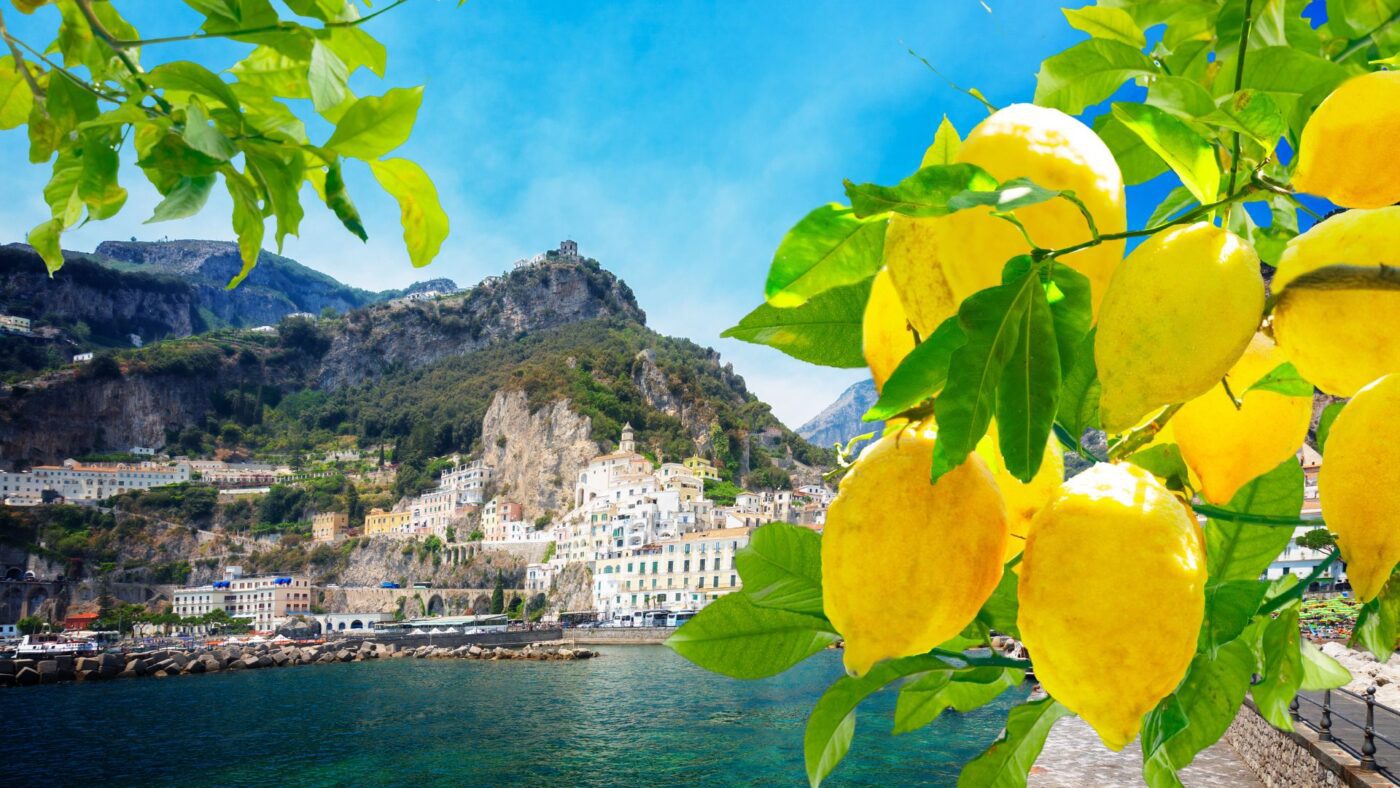
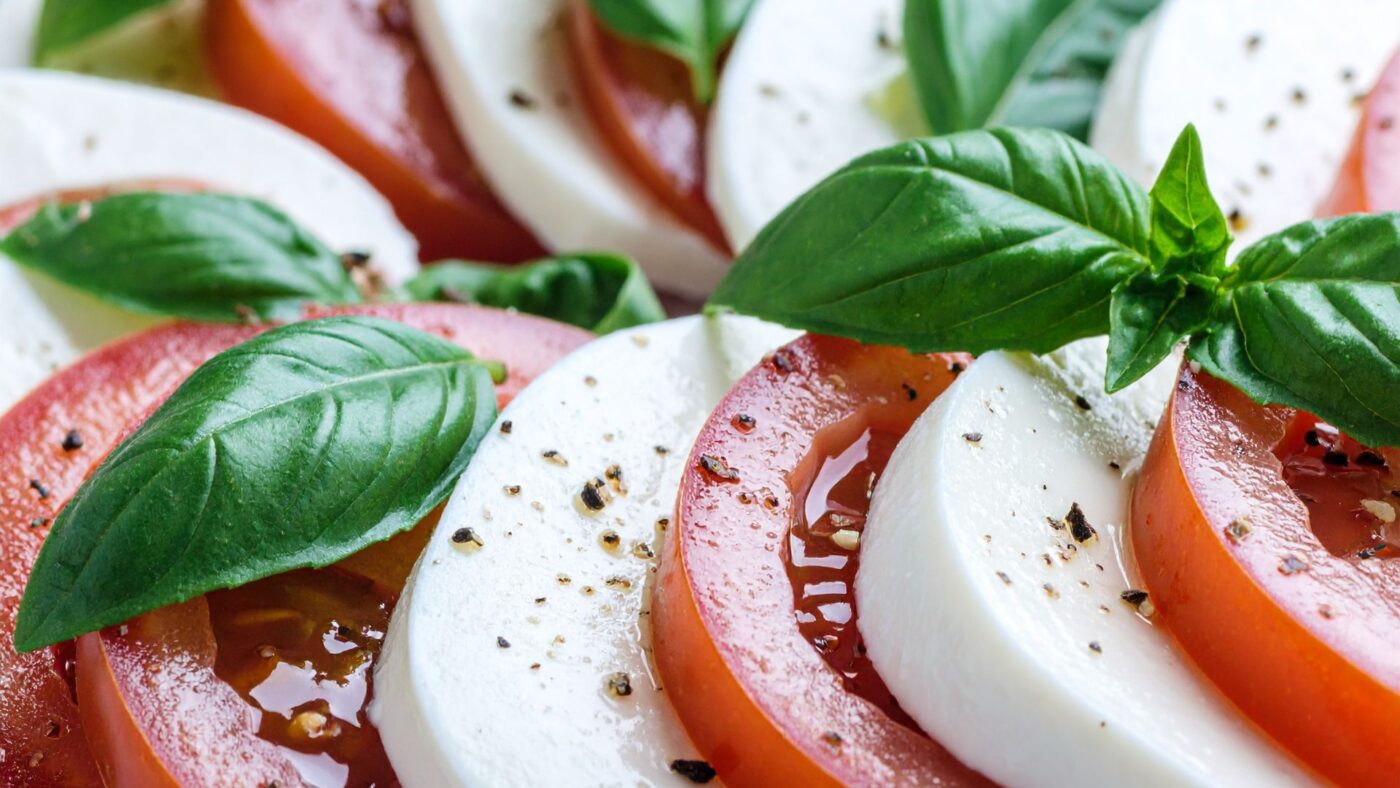
The simplest dish in Italy is also one of its most sublime — when made with the right ingredients. Authentic mozzarella di bufala is made from Italian water buffalo milk in the Campania region, and bears almost no resemblance to what passes for mozzarella elsewhere. Sliced and arranged with vine-ripened tomatoes, fresh basil, and a drizzle of first-pressed olive oil, the Caprese salad mirrors the colours of the Italian flag and captures the essence of Mediterranean cooking in a single plate. Seek it out in its home territory around the Amalfi Coast and Sorrento, where the buffalo farms are minutes away and the tomatoes taste of sunshine.
Where to try it: Any restaurant along the Amalfi Coast using locally sourced bufala — or visit a caseificio (cheese dairy) in Paestum for the freshest experience
AT A GLANCE: What to Expect to Pay
Dining Level | Typical Cost Per Person | What That Gets You |
Fine Dining (Michelin) | €150–€400+ | Multi-course tasting menu, sommelier wine pairing, world-class setting |
Mid-Range Trattoria | €30–€60 | Two courses, side dish, house wine, water, cover charge |
Local Neighbourhood Spot | €15–€35 | Pasta dish, glass of wine, water |
Street Food / Pizza al Taglio | €3–€10 | Slice of pizza, arancini, or supplì |
Coffee & Pastry (Breakfast) | €2–€5 | Cappuccino and cornetto at the bar |
Note: Most Italian restaurants add a coperto (cover charge) of €1.50–€3 per person, which typically includes bread. Water is usually charged separately at €2–€3 for a bottle. Tipping is not expected but rounding up or leaving 5–10% for exceptional service is appreciated.
INSIDER TIPS: Eat Like an Italian
- Never order cappuccino after 10am — Italians consider it a breakfast drink. After a meal, order an espresso.
- Eat seasonally — authentic Italian restaurants change their menus throughout the year. Artichokes in spring, truffles in autumn, fresh porcini in late summer.
- Avoid restaurants with picture menus and multi-language tourist boards outside. The best places often have handwritten daily specials on a chalkboard.
- Aperitivo hour (6–8pm) — many bars offer complimentary snacks or small plates with your drink. It’s a delicious and cost-effective way to begin your evening.
- Lunch is the main meal — Sunday lunch in particular is sacred in Italy. Many restaurants offer better value at lunchtime than dinner.
- Trust the locals — if a trattoria is full of Italians over 50, you’re in the right place.
USEFUL LINKS
Italy Official Tourism Board — Food & Wine: italia.it/en/italy/things-to-do/food-and-wine
Delicious Italy (Independent Regional Food Guide): deliciousitaly.com