
Island Hopping: Italy’s Offshore Treasures
From Capri to the Aeolians, from Sardinia to Elba — a guide to exploring Italy by sea
Italy’s coastline extends over 7,600 kilometres, and its islands — from the glamorous to the volcanic to the virtually unknown — offer experiences that the mainland cannot match. Some are accessible by public ferry; others require private charters; all reward the traveller who takes to the water. This is our guide to Italy’s island archipelagos and the cruising routes that connect them.
The Bay of Naples: Capri, Ischia, and Procida
The islands of the Bay of Naples have drawn visitors since the emperors built their villas here — Tiberius ruled the Roman Empire from Capri, devising the tortures that Suetonius would later describe with relish. Today, Capri remains Italy’s most glamorous island, a place where the jet set congregates at La Piazzetta and where day-trippers from Naples crowd the funicular and the Blue Grotto.
The Blue Grotto — Grotta Azzurra — deserves its fame, even if the experience involves herding into small rowboats with strangers and being paddled through a tiny opening by boatmen who expect tips. The light inside — refracted through underwater openings that filter out red wavelengths, leaving only electric blue — genuinely defies description. Outside peak hours (avoid midday), the effect is magical enough to justify the circus of getting there.
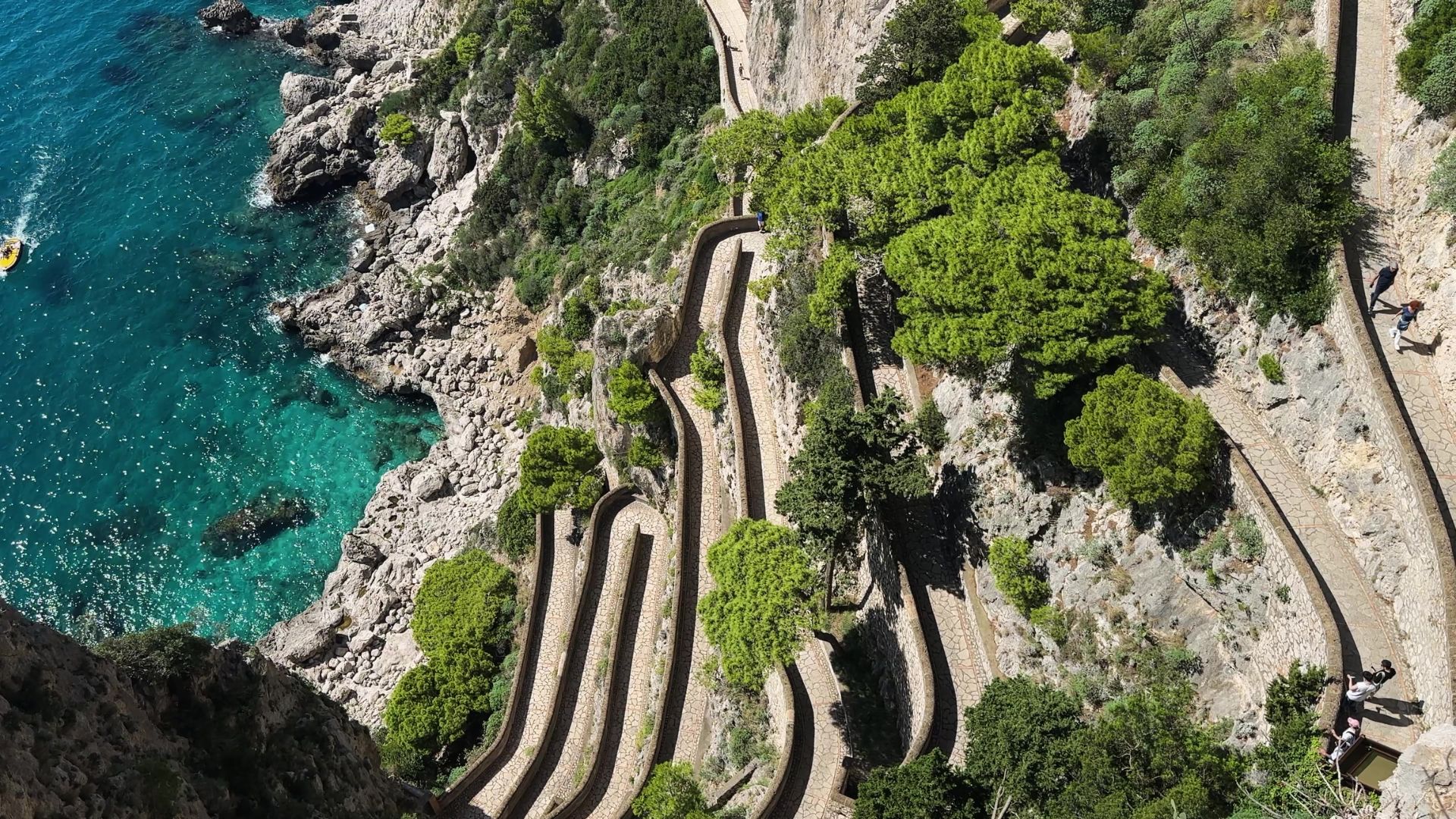
But Capri’s real pleasures lie away from the crowds: the Gardens of Augustus, with their views to the Faraglioni rock stacks; the Villa Jovis, Tiberius’s ruined palace on the island’s highest point; the chairlift to Monte Solaro, where the panorama extends from Naples to the Amalfi Coast; Anacapri, the quieter upper town where the crowds thin and the shops sell local limoncello rather than tourist tat. Stay overnight — the ferries stop in early evening — and you’ll have the island to yourself for sunset drinks at a terrace bar.
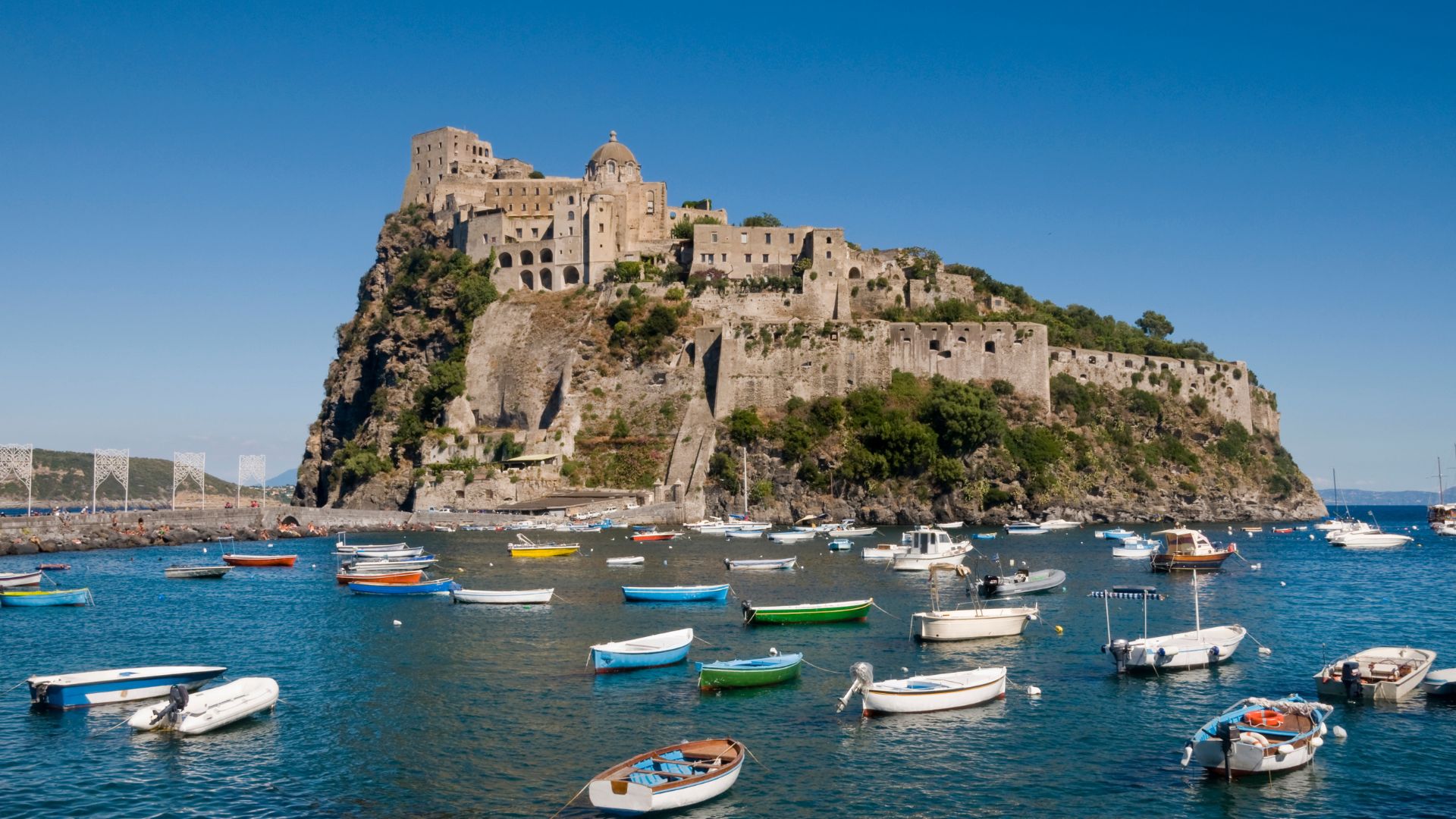
Ischia, larger and less glamorous, offers thermal spas that have been drawing the cure-seeking since Roman times. The Poseidon Gardens, a complex of thermal pools at varying temperatures arranged down a hillside to the sea, is worth the journey alone — spend a day cycling between volcanic mud baths, sauna caves carved into the rock, and Mediterranean swimming, and you’ll understand why the Romans called this place ‘the island that restores health.’
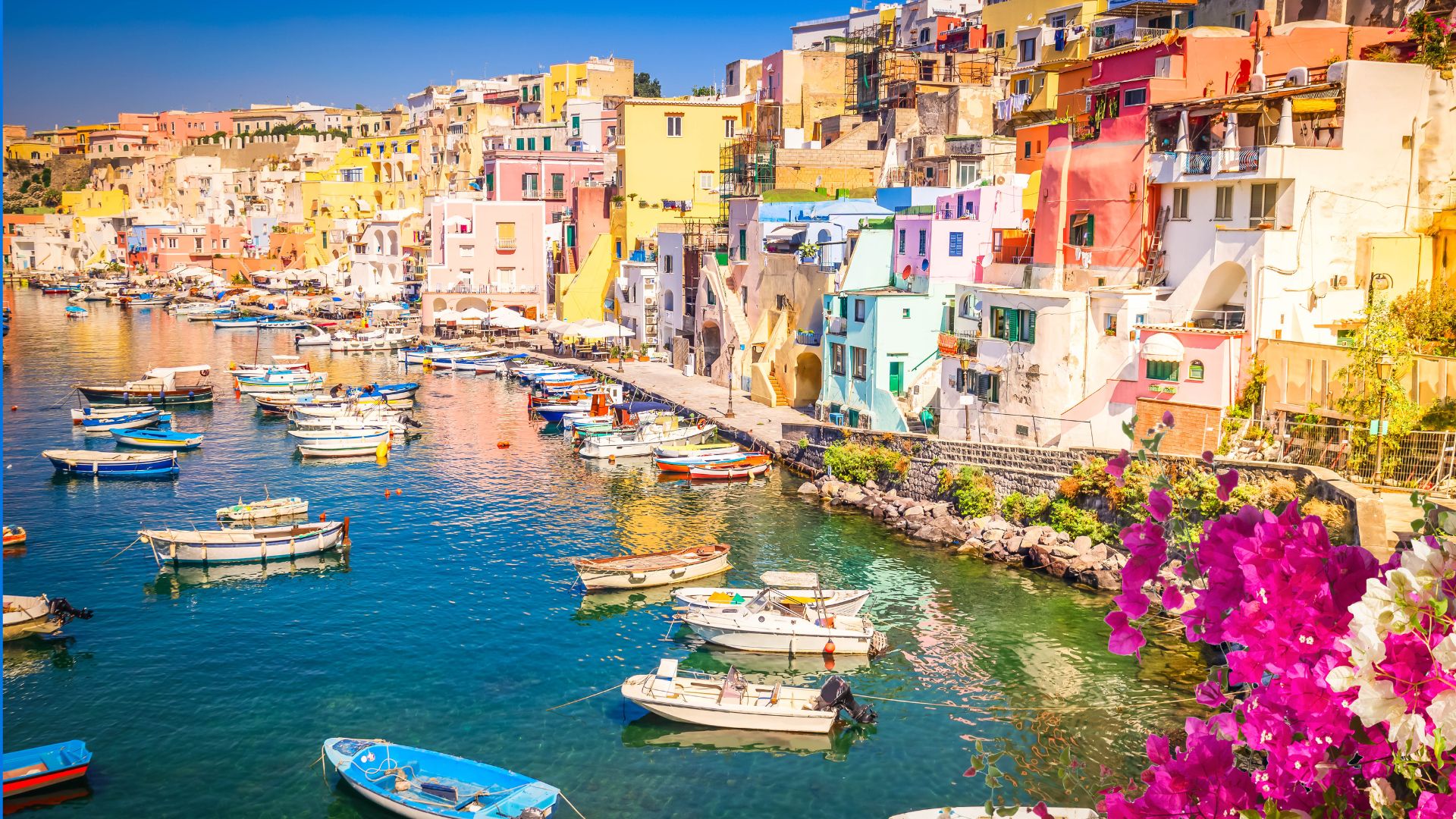
Procida, smallest of the three, remains the most authentic — a working fishing island that tourism has touched but not transformed. The harbour of Marina Grande, with its pink and yellow houses stacked on the hillside, provided the setting for Il Postino and numerous other films. The beaches are black volcanic sand; the restaurants serve whatever the boats brought in that morning; the pace of life remains Mediterranean in the best sense — slow, convivial, oriented around food and family and the sea.
The Aeolian Islands
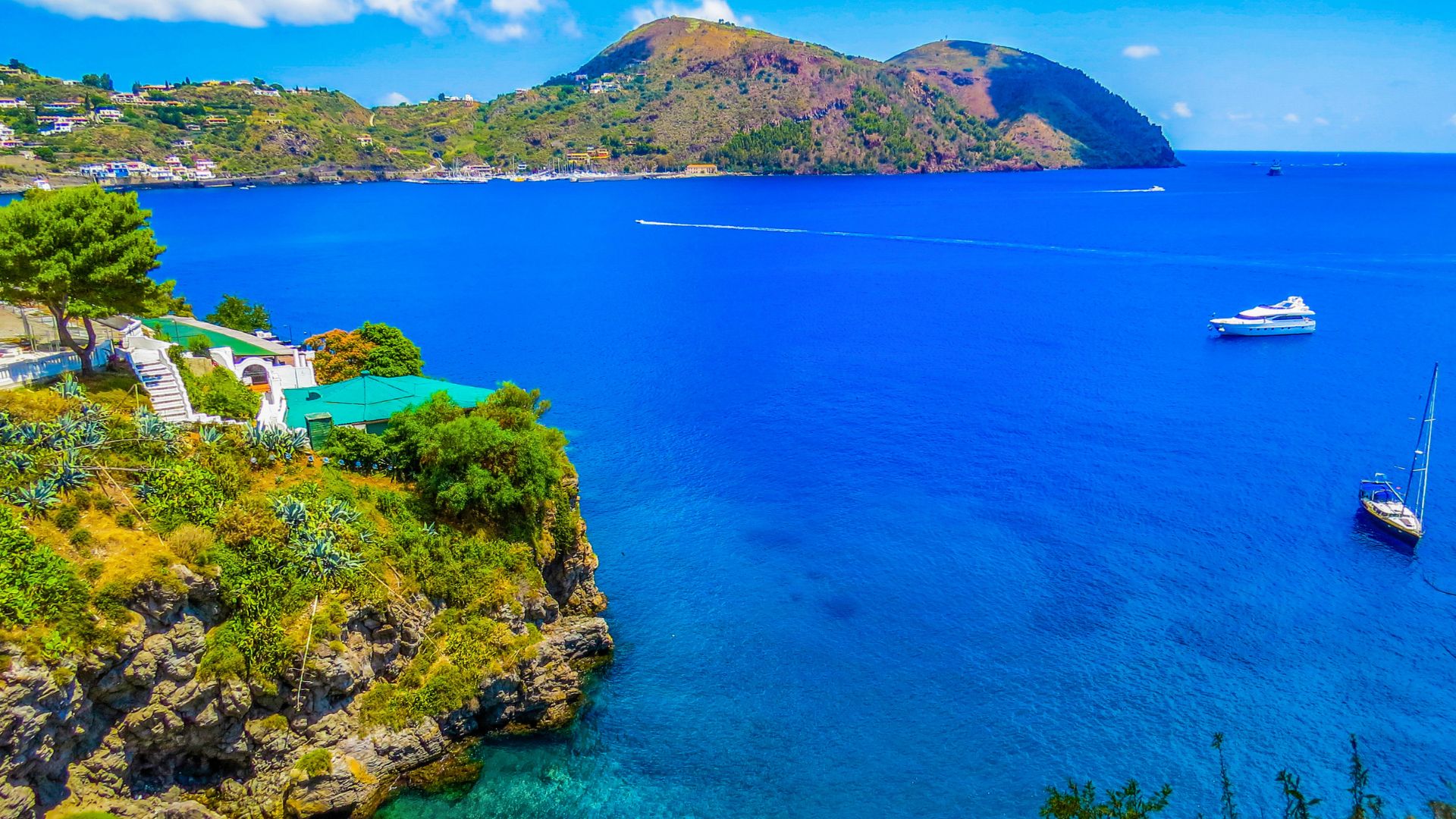
North of Sicily, seven volcanic islands rise from the Tyrrhenian Sea — the Aeolian archipelago, named for Aeolus, keeper of the winds in Homer’s Odyssey. Odysseus stopped here; so should you. The islands range from Lipari (largest, most developed, most accessible) to Alicudi (smallest, most remote, reachable only by occasional ferry). Between them lie experiences found nowhere else in Italy.
Stromboli is the most dramatic: an active volcano that erupts every fifteen minutes with a reliability that feels almost performative. By day, you can watch puffs of smoke from the summit; by night, the explosions glow red against the dark sky. Guided hikes to the summit (now limited to 400 metres due to recent eruptions) offer close-up views; boat trips around the Sciara del Fuoco — the black slope down which lava flows to the sea — offer theatrical distance.
Vulcano offers a different volcanic experience: bubbling mud pools where you can coat yourself in sulphurous grey clay (allegedly therapeutic, definitely memorable), hot springs where the sea itself warms from underwater vents, and the Gran Cratere hike to the rim of the main caldera, where fumaroles hiss and the views extend to all seven islands.
Salina, greenest of the islands, produces the Malvasia dessert wine that Aeolian tables have poured for centuries and the capers that appear in every Sicilian kitchen. Panarea, smallest inhabited island, has become the summer refuge of Italian celebrities — its white-cube houses and exclusive bars offer a Cycladic atmosphere at Italian prices. Filicudi and Alicudi, the western outliers, remain genuinely remote — no cars, limited electricity, accommodations that range from basic to primitive, and a silence that the modern world has largely forgotten.
Sardinia and the Costa Smeralda
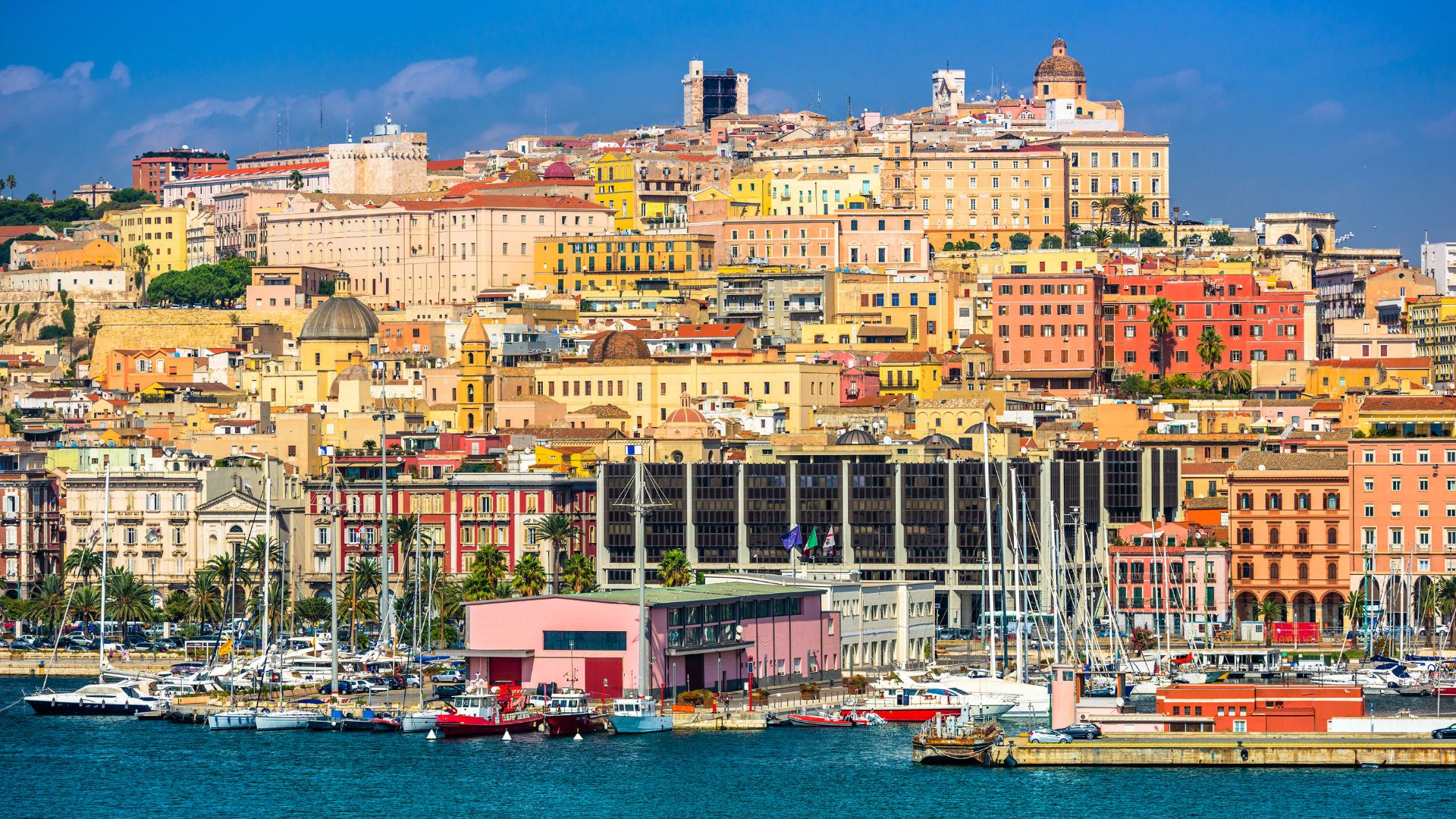
Sardinia, Italy’s second-largest island (after Sicily), could occupy an entire holiday — or an entire lifetime. The Costa Smeralda, the Aga Khan’s 1960s development on the northeast coast, offers the most exclusive Mediterranean beach experience available: Porto Cervo’s superyacht harbour, beaches of powdered white sand, hotels where rooms start at €1,000 per night and rise steeply from there. The beautiful people come here in August; the merely wealthy come in July; the rest of us come in June or September, when the water is warm but the prices merely outrageous rather than stratospheric.
But Sardinia’s true treasures lie elsewhere. The Maddalena archipelago, a national park off the Costa Smeralda, offers islands accessible by ferry or private boat — pink granite beaches, waters so clear they seem to lack water entirely, coves where you can anchor and swim and see nothing but rock and sky. The west coast, facing Africa, receives swells that draw surfers to beaches with names like Capo Mannu and Is Arenas. The interior — the Barbagia, the wild heart of the island — preserves traditions (and vendettas, according to local legend) that the coast abandoned generations ago.
Sailing Sardinia requires planning but rewards it handsomely. Charter boats from Olbia or Alghero; provision for island-hopping through the Maddalena archipelago or south along the coast to the wild beaches of Villasimius and the Costa Rei. The winds can be challenging — the mistral blows hard from the northwest — but the anchorages are beautiful and the seafood in coastal restaurants justifies every difficulty reaching them.
Elba and the Tuscan Archipelago
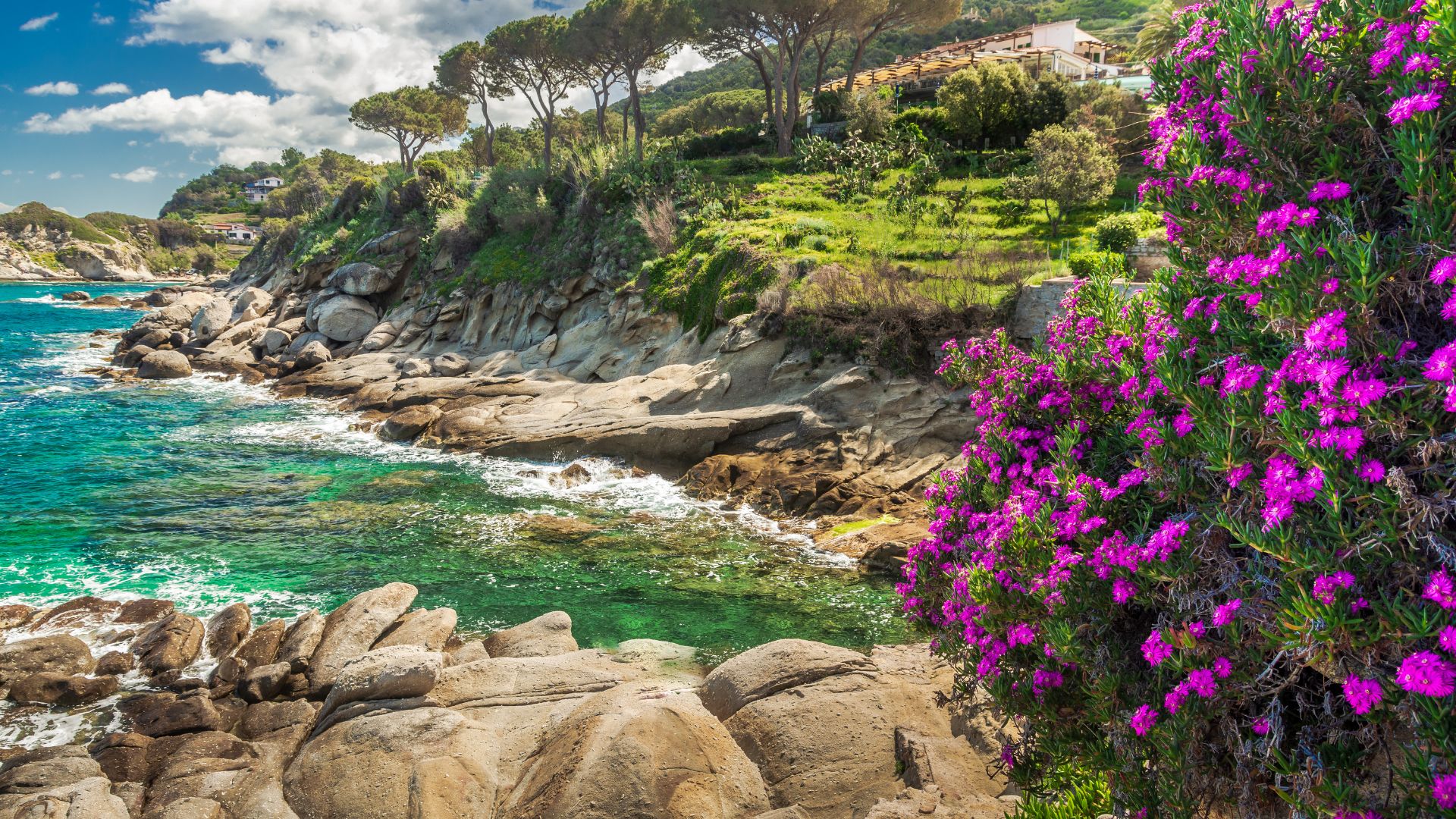
Napoleon’s island of exile — he spent ten months here before his escape and the Hundred Days — has transformed from imperial prison to Tuscan resort. Elba offers beaches that rival Sardinia’s, wines that benefit from the island’s unique microclimate, and Napoleonic sites that satisfy history enthusiasts: the Palazzina dei Mulini in Portoferraio, the Villa San Martino outside town, the views toward Corsica (French territory, but visible from Elba’s western shores) that must have tormented the exiled emperor.
The Tuscan archipelago extends beyond Elba to include Giglio (accessible by ferry from Porto Santo Stefano), Capraia (midway between Elba and Corsica, part of Italy but feeling distinctly its own place), and Montecristo — yes, that Montecristo — now a nature reserve accessible only by special permit. Day cruises and multi-day charters explore the archipelago from Elba bases; the swimming is exceptional, the crowds minimal, the sense of discovery still available to those who venture beyond the obvious.
Practical Information for Island Cruising
- Ferries: Frequent services connect major islands to mainland ports. Book ahead in summer; walk-on passages sell out. Check Tirrenia, Moby, and Grimaldi for Sicily/Sardinia; SNAV and Caremar for Bay of Naples; Liberty Lines for the Aeolians.
- Charter Boats: Sailing yachts from €2,000/week (bare boat) to €20,000+ (crewed luxury). Motor yachts higher. Book through moorings.com, dreamyachtcharter.com, or local brokers in major ports.
- Best Time: June and September offer warm water, manageable crowds, and reasonable prices. August is intensely crowded; July hot but festive; May beautiful but water still cool.
- Small Ship Cruises: Several operators run small-ship cruises around Sicily, the Aeolians, and Sardinia. Variety Cruises, Ponant, and Windstar offer itineraries ranging from 7-14 nights.