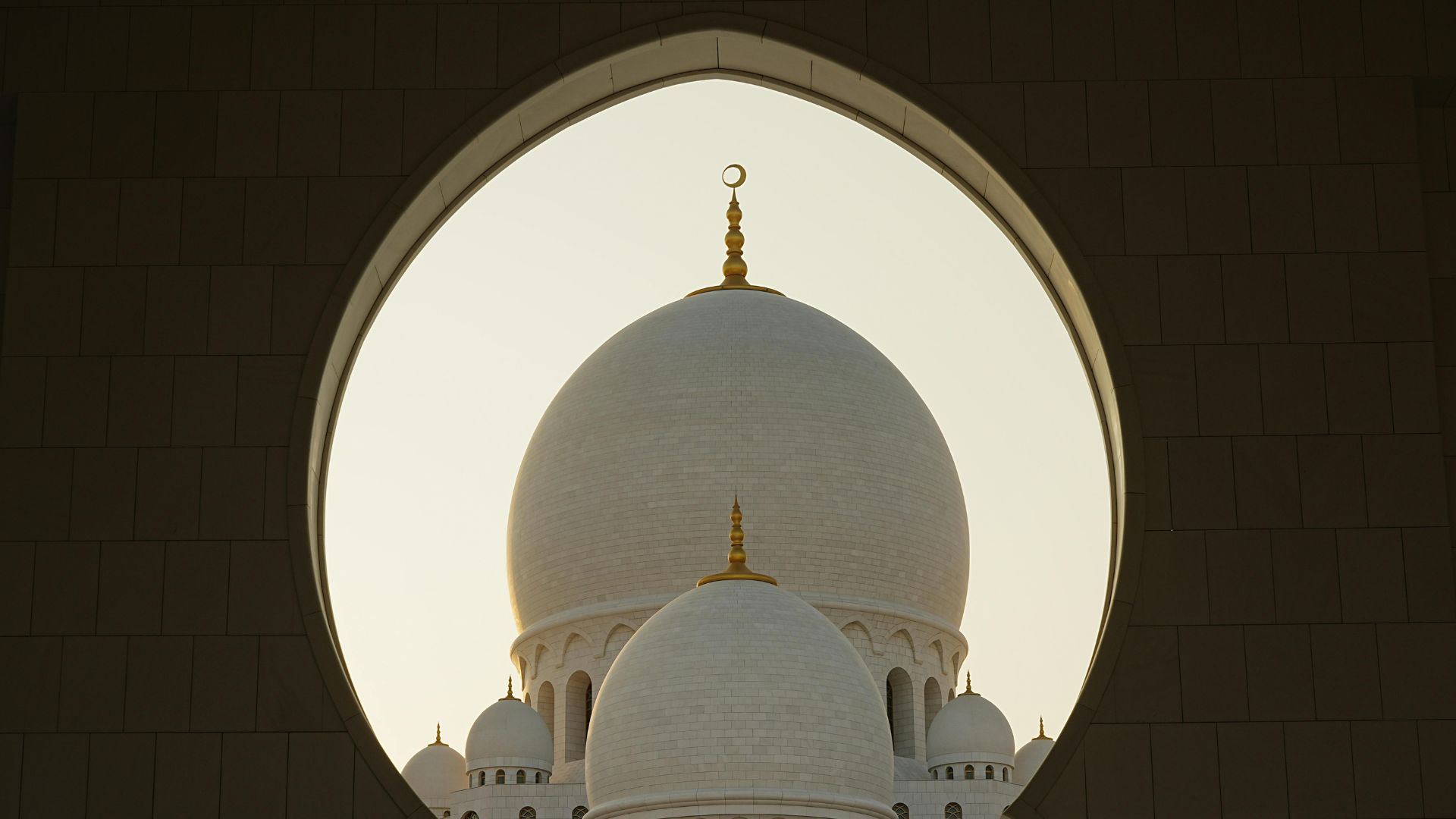
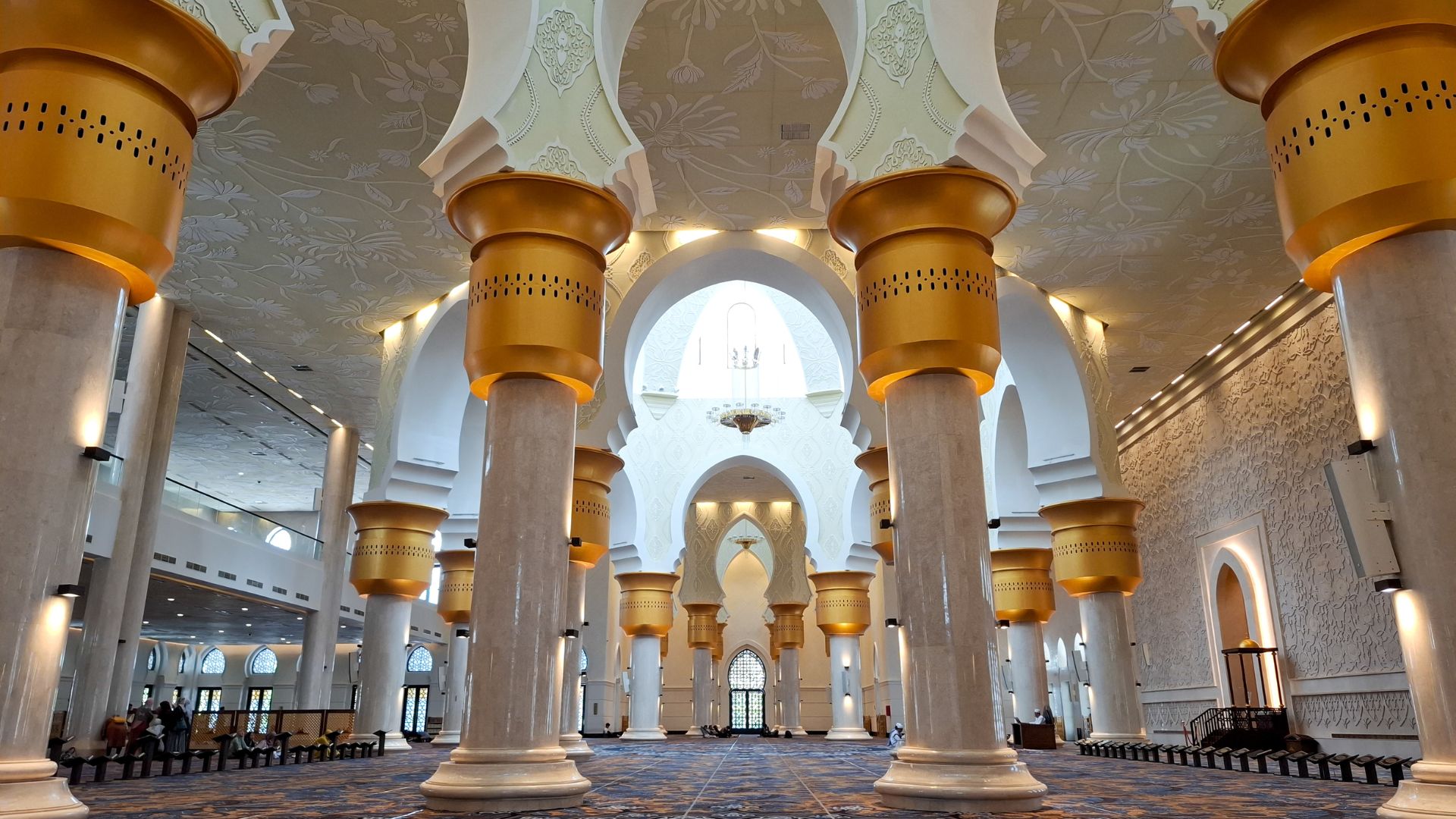
The Sheikh Zayed Grand Mosque does not invite casual description. Statistics help (82 domes, 4 minarets, capacity for 40,000 worshippers, the world’s largest hand-woven carpet) but also mislead, reducing architecture to numbers that cannot convey the experience of standing in the main prayer hall as sunset light filters through the screens. The mosque was completed in 2007 and already feels timeless — a building that could have existed for centuries and will exist for centuries more.
Our guide, Fatima, was Emirati, female, and dressed in an abaya whose understated elegance suggested fashion as much as modesty. She had been guiding at the mosque for twelve years and still seemed moved by the building she showed visitors daily. ‘Sheikh Zayed wanted a mosque that welcomed everyone,’ she explained, ‘Muslims and non-Muslims, Arabs and foreigners. He wanted beauty that did not intimidate but inspired.’ The vision, whatever its theological implications, has been realised: the mosque receives two million visitors annually, many of them non-Muslim, and all of them welcomed with genuine warmth.
The details reward attention that the scale can overwhelm. The calligraphy, carved into marble by artists from the UAE and beyond, quotes Quranic verses in scripts that trace typography’s evolution across centuries. The columns, 1,096 of them, are inlaid with semi-precious stones in patterns that reference Mughal architecture while claiming distinctly Emirati identity. And the carpet — 5,700 square metres, woven by 1,200 artisans over two years — achieves the impossible: soft underfoot despite the traffic, beautiful despite the scale, prayer-worthy despite the tourists. We left as the call to prayer echoed across the water features, feeling we had witnessed something that exceeded tourism’s usual categories.