
Hogmanay: When Edinburgh Knows How to Party
“Should auld acquaintance be forgot, and never brought to mind? Should auld acquaintance be forgot, and auld lang syne?”
— Robert Burns, 1788
Edinburgh does not do New Year quietly. While much of the world marks the passing of December 31st with fireworks and champagne before retiring to bed at a sensible hour, Scotland’s capital treats Hogmanay as a multi-day celebration requiring serious commitment. This is not mere revelry; it is tradition codified into festival, sentiment transformed into spectacle, and hospitality elevated to art form. The Scots invented the modern New Year’s Eve party, and Edinburgh remains determined to prove they still know how it’s done.
The name itself carries history. ‘Hogmanay’ most likely derives from the Norman French ‘hoguinane,’ meaning a gift given at New Year, though Scots being Scots, several alternative etymologies compete for attention. What matters more than linguistic origins is the cultural reality: for centuries, Christmas was downplayed in Presbyterian Scotland—it remained an ordinary working day until 1958—and so New Year absorbed the celebratory energy that other nations spread across the holiday season. This legacy persists; Hogmanay remains Scotland’s defining winter celebration.
Three Days of Celebration
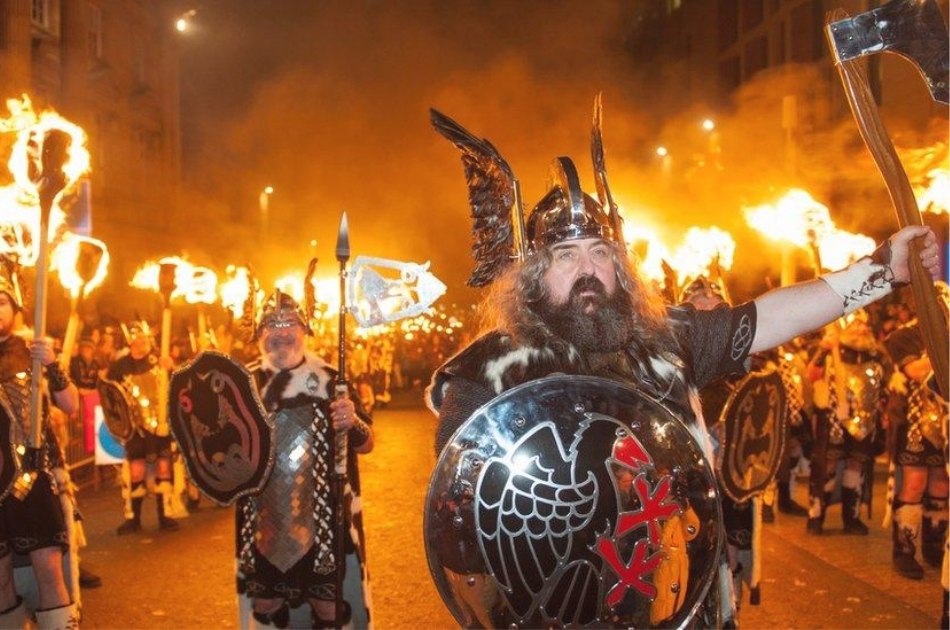
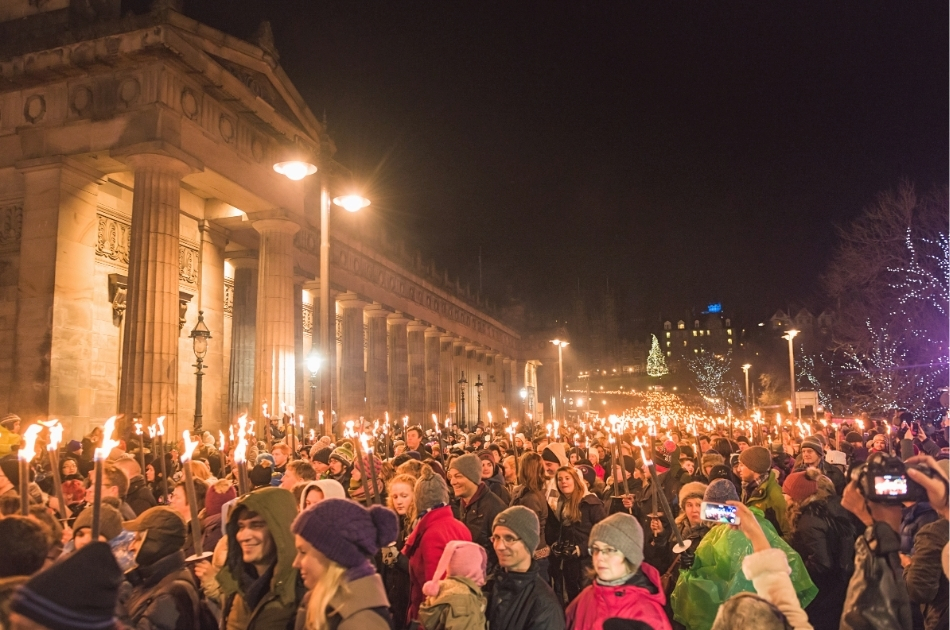
Modern Hogmanay in Edinburgh has evolved into a three-day festival drawing visitors from around the world. The Torchlight Procession, typically held on December 30th, sees thousands of participants carrying flaming torches from the Royal Mile to Holyrood Park, creating a river of fire through the city. The spectacle combines pagan imagery with community participation—anyone can join, and many do, linking Edinburgh’s present to ancient traditions of midwinter light.
New Year’s Eve brings the main event. The Street Party fills Princes Street and surrounding areas with stages, bars, and more humanity per square metre than most cities experience annually. Tens of thousands of ticket-holders—the event is no longer free, a change that still provokes debate—gather to celebrate beneath the castle. Live music spans genres and generations; Scottish bands receive prominent billing alongside international acts. As midnight approaches, anticipation builds to a collective intensity that feels almost primal.
The Concert in the Gardens, set in the natural amphitheatre of Princes Street Gardens with the castle as backdrop, offers an alternative for those preferring their Hogmanay with assigned seating. The Ceilidh under the Castle provides traditional Scottish dancing for those who know their Gay Gordons from their Dashing White Sergeants—and instruction for those willing to learn.
“There’s no night like Hogmanay for remembering who you are and where you come from—even if you can’t quite remember where you left your coat.”
— Traditional Edinburgh wisdom
Midnight and the Bells
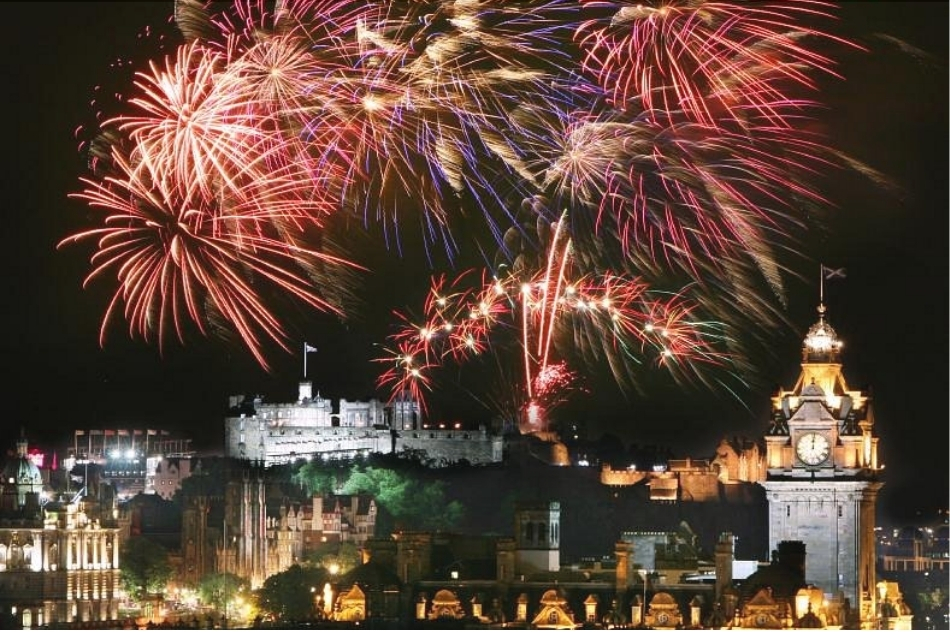
At the stroke of midnight, Edinburgh erupts. Fireworks burst from the castle ramparts in a display that has become one of the world’s most photographed celebrations. The castle, floodlit and dramatic against the winter sky, provides a backdrop that no other city can match. Arms are linked, voices are raised, and ‘Auld Lang Syne’ rings out across the city—Robert Burns’ words, set to traditional melody, performed by thousands in the very city where Burns’ memory is venerated.
The singing is sincere, emotional, and frequently off-key. It does not matter. This is not about musical perfection; it is about collective expression of sentiment that Burns captured with characteristic precision. Should auld acquaintance be forgot? In Edinburgh, at midnight on Hogmanay, the answer is emphatic: absolutely not. Strangers become friends, friends become family, and the normal barriers of British reserve collapse entirely.
First-Footing and Other Traditions
The Scottish tradition of first-footing adds a layer of ritual to New Year hospitality. The first person to cross your threshold after midnight—the ‘first foot’—ideally should be a tall, dark-haired man bearing symbolic gifts: coal for warmth, bread for food, salt for flavour, and whisky for good cheer. The superstition has practical roots in Viking history (a blond stranger at your door might not have had friendly intentions), but the practice persists as social ritual.
First-footing means that Hogmanay celebrations continue well into January 1st, as guests move from house to house bearing gifts and receiving hospitality. In Edinburgh, this translates into a city that remains alive through the small hours, with pubs granted extended licences and private parties spilling into communal celebration. The concept of ‘going home’ becomes fluid; home is wherever the next dram is being poured.
“A guid New Year to ane an’ a’—and mony may ye see.”
— Traditional Scottish toast
The Loony Dook
Come New Year’s Day, the truly committed take to the waters of the Firth of Forth for the Loony Dook. This mass swim—using the term loosely, as most participants achieve more of a gasping wade—takes place at South Queensferry, beneath the shadow of the Forth Bridges. Thousands in fancy dress plunge into water that, in January, hovers around 6 degrees Celsius. The spectacle draws crowds of sensibly clothed spectators who cheer, photograph, and thank their fortunate stars they made different life choices.
The Loony Dook began in 1987 and has grown from a handful of eccentrics to a major event. It raises money for charity, provides material for social media, and offers a guaranteed hangover cure—or so participants claim, though the medical evidence remains inconclusive. What cannot be disputed is the atmosphere: joyful, slightly mad, and thoroughly Scottish in its embrace of discomfort as celebration.
Planning Your Hogmanay
Attending Edinburgh’s Hogmanay requires advance planning. Street Party tickets sell out; accommodation prices multiply; transport arrangements need forethought. Book months ahead for the best options. Dress warmly—Scottish winters earn their reputation—and wear shoes capable of surviving cobblestones, crowds, and the occasional spillage. Pace yourself across the three days; Hogmanay is a marathon, not a sprint.
The rewards justify the effort. There are few places on Earth where New Year carries such cultural weight, such communal enthusiasm, such determined joy. Edinburgh at Hogmanay is not simply celebrating the calendar’s turn; it is affirming something about identity, continuity, and the Scottish belief that any excuse for a party is a good excuse, and the turning of the year is better than most.
As the Scots say when raising a glass: ‘Here’s tae us; wha’s like us? Damn few, and they’re a’ deid.’ It loses something in translation, but the sentiment—confident, affectionate, slightly defiant—captures Hogmanay’s spirit perfectly.