
Frozen in Time: Pompeii and Herculaneum
The volcanic catastrophe of 79 AD preserved two Roman cities in extraordinary detail — a guide to exploring the ruins that changed archaeology forever
On August 24, 79 AD — or perhaps October 24, if recent scholarship is correct — Mount Vesuvius erupted with a force that would not be equalled in Europe until Krakatoa. Two Roman cities, prosperous resort towns on the Bay of Naples, vanished beneath ash and pumice and superheated gas. Pompeii, buried under four metres of volcanic debris, was forgotten until the 18th century. Herculaneum, buried under twenty metres of solidite rock, proved even harder to excavate. Together, they offer an unparalleled window into Roman daily life — streets and shops and houses and bodies preserved exactly as they were on the day the world ended.
Pompeii
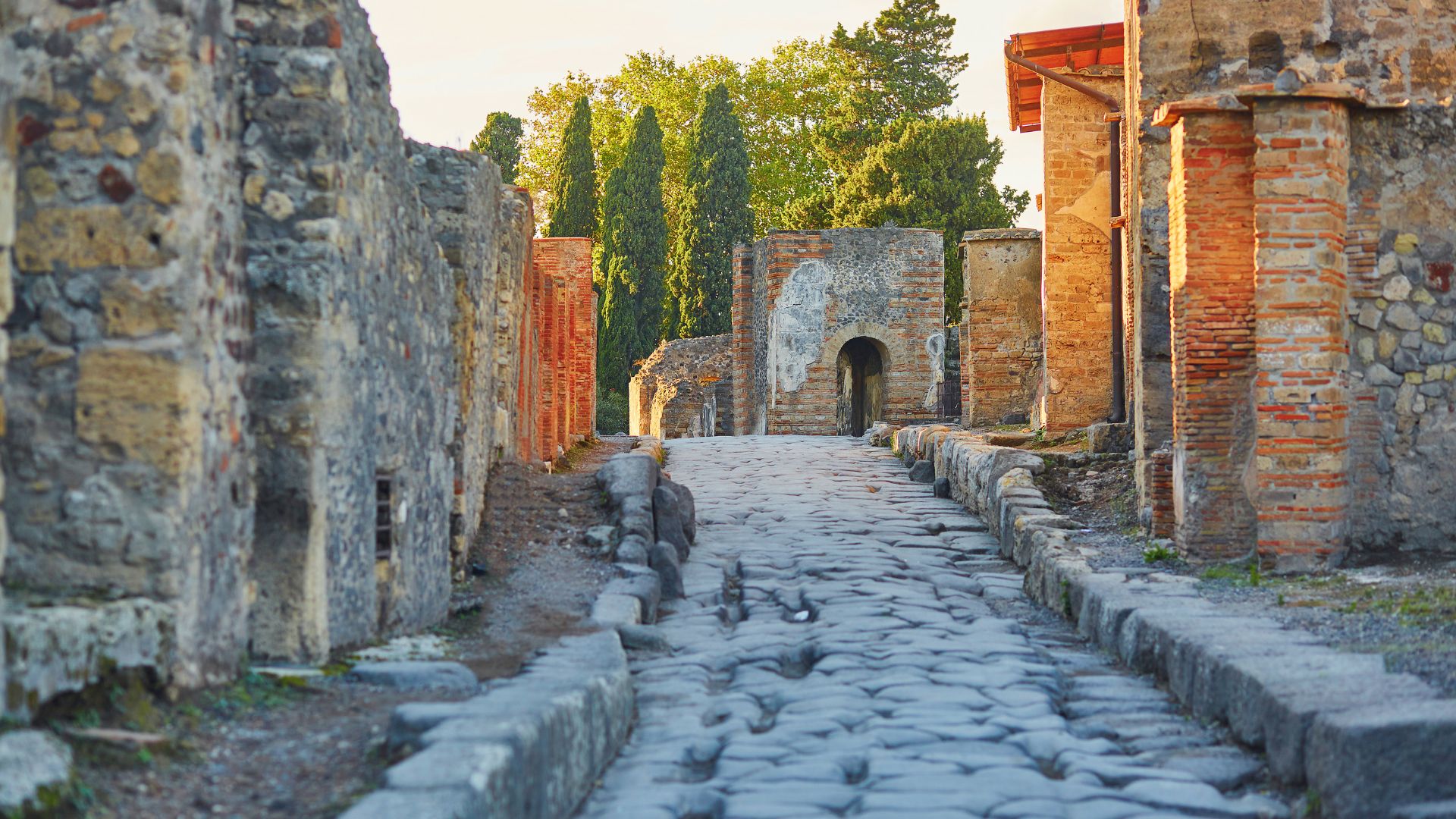
Pompeii is vast — 66 hectares of excavated ruins, perhaps a third of the ancient city — and requires at least a full day to appreciate. The site overwhelms not through any single monument but through accumulation: street after street of houses and shops and taverns and brothels, frescoes still vivid on walls, graffiti still legible (‘Successus the weaver is in love with a barmaid named Iris’), ruts worn into stone by cart wheels, stepping stones that allowed pedestrians to cross streets that doubled as open sewers.
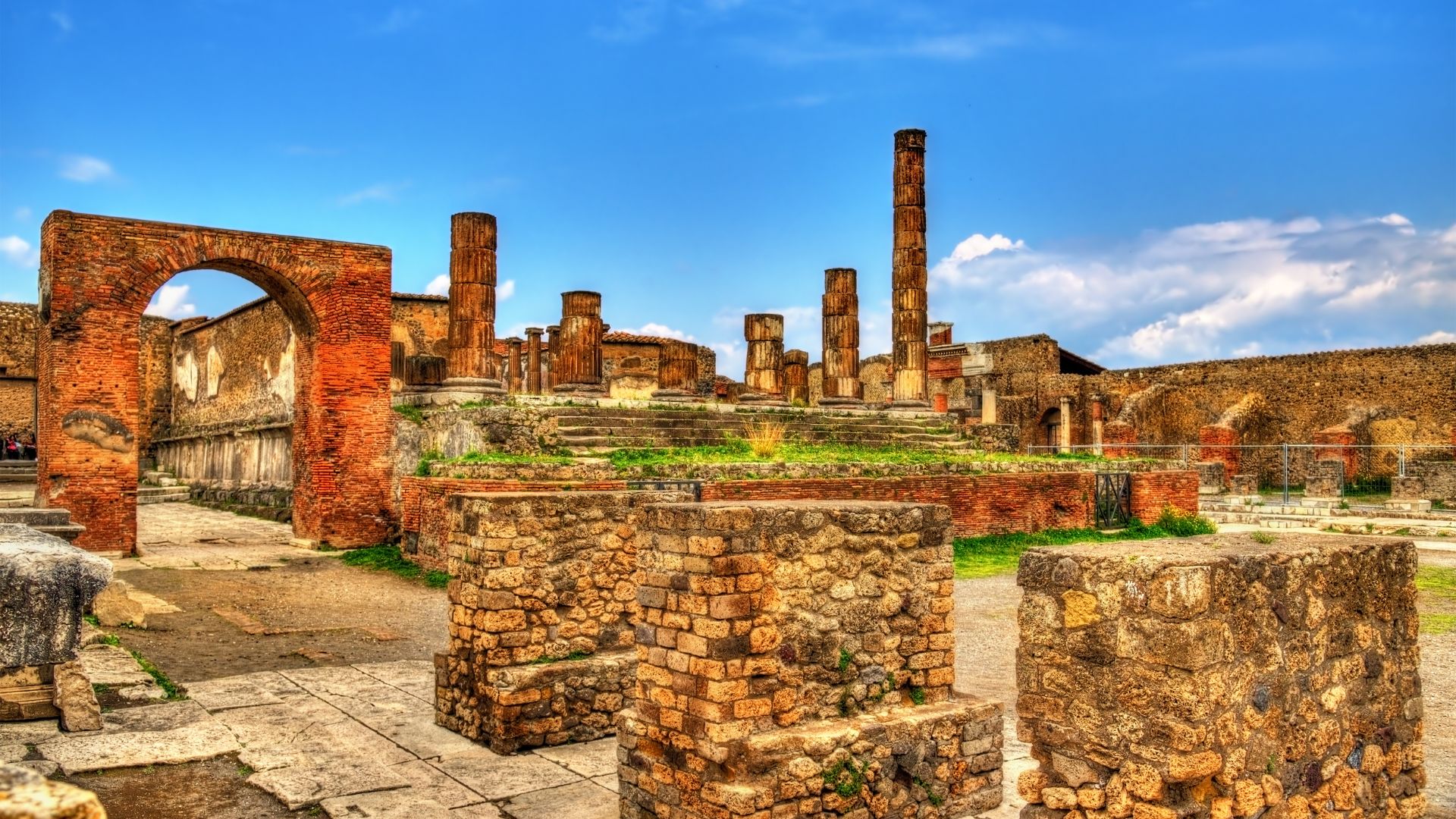
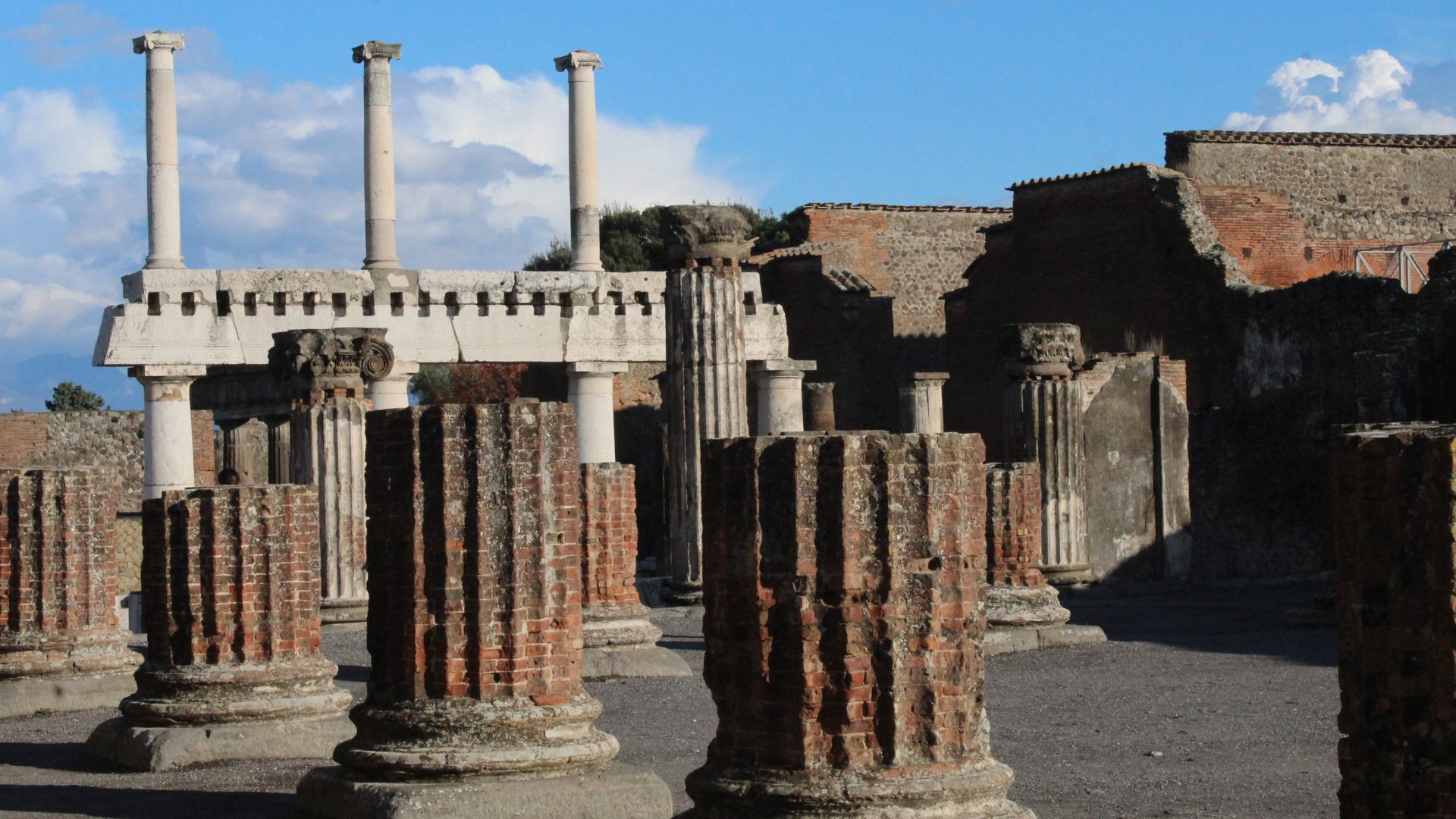
Begin at the Forum, the city’s political and commercial centre, where temples to Jupiter and Apollo still stand and markets once sold everything from fish to slaves. The Basilica, where law courts operated, retains columns that suggest its original grandeur. The Temple of Apollo faces a bronze statue of the god — a cast; the original is in the Naples museum — in a posture of eternal vigilance that the eruption cruelly mocked.
The private houses reveal how Pompeii’s wealthy lived. The House of the Faun — named for the bronze satyr in its atrium — contained the Alexander Mosaic, that masterpiece of over a million tesserae depicting Alexander’s victory over Darius, now in the Naples museum. The House of the Vettii, owned by freed slaves who prospered in the wine trade, blazes with frescoes of mythological scenes and cupids engaged in various trades. The House of the Tragic Poet, whose floor mosaic of a chained dog bears the warning CAVE CANEM (Beware of Dog), inspired Bulwer-Lytton’s novel and a thousand tourist photographs since.
The brothel (lupanare) draws prurient interest with its erotic frescoes — probably a menu of services — and its tiny stone beds where transactions occurred. The bakeries retain their millstones and ovens; the thermopolium (fast-food counters) display terracotta jars where hot food waited for customers; the amphitheatre, oldest surviving Roman arena, still hosts concerts where the acoustics justify their ancient reputation.
The plaster casts demand attention. When excavators discovered hollow spaces in the ash layer, they realised these were voids left by decomposed bodies. Pouring plaster into the voids produced haunting records: a dog straining at its chain, a man covering his face, a mother sheltering her child, a pregnant woman whose belly suggests she died before giving birth. These are not anonymous statistics but individuals, frozen in their final moments of terror, preserved by the same disaster that killed them. Standing before them, the eruption ceases to be ancient history and becomes human tragedy.
Herculaneum
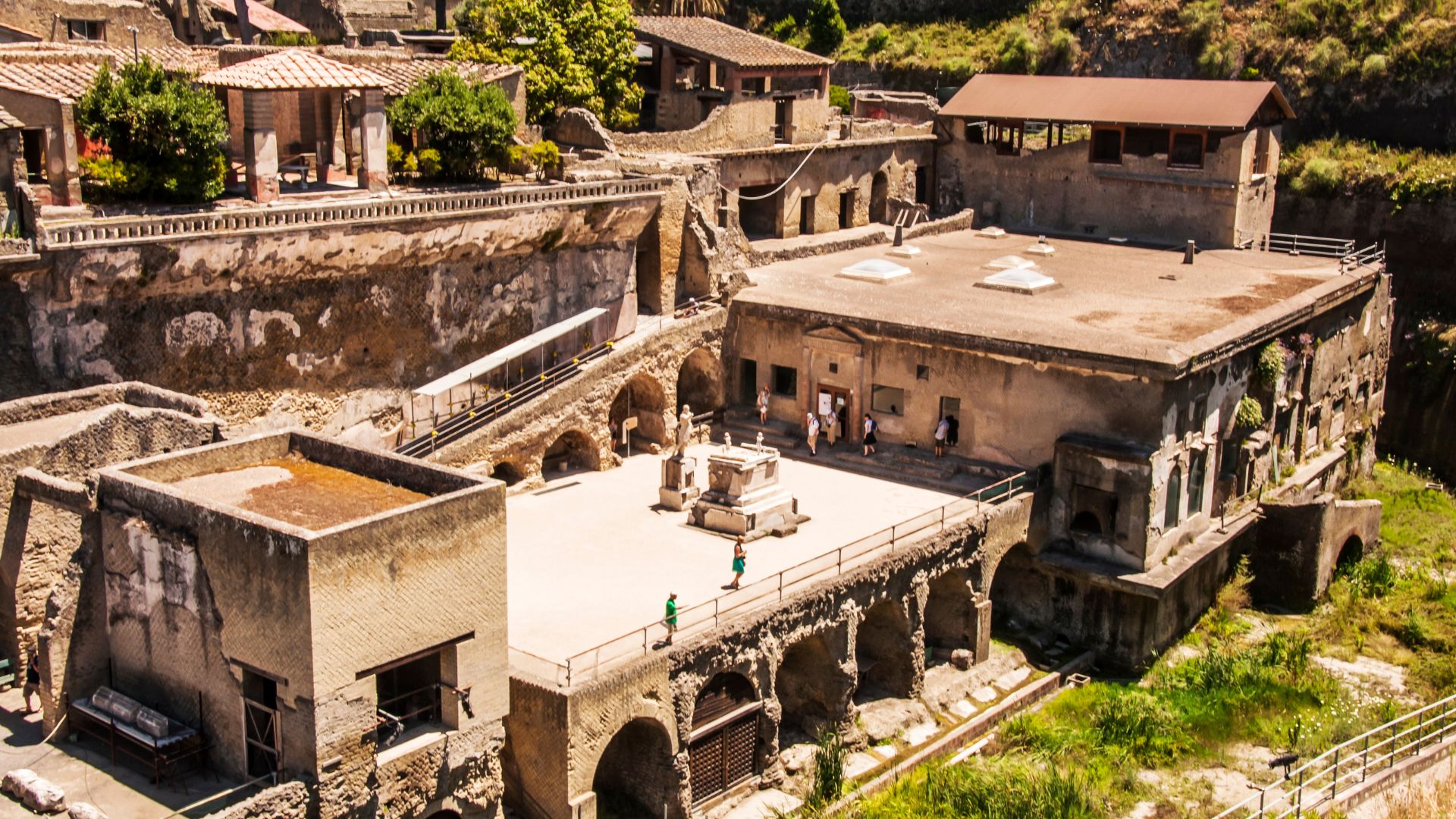
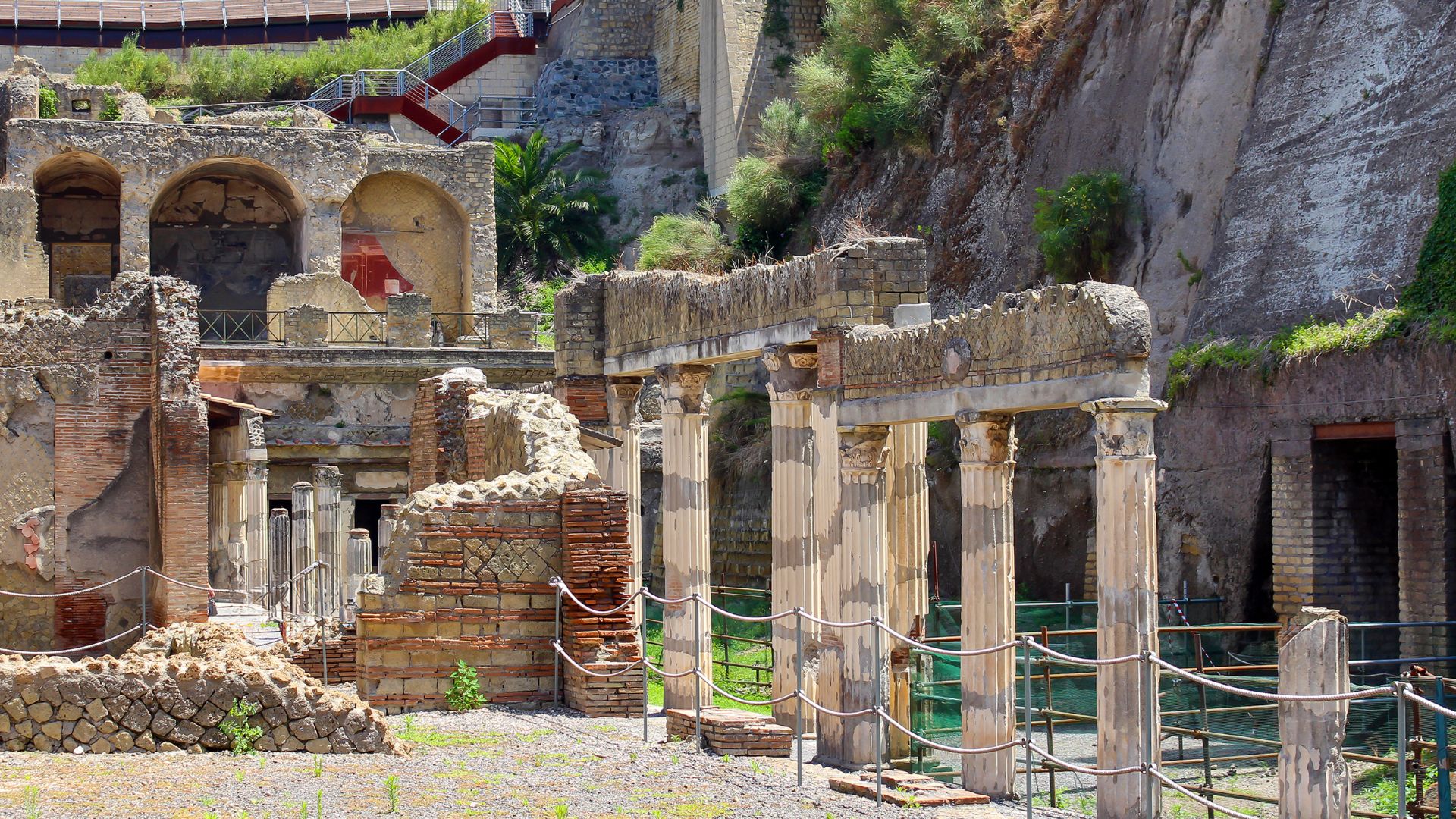
Herculaneum is smaller, more manageable, and in many ways better preserved than its larger neighbour. The pyroclastic surge that destroyed it — superheated gas and ash travelling at over 100 kilometres per hour — carbonised organic materials that volcanic ash at Pompeii merely crushed. Here you’ll find wooden furniture, wooden doors, wooden roof beams, even food preserved in carbonised form. The colours are vivid; the houses feel recently abandoned rather than excavated from millennia of burial.
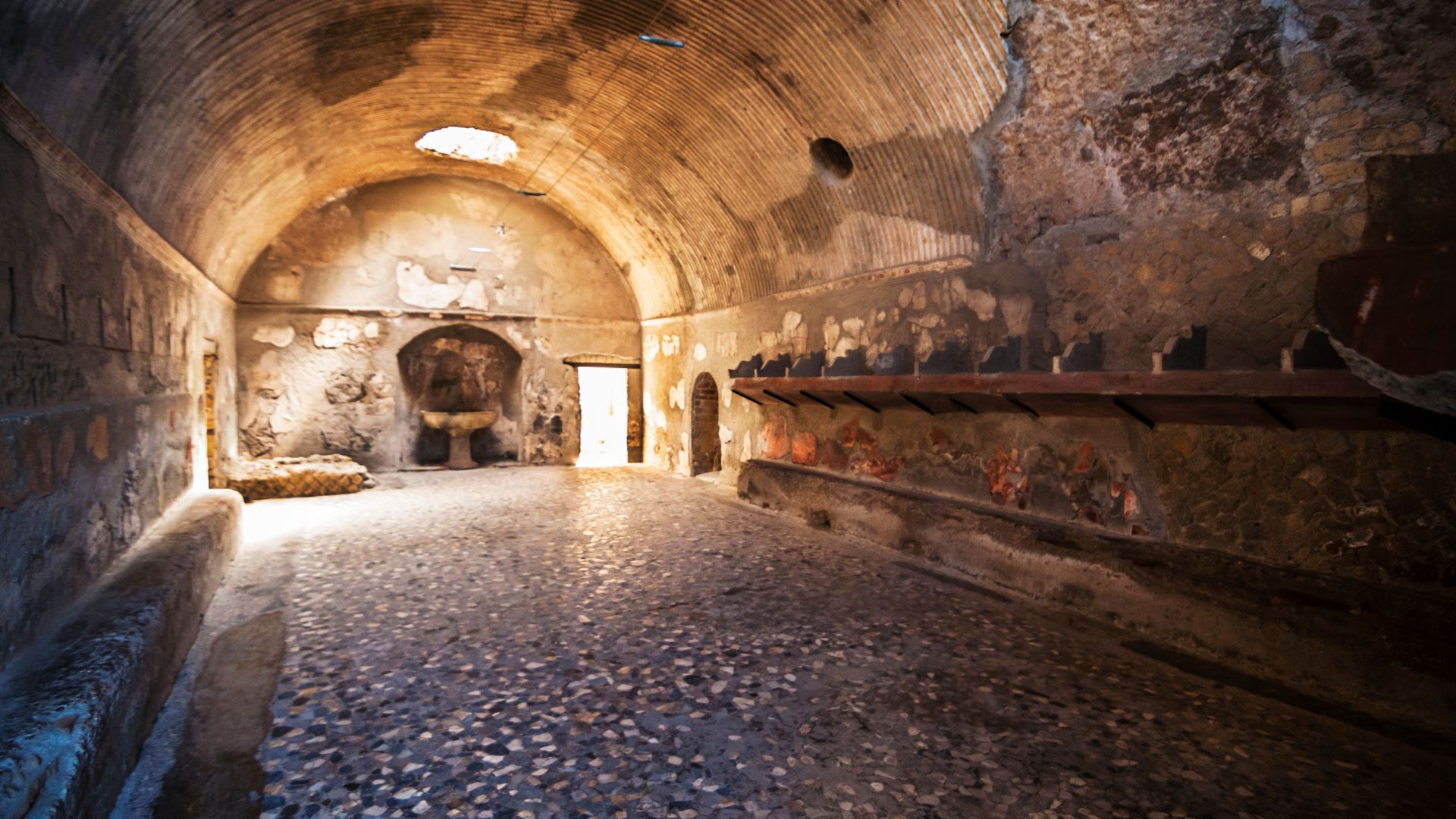
The wealthier houses here — the House of the Mosaic Atrium, the House of the Deer, the House of Neptune and Amphitrite — display decoration that surpasses Pompeii’s best. The College of the Augustales, where freed slaves who had prospered tended the imperial cult, retains frescoes showing Hercules (the town’s mythical founder) in vivid red and blue. The Suburban Baths preserve not just the usual sequence of hot and cold rooms but also the heating system beneath the floors, the lead pipes that carried water, the marble benches where bathers lounged.
The boat chambers at the ancient shoreline — discovered only in the 1980s — contained the remains of over 300 people who fled to the beach hoping for rescue by sea. The boats never came; the pyroclastic surge reached them first. Their skeletons, still articulated and many still bearing jewelry and coins, provide DNA and chemical evidence that archaeologists continue to study. One skeleton belonged to a soldier, still wearing his sword; another to a woman clutching an infant; another to a man carrying a bag of coins he never had the chance to spend.
The Naples Archaeological Museum
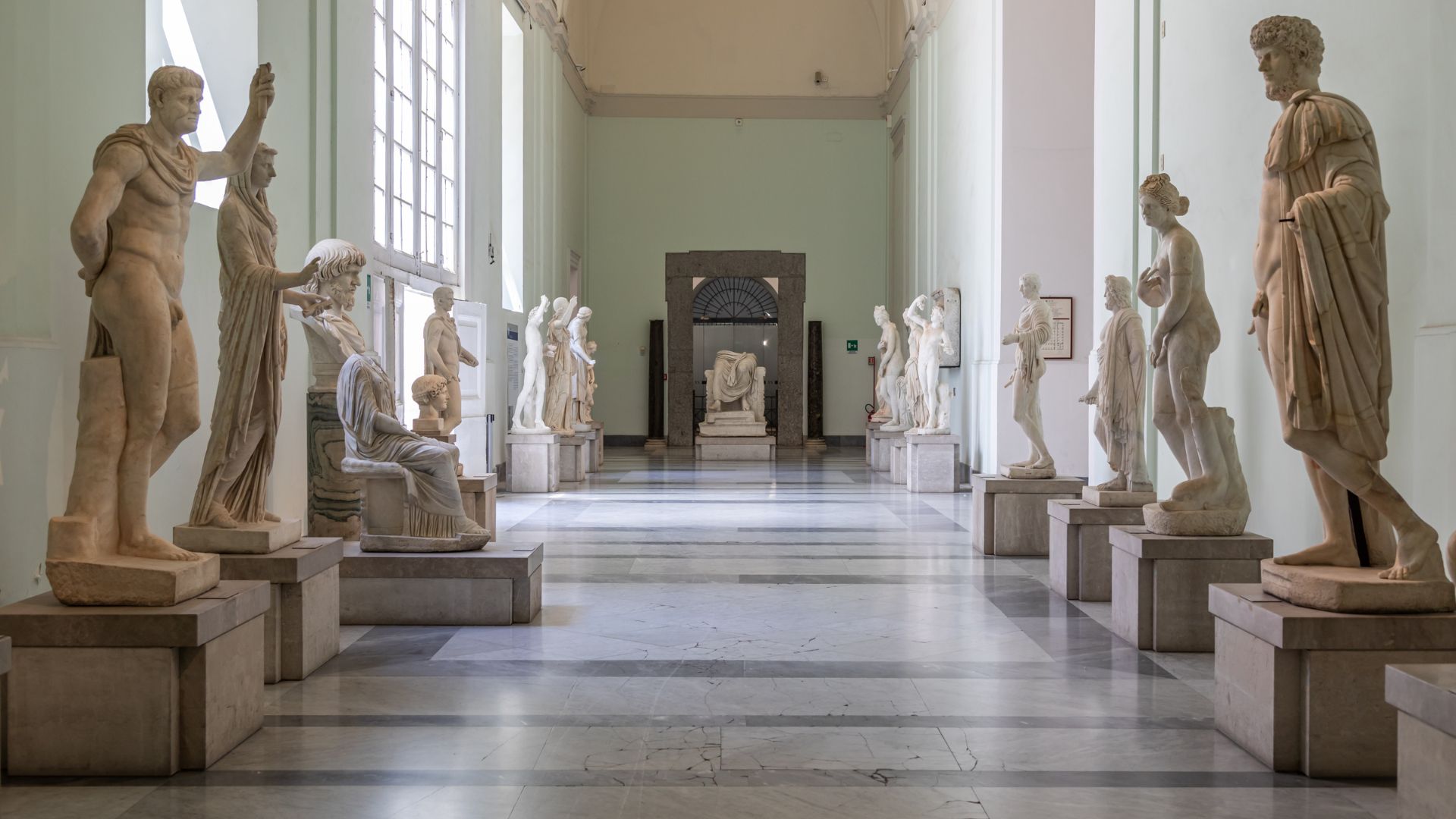
A visit to either site requires a complementary visit to the Museo Archeologico Nazionale di Napoli, where the portable treasures of both cities are displayed. The Alexander Mosaic dominates its gallery; the Farnese Hercules and Farnese Bull — classical sculptures that inspired Michelangelo — anchor the collection of antiquities; the Secret Cabinet contains the erotic art that Victorian visitors found too shocking for public display. The museum also holds frescoes, household implements, surgical instruments, gladiatorial armor, and the carbonised papyrus scrolls from Herculaneum’s Villa of the Papyri, which scientists are still learning to read using advanced imaging techniques.
Practical Information
- Getting There: The Circumvesuviana train from Naples Central or Piazza Garibaldi serves both sites. Pompeii: exit at Pompei Scavi-Villa dei Misteri. Herculaneum: exit at Ercolano Scavi.
- Timing: Pompeii requires a full day; Herculaneum can be seen in 3-4 hours. Consider visiting both on separate days, with the Naples museum on a third.
- Heat: Both sites are shadeless and brutally hot in summer. Bring water, wear a hat, and consider visiting in spring or autumn.
- Guides: The sites are labyrinthine and most buildings lack explanation. A good guidebook or official guide transforms the experience.
- Combined Tickets: A three-site ticket covering Pompeii, Herculaneum, and three smaller sites (Boscoreale, Oplontis, Stabiae) offers significant savings.