
Edinburgh Castle: The Rock That Refuses to Be Ignored
“Nowhere beats the heart of Scotland so loudly as beneath the esplanade of Edinburgh Castle.”
— Traditional Scottish saying
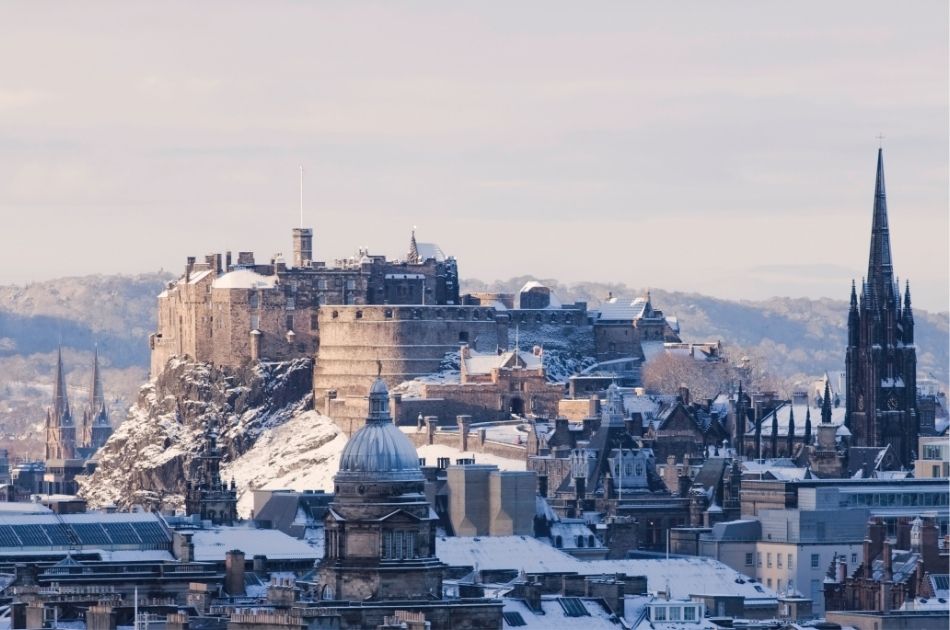
There is no sneaking up on Edinburgh Castle. It announces itself with the confidence of a performer who knows they have the best entrance in the business. Perched upon Castle Rock—a 350-million-year-old volcanic plug that has witnessed more history than most nations can claim—the fortress dominates the city’s skyline with an authority that borders on theatrical. Whether you arrive by train into Waverley Station, descend from a flight circling the Firth of Forth, or approach by any road into the city, the castle makes itself known immediately. As the Scots would say, it’s gey hard to miss.
The statistics alone command respect: the rock rises 130 metres above sea level, the castle has endured more sieges than any other fortress in Britain—at least twenty-six documented assaults—and human habitation here stretches back to the Bronze Age, around 900 BC. But statistics, however impressive, cannot capture what it feels like to stand on the Half Moon Battery as the wind whips in from the west and the city spreads beneath you like a tapestry of stone and spire. This is not mere tourism; this is communion with something ancient and immovable.
A Fortress Forged in Conflict
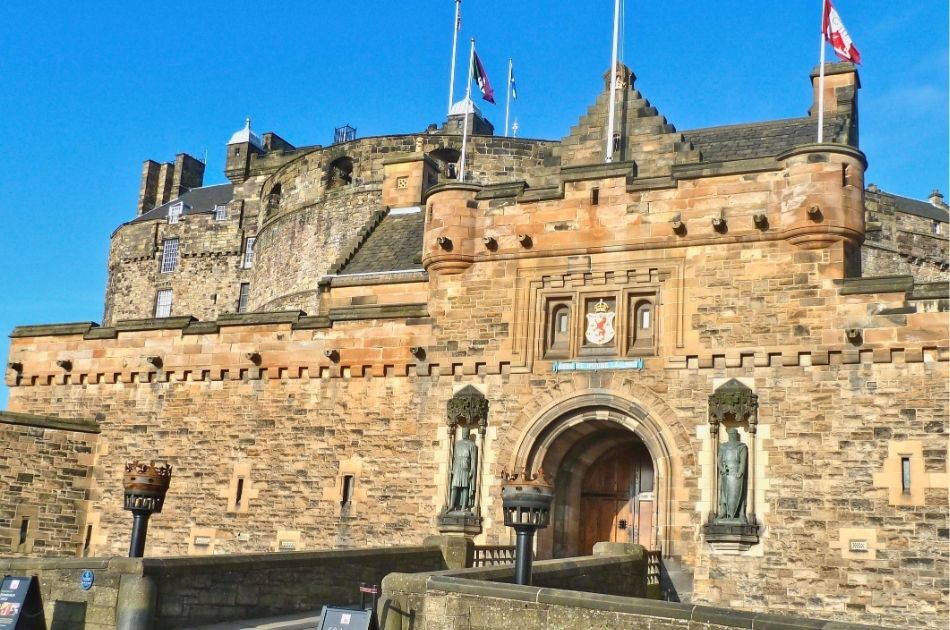
Edinburgh Castle has been fought over more times than a disputed inheritance—and with considerably more bloodshed. English forces, Scottish rebels, royal claimants, and Jacobite dreamers have all sought to possess this rock, understanding instinctively what military strategists have always known: whoever controls the castle controls the city, and whoever controls Edinburgh holds the key to Scotland.
The Lang Siege of 1571-73 saw the castle held for Mary, Queen of Scots, even as her cause crumbled elsewhere. The garrison endured thirty-three months of bombardment before the wells ran dry and the walls began to fail. When English cannons finally breached the defences, the devastation was so complete that the medieval fortress had to be largely rebuilt—the David’s Tower, once the castle’s greatest structure, was reduced to rubble that remained buried until Victorian archaeologists rediscovered it.
The Jacobite Rising of 1745 brought Bonnie Prince Charlie’s forces to Edinburgh’s gates, though the castle itself—held by government troops under General Preston—never fell. The city below changed hands, but the rock held firm. Stand in the Great Hall today and you can almost hear the echoes of that divided loyalty: a capital occupied by one army, its ancient fortress defiant above.
“Here I stand, your true King, come home at last.”
— Prince Charles Edward Stuart, addressing the crowd at Holyrood, 1745
Crown, Stone, and Sacred Relics
Inside the castle walls, you will find objects that carry the weight of centuries. The Honours of Scotland—the crown, sceptre, and sword of state—represent the oldest surviving regalia in Britain. The crown itself incorporates gold from the circlet worn by Robert the Bruce, and when Sir Walter Scott rediscovered these treasures in 1818, after over a century locked in an oak chest and nearly forgotten, he wept. The moment is recorded in his own journals: ‘The Joy was therefore extreme when the Regalia were found in perfect preservation.’
Beside the Honours rests the Stone of Destiny—the Lia Fàil upon which Scottish monarchs were crowned for centuries. Its journey is the stuff of legend and controversy: seized by Edward I in 1296, kept beneath the Coronation Chair at Westminster for 700 years, briefly ‘liberated’ by Scottish students on Christmas Day 1950, and finally returned to Scotland in 1996 amid ceremony and not a little emotion. When you stand before it in the Crown Room, you are looking at an object that has shaped the mythology of two nations.
Film enthusiasts will recognise the castle’s starring role in countless productions. Mel Gibson’s Braveheart (1995) used the esplanade for crowd scenes, though historical purists will note that William Wallace never actually set foot here. More recently, the castle appeared in Avengers: Infinity War (2018), proving that even Marvel’s universe cannot resist Edinburgh’s photogenic appeal. The Netflix series Outlander has sent visitor numbers soaring, with fans seeking out locations connected to the Jacobite storyline that runs through the show’s narrative.
The One O’Clock Gun
Every day at precisely 1300 hours—except Sundays, Good Friday, and Christmas Day—a 105mm field gun fires from Mills Mount Battery. The tradition dates to 1861, when the gun was introduced to help ships in the Firth of Forth set their maritime chronometers. In an age before radio signals and GPS, accurate timekeeping could mean the difference between a safe voyage and disaster.
Today, the gun serves no practical purpose beyond startling tourists and providing locals with quiet amusement. Watch any visitor’s face at 12:59 and you’ll understand why Edinburghers never tire of the ritual. The question ‘Why one o’clock and not noon?’ has a delightfully Scottish answer: firing at noon would waste eleven rounds of ammunition. Practicality, even in ceremony.
“The One O’Clock Gun: because Edinburgh believes in punctuality, but not extravagance.”
— Local saying
Visiting with Purpose
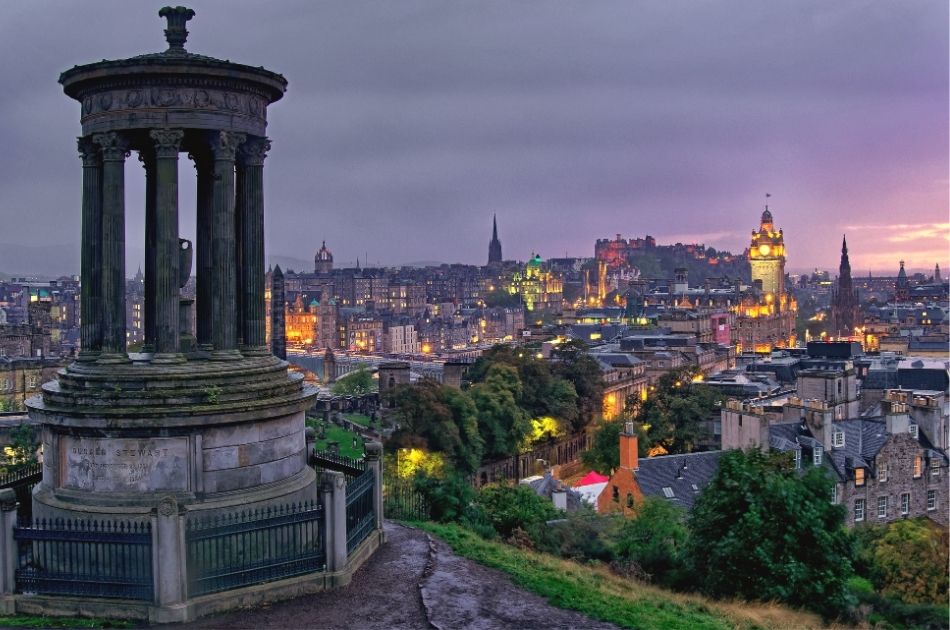
The castle deserves more than a hurried circuit between coach arrivals. Allow at least three hours, and consider the timing of your visit. Early morning, when the gates first open, offers a relative calm before the crowds descend. Late afternoon brings a golden light that photographers prize, and the castle stays open until 6pm in summer months. The views alone justify a leisurely pace: from the Argyle Battery, you can see across the New Town to the waters of the Firth; from the eastern battlements, Arthur’s Seat rises in prehistoric grandeur.
The National War Museum, housed within the castle grounds, deserves attention. Scotland’s military history spans centuries of conflict, alliance, and transformation, and the collection here—from Jacobite swords to contemporary peacekeeping equipment—tells that story with intelligence and restraint. The Scottish National War Memorial, designed by Sir Robert Lorimer after the First World War, is among the most moving spaces in Scotland: a place of quiet reflection where every Scottish regiment and every theatre of war is commemorated.
As the Scots say: Lang may yer lum reek—long may your chimney smoke, or in more contemporary terms, long may you prosper. The castle has endured for a millennium and shows no signs of surrender. It remains what it has always been: the heart of Edinburgh, the symbol of Scotland, and a reminder that some things are worth defending.