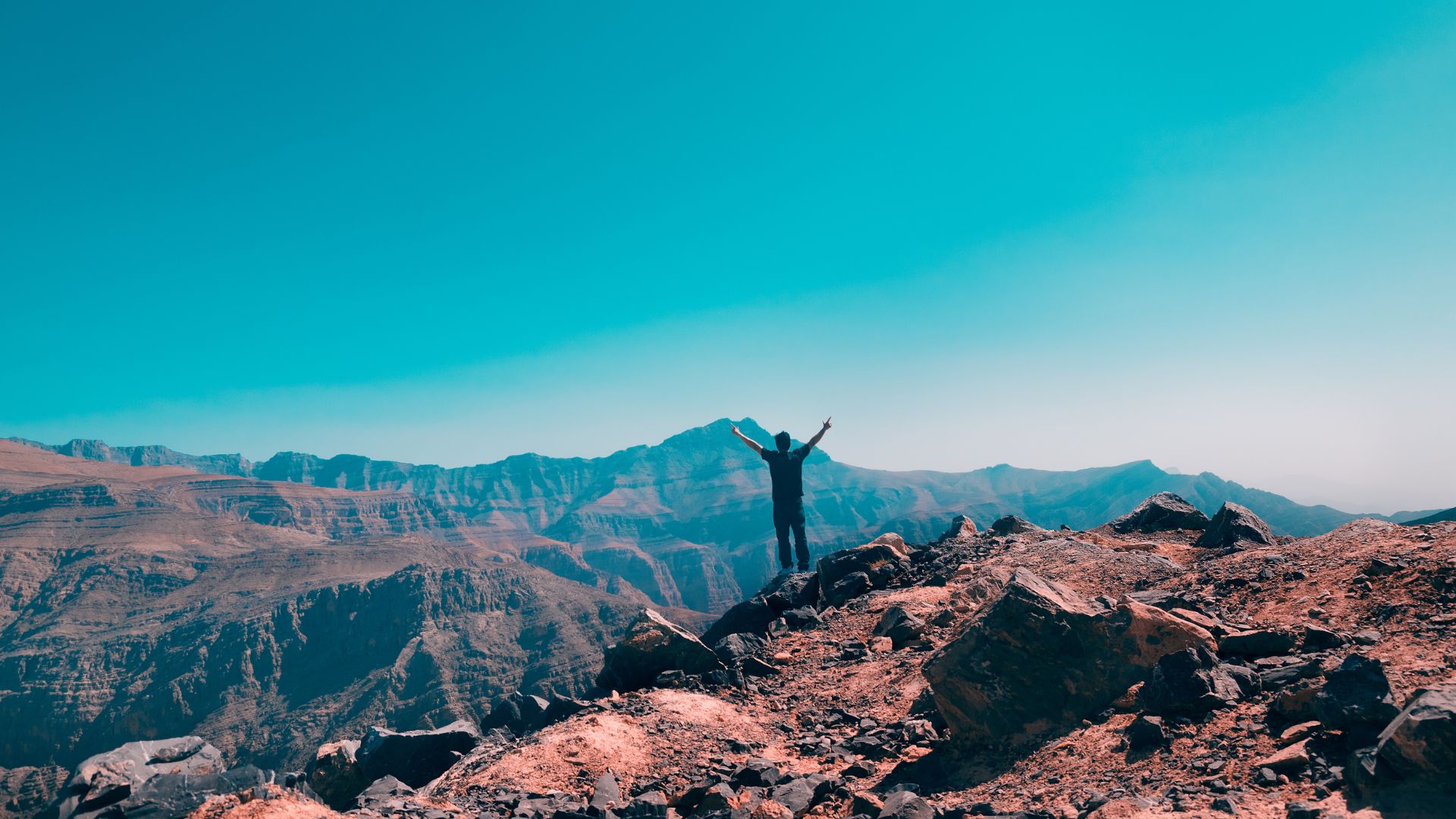
The road from Ras Al Khaimah to Fujairah climbs through terrain that confounds every assumption about the UAE. The Hajar Mountains, rising to nearly 2,000 metres, are not sand but rock — ancient limestone and ophiolite in shades of brown and orange that recall Arizona more than Arabia. The temperature drops with altitude; the vegetation thickens; and the villages that appear in valleys seem to belong to a different country than the one you left an hour ago.
We stopped at Wadi Shawka, a valley where freshwater pools survive even the summer heat. The path from the road to the first pool took twenty minutes of scrambling over boulders; the reward was water cool enough to shock and clear enough to see every stone on the bottom. Other hikers — Emirati families, mostly, for whom the mountains are weekend escape — picnicked on the rocks, their children splashing while their parents watched with the contentment of people returning to something familiar.
The summit road to Jebel Jais, completed in 2016, provides the drive’s climax: hairpin bends with views that extend to Oman, observation platforms designed for the Instagram generation, and, at the top, temperatures that required the jackets we’d packed with scepticism. The UAE’s highest point (1,934 metres) feels nothing like the country below — cooler, quieter, wilder, and somehow more itself for being less developed. We stayed for sunset, watching the desert far below turn from gold to orange to the blue-grey of twilight, and understood why Emiratis speak of these mountains with affection that the coastline rarely inspires.