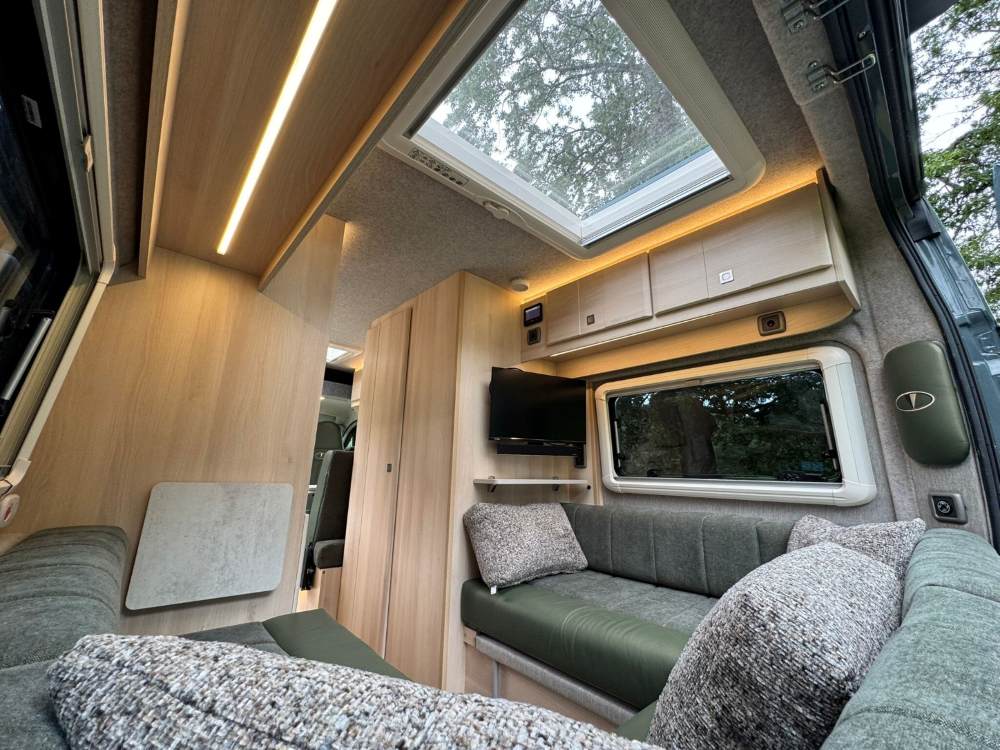

Cotswolds & Stratford Heritage Route
The Cotswolds: Honey-Stone Villages and Gentle Countryside
If the previous routes celebrate wild landscapes, the Cotswolds offer something different: a gentle countryside where human settlement and natural beauty have merged over centuries into something quintessentially English. This is touring for those who prefer honey-stone villages and country pubs to cliff edges and mountain passes.
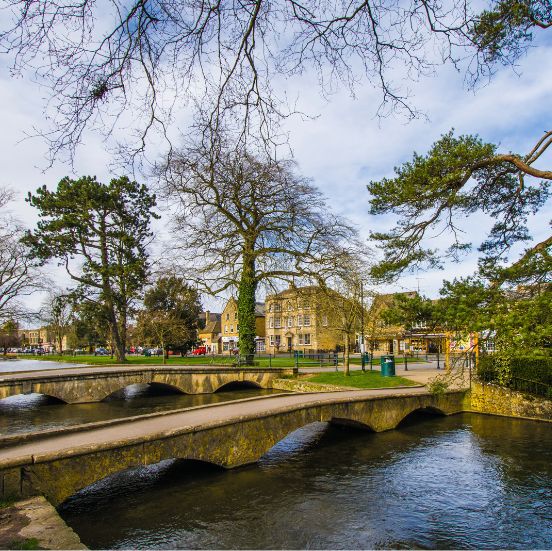
The Cotswolds National Landscape — the largest in England and Wales at nearly 800 square miles — stretches from the borders of South Warwickshire and Worcestershire in the north to parts of Bath and North East Somerset in the south. Most motorhome itineraries focus on the central honeypot villages: Bourton-on-the-Water, known as the “Venice of the Cotswolds” for its stone bridges spanning the River Windrush, and home to a celebrated 1930s model village built in one-ninth scale from authentic Cotswold stone; Bibury, whose Arlington Row of fourteenth-century weavers’ cottages is widely regarded as one of the most photographed scenes in the Cotswolds — William Morris famously called Bibury “the most beautiful village in England”; Broadway, where the eighteenth-century tower, perched at the second-highest point of the Cotswold escarpment, offers views spanning up to sixteen counties; and Chipping Campden, whose remarkable High Street of fourteenth- to seventeenth-century buildings has changed remarkably little since the medieval wool trade created its wealth.
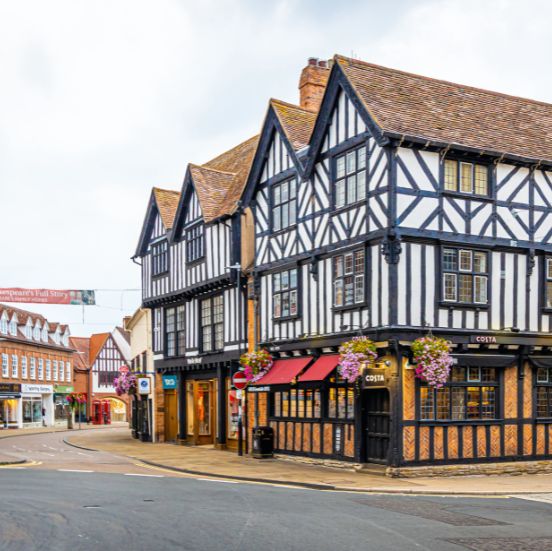
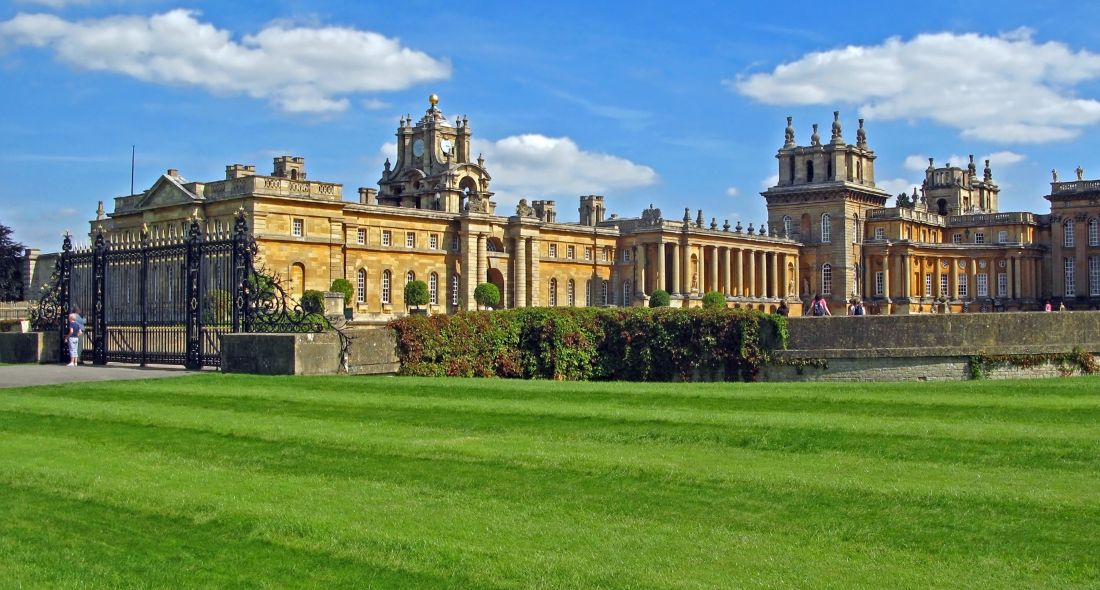
Beyond the famous villages, quieter pleasures await. The Slaughters — Upper and Lower — attract fewer visitors despite equally picturesque character. Blenheim Palace near Woodstock in Oxfordshire, birthplace of Winston Churchill in 1874, provides stately grandeur just beyond the National Landscape’s eastern boundary and makes a natural addition to any Cotswolds itinerary. Stratford-upon-Avon adds theatrical dimension with its Royal Shakespeare Company performances and Shakespeare-related attractions.
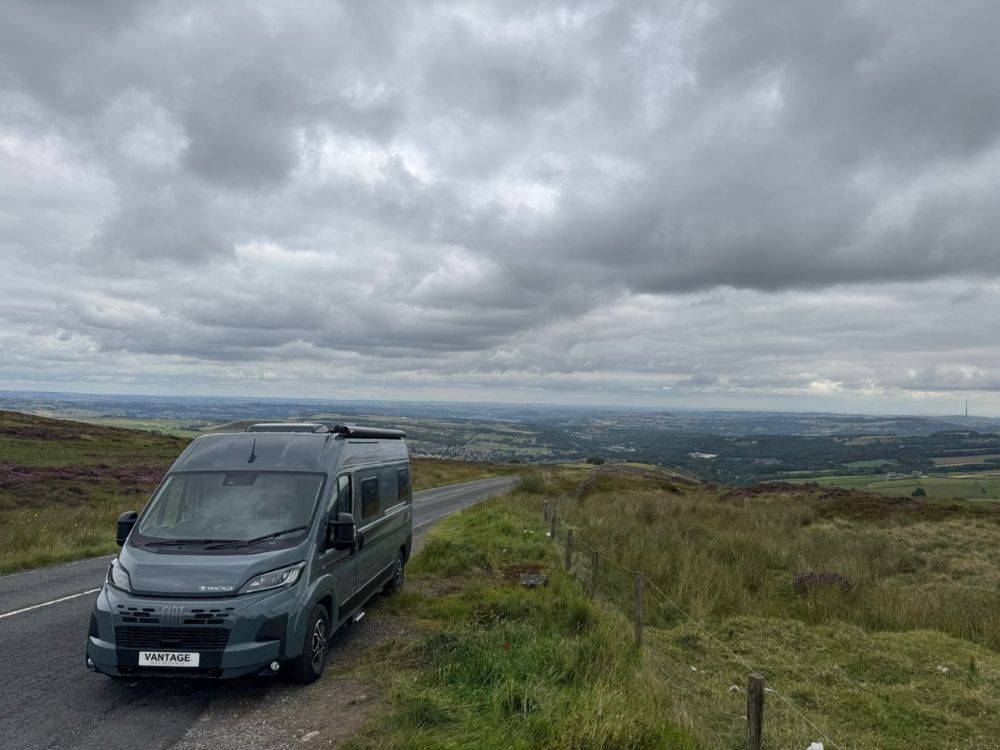
Motorhome travel here suits those comfortable with narrow lanes — an unavoidable feature of genuine Cotswolds exploration. Larger vehicles may find some villages inaccessible, but dedicated campsites provide bases from which to explore by bicycle or on foot. The region’s proximity to London makes it popular, particularly on summer weekends; autumn and winter visits reveal quieter, equally atmospheric landscapes. Three to four days will allow you to sample the highlights; longer stays will permit the leisurely pub lunches and antique-shop browsing is a must!
Where to Stop: Motorhome Sites and Campsites
The Cotswolds is well served by touring sites, from large club-run parks with full facilities to smaller farm-based stopovers that put you closer to the landscape. Here are some of the best bases for a motorhome tour of the region.
Moreton-in-Marsh Caravan and Motorhome Club Site — One of the most popular bases for Cotswolds touring, this well-maintained woodland site has 184 pitches (all with 16-amp electric hook-up, most hardstanding) and sits within easy walking distance of Moreton-in-Marsh’s high street, pubs, restaurants and the famous Tuesday on street market. The town’s railway station offers direct services to Oxford and London Paddington, and bus routes connect to surrounding villages. Bourton-on-the-Water and Stow-on-the-Wold are each just a few miles away. Note: maximum unit length is nine metres… For recreation you might want to bob along to the Batsford Arboretum and Falconry Centre which is a pleasant walk from the site.
Bourton-on-the-Water Caravan and Motorhome Club Site — Set high in the Cotswolds countryside about five miles from Bourton-on-the-Water village, this site offers 69 grass and hardstanding pitches with 16-amp electric. There is no toilet block, so you’ll need to be self-contained. Maximum outfit length is eight metres. Its elevated position provides a peaceful retreat while keeping the honeypot village within easy reach.
Field Barn Park — An independently run site exclusively for adults over thirty, within walking distance of Bourton-on-the-Water (about a mile across the fields). It offers 53 large pitches with water and electric hook-up. Clever tree and shrub planting gives each pitch privacy, and the site is known for its spotlessly clean facilities including a heated shower block. Free Wi-Fi and of course access to miles of footpaths directly from the park which makes it a truly popular choice for couples and those seeking a quieter spot to base yourself at.
Cotswold Farm Park — Owned by Countryfile presenter Adam Henson, this site near Guiting Power sits midway between Broadway Tower and Bourton-on-the-Water. It offers 25 premium serviced pitches (half hardstanding, half grass) with electricity, water and grey waste, plus a further 29 electric grass pitches. The big draw is free Farm Park entry for the duration of your stay. On-site restaurant and farm shop. Ideal for families, though open to all.
Broadway Caravan and Motorhome Club Site — Tucked behind the village of Broadway, this members-only site provides a convenient base for exploring the northern region of the Cotswolds. Broadway’s high street an absolute must! Is teaming with galleries, antique shops and restaurants and thankfully is just a short walk away! Broadway Tower (also not to be missed) is accessible on foot via the Cotswold Way. The site has 117 pitches (112 hardstanding) including 29 fully serviced, with electric hook-up. The Gloucestershire Warwickshire Steam Railway station is right next door.
General advice: Club sites (Caravan and Motorhome Club, Camping and Caravanning Club) generally require membership but offer consistent facilities and online booking. For a more informal experience, several Cotswolds pubs offer motorhome stopovers — see below to search “pub stopovers Cotswolds” on sites like Pitchup or Brit Stops. Whichever site you choose, book well ahead for summer weekends and bank holidays; midweek and off-season visits are easier and often better value.
Campervan and Motorhome Hire Near the Route
If you don’t own a motorhome, several local hire companies operate in or near the Cotswolds, meaning you can collect a vehicle close to the route rather than driving one out of London.
Cotswold VW Camper Hire — Based in Chipping Campden itself — one of the key villages on this route — this specialist hire company offers a fleet of VW California Ocean campervans. Being in the heart of the North Cotswolds puts you within easy reach of Broadway, Moreton-in-Marsh, and the rest of the touring area from the moment you collect the keys. A good choice for couples or small families who want a compact, well-equipped vehicle suited to the region’s narrow lanes.
Website: cotswoldcamper.com
Cotswold Motorhome Hire (Oxfordshire) — A family-run business offering larger motorhomes (four to six berth) for those who need more space or are travelling with children. Based in Oxfordshire, close to the eastern edge of the Cotswolds National Landscape.
Website: cotswold-motorhomehire.co.uk
Cotswolds to Coast Campers — A family-run VW campervan hire company on the edge of the Cotswolds in Oxfordshire, just off the M40. A practical option if you’re driving up from London and want to swap your car for a campervan at the start of your trip. They offer a complimentary welcome hamper with every hire.
Website: cotswoldstocoastcampers.co.uk
Peer-to-peer platforms such as Camperbug, Yescapa, and Goboony also list privately owned campervans and motorhomes available for hire across Gloucestershire and Oxfordshire, often at competitive rates.
Getting There from London
The Cotswolds are surprisingly accessible from London, whether you’re travelling in your own motorhome or picking up a hire vehicle near the route.
By Road
The drive from central London to the heart of the Cotswolds takes around two hours, depending on traffic and your destination. Two main motorway routes serve the area:
- Via the M40 (North Cotswolds): Take the M40 from London towards Oxford and Birmingham, leaving at Junction 15 for the A429 (Fosse Way) south to Stow-on-the-Wold and Bourton-on-the-Water, or continuing to the A44 for Moreton-in-Marsh, Broadway, and Chipping Campden. This is the most direct route for the villages featured in this guide. Allow around 90 minutes to Moreton-in-Marsh in good traffic.
- Via the M4 (South Cotswolds): Take the M4 west towards Bristol, leaving at Junction 15 for the A419 to Cirencester, or at Junction 17 for the A429 north into the Cotswolds. This route suits those heading for the southern villages first — Bibury, Cirencester, and the Coln Valley — before working north. The drive from London to Cirencester is approximately 92 miles and takes around one hour and 45 minutes.
Once in the Cotswolds, the A429 (Fosse Way) is the main north–south artery connecting Cirencester, Stow-on-the-Wold, and Moreton-in-Marsh. Be prepared for narrow lanes once you leave the main roads — satnav is helpful, but so is a healthy dose of patience at passing places.
By Rail
For those collecting a hire vehicle locally, or combining rail travel with bus and taxi connections, the train is a relaxed and scenic alternative.
Great Western Railway operates direct services from London Paddington to Moreton-in-Marsh, the principal rail gateway for the North Cotswolds. The fastest trains cover the 73 miles in around one hour and 25 minutes, with services running roughly hourly throughout the day. Advance fares can be very reasonable if booked early. From Moreton-in-Marsh, local buses connect to Bourton-on-the-Water, Stow-on-the-Wold, Chipping Campden, and Broadway — though services can be infrequent, particularly on Sundays, so it’s worth checking timetables in advance.
Other useful stations on the Cotswold Line include Kingham (for the Daylesford estate and quieter central Cotswolds) and Charlbury. For the southern Cotswolds, Kemble station serves Cirencester and is also reached direct from Paddington in around one hour and ten minutes.
If you’re planning to hire a campervan from Cotswold VW Camper Hire in Chipping Campden, a train to Moreton-in-Marsh followed by a short bus ride or taxi (six miles) gets you to the hire base without needing a car at all.
Cotswolds Motorhome Touring: At a Glance
A quick-reference guide to planning your trip.
Best Time to Visit
The Cotswolds are beautiful year-round, but each season offers a different experience. Late spring (May to early June) is arguably the finest time: wildflower meadows are at their peak, beech woodlands are lush, and the villages are busy but not yet overwhelmed. Summer (July and August) brings the longest days and warmest weather, with average highs of 18–20°C, but also peak crowds — book campsites well in advance and expect busy car parks at the honeypot villages, particularly on weekends.
Autumn (September to October) is a strong contender for motorhome touring: the summer crowds thin out, campsite availability improves, and the beech woodlands along the Cotswold escarpment put on a spectacular display of colour. Crisp mornings and clear skies can make for the best views of the year.
Winter (November to February) is quieter still — some smaller campsites close for the season, but the larger club sites generally remain open. Expect temperatures around 2–7°C, shorter days, and the chance of frost or light snow on higher ground. The upside is atmospheric, near-empty villages and roaring pub fires. Moreton-in-Marsh’s Tuesday market runs year-round.
Travelling with Dogs
The Cotswolds is one of the most dog-friendly touring areas in England. The region has over 3,000 miles of public footpaths and bridleways, and most campsites welcome well-behaved dogs (typically for a small nightly charge of £2–£3). All the sites listed in this guide accept dogs, though it’s always worth confirming any breed or number restrictions when booking.
In the villages, many pubs, cafés, and tea rooms welcome dogs — Bourton-on-the-Water, Moreton-in-Marsh, and Broadway all have good options. The Cotswold Farm Park does not allow dogs in the main farm park area, but dogs are welcome on the campsite itself and in a dedicated exercise field. Keep dogs on leads around livestock, which you’ll encounter frequently on footpaths — there are lots of working farms in this part of the countryside. If cattle become agitated, keep your dog on the lead so it move calmly away from the herd.
The Cotswold Way National Trail is generally dog-friendly, though note that the organised group walks run by the Cotswold Voluntary Wardens do not permit dogs. Carry water and waste bags — not all routes pass have reliable water sources.
What to Wear and Pack
The golden rule for any Cotswolds trip is layers. Even in summer, mornings and evenings can be cool, and the weather can change quickly. A waterproof jacket is essential in every season — the Cotswolds sees some rainfall on an average of 9–18 days per month depending on the time of year, and showers can arrive without much warning.
For walking, sturdy footwear with good grip is important. Cotswold footpaths can be muddy after rain, even in summer, and the limestone terrain gets slippery when wet. Walking boots or trail shoes are far better than trainers for anything beyond village pavements. In autumn and winter, waterproof trousers and warm base layers make a real difference.
Sun cream and a hat are worth packing for summer walks — some sections of the Cotswold Way and other escarpment paths have little shade. A compact daypack with water, a snack, and an OS map or downloaded route on your phone covers most eventualities.
Walking from Your Campsite
One of the great pleasures of motorhome touring in the Cotswolds is being able to leave the vehicle at your pitch and explore on foot. The region’s network of public footpaths connects most villages, and several of the campsites listed in this guide have direct footpath access.
The Cotswold Way — The 102-mile National Trail runs from Chipping Campden to Bath along the Cotswold escarpment. You don’t need to walk the whole thing: 15 waymarked circular walks of 2.5 to 6 miles are available along the route, each making a satisfying half-day outing. The Broadway campsite is directly on the Cotswold Way, with the walk up to Broadway Tower a popular section.
Village-to-village walks — The walk from Bourton-on-the-Water to Upper and Lower Slaughter (approximately 4 miles circular) is a classic, following the River Eye through some of the prettiest scenery in the Cotswolds. From Moreton-in-Marsh, a 7-mile circular walk via Bourton-on-the-Hill and Sezincote follows part of the Monarch’s Way. A shorter option is the 3.5-mile round trip from Moreton to Batsford Arboretum.
Ordnance Survey maps — OS Explorer OL45 (The Cotswolds) covers the core touring area at 1:25,000 scale and is invaluable for footpath navigation. A digital OS Maps subscription is a practical alternative if you prefer using your phone.
When It Rains
The British weather being what it is, a rainy day or two is almost inevitable. The good news is that the Cotswolds has plenty of indoor options to fill a wet afternoon.
Gloucestershire Warwickshire Steam Railway — A 14-mile heritage railway between Cheltenham Racecourse and Broadway, with vintage carriages, a buffet car, and museums at Toddington and Winchcombe. A round trip takes around three hours and is an atmospheric way to spend a rainy morning.
Blenheim Palace — The staterooms, Churchill exhibition, and “Below Stairs” experience at this UNESCO World Heritage Site can comfortably fill a wet day. Near Woodstock, just beyond the eastern edge of the National Landscape.
Corinium Museum, Cirencester — One of the finest collections of Roman artefacts outside London, telling the story of the Cotswolds from prehistoric times to the present. Cirencester was the second-largest Roman town in Britain.
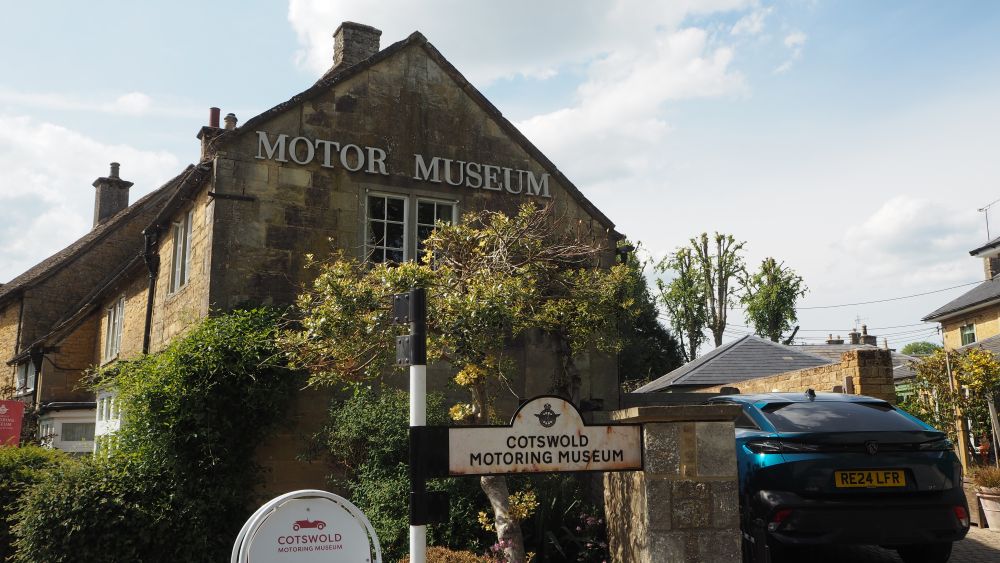
Cotswold Motoring Museum, Bourton-on-the-Water — A nostalgic collection of vintage cars, motorcycles, caravans, and toys. Good for an hour or two, particularly with children.
Cotswolds Distillery, Stourton — Award-winning tours and tasting sessions covering their whisky and gin production. Gin-making masterclasses are available if you want to get hands-on. Booking essential.
Sudeley Castle, Winchcombe — Once home to Katherine Parr, Henry VIII’s last wife. The exhibition rooms and castle interiors offer shelter, and the gardens are worth braving a shower for.
And of course, a rainy afternoon in the Cotswolds is a fine excuse to settle into a village pub with a local ale and a proper lunch. Most villages on this route have at least one good option.
Quick Reference
Area: Cotswolds National Landscape — nearly 800 square miles, the largest in England and Wales
Ideal tour length: Three to five days for the highlights; a week or more for a leisurely pace
Best months: May–June (spring colour, manageable crowds) and September–October (autumn colour, quieter sites)
Summer highs: 18–20°C average; winter lows around 2–7°C
Rainfall: Possible year-round; always pack waterproofs
Dogs: Welcome at most campsites and many pubs/cafés; keep on leads near livestock
Footwear: Walking boots or trail shoes essential; paths muddy after rain even in summer
Key footpath: Cotswold Way National Trail — 102 miles, Chipping Campden to Bath, with 15 shorter circular walks
Road from London: M40 (North Cotswolds) or M4 (South Cotswolds) — approximately two hours
Rail from London: Paddington to Moreton-in-Marsh — around 1 hour 25 minutes direct (GWR)
OS Map: Explorer OL45 (The Cotswolds) — 1:25,000 scale
Narrow lanes: Expect single-track roads with passing places; VW campervan-sized vehicles cope best
Tuesday market: Moreton-in-Marsh — one of the largest open-air street markets in the Cotswolds, runs year-round
Sources and Further Reading
Cotswolds National Landscape — Official Site
Cotswolds National Landscape — National Landscapes
Arlington Row, Bibury — Official Guide
Broadway Tower — Official Site
Visiting Broadway Tower — Explore the Cotswolds
Chipping Campden — Cotswolds.com
Chipping Campden — Chipping Campden Online
The Model Village, Bourton-on-the-Water
Bourton-on-the-Water — Explore the Cotswolds
Winston Churchill at Blenheim Palace
Blenheim Palace — Historic Houses
Moreton-in-Marsh Club Campsite — Caravan and Motorhome Club
Cotswold Farm Park — Touring and Pitches
https://www.motorhomecouch.co.uk/en
Cotswold Motorhome Hire (Oxfordshire)
Great Western Railway — Train Times
National Rail — Journey Planner
Walking the Cotswold Way — Explore the Cotswolds
What to Do in the Cotswolds in the Rain — Explore the Cotswolds