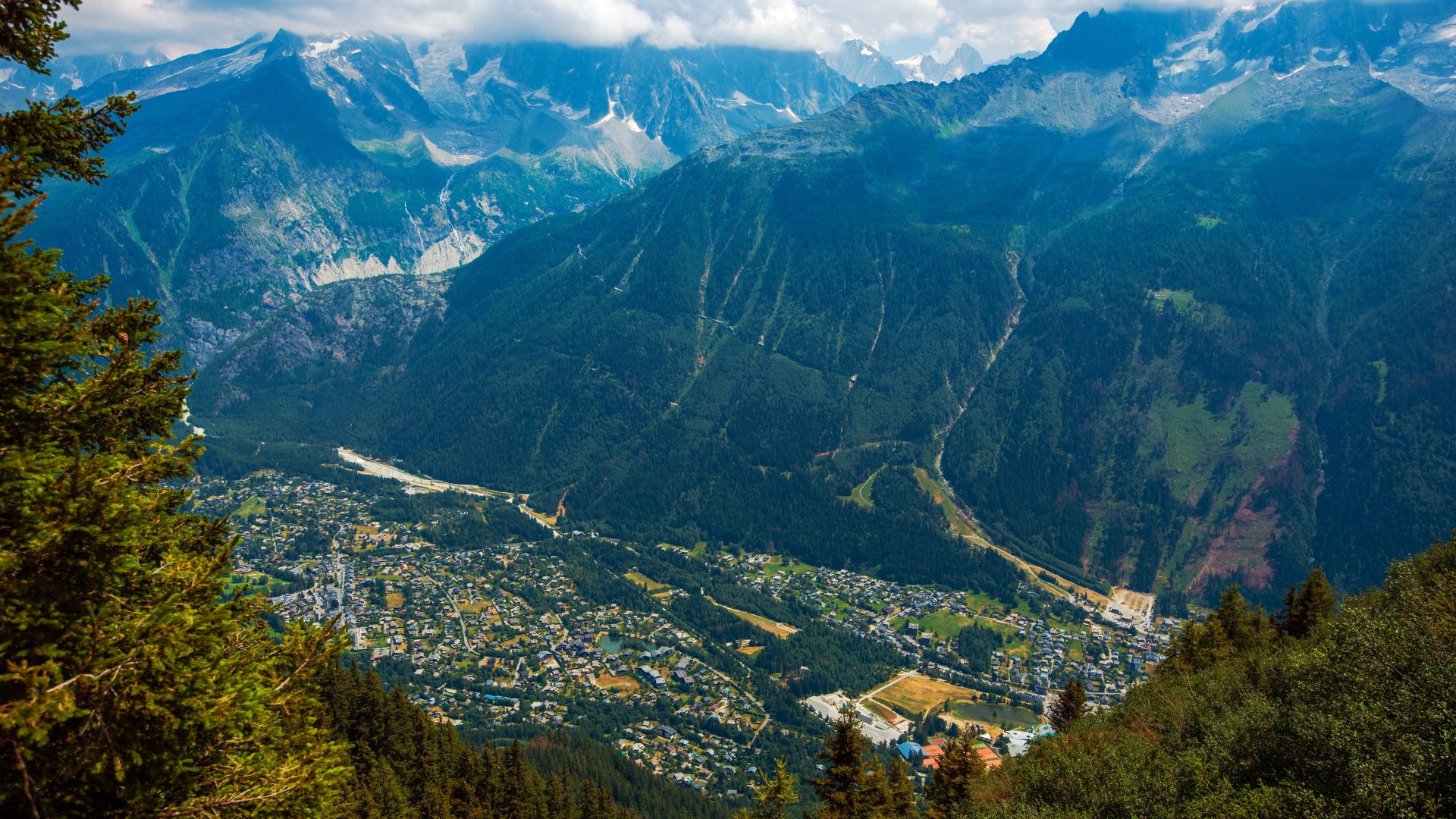
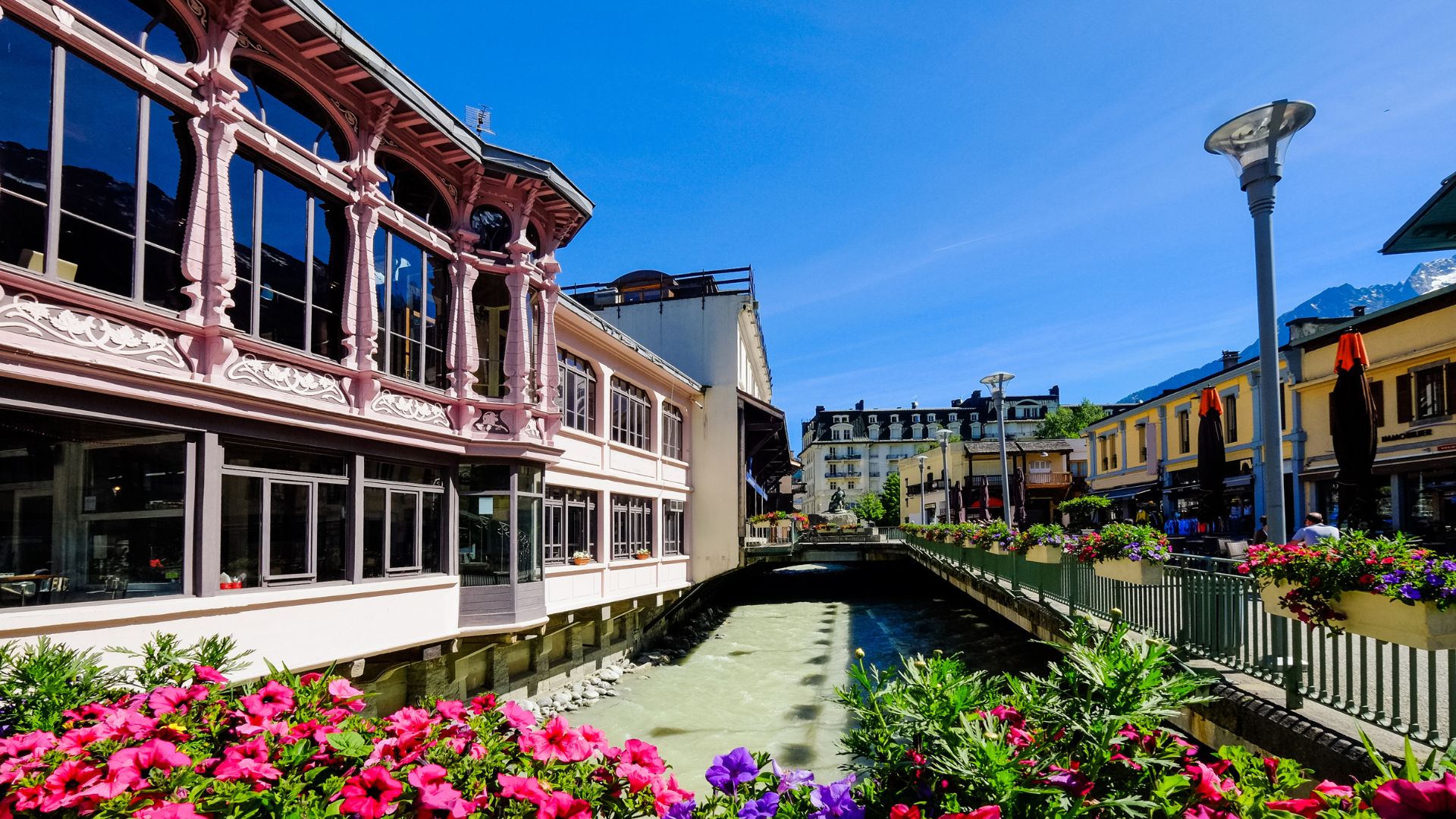
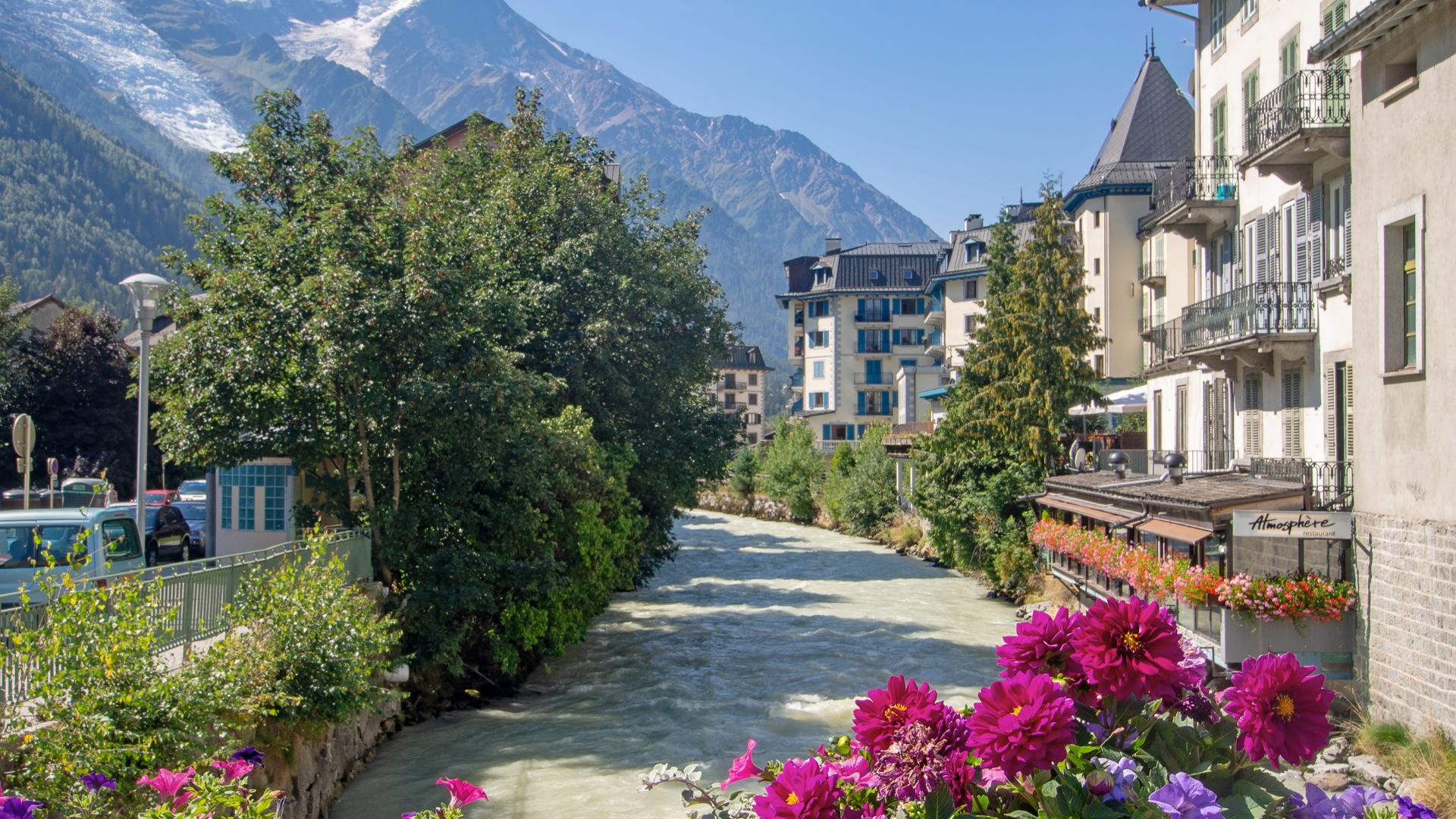
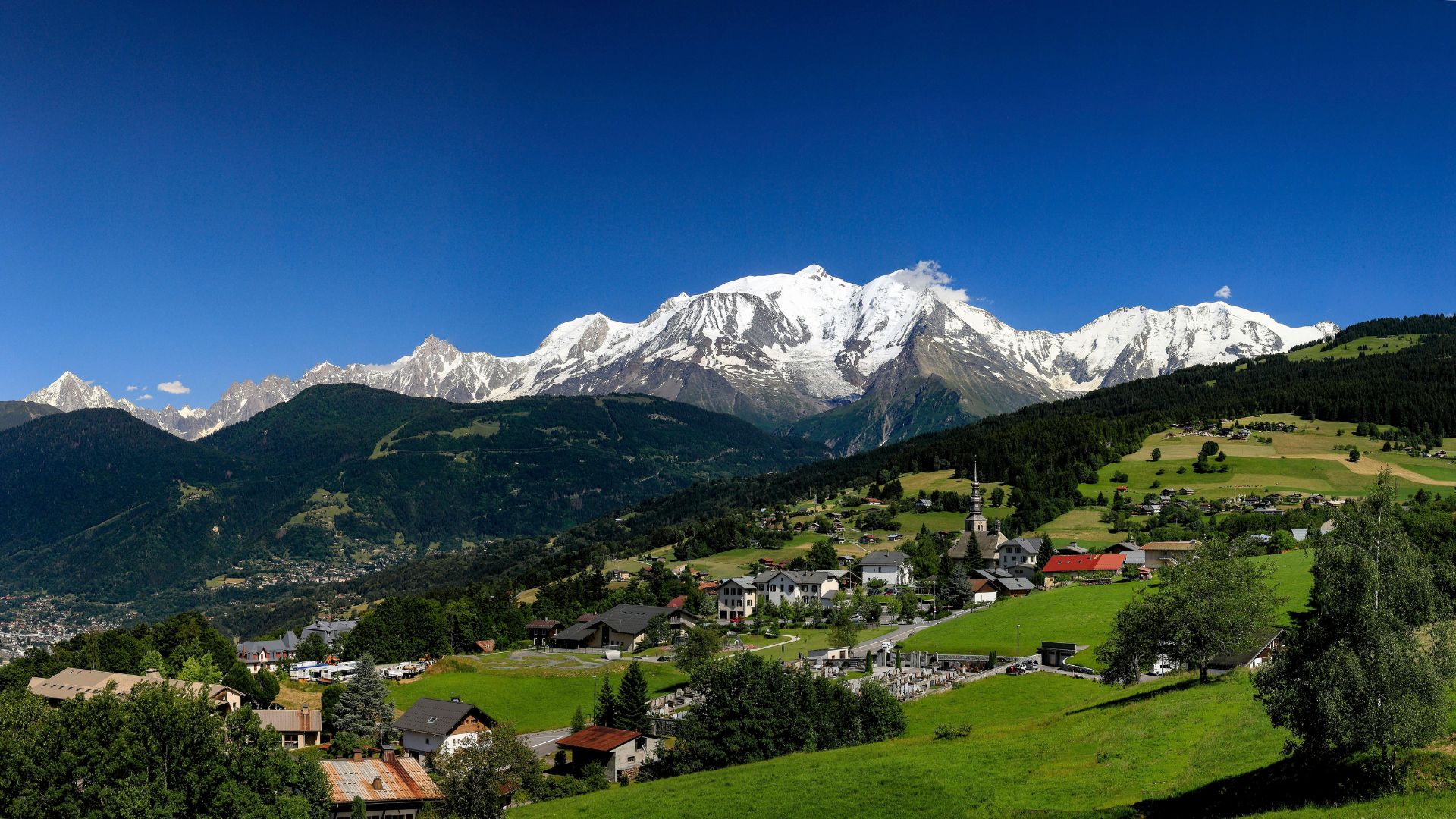
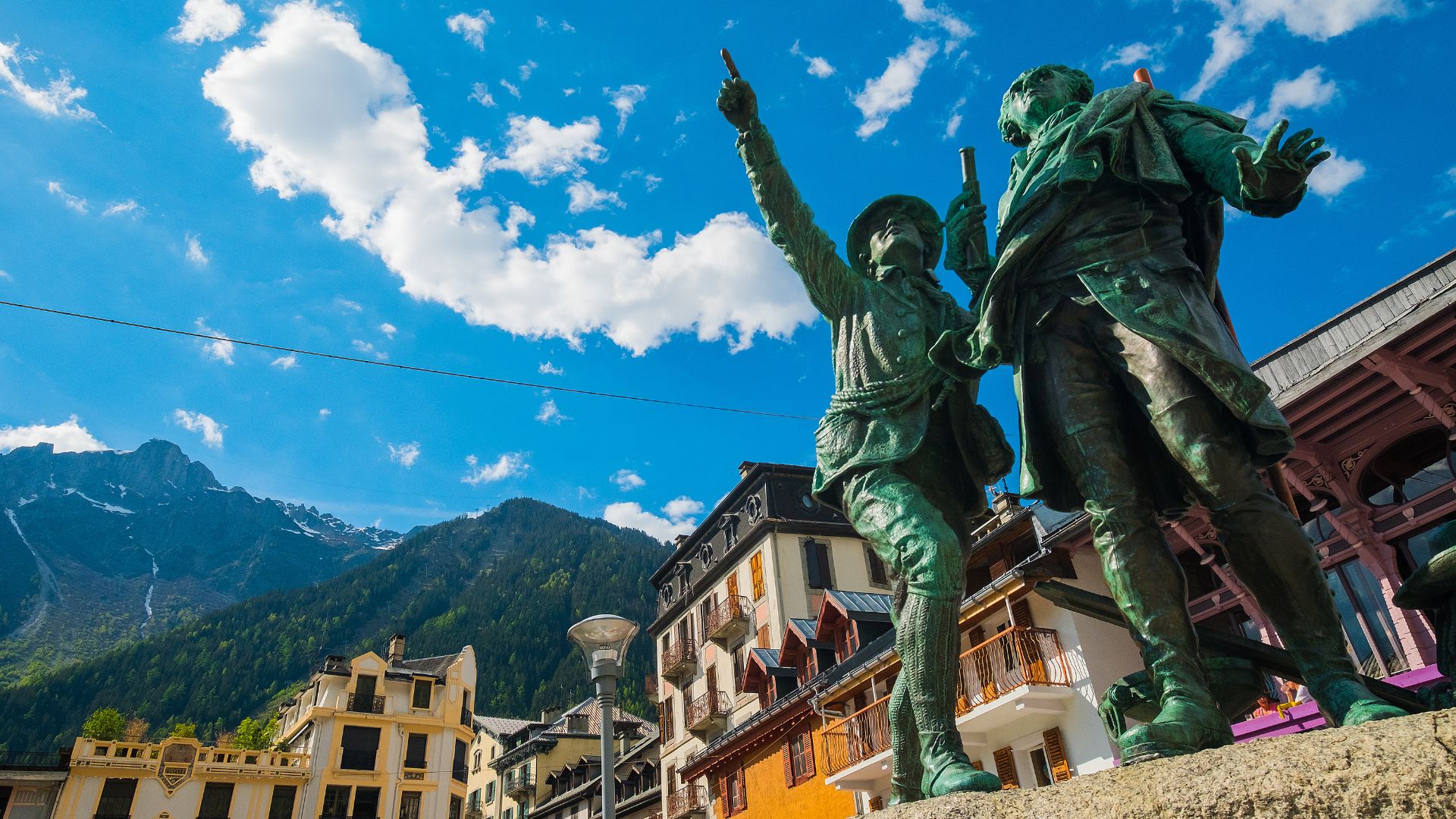
Europe’s adventure capital rewards those who look beyond the pistes — from via ferrata to ice caves to the Mer de Glace railway. Chamonix-Mont-Blanc, to give the town its full name, sits in a valley so dramatic that early visitors thought they had found a portal to another world. Mont Blanc, at 4,808 metres the highest peak in the Alps, anchors the view; the glaciers that descend from its flanks — the Bossons, the Mer de Glace, the Argentière — are among the most accessible in the Alps. You can ski here, of course, but to come only for skiing is to miss the mountain’s larger invitation.
The Aiguille du Midi cable car, which ascends 2,800 metres in twenty minutes, delivers visitors to a world of permanent snow and vertiginous views. From the top station, the panorama extends from the Matterhorn to the Jura; on clear days, you can see four countries. A glass-floored platform, suspended over the void, invites the brave to confront their fear of heights in the most direct way possible. Those who venture further — the mountain guides lead roped parties across the glacier to the Cosmiques refuge — enter terrain that has not changed since mountaineering’s golden age.
The Montenvers railway, a cog railway that climbs from Chamonix to the Mer de Glace, has been making the journey since 1909. The glacier it serves has retreated dramatically — the walk from the station to the ice now requires 400 steps that didn’t exist a generation ago — but the experience remains magical. An ice cave, recarved each year as the glacier moves, displays sculptures that glow blue in the diffused light; the scale of the surrounding peaks reduces human concerns to proper proportion. We spent an afternoon simply sitting, watching the play of light on ice, feeling the cold that radiates from a mass of frozen water older than recorded history.
Summer brings its own pleasures. The Tour du Mont Blanc, a 170-kilometre circumnavigation of the massif through France, Italy, and Switzerland, draws walkers from every continent. The via ferrata routes — iron rungs and cables fixed to rock faces, allowing non-climbers to ascend routes that would otherwise require technical skill — offer adventure without expertise. Paragliders launch from the Brévent and spiral down to landing zones in the valley floor, their coloured canopies dotting the sky like improbable birds. Chamonix invented Alpine tourism in the 18th century and continues to define it in the 21st; the mountains reward every approach, and punish only those who fail to respect them.