
Bude: The Cornwall That Forgot to Become a Cliché
You know that thing where everyone tells you a place is ‘unspoilt’ and then you arrive to find a Starbucks and a car park that costs more than your lunch?
That’s not Bude.
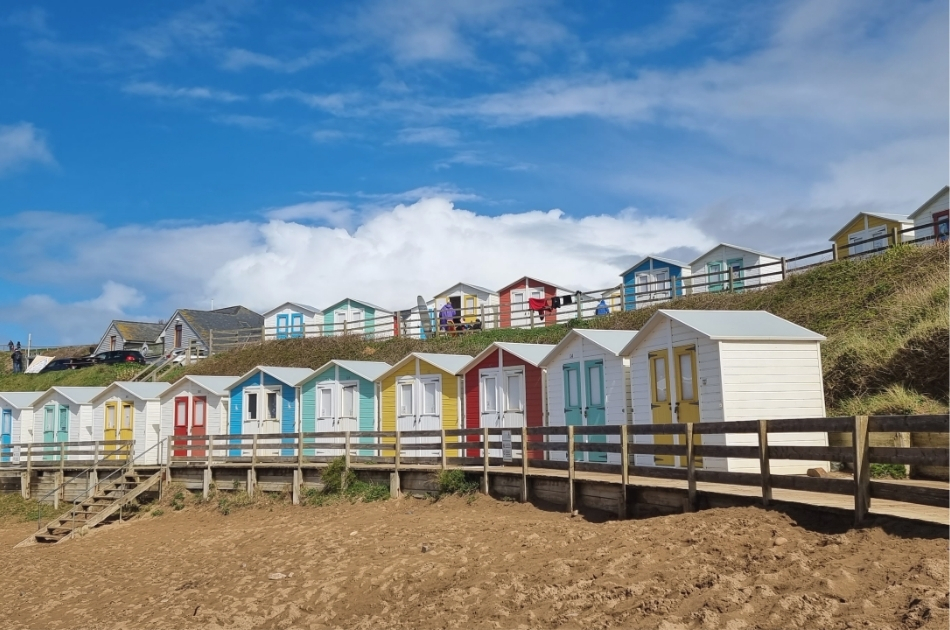
Tucked into Cornwall’s northern coast where it almost becomes Devon, Bude is what happens when a seaside town simply refuses to play the game. No pastel-painted Instagram bait. No artisan everything. Just proper beaches, proper waves, and a canal that Victorian engineers somehow thought was a good idea—and, against all odds, were right.
This is Cornwall without the performance.
The Beaches That Actually Deliver
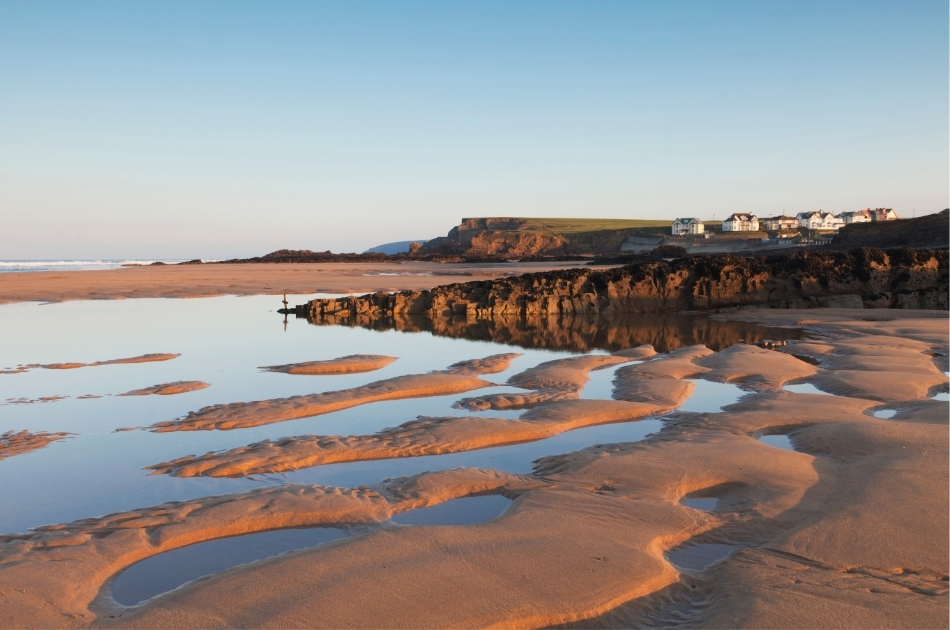
Start at Summerleaze. Not because it’s the ‘main’ beach—though it is—but because standing there at low tide, with Bude’s famous sea pool glittering on the rocks and the breakwater cutting into Atlantic swells, you understand immediately what this town is about.
That sea pool, by the way? It’s been there since the 1930s, carved into the rocks and filled by the tide twice daily. Completely free. Completely unchanged. Kids splash in it while serious swimmers do proper lengths. Nobody’s monetised it. Nobody’s ‘elevated the experience.’ It just… works.
Crooklets Beach is where the surfers go. Not the performative kind who bought a board for the ‘gram—the actual kind who’ve been coming here for decades because the reef breaks are consistent and the crowds are manageable. The British Surfing Championships have been held here. Multiple times. Because the waves are actually good, not because someone decided it would be good marketing.
Widemouth Bay, three miles south, is the family beach—wide enough that even on a packed August weekend, you can find space. The rock pools at low tide are genuinely excellent. Crabs. Anemones. Kids with nets having the kind of summer afternoon that doesn’t require a ticket or a reservation.
And then there’s Sandymouth. National Trust owned, backed by crumbling cliffs that look like something from a geology textbook, and accessed via a path that weeds out anyone who isn’t genuinely committed. The reward? A beach that feels like you’ve discovered it yourself.
The Canal That Shouldn’t Exist
Here’s the thing about Bude Canal: it makes no sense. And that’s precisely why it matters.
In 1823, someone looked at the steep Cornish countryside and decided to build a canal system using inclined planes instead of locks. The boats were literally hauled up hills on rails. It was engineering madness, and it worked—carrying sand inland to fertilise acidic soils for thirty years until the railway made it obsolete.
What remains is two miles of utterly peaceful waterway that cuts through the heart of Bude. Rent a kayak, a paddleboard, or one of those ridiculous swan pedalos that kids love and adults pretend to find embarrassing while secretly enjoying every moment. Glide past families feeding ducks, past gardens that back onto the water, past The Weir where the canal meets the river and the sea beyond.
In summer, people swim in it. Actually swim. In a canal. In Cornwall. And nobody thinks that’s weird because, well, it isn’t.
Walks That Earn Their Views
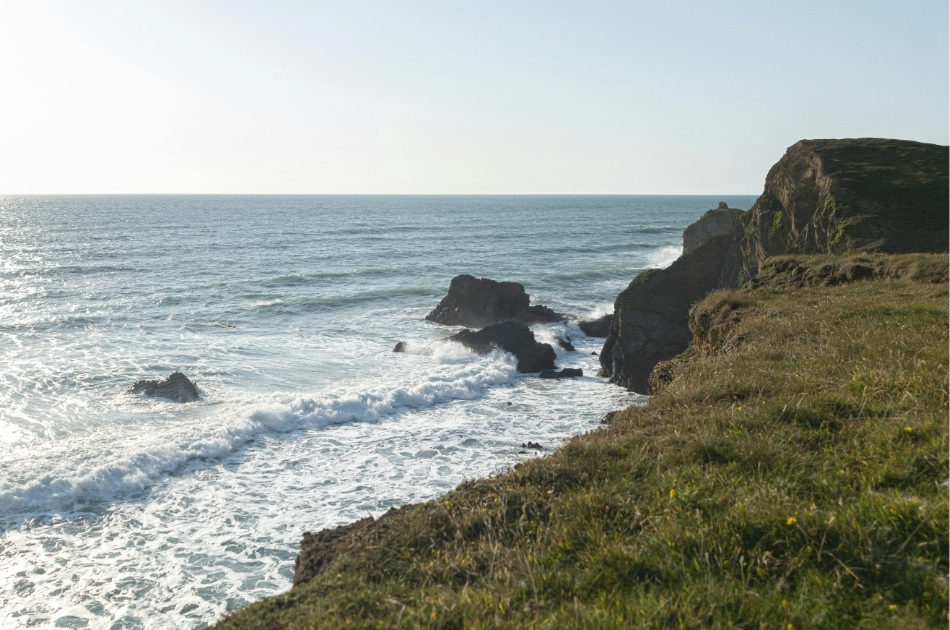
The South West Coast Path passes through Bude, and let’s be clear: this isn’t gentle strolling. The section north to Hartland is some of the most dramatic—and demanding—coastal walking in Britain. Cliffs that drop vertically into churning water. Valleys that plunge and climb without mercy. Views that justify every aching muscle.
Compass Point, just above Summerleaze, is the easy win. A ten-minute walk to an octagonal tower built by a local architect in 1840, because apparently Victorians just did things like that. The views north and south along the coast are ridiculous. The sunsets from here have launched a thousand proposals and should have launched a thousand more.
For something wilder, walk to Duckpool. It’s a cove—barely a beach—surrounded by cliffs that the National Trust owns but nature clearly runs. At low tide, the rock formations look prehistoric because, technically, they are. You’ll share it with maybe a dozen people, most of whom came for the same reason: somewhere that feels genuinely remote without requiring a helicopter.
Food Without Pretension
Bude’s food scene isn’t trying to reinvent anything. It’s just doing the basics properly.
Life’s a Beach café has been serving all-day breakfasts and proper coffee to sandy customers since before ‘brunch’ was a verb. The portions are generous. The vibe is surfer-friendly. Nobody’s deconstructed anything.
The Barrel at Bude does craft beer and stone-baked pizza in a micropub that seats maybe thirty people if everyone squeezes. The beer selection rotates. The pizzas are excellent. The atmosphere is the kind of convivial that happens when a small space is doing one thing well.
For fish and chips—and let’s be honest, you’re coming to Cornwall for fish and chips—Bude has options that would start arguments in any pub. Simply Fish on Belle Vue does it properly. So does the Lansdown Road chippy. Order, sit on the breakwater, watch the sun go down over the Atlantic, and accept that some pleasures don’t need improving.
Temple, if you want something fancier, does seasonal tasting menus in a restored church. It’s genuinely good—Michelin recognition, local ingredients, the kind of cooking that takes itself seriously without being insufferable about it.
The Surf Thing
Let’s address this directly: Bude is a surf town. Has been since the 1960s when British surfing was something people did rather than something people performed.
Crooklets and Summerleaze get the consistent waves. Widemouth is where beginners learn because the beach is forgiving and several surf schools have set up there. The water is cold—this is the Atlantic, not the Mediterranean—but wetsuits exist for a reason, and once you’re in, you’re in.
What makes Bude different from other British surf spots is the attitude. There’s no localism here. Nobody’s marking territory. Families share the lineup with people who’ve been surfing these breaks for forty years, and everyone seems to understand that the ocean doesn’t care about hierarchy.
Even if you never stand on a board, watching is free. And there’s something genuinely meditative about sitting on the beach at Crooklets as the sun drops and the silhouettes of surfers catch the last waves of the day.
Why This Actually Works
Bude works because it hasn’t tried to become something else.
It’s not St Ives, with the galleries and the parking nightmares and the sense that you’re visiting a brand rather than a place. It’s not Padstow, where Rick Stein’s empire has made eating out feel like a pilgrimage. It’s not Newquay, where stag weekends and surf shops compete for pavement space.
Bude is just… Bude. A town of 10,000 people that swells in summer and contracts in winter, where the beaches are the attraction and nobody’s trying to monetise your attention span. The high street has independent shops because that’s what high streets should have. The pubs serve local ale because that’s what pubs should serve. The sea pool fills with the tide because that’s how tides work.
Come expecting the Cornwall of postcards. Leave wondering why you ever went anywhere else.
That’s Bude. Unpolished, unpretentious, and completely itself.
Worth the drive down those narrow Cornish roads? Every single time.