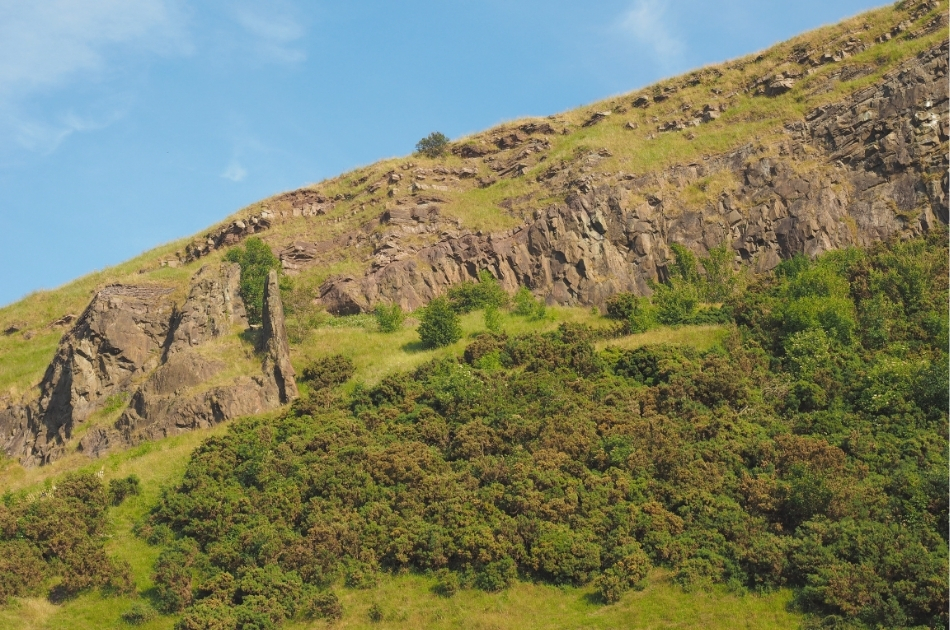

Arthur’s Seat: A Capital City With a Wild Side
“There is not a happier man in Christendom than the one who has his dinner table set beneath the shadow of Arthur’s Seat.”
— Robert Louis Stevenson
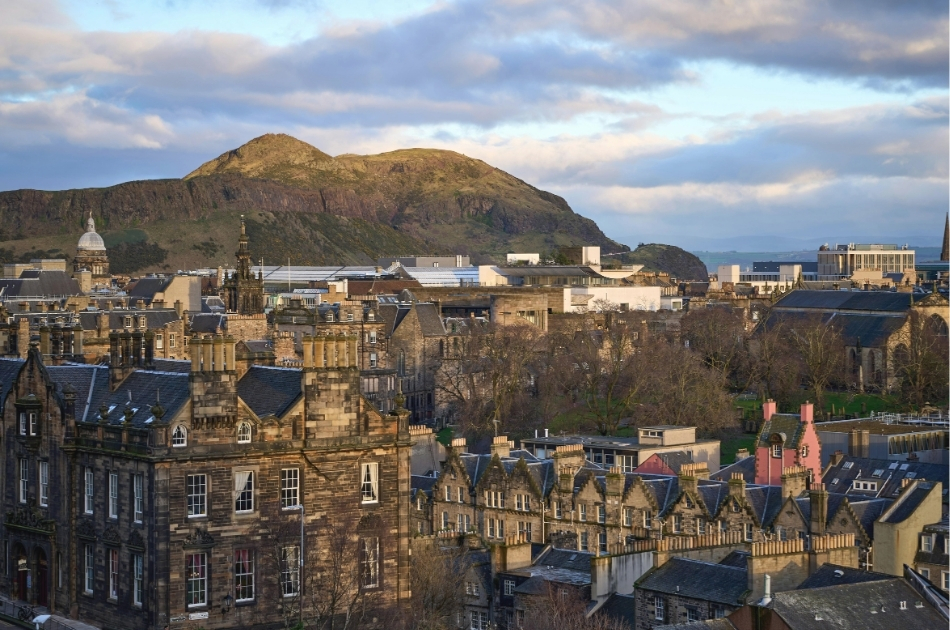
Most capital cities offer parks: manicured lawns, ornamental lakes, carefully tended flower beds. Edinburgh offers a volcano. Arthur’s Seat rises from Holyrood Park like a primordial reminder that nature was here long before politics, palaces, or planning permission—and will be here long after. At 251 metres, it is hardly Himalayan; you will not require supplemental oxygen or technical equipment. But the views from the summit will steal your breath more efficiently than any altitude, and the experience of wild landscape minutes from a city centre remains genuinely extraordinary.
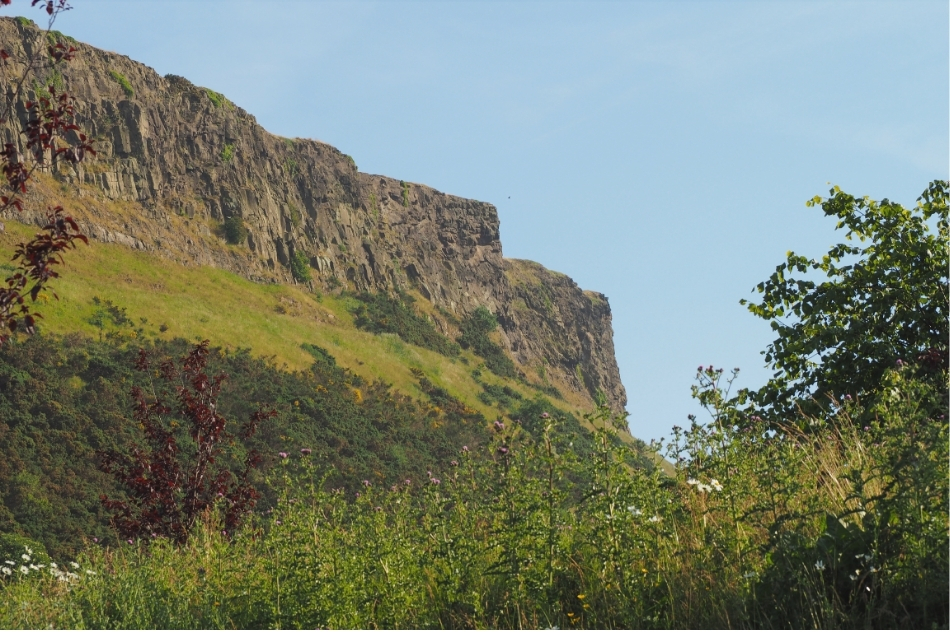
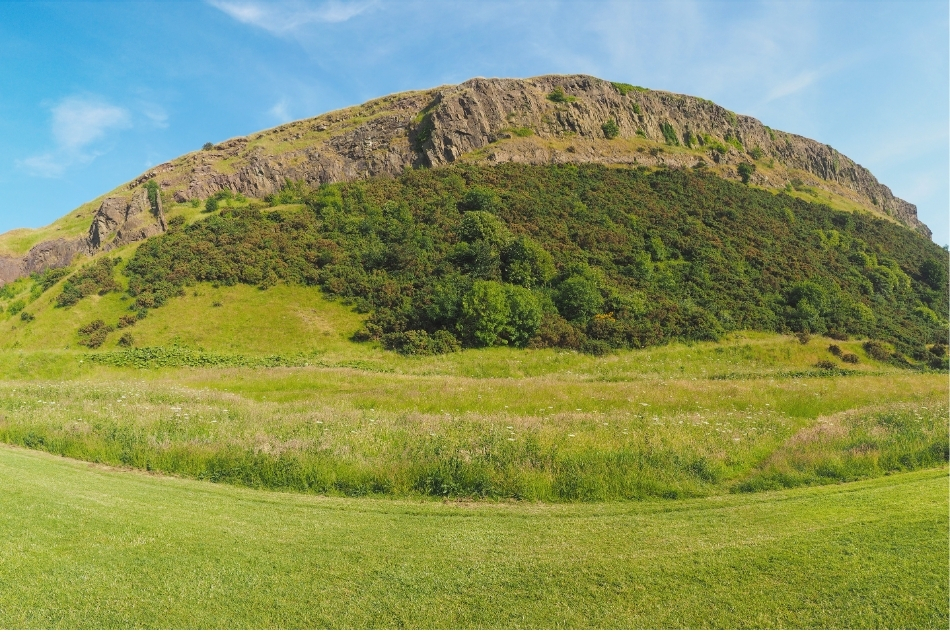
The geology tells a story spanning 340 million years. Arthur’s Seat is the main peak of an extinct volcanic complex, its distinctive profile shaped by successive glaciations that carved the crags and sculpted the slopes. James Hutton, father of modern geology, conducted pioneering studies here in the 18th century, recognising that the landscape revealed earth processes operating over timescales that challenged Biblical chronology. His work at Arthur’s Seat and nearby Salisbury Crags helped establish the deep time that geology now takes for granted.
The Ascent
The walk up Arthur’s Seat is one of Edinburgh’s great levellers. Dog walkers stride past with caffeine and purpose. Tourists pause every few steps for photographs, each vista prompting fresh disbelief that such landscape exists within a capital city. Students use the hill for exercise; couples climb for picnic spots; parents teach children about the simple pleasures of upward exertion. On sunny weekends, the paths resemble rush-hour commuter routes, though considerably more cheerful.
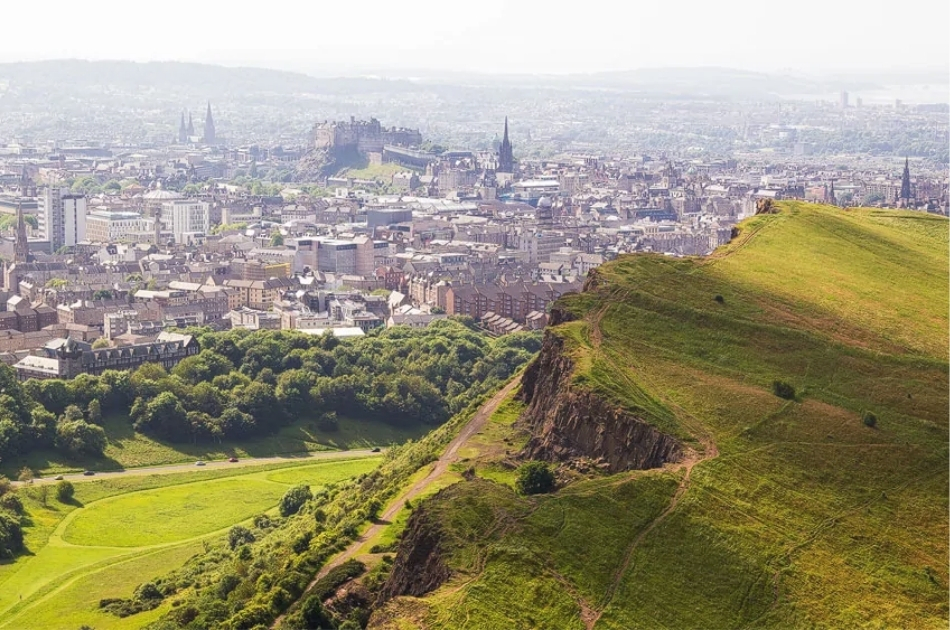
Several routes lead to the summit, varying in difficulty from gentle path to rocky scramble. The most popular approach begins near the Scottish Parliament at Holyrood, ascending via the col between Arthur’s Seat and the Salisbury Crags. This route offers manageable gradients for most fitness levels, though proper footwear is advisable—the paths can become slippery when wet, which in Edinburgh means ‘frequently.’ An alternative approach from Dunsapie Loch offers a shorter but steeper ascent, while purists might choose the more challenging route via the Radical Road.
From the summit, Edinburgh unfolds in every direction. The castle dominates the western skyline, the Firth of Forth glitters to the north, the Pentland Hills roll southward, and on clear days, the Highlands appear as blue shadows on the horizon. The perspective transforms understanding: you see how the Old Town clings to its ridge, how the New Town spreads in ordered squares, how the volcanic geography has shaped every aspect of urban development. It is Edinburgh’s best geography lesson.
“From this hill, you can see not just Edinburgh, but Scotland’s entire story laid out beneath you.”
— Local guide
Legend and Literature
The name ‘Arthur’s Seat’ has prompted centuries of speculation. Some connect it to King Arthur, suggesting this was the Camelot of legend—though evidence is, to put it charitably, thin. Others propose a Gaelic origin: ‘Àrd-na-Said,’ meaning ‘height of arrows,’ a reference to hunting. A third theory suggests corruption of ‘Archer’s Seat,’ referring to medieval bowmen. The honest answer is that nobody knows, and Edinburgh rather enjoys the mystery.
Writers have found inspiration here for generations. Robert Louis Stevenson, who knew Edinburgh’s landscape intimately, set scenes on these slopes. Robert Burns climbed Arthur’s Seat during his Edinburgh years, and James Hogg’s ‘Confessions of a Justified Sinner’—one of Scottish literature’s darkest achievements—uses the hill as a setting for psychological terror. Ian Rankin’s Inspector Rebus has investigated bodies found on these slopes; the combination of wild landscape and urban proximity makes Arthur’s Seat irresistible for crime writers.
In 1836, a group of boys hunting rabbits near the summit discovered seventeen miniature coffins hidden in a cave, each containing a carved wooden figure. The purpose of these mysterious objects has never been determined; theories range from witchcraft to memorials for Burke and Hare’s victims to Scottish folk tradition. Eight surviving coffins now reside in the National Museum of Scotland, their enigmatic presence a reminder that Arthur’s Seat keeps secrets.
Holyrood Park
Arthur’s Seat forms the dramatic centrepiece of Holyrood Park, but the surrounding landscape deserves exploration in its own right. Salisbury Crags, a series of cliffs formed by volcanic sills, offer dramatic walking and climbing opportunities. The Radical Road, a path constructed in the 1820s to provide employment for unemployed weavers, traces the base of the crags and provides one of Edinburgh’s finest walks. St Margaret’s Loch attracts birdwatchers; the ruins of St Anthony’s Chapel offer romantic decay.
The park remains largely wild by design. Unlike London’s Royal Parks with their formal gardens and strict regulations, Holyrood Park embraces its untamed character. Weather changes fast here—a sunny morning can become a blustery afternoon within hours—and the word ‘dreich’ (that uniquely Scottish combination of grey, damp, and dispiriting) suddenly makes experiential sense. This variability is not a drawback but a feature; the hill presents differently in every season, every weather, every light.
“Arthur’s Seat is Edinburgh’s conscience: always there, always watching, always reminding the city that it is not master of everything.”
— Contemporary writer
Practical Considerations
Come to Arthur’s Seat at any time—sunrise for photographers, sunset for romantics, midday for the energetic, late afternoon for the golden light that turns the crags amber. There is no wrong moment, only different experiences. Dress sensibly; even summer days can turn cold at altitude, and wind on the summit is a near-constant companion. Bring water, particularly in warmer months; there are no facilities on the hill itself.
The ascent takes 30-45 minutes for reasonably fit walkers, though the pace matters less than the experience. Pause often. Look around. Notice how the city sounds fade as you climb, replaced by birdsong and wind. This is what Edinburgh offers that few capitals can match: genuine wildness, not sanitised or landscaped into submission, but present and accessible and free.
Arthur’s Seat reminds visitors—and residents who sometimes forget—that Edinburgh exists in relationship with landscape that predates human presence by unimaginable spans. The city can feel ancient, but the hill makes it look young. That perspective is worth the climb.