“Edinburgh pays for what London offers for nothing—the pleasure of looking at its own buildings.”
— Attributed to Robert Louis Stevenson
Edinburgh’s skyline is one of the world’s most distinctive. Spires, domes, monuments, and volcanic rock combine to create a silhouette that is instantly recognisable. The setting provides foundation that no architect could replicate. Castle Rock, Arthur’s Seat, Calton Hill, and the connecting ridge create topography that forces buildings to respond to landscape.
The Old Town preserves Edinburgh’s earliest architectural heritage. St Giles’ Cathedral anchors the Royal Mile with Gothic presence dating primarily from the 14th and 15th centuries. The New Town represents Georgian architecture at its most accomplished. Charlotte Square, designed by Robert Adam, is considered among the finest examples of Georgian urban architecture in Europe.
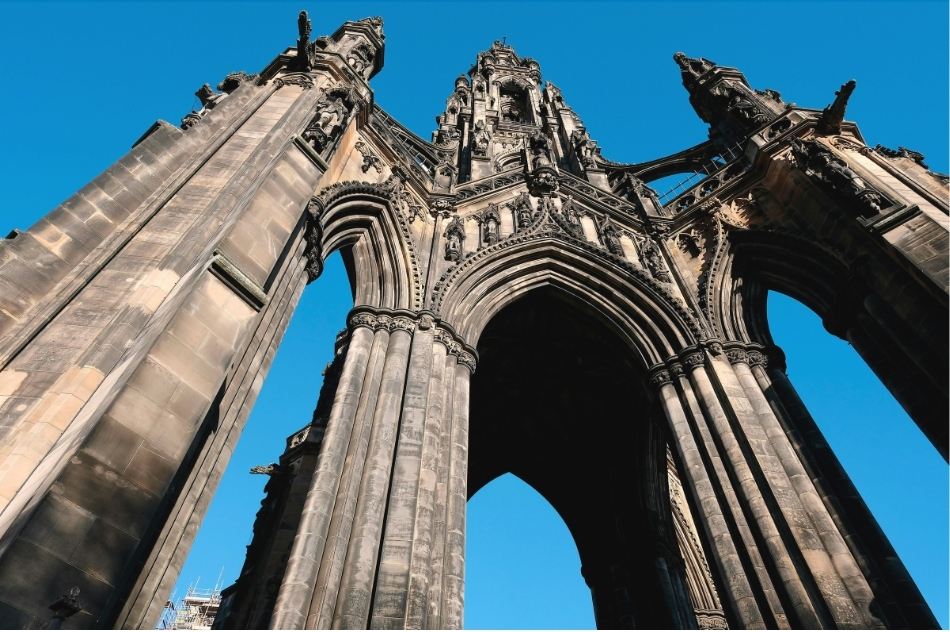
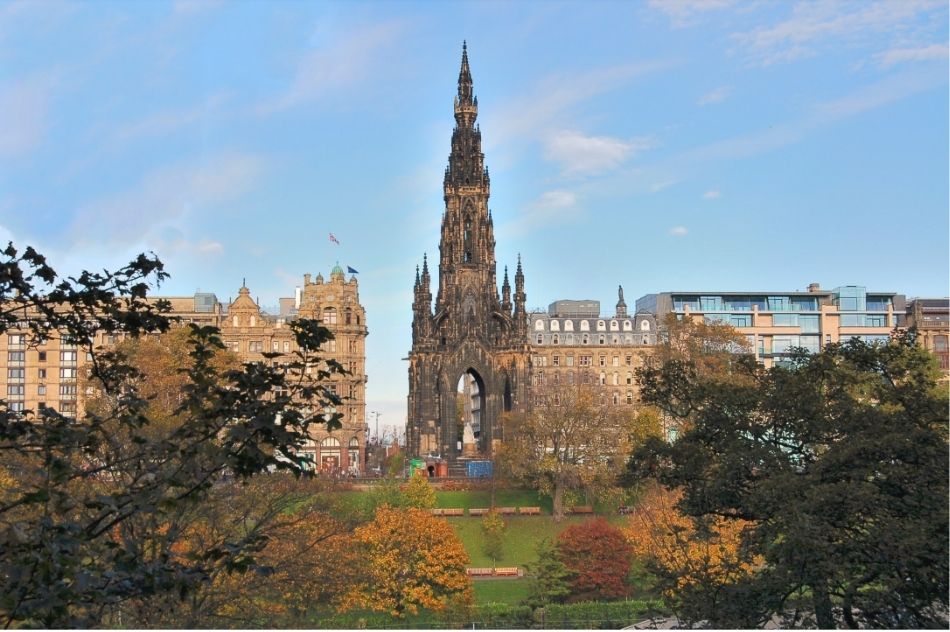
The Scott Monument represents Victorian Edinburgh at its most confident—a 200-foot Gothic spire containing 64 figures from Scott’s novels, the largest monument to a writer anywhere in the world. The Scottish Parliament at Holyrood provoked controversy but has achieved acceptance as significant contemporary architecture. Its forms attempt dialogue with landscape rather than imposition upon it.
The advice for experiencing Edinburgh’s architecture is simple: look up often. The skyline rewards attention. Light changes constantly, transforming stone from silver to gold to deep grey within minutes. Few skylines feel so complete, so considered, so clearly the product of accumulated intention. Look up, and the city explains itself.