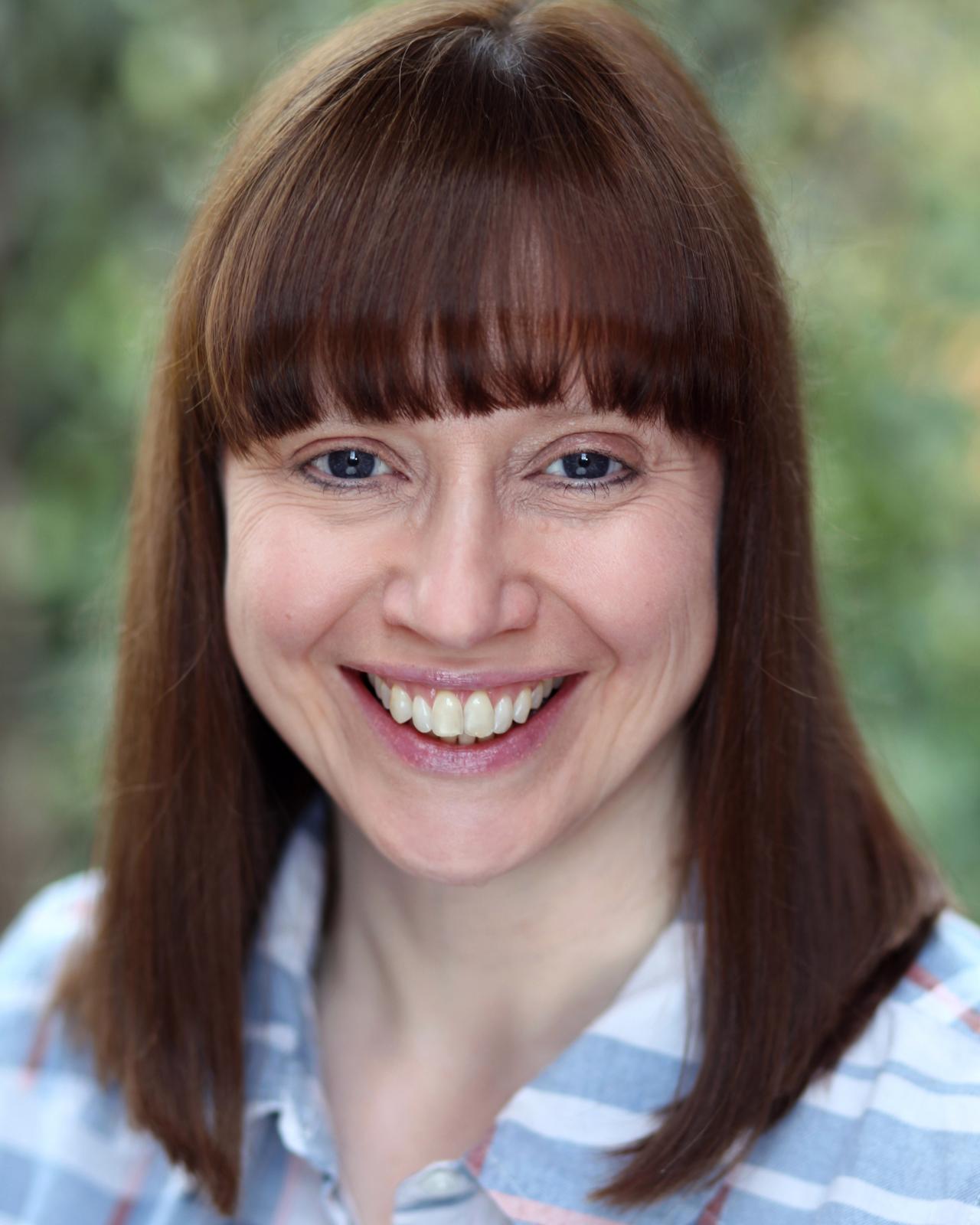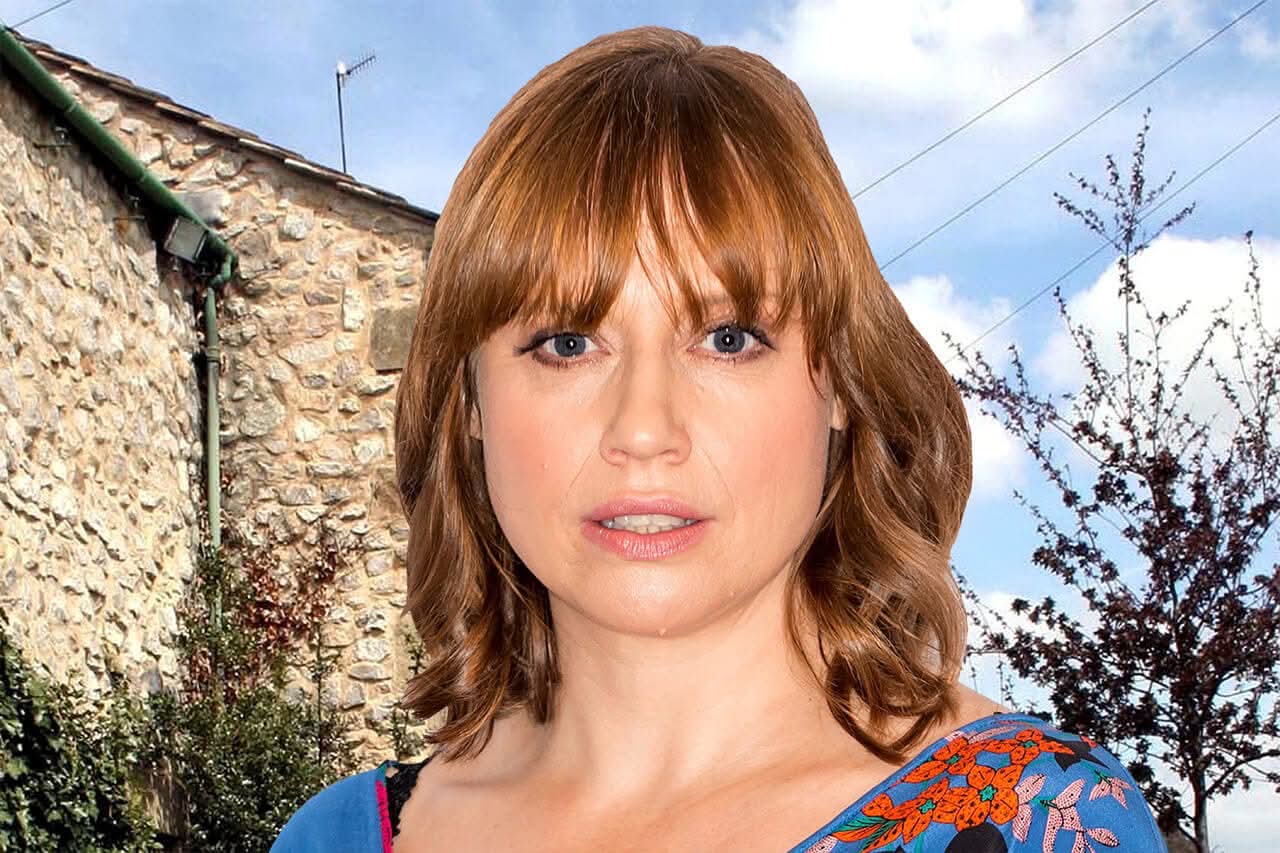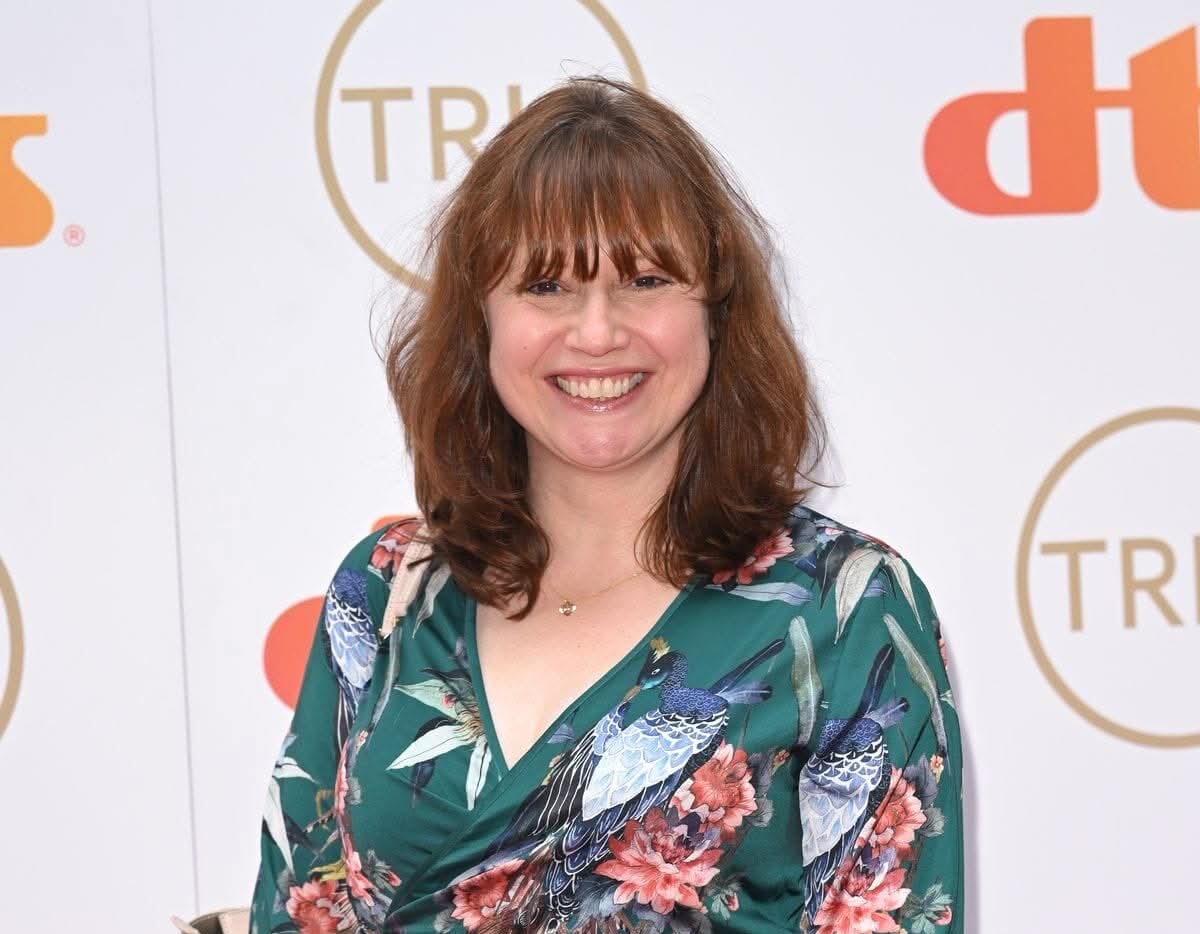

Women of Substance: Karen Blick
The woman everybody knows
For nearly a decade, Karen Blick has played Lydia — the warm, daft, unmistakably Yorkshire heart of Emmerdale’s Dingle clan. Over a cup of tea in a café where nobody bats an eyelid, she talks about luck and graft, the storylines that carried a real weight, and the deliberately ordinary life she has guarded behind the most recognisable face in the Dales.
Interview by Shannon Palmer
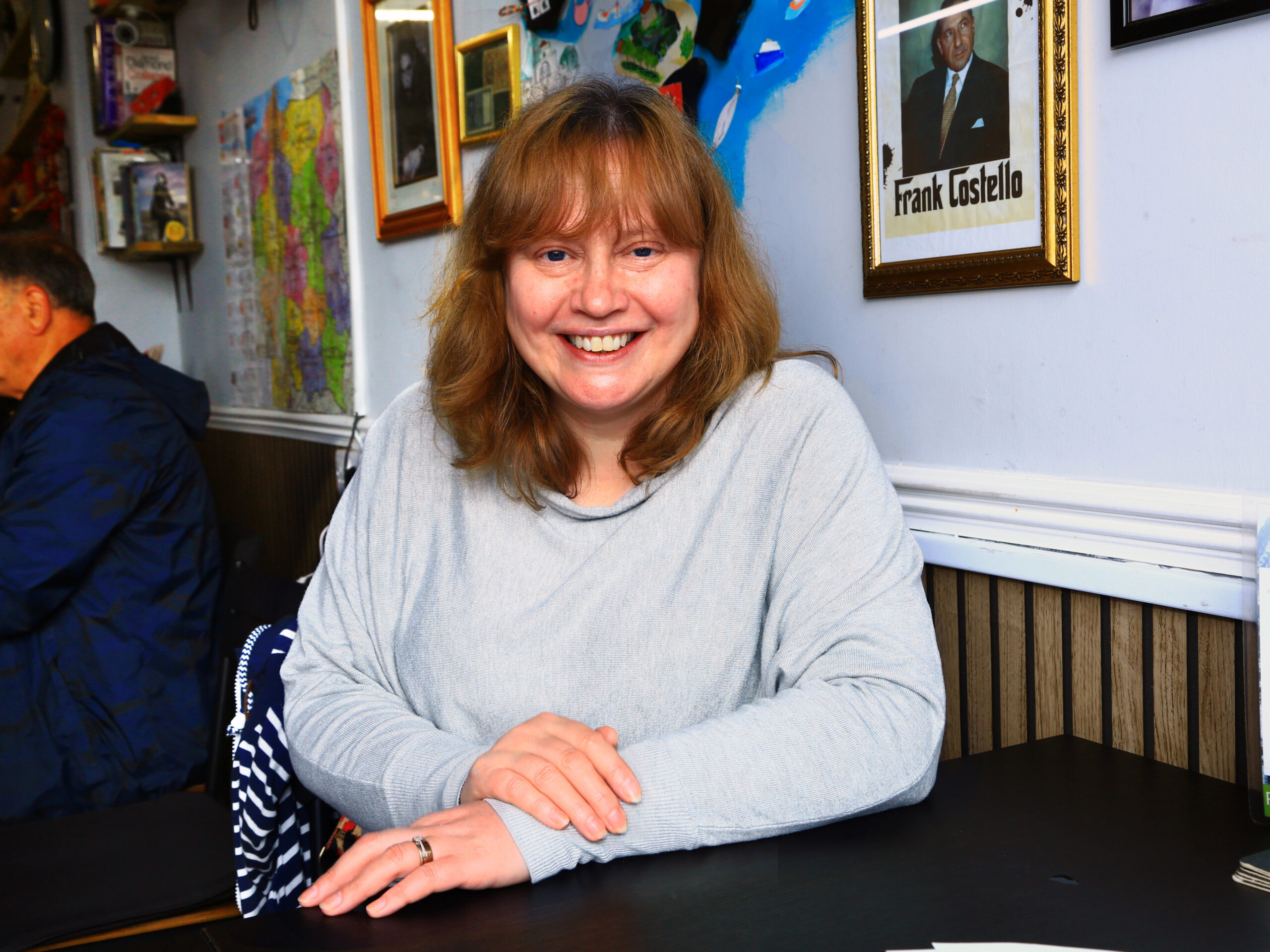
There is a framed portrait of Frank Costello on the café wall, gangster-grave in the Godfather font, presiding over a clutter of bright pictures and a great splashy map the World. Beneath it, entirely at ease in a soft grey jumper, sits a woman whose own television family is rather more beloved than the Corleones, and a good deal funnier. A man at the next table works through his breakfast without so much as a glance. This, it turns out, is the point of Karen Blick: she is one of the most recognised faces in the North of England, and she can sit in a café and be left in peace, because the person everyone recognises isn’t quite her.
“Everybody knows Lydia,” she says, with the wide, unguarded laugh that has carried her through nearly ten years in the Yorkshire Dales. “I get comments from people all the time — they tell me they know her, like she’s someone down their street.” She means it as the highest compliment to the work, and it is. The character she has played in Emmerdale since 2016 — scatty, kind, quietly resilient — is, by her own account, built from real foundations. “She’s rooted in truth,” Blick says. “She’s based on two people I actually know. As daft as she can be, she’s a recognisable Yorkshire woman.” The county has clasped Lydia to its chest precisely because it sees itself in her.
She arrived almost by accident, and intended to stay only a fortnight’s worth of episodes. “I feel like I snuck in through the back door,” she says, “because I’m still there.” The detail she relishes most about those early days is the pet parrot, Steve, that Lydia brought with her: long since written out, stuffed, and still perched somewhere on the Dingle set to this day. It is a very Emmerdale sort of immortality.
Blick is a Bradford girl, and the seed was planted in a school classroom there, by a drama teacher called Nadine — recently retired, still in touch — who staged the Christmas and summer shows that quietly rearrange a teenager’s sense of what’s possible. The decisive moment came from an unlikelier source. One of her teachers happened to be married to the actress Beverley Callard, then Liz McDonald on the cobbles of Coronation Street; he came to watch a school production and told a 15-year-old Karen, simply, that she could do this for a living. “That planted it,” she says. “That was what I wanted to do.”
What followed was Yorkshire all the way down — a BTEC at Calderdale College in Halifax, then a place at Bretton Hall, the storied West Yorkshire college that has sent so many actors out into the world. She did the lot without ever leaving the county, and says so with some pride, because it is the first myth she likes to puncture for the young people who tell her they fancy a go. “Everyone thinks you have to go to RADA, or off to New York,” she says. “You don’t. There are courses all over Leeds now — a conservatoire, the universities. You can stay local.” The door, in her telling, is always nearer to home than the nervous suppose.
Her advice to the young, then, is brisk and unsentimental: go for it. But press her on what that actually looks like — because “go for it” is the sort of thing people say and rarely unpack — and the romance drains out of it in the best possible way. It looks like work. “You build the craft,” she says. “You learn it — properly, through your training, your education — and then you keep going to the auditions. You push, and you push, and you keep pushing.” There is no shortcut hidden in there, no overnight discovery; only the unglamorous arithmetic of turning up, being turned down, and turning up again, which is precisely the arithmetic that, two weeks from quitting, eventually delivered her Lydia. She knows of what she speaks from both sides of the room now, because she teaches it herself, at Articulate — the Bradford-born drama school and casting agency that the former-lawyer Stacey Burrows has built, from an after-school class, into one of the most successful in the country, quietly funnelling Yorkshire children into Netflix dramas and Hollywood films. It is, you sense, the part of the job that most resembles a vocation: standing in front of the next nervous fifteen-year-old and telling her, as a teacher once told Karen, you could do this.
The decades that followed were less the stuff of fairy tale than of stamina. “It’s a tough, competitive industry,” she says, with no trace of self-pity, “and I’ve been incredibly lucky to make a living from it for thirty years.” Luck, here, did a great deal of overtime alongside graft: small-scale touring theatre, jobs from friends with their own companies, a comedy sketch troupe she took up to Edinburgh, a Hamlet that trundled round the county. And teaching, always teaching, as a parallel love rather than a defeat — which is just as well, because the moment came when she very nearly chose it for good.
It arrived in the shape of an audition she was certain she’d nailed and didn’t get. “I was gutted,” she says. “I told my agent — get me some feedback, because if I’m not any good at this, I’m giving it up and teaching full time.” The feedback that came back was that the casting director wanted to keep her in mind for something bigger. Two weeks later they called her in for Lydia. “So never give up on the dream,” she says, and you can tell it is not a line she trots out lightly; she was, by her own measure, two weeks from packing it in. There is a lovely coda about the part itself. She’d prepared Lydia as a quirky comic turn; the director told her to play it dead straight; then, on the first morning of filming, changed her mind entirely — play her a bit daft, flirt with Jimmy — and the character the nation adores was born on the spot, out of a contradiction.
If the comedy is what people stop her for, it is the darkness she speaks about most carefully. Lydia’s history is harrowing — raised in care, she gave birth to a stillborn baby at fifteen and, too frightened to tell a soul, buried the child; years later came a storyline in which she was the victim of a sexual assault. “It’s a huge responsibility, tackling something like that,” Blick says, and the laugh recedes for the first time. “You want to get it right — for the people who’ve actually been through it.” The production researched it exhaustively, working with a specialist charity who went over the scripts; the proof came afterwards, in the women who approached her to say it had spoken for them. “You want to get it right for them. And it was written so well.” She is clear that the lightness is not a relief from the darkness but its necessary partner — the streaking scene that had the whole country in stitches, the recent revelation that Lydia was once a ballroom champion, a tender waltz with Sam at Home Farm. “You need the light and the shade,” she says. “It keeps it alive.”
She is generous about the company she keeps — Claire King, with whom she shares a dressing room and an obvious affection; Emma Atkins, whose Charity she admires for moving so easily between the comic and the devastating — and faintly bemused by the apparatus of recognition. People want photographs of her in the Asda, she says, while she’s doing the weekly shop “like everybody else”; some of them, charmingly, don’t quite believe it’s her.
The not-believing is, perhaps, the secret to a private life she has held intact against considerable odds. She is off social media for anything personal, married to her husband Simon — together fifteen years before they wed — and raising two teenagers whose names you will not find her trading on. An ordinary day, she says, is “chaos”: the school run, the ferrying about, the nightly diplomatic effort of cooking one meal a whole household will eat. (“Spaghetti Bolognese. That’s the only one.”) Asked what she counts as valuable now, she doesn’t reach for the career. “Being a mum,” she says. “And being a good friend.”
It is of a piece with the Yorkshire she keeps returning to — not the postcard version but the lived one. The boltholes are real and unglamorous in the best way: Haworth for its little shops, York for a weekend, a tiny glamping site on the coast the family goes back to every year, walks on Ilkley Moor, Salts Mill at Saltaire, which she presses on everyone she meets. She runs now, and does her yoga, and a few years ago ran the London Marathon for Sue Ryder, in memory of a friend the hospice had cared for through breast cancer — the one achievement she calls, without hesitation, empowering. And she rhapsodises, cliché be damned, about her own street’s WhatsApp group, the neighbours forever helping each other out. “It seems old-fashioned,” she says. “It’s lovely.”
Her own taste runs to the storytellers who do for the North what she does for the Dales — Sally Wainwright, the genius behind Happy Valley (“she’s fantastic”), the great Willie Russell — writers who hold up a mirror and let people recognise themselves in it. Which is, in the end, the trick Blick has pulled off too, and the reason a woman can sit beneath a fictional mobster in a busy café and go unremarked. She has spent ten years giving a whole county the pleasure of feeling known. The least it can do, when it spots her over the spaghetti, is let her finish her tea.
The Travelling Telegraph’s Women of Substance series profiles remarkable women living in Yorkshire.
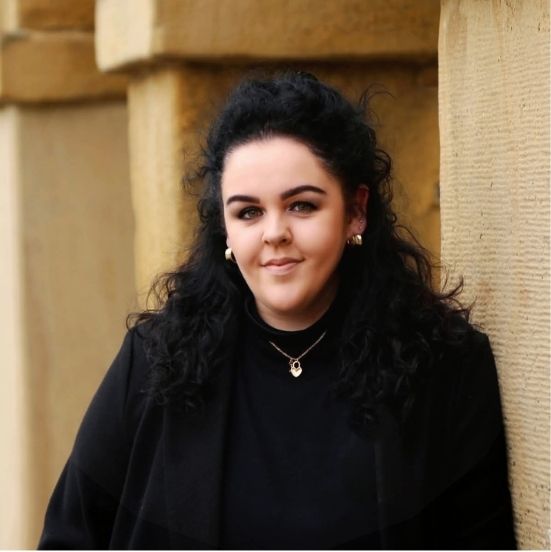
Shannon Palmer is The Travelling Telegraph's Yorkshire blogger with a passion for uncovering the county that most visitors never get to see. Drawing on years of life across God's Own County, she shares honest guides, hidden discoveries and the kind of local knowledge that only comes from truly being there.